Partial guitar capos let you change the pitch of selected strings while leaving others open, making them useful for drop-D, DADGAD, open-style voicings, and creative chord shapes.
We compared 10 popular options across string coverage, adjustment, construction, compatibility, and ease of use so you can find the right capo for your playing style and guitar.
Best 10 Partial Guitar Capos Picks for 2026
Best for DADGAD-Style Sounds

- Three-string DADGAD-style design
- Lightweight aluminum construction
- Parks on the headstock
Best For: Acoustic players exploring DADGAD-like sounds
Best Adjustable Drop-D Option

- Covers two three-string positions
- Set-and-forget pressure design
- Brass body with rubber grip
Best For: Players experimenting with adjustable partial effects
Best for Precise Tension

- Micrometer tension adjustment
- Lightweight aluminum body
- Works on acoustic and electric guitars
Best For: Players wanting precise, easy one-handed capo control
Best Simple Three-String Design

- Two three-string coverage positions
- Set-and-forget adjustment
- Polished brass construction
Best For: Electric players exploring dedicated partial-capo effects
Best Premium Option
D'Addario Pro Plus Guitar Capo

- FlexFit technology adapts to fretboard radii
- Adjustable pressure helps prevent fret buzz
- Works with 6- or 12-string instruments
Best For: Players seeking precise, one-handed capo control
Best Dedicated Partial Capo

- Covers three inside strings
- Brass body with polished finish
- Purpose-built for partial-capo effects
Best For: Players targeting three-string alternate voicings
Best Lightweight Pick

- Lightweight aluminum construction
- Finish-safe padding
- One-hand operation for quick key changes
Best For: Acoustic players wanting a compact, easy-to-use capo
Creative Open Tunings
G7th Newport 3-String Partial Capo
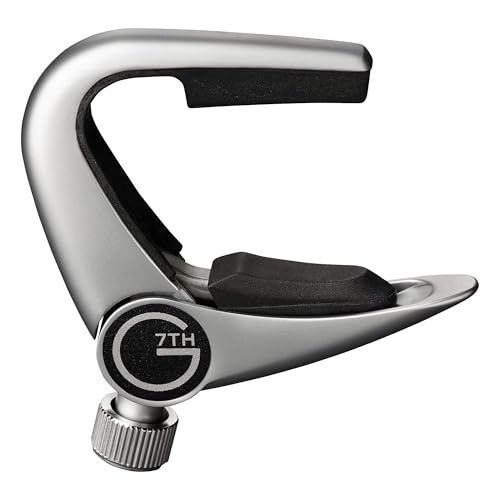
- Creates DADGAD- and open-G-style effects
- Fine-tune knob supports controlled pressure
- Quick release with silicone protective pads
Best For: Exploring open-style tunings without retuning
Reliable Everyday Clamping
Shubb C1 Standard Acoustic Guitar Capo

- Set-and-forget adjustable design
- Simple lever-based operation
- Rubber grip and nickel-plated brass body
Best For: Standard acoustic guitar capo use
Drop-D-Style Changes
G7th Newport 5-String Partial Capo

- Creates Drop-D-style sounds without retuning
- Five-string coverage with fine-tune control
- Fits 9.5- to 18-inch fingerboard radii
Best For: Fast five-string tuning effects on stage or in practice
Best for DADGAD-Style Sounds – Kyser Short-Cut Partial Capo
The Kyser Short-Cut is a focused option for guitarists exploring partial guitar capos and DADGAD-like sounds. Its three-string design is made for quick key changes and parks on the headstock when you are not using it.
Best For: Acoustic guitar players who want a lightweight, USA-made partial capo for DADGAD tuning simulation.
Pros:
- Designed specifically for DADGAD tuning simulation.
- Three-string format creates a distinctive sound profile.
- Aircraft-grade aluminum construction weighs 1.6 ounces.
- Quick-change design and headstock storage add convenience.
Cons:
- Its specialized three-string design is less versatile than a full capo.
- The supplied notes list a one-year warranty, while also describing the product as guaranteed for life; verify coverage before purchase.
This is a purpose-built choice rather than an all-purpose capo. Choose it when DADGAD-style voicings and fast, lightweight handling are the priority.
Best Adjustable Drop-D Option – Shubb C8B Drop-D Partial Capo
The Shubb C8B is an adjustable choice for guitarists comparing partial guitar capos. Its design can cover the 2-3-4 or 3-4-5 strings, opening up different effects while allowing you to set the pressure and leave it ready to use.
Best For: Players who want a brass partial capo with adjustable string coverage and a set-and-forget tension approach.
Pros:
- Can cover either the 2-3-4 or 3-4-5 strings.
- Custom rubber is designed to work like a fingertip and help keep the guitar in tune.
- Set-and-forget adjustment avoids resetting pressure with every use.
- Brass body with a polished finish offers a substantial build.
Cons:
- At 22.68 grams, it is heavier than the aluminum Kyser and D’Addario options listed here.
- Its specialized coverage may require experimentation to find the effects you want.
The C8B suits players who value adjustable partial coverage and repeatable pressure more than minimum weight. Its two coverage positions make it a flexible tool for experimenting with altered textures.
Best for Precise Tension – D'Addario NS Tri-Action Capo
The D’Addario NS Tri-Action is a practical alternative for guitarists who want controlled capo pressure alongside partial guitar capo experimentation. Its micrometer adjustment, even tension, and tri-action geometry are designed for buzz-free, in-tune performance on acoustic and electric six-string guitars.
Best For: Acoustic or electric players who prioritize precise tension, one-handed operation, and lightweight construction.
Pros:
- Micrometer adjustment provides precise control over neck pressure.
- Tri-action geometry applies even tension while reducing operating force.
- Aircraft-grade aluminum construction weighs 9.07 grams.
- Clamps to the headstock and includes an integrated pick holder.
Cons:
- This is a full guitar capo rather than a dedicated partial capo.
- It does not provide the specialized three-string coverage of the Kyser or Shubb models.
Choose the NS Tri-Action when dependable tension control and broad six-string compatibility matter more than a dedicated partial-capo layout. It is especially convenient for players switching between acoustic and electric guitars.
Best Simple Three-String Design – Shubb C7B Partial Capo
The Shubb C7B is a straightforward option for guitarists seeking partial guitar capos with a three-string format. It covers the 2-3-4 or 3-4-5 strings and uses Shubb’s adjustable design to maintain consistent pressure without resetting it each time.
Best For: Electric guitar players who want a brass three-string partial capo for exploring alternate effects.
Pros:
- Designed to cover either the 2-3-4 or 3-4-5 strings.
- Custom rubber grip is intended to act like a fingertip and help maintain tuning.
- Set-and-forget adjustment simplifies repeated use.
- Polished brass body provides a durable, substantial construction.
Cons:
- Its 22.68-gram brass construction is not the lightest option.
- The specialized three-string coverage may not suit players who need full-neck capoing.
The C7B is a good fit when you want a dedicated three-string design without the broader features of a full capo. Its adjustable coverage gives you two positions for developing different playing effects.
Best Premium Option – D'Addario Pro Plus Guitar Capo
For players comparing partial guitar capos with versatile full-neck performance, the D’Addario Pro Plus is a premium screw-style option designed for acoustic, electric, classical, and 6- or 12-string instruments. Its FlexFit technology automatically adapts to different fretboard radii while providing adjustable tension.
Best For: Guitarists who want precise, one-handed capo adjustment and buzz-free performance across multiple guitar types.
Pros:
- FlexFit technology adjusts to different fretboard radii.
- Designed for 6- or 12-string guitars and instruments with octave-paired strings.
- Adjustable pressure helps prevent fret buzz and support in-tune playing.
- Single-hand operation makes repositioning quick and convenient.
Cons:
- This is a versatile full capo rather than a dedicated partial capo.
- The premium screw-style design may be more than needed for players seeking a basic capo.
The Pro Plus stands out for flexible fit and tension control. It is a strong choice when reliable, buzz-free operation matters more than having a specialized partial-string configuration.
Best Dedicated Partial Capo – Shubb C7B Brass Partial Capo
The Shubb C7B is a purpose-built choice for players shopping for partial guitar capos. This limited-edition brass capo covers three inside strings, making it suitable for creating alternate voicings while leaving the remaining strings open.
Best For: Guitarists who specifically want a three-string partial capo for experimenting with alternate tunings and chord shapes.
Pros:
- Covers three inside strings for a dedicated partial-capo setup.
- Brass construction with a polished brass finish.
- Rubber grip material helps provide contact with the instrument.
- Limited-edition design offers a distinctive appearance.
Cons:
- Its three-string coverage is less versatile than a full capo.
- The supplied details do not specify one-hand operation or adjustable tension features.
Unlike general-purpose capos, the C7B is designed around a specific three-string configuration. It is the more targeted pick for players who already know they want partial capo effects on the inside strings.
Best Lightweight Pick – Fender Laurel Capo
For shoppers considering partial guitar capos but wanting a compact general-purpose accessory, the Fender Laurel is a lightweight option for acoustic guitar. Its aluminum construction, finish-safe padding, and one-hand operation make it convenient for quick key changes.
Best For: Acoustic guitarists who prioritize low weight, simple handling, and a fit that accommodates different neck shapes.
Pros:
- Lightweight aluminum construction weighs 0.06 kg.
- Finish-safe padding helps protect the guitar surface.
- Quick one-hand operation supports fast key changes.
- Versatile fit is designed for any neck shape.
Cons:
- This is a standard acoustic capo, not a dedicated partial capo.
- The supplied details do not mention adjustable tension control.
The Laurel is best viewed as a straightforward acoustic capo rather than a specialized partial-string tool. Its compact ergonomic design makes it appealing for players who value portability and quick repositioning.
Creative Open Tunings – G7th Newport 3-String Partial Capo
The G7th Newport 3-String is a specialized choice for guitarists exploring partial guitar capos and open-style tunings. Its three-string design can create DADGAD-style effects or open-G-style sounds without retuning, while the fine-tune knob helps control string pressure.
Best For: Players who want quick DADGAD- or open-G-style textures from a partial capo.
Pros:
- Creates open-style tuning effects without retuning.
- Quick-release mechanism supports fast changes.
- Fine-tune tension control helps maintain tuning stability.
- Silicone pads help protect the guitar and reduce unwanted damping.
Cons:
- Its three-string format is specialized rather than a general-purpose capo.
- Fit is specified for a 7.25-inch-to-flat fingerboard radius.
Choose this Newport when creative alternate-tuning effects are more important than broad, conventional capo coverage. The lifetime warranty and low-profile lever add practical appeal for rehearsal and performance use.
Reliable Everyday Clamping – Shubb C1 Standard Acoustic Guitar Capo
The Shubb C1 is a straightforward option for acoustic players who want dependable capo changes alongside specialized partial guitar capos. Its adjustable design is intended to be set once and reused, with a rubber grip shaped to work like a fingertip.
Best For: Acoustic guitarists seeking a familiar, easy-to-operate capo for standard capo duties.
Pros:
- Set-it-and-forget-it pressure adjustment reduces repeated setup.
- Lever operation makes locking and removal simple.
- Custom rubber grip is designed to help keep the guitar in tune.
- Nickel-plated brass body offers a polished nickel finish.
Cons:
- This is a standard acoustic capo, not a partial capo.
- Its supplied details do not describe alternate-tuning-specific string coverage.
The C1 makes sense when you need a dependable standard capo rather than a purpose-built partial model. It is a practical companion for players comparing partial guitar capos with a traditional acoustic capo.
Drop-D-Style Changes – G7th Newport 5-String Partial Capo
The G7th Newport 5-String is designed for guitarists who want partial guitar capos to produce Drop-D-style sounds quickly. It covers five strings and uses a flip lever plus fine-tune tension control, making it suitable for fast transitions without retuning.
Best For: Players seeking quick five-string Drop-D-style effects for practice, songwriting, or stage use.
Pros:
- Creates Drop-D-style tuning effects without retuning.
- Quick-release lever enables rapid attachment and removal.
- Fine-tune control supports precise string pressure.
- Fits fingerboard radii from 9.5 to 18 inches.
Cons:
- The five-string coverage is less specialized for three-string open-style effects.
- At 2.08 ounces, it is heavier than the three-string Newport model.
This model is a strong fit when five-string coverage and broad fingerboard compatibility matter. Its balanced, natural sound profile, protective silicone grip, and lifetime warranty reinforce its practical stage and practice orientation.
How We Picked the Best Partial Guitar Capos
We focused on capos that cover only a portion of the fretboard rather than clamping all six strings. The selection includes dedicated three-string and five-string designs, adjustable models, and standard capos for players who want a versatile alternative. We considered construction quality, pressure control, stability, string coverage, tuning usefulness, and compatibility with common acoustic and electric guitar necks.
Because partial capos can produce very different results depending on the strings they cover, we also looked at their intended use. Three-string models are often suited to DADGAD-style experimentation or open-string chord textures, while five-string designs can provide a practical drop-D-style setup.
Quick Comparison
| Type | Best For | What to Look For |
|---|---|---|
| Three-string partial | DADGAD and open-style voicings | Accurate alignment and secure pressure |
| Five-string partial | Drop-D-style tuning changes | Correct string coverage and neck fit |
| Adjustable partial | Experimenting with different setups | Fine tension control and easy repositioning |
| Full guitar capo | General-purpose use | Broad compatibility and even clamping |
Key Buying Factors for Partial Guitar Capos
String Coverage
Confirm exactly which strings the capo covers. A three-string capo and a five-string capo can create very different chord shapes, and coverage may be described from the bass or treble side. Check the manufacturer’s tuning guidance before ordering.
Neck and Fretboard Compatibility
Measure or inspect your guitar’s neck profile if possible. A capo must sit flat across the intended strings without touching neighboring strings or pulling notes sharp. Acoustic guitars with wider or more rounded necks may need a different fit from slim electric guitar necks.
Pressure Adjustment
Too little tension causes buzzing or slipping; too much can raise pitch and make bends or fretting feel stiff. Adjustable designs offer more control, while spring-style models are faster to move during live playing.
Materials and Durability
Metal construction generally offers long-term durability, while padded contact surfaces help protect the fretboard and strings. Look for smooth edges, replaceable pads when available, and a mechanism that holds its setting consistently.
Who Should Buy Which Partial Guitar Capos?
Choose a dedicated three-string model if you mainly play DADGAD, Celtic-style arrangements, or open-string voicings. A five-string partial capo is a better match for players seeking a drop-D-style effect without retuning the guitar manually.
Players who frequently test alternate tunings should consider an adjustable model, especially if they use more than one guitar. If you need a dependable capo for standard playing as well as occasional experimentation, a versatile full capo may be the more practical choice. Before performing, test any partial capo at the intended fret and retune if necessary; small alignment changes can significantly affect intonation.