Multitrack loop stations can transform a simple riff, beat, or vocal line into a full performance. The right model makes it easy to build layers, stay in time, and switch between ideas without breaking your flow.
In this roundup, we focus on the best options for players who want reliable recording, flexible track control, and practical features for stage, practice, or songwriting.
Best 10 Multitrack Loop Stations Picks for 2026
Tabletop Powerhouse
Boss RC-505 Mk2 Tabletop Looper

- Five stereo tracks for layered looping
- Two XLR mic inputs with phantom power
- Two stereo line input pairs for flexible routing
Best For: Hands-on performers building complex vocal and instrument loops
Portable Performer
Sheeran Looper + Dual Track Pedal

- Four looping modes with single and dual-track workflow
- Stores up to 128 loops and 3+ hours of audio
- USB audio interface plus battery-powered operation
Best For: Gigging musicians and streamers who want portable looping
Studio Control Hub
BOSS RC-505mkII Tabletop Looper
- Five stereo tracks with dedicated faders
- 49 Input FX and 53 Track FX types
- Two XLR mic inputs plus multiple line I/O
Best For: Advanced tabletop looping with detailed effects control
Pedalboard Workhorse
Boss RC-600 Six-Track Loop Pedal
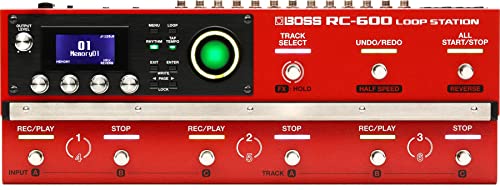
- Six stereo phrase tracks for larger arrangements
- Two XLR mic inputs with phantom power
- 99 phrase memory presets with rhythm guide
Best For: Floor-based looping for guitar, vocals, and multi-instrument rigs
Dual-Track Powerhouse

- Two-track looping with 32-bit audio quality
- Up to 13 hours of stereo record time
- XLR, 1/4-inch, and USB connectivity
Best For: players who want a compact two-track looper with long recording time
Three-Track Workhorse

- Three stereo tracks with dedicated footswitches
- Per-track faders plus expression pedal control
- 99 memories and up to three hours recording
Best For: live performers who want a three-track looper with separate controls and storage
Tabletop Performance Looper

- Two stereo tracks with fingertip controls
- 64 phrase memories and dual FX sections
- USB audio/MIDI with optional external control
Best For: tabletop performers, beatboxers, and electronic musicians
Dual-Track Performance Looper

- Two synchronized stereo tracks
- Up to three hours of stereo recording
- 99 memory phrases for saved loops
Best For: Players wanting simple stereo looping with hands-on faders
Footswitch-Controlled Multi-Track Looper

- Plays up to three stereo tracks simultaneously
- Seven footswitches for live control
- Undo/Redo plus MIDI clock syncing
Best For: Performers needing a larger looper with extensive foot control
Feature-Rich Live Performance Looper

- Assignable CTL control for flexible operation
- 49 Input FX and 53 Track FX
- Two XLR mic inputs plus 200+ patterns
Best For: Advanced performers needing deep effects and connectivity
Tabletop Powerhouse – Boss RC-505 Mk2 Tabletop Looper
If you want one of the most capable multitrack loop stations for studio-style hands-on performance, the Boss RC-505 Mk2 is built for serious looping control. Its five stereo tracks, dual XLR mic inputs with phantom power, and dual stereo line input pairs make it especially flexible for vocals, instruments, and layered arrangements.
Best For: Performers and producers who want a tabletop looper with deep hands-on control for vocals, instruments, and complex layered sets.
Pros:
- Five stereo tracks for detailed multitrack layering
- Two XLR mic inputs with phantom power
- Two stereo line input pairs for broader routing options
- Includes rhythm generator and looping controls for performance use
Cons:
- Tabletop format is less portable than a pedal-style looper
- May be more control than casual loopers need
The RC-505 Mk2 stands out when workflow and track control matter most. If you need a tabletop centerpiece for multitrack loop stations, this one is clearly aimed at detailed live creation and flexible input handling.
Portable Performer – Sheeran Looper + Dual Track Pedal
The Sheeran Looper + is a practical choice if you want multitrack loop stations in a compact pedal format with modern workflow features. It offers single and dual-track looping modes, a full-color display, RGB loop status ring, and 32-bit audio with custom DSP, making it easy to build, monitor, and manage loops on the fly.
Best For: Players who want a portable, battery-powered looper with easy loop management and USB recording.
Pros:
- Four looping modes: single, multi, sync, and song
- Stores up to 128 loops with over 3 hours of total audio
- Works as a 2-in/2-out USB audio interface for recording and streaming
- Runs on 4 AA batteries for gigging and street performance
Cons:
- Only dual-track design compared with larger multitrack units
- More compact workflow may suit simpler setups better
This looper is a strong fit if portability matters as much as flexibility. For players who want multitrack loop stations that travel easily and connect directly to a computer, it covers a lot of ground without getting overly complicated.
Studio Control Hub – BOSS RC-505mkII Tabletop Looper
The BOSS RC-505mkII is a flagship option for multitrack loop stations, especially when you want deep control from a tabletop layout. With five simultaneous stereo phrase tracks, extensive onboard effects, and dedicated faders for each track, it is designed for complex live looping and detailed sound shaping.
Best For: Advanced loop artists who need a powerful tabletop looper with extensive effects and precise track control.
Pros:
- Five simultaneous stereo phrase tracks with independent volume faders
- 32-bit AD/DA conversion and 32-bit floating-point processing
- 49 Input FX types and 53 Track FX types for sound design
- Two XLR mic inputs with phantom power and multiple line input/output pairs
Cons:
- Large tabletop footprint
- Can be more complex than basic loopers
- Likely best suited to users who will use its full feature set
This model is all about flexibility, precision, and performance depth. If your goal is to build layered sets with serious effects control, the RC-505mkII is one of the most feature-rich multitrack loop stations in this group.
Pedalboard Workhorse – Boss RC-600 Six-Track Loop Pedal
The Boss RC-600 is a powerful pedal-format option for players comparing multitrack loop stations that can handle larger live arrangements. It packs six stereo phrase tracks, two XLR microphone inputs with phantom power, and two stereo instrument/line input pairs, so it is built for flexible routing and dense looping setups.
Best For: Guitarists, vocalists, and multi-instrument performers who want a feature-rich pedal looper with six stereo tracks.
Pros:
- Six stereo phrase tracks for expanded layering
- Two XLR microphone inputs with phantom power
- Two stereo instrument/line input pairs for versatile connections
- Includes 99 phrase memory presets and a rhythm guide
Cons:
- Pedalboard-style layout may take up more floor space
- Feature depth may be more than simple looping setups require
For users who want a floor-based looper with broad input options and plenty of track space, the RC-600 is a strong contender. It brings the kind of capacity that makes sense for more ambitious multitrack loop stations without giving up pedal-based control.
Dual-Track Powerhouse – BOSS RC-500 Loop Station
If you want multitrack loop stations with enough flexibility for serious live layering, the BOSS RC-500 is built around two-track looping, 32-bit audio quality, and up to 13 hours of stereo record time. It also adds onboard rhythm tracks, XLR and 1/4-inch inputs, and USB import/export, making it a practical choice for players who need more than a basic looper.
Best For: Guitarists, vocalists, and solo performers who want a compact two-track looper with long recording time and flexible connectivity.
Pros:
- Two-track looper with dedicated multicolor backlit display
- Up to 13 hours of stereo recording time
- Onboard rhythm tracks for practice or performance support
- XLR and 1/4-inch inputs plus USB import/export
Cons:
- Only two tracks, so it is less expansive than larger multi-track units
- Requires an AC adapter for power
This is a strong fit if you value recording time, clear controls, and versatile input options over sheer track count. The RC-500 stays focused on hands-on looping while still covering the features many live players actually use.
Three-Track Workhorse – BOSS RC-300 Loop Station
Among multitrack loop stations, the BOSS RC-300 stands out for its three stereo tracks, dedicated footswitches, and individual faders for each track. It also includes an expression pedal for real-time effects control, up to three hours of internal recording, and 99 onboard memories, so it is geared toward players who want more hands-on control during performance.
Best For: Guitarists and live performers who want a three-track looper with separate controls and memory storage.
Pros:
- Three stereo tracks with dedicated footswitches and controls
- Dedicated fader per track for easier mix balancing
- Expression pedal support for real-time effects control
- 99 onboard memories and up to three hours of recording
Cons:
- Internal recording time is shorter than some newer loopers
- Uses a plug-in power setup rather than battery operation
The RC-300 makes sense if you want a traditional floor-based looping workflow with clear access to each track. Its three-track layout and performance controls are the main reasons to choose it over simpler loop stations.
Tabletop Performance Looper – BOSS RC-202 Loop Station
If you are comparing multitrack loop stations for tabletop use, the BOSS RC-202 is designed for fingertip operation rather than foot control. It offers two simultaneous stereo phrase tracks, 64 phrase memories, four input FX, four track FX, and USB audio/MIDI, which makes it a strong match for electronic musicians, club performers, and beatboxers.
Best For: Tablet-top performers and electronic creators who want hands-on looping with deep effects control.
Pros:
- Two simultaneous stereo phrase tracks with dedicated indicators
- 64 phrase memories for organizing performances
- Four input FX and four track FX available at once
- USB audio/MIDI plus optional external footswitch or expression control
Cons:
- Tabletop design is less suited to players who want a floor pedal layout
- Only two stereo tracks, so it is not the most expansive multitrack option
The RC-202 is best when your looping workflow is built around hands-on control and effects manipulation. Its compact tabletop format and MIDI/USB support make it especially appealing for electronic and vocal performance setups.
Dual-Track Performance Looper – BOSS RC-30 Twin Guitar Pedal
The BOSS RC-30 is a practical pick for players shopping for multitrack loop stations that stay straightforward while still offering real stereo looping. It gives you two synchronized stereo tracks, dedicated volume faders, and track-select buttons, so managing layered parts is simple on stage or at home.
Best For: Guitarists who want a compact twin-pedal looper with stereo tracks and easy hands-on control.
Pros:
- Two synchronized stereo tracks with dedicated volume faders
- True stereo I/O for a fuller loop signal path
- Up to three hours of stereo recording time
- 99 onboard memory phrases for storing loops
Cons:
- Only two tracks, so it is less expansive than larger multitrack units
- Requires corded power, so it is not battery-friendly
If you want a dependable looper that focuses on clear stereo looping and simple track control, the RC-30 is an easy one to evaluate. Its built-in effects and memory storage add flexibility without making the layout feel complicated.
Footswitch-Controlled Multi-Track Looper – Boss RC-50 Loop Station
The Boss RC-50 is a strong option in multitrack loop stations if you want extensive foot control and flexible routing. It lets you play up to three stereo phrase tracks simultaneously, all synced to an internal or MIDI clock, and the seven footswitches make live operation more immediate.
Best For: Performers who want a large-format looper with multiple stereo tracks and footswitch-driven control.
Pros:
- Up to three stereo phrase tracks can play at once
- Seven footswitches for intuitive control
- Internal or MIDI clock syncing for timing flexibility
- Undo/Redo support for recording and overdubbing
Cons:
- Large footprint at 25 x 12 x 8 inches
- More complex than simpler twin-pedal loopers
This model suits players who need more control surface and routing options than a compact looper usually offers. Features like center cancellation, flat amp simulation, and multiple input/output types make it practical for varied setups.
Feature-Rich Live Performance Looper – Boss RC-600 Bundle
The Boss RC-600 is aimed at players comparing multitrack loop stations for advanced performance control and broader connectivity. It includes assignable CTL parameters, 49 Input FX, 53 Track FX, two XLR mic inputs, and over 200 musical patterns, giving it a deep feature set for complex setups.
Best For: Musicians who want a highly configurable looper with extensive effects, mic inputs, and bundled accessories.
Pros:
- Assignable CTL parameters for customized track and FX control
- 49 Input FX and 53 Track FX for broad sound shaping
- Two XLR mic inputs and multiple input pairs for flexible routing
- Over 200 musical patterns with variations, intros, endings, and fills
Cons:
- Feature-heavy layout may be more than casual users need
- Bundle includes accessories, but the pedal itself is still a corded setup
For performers who want maximum control and a wide range of built-in tools, the RC-600 stands out as the most elaborate option here. The included cables, picks, and cloth also make the bundle more convenient out of the box.
How We Picked the Best Multitrack Loop Stations
We focused on loop stations that offer strong track management, dependable synchronization, and enough recording flexibility for real-world use. That means prioritizing models with multiple tracks, solid audio quality, useful memory options, and controls that are practical during performance.
We also looked at format and workflow. Some players need a tabletop unit for hands-on vocal and production work, while others want a pedal-based setup for guitar-first looping. The best choice depends on how you perform, how many parts you layer, and how much foot control you need.
Quick Comparison: What Matters Most
When comparing Multitrack Loop Stations, the main differences usually come down to track count, input/output flexibility, storage, and control layout. Tabletop units often suit singers, beatmakers, and electronic performers who want direct access to buttons and pads. Pedal models are usually better for guitarists and solo performers who need hands-free operation.
Also check whether the unit supports stereo recording, MIDI or USB connectivity, phrase memory, and overdub-friendly workflow. These features can make a big difference if you plan to build complete arrangements rather than just short loop phrases.
Key Buying Factors for Multitrack Loop Stations
Track Count and Layering Depth
More tracks give you more room to build complex songs, but only if the workflow stays manageable. If you mainly loop guitar or vocals, two to three tracks may be enough. If you want full arrangements, look for higher track counts and fast switching.
Audio Quality and Timing
Clean conversion and stable timing matter more than flashy extras. A good loop station should preserve tone, handle overdubs smoothly, and keep layers locked together without noticeable drift.
Hands-Free Vs Hands-On Control
Pedal units are ideal for live guitar performance, while tabletop designs work well for vocalists, electronic artists, and studio creators who prefer direct access. Choose the control style that matches your performance habits.
Memory, Connectivity, and Expansion
Phrase memory, USB audio, MIDI support, and stereo connectivity all improve flexibility. These features help with saving ideas, syncing to other gear, and moving loops between live and recording setups.
Who Should Buy Which Multitrack Loop Stations?
If you are a guitarist who performs live, a pedal-based unit is usually the smartest choice. If you create layered vocal parts, beat-driven arrangements, or experimental performances, a tabletop model may be a better fit.
For beginners, simpler dual-track units are often easier to learn and still powerful enough for songwriting. For advanced users, the more capable Multitrack Loop Stations in this roundup offer deeper routing, more memory, and stronger performance control for ambitious looping setups.