Great live sound starts with a clean, balanced signal, and the right DI box can make that happen fast. Whether you need passive simplicity, active headroom, or multiple channels, the best choice depends on your rig.
Our roundup of 10 DI boxes for live performance focuses on practical stage use: noise control, durability, connectivity, and the features that matter when the show is already rolling.
Best 10 Di Boxes for Live Performance Picks for 2026
Passive Stage-Ready DI Box
Radial Pro DI Passive Direct Box

- Passive mono DI with custom transformer
- Rugged stainless steel I-beam construction
- Suited to guitars, bass, keys, and drum machines
Best For: Reliable stage use with common instruments and console feeds
Flexible Dual-Channel DI
ART DualXDirect Dual Professional Active Direct Box

- Active dual-channel DI with phantom or 9V power
- Switchable attenuation, low-pass filter, and phase invert
- Converts high-impedance inputs to balanced outputs
Best For: Dual-source live rigs that need extra control
Stereo Isolation DI
Radial ProD2 Passive 2 Channel Direct Box

- Passive stereo DI with two channels
- Isolation transformer plus lift switch
- Includes a 15 dB pad for stronger signals
Best For: Stereo or dual-output sources that need passive isolation
Compact Phantom-Powered DI
Radial Pro48 Active 48-Volt Compact Direct Box
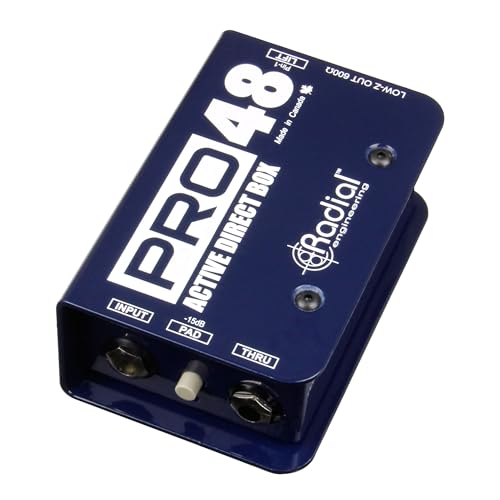
- Active DI powered by phantom power
- -15 dB pad suits passive guitars and basses
- Compact design with low-noise analog circuit
Best For: Passive guitars and basses in compact live rigs
Compact Passive DI
Whirlwind IMP 2 1-Channel Passive Instrument Direct Box
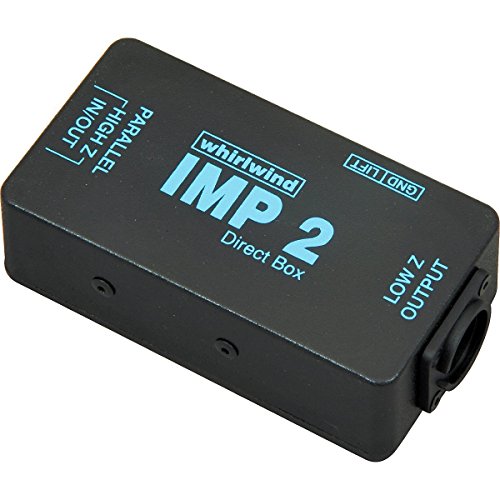
- Passive transformer DI for simple live use
- Converts unbalanced signals to balanced mic level
- Compact, durable design with riveted TRHL transformer
Best For: Economical live rigs needing a dependable passive DI
Budget Hum-Reducer DI
Pyle Premium Direct Injection Audio Box

- Passive DI with buzz and hum cancellation
- Input attenuator for flexible live routing
- Supports guitars, bass, keyboards, and more
Best For: Budget live setups needing a basic hum-eliminating DI
Stereo Active Workhorse
Bolanle J22 Direct Active Stereo DI Box

- Dual-channel active DI for stereo sources
- Runs on phantom power, battery, or USB
- Ground lift and polarity reversal for live control
Best For: Keyboard and synth players needing stereo DI flexibility
Passive DI with Attenuation Pad
Livewire SPDI for Flexible Signal Matching

- Passive 1/4" input with throughput
- Balanced XLR output ignores phantom power
- Variable attenuation plus ground lift control
Best For: Guitar and bass players needing a simple live DI
4-Channel Active DI Rack
Behringer DI4000 V2 for Multiple Inputs

- Four active DI channels in one unit
- Switchable attenuation helps match sources
- +20dB gain switches add flexibility
Best For: Bands and keyboard rigs needing multiple DI channels
Passive Guitar & Bass DI
PRORECK DC21 for Hum-Free Stage Routing

- Passive impedance matching for clean conversion
- Ground lift and isolation transformer reduce noise
- Thru/out design supports amp and PA use
Best For: Players wanting a passive DI with hum control and dual outputs
Passive Stage-Ready DI Box – Radial Pro DI Passive Direct Box
If you need one of the most straightforward di boxes for live performance, the Radial Pro DI Passive Direct Box is built for clean, rugged signal handling. Its passive mono design, custom transformer, and XLR connectivity make it a practical choice for instruments and console feeds in stage or studio setups.
Best For: Acoustic guitars, bass, keyboards, drum machines, and live snake systems that need a durable passive DI.
Pros:
- Passive mono design with a custom transformer for direct instrument-to-console use
- Rugged I-beam stainless steel construction for demanding live setups
- Works with acoustic guitars, bass, keyboards, drum machines, and professional snake systems
- Compact corded unit with XLR connectivity
Cons:
- Mono output only, so it is not a stereo DI solution
- No wireless or battery-powered operation
- Passive design may not suit sources that need active features
For players and engineers who want a simple, durable passive DI box, this Radial model focuses on reliability and core signal conversion rather than extra switching. It is a strong fit when you want a dependable stage tool that can handle common live-performance sources.
Flexible Dual-Channel DI – ART DualXDirect Dual Professional Active Direct Box
For di boxes for live performance that need flexibility, the ART DualXDirect is designed to handle two channels in one unit. It converts high-impedance balanced or unbalanced inputs into 600 ohm balanced outputs and adds useful controls like attenuation, low-pass filtering, and phase invert for live mixing.
Best For: Dual-source live rigs that need active DI functionality and onboard control options.
Pros:
- Fully active design with phantom power or 9V battery operation
- Two output channels for handling dual sources
- Switchable input attenuation at 0, -20, and -40 dB
- Includes low-pass filter and phase invert controls
Cons:
- Requires power from phantom or battery, so it is not passive
- Bulkier than a single-channel compact DI
- More features than a basic plug-and-play box, which may be unnecessary for simple rigs
This is a practical pick when you want one DI that can cover more than one source and give you extra control at the board. It is especially useful for live setups where input level, phase, and filtering need quick adjustment.
Stereo Isolation DI – Radial ProD2 Passive 2 Channel Direct Box
The Radial ProD2 is a useful option if you need di boxes for live performance that can handle stereo or two-channel sources. Its passive stereo design, isolation transformer, lift switch, and 15 dB pad make it well suited to stage sources that benefit from clean balancing and hum control.
Best For: Stereo keyboards, dual-output instruments, or two-channel live feeds that need passive isolation.
Pros:
- Passive stereo DI with two channels in one box
- Isolation transformer and lift switch help with noise management
- 15 dB pad adds input flexibility for stronger signals
- XLR and 1/4-inch connector support for common stage connections
Cons:
- Passive design does not offer active gain or phantom-powered features
- Larger and heavier than a single-channel DI
- May be more than needed for simple mono instrument runs
For live players and engineers working with stereo sources, this Radial model offers a straightforward way to split and balance two channels at once. It focuses on isolation and compatibility, which are often the key needs in a live rig.
Compact Phantom-Powered DI – Radial Pro48 Active 48-Volt Compact Direct Box
When shopping for di boxes for live performance, the Radial Pro48 is aimed at players who want a compact active unit for bass and guitar. It is phantom-powered, uses a proprietary low-noise analog circuit, and adds a -15 dB pad to better handle passive sources on stage.
Best For: Passive guitars and basses that need a compact active DI with phantom power support.
Pros:
- Active DI powered by phantom power
- -15 dB pad helps with passive guitars and basses
- Compact enclosure for easy stage placement
- Low-noise proprietary analog circuit
Cons:
- Designed for guitar and bass rather than broader multi-source use
- Requires phantom power for operation
- No stereo or dual-channel capability
This is a sensible choice if you want a small, stage-friendly active DI that stays focused on core performance needs. Its feature set is practical rather than flashy, which can be exactly what live setups call for.
Compact Passive DI – Whirlwind IMP 2 1-Channel Passive Instrument Direct Box
If you need one of the most straightforward di boxes for live performance, the Whirlwind IMP 2 is built around simple, reliable signal conversion. It turns an unbalanced instrument or line signal into a low-impedance balanced mic-level signal, making it a practical fit for stage use when you want a clean feed without extra complexity.
Best For: Players and engineers who want a durable, economical passive DI for guitar, bass, or other line/instrument sources.
Pros:
- Passive transformer design keeps operation simple and stage-friendly
- Converts unbalanced line or instrument signals to balanced mic level
- Riveted TRHL transformer adds a durability-focused build detail
- Compact footprint makes it easy to fit into a live rig
Cons:
- Single-channel design only handles one source at a time
- No active power options for added signal features
The IMP 2 stands out as a no-nonsense option for live work when durability and basic conversion matter most. It is a practical pick if you want professional quality in an economical package.
Budget Hum-Reducer DI – Pyle Premium Direct Injection Audio Box
For musicians comparing di boxes for live performance, this Pyle passive unit covers the basics needed to get instruments and line sources into a PA or mixer. It accepts unbalanced sources like guitars, basses, keyboards, and processors, and adds buzz and hum cancellation plus an input attenuator for more flexible stage routing.
Best For: Budget-conscious players who want a simple passive DI for guitars, bass, keyboards, and other unbalanced sources.
Pros:
- Passive DI design works with a wide range of unbalanced sources
- Buzz and hum cancellation helps clean up live signal paths
- Input attenuator adds flexibility for different source levels
- Can be used with instruments, processors, and even consumer stereo outputs
Cons:
- Bulky compared with very compact DI boxes
- Passive design may not suit users who want active power options
This is a utilitarian live-sound tool aimed at getting a clean balanced feed from common stage and playback sources. If you need an economical DI box with hum-reduction features, it fits the role well.
Stereo Active Workhorse – Bolanle J22 Direct Active Stereo DI Box
Among di boxes for live performance, the Bolanle J22 is aimed at players who need stereo handling and flexible power on real-world stages. It offers dual-channel active DI conversion, supports 48V phantom power, a 9V battery, or 5V USB power, and keeps stereo sources separated through dual XLR outputs.
Best For: Keyboard players, synth users, and live performers who need stereo DI support with multiple power options.
Pros:
- Dual-channel active design handles stereo keyboards or two instruments
- Three power options: 48V phantom, 9V battery, or 5V USB
- Ground lift switch helps eliminate hum on noisy stages
- Dual XLR outputs preserve left/right separation without mono-summing
Cons:
- More specialized than a simple single-channel DI for basic rigs
- Batteries are not included
The J22 is built for performers who cannot afford to lose stereo detail or power flexibility during a show. Its feature set makes it a strong stage-ready choice for keyboard and synth setups.
Passive DI with Attenuation Pad – Livewire SPDI for Flexible Signal Matching
If you need one of the more straightforward di boxes for live performance, the Livewire SPDI is built for clean instrument-to-mixer connection with passive operation, a 1/4″ high-impedance input and throughput, and a balanced XLR output. It also ignores +48V phantom power, which helps it fit into typical stage setups without fuss.
Best For: Guitar and bass players who want a simple passive DI with attenuation and ground control for live rigs.
Pros:
- Passive design with 1/4″ high-impedance input and throughput
- Balanced, floating XLR output that ignores +48V phantom power
- Variable attenuation for more input flexibility
- Lift mode can sever the ground connection to help reduce noise
Cons:
- Single-channel unit only
- Passive design may not suit every signal source
This is a practical stage DI if you want basic routing, ground handling, and attenuation in a compact box. It keeps the feature set focused on live-use essentials rather than extra channel count or powered operation.
4-Channel Active DI Rack – Behringer DI4000 V2 for Multiple Inputs
For bigger stage setups, this active option stands out among di boxes for live performance because it combines four channels with switchable input attenuation and +20dB gain switches. That makes it a better fit when you need to handle several sources from one unit and want more control over level matching.
Best For: Bands, keyboard rigs, and live setups that need four DI channels in one active box.
Pros:
- 4-channel active DI design
- Switchable input attenuation for source-level control
- +20dB gain switches add routing flexibility
- One unit can cover multiple live inputs
Cons:
- Bulkier and heavier than a single-channel DI
- May be more box than solo players need
If you are consolidating multiple stage sources, this model offers a practical way to simplify your DI workflow. It is especially appealing when channel count and level control matter more than minimal size.
Passive Guitar & Bass DI – PRORECK DC21 for Hum-Free Stage Routing
Among di boxes for live performance, the PRORECK DC21 is aimed at players who want passive impedance matching, hum reduction, and easy stage-to-PA routing. Its 1/4″ transformer-based input, ground lift, and dual-output design make it a practical pick for guitar, bass, keyboards, and other common live sources.
Best For: Guitar and bass players who want a passive DI with hum elimination and dual-output flexibility.
Pros:
- Passive impedance matching for instruments and other audio sources
- Ground lift and isolation transformer help reduce hum and buzz
- Thru/output design supports stage amp and mixer/PA connections
- Works with guitars, basses, keyboards, and effect processors
Cons:
- Passive design may not be ideal for every active source
- Single DI box rather than a multi-channel solution
This is a versatile live-use DI if you want clean signal conversion and basic noise control without moving to a larger rack unit. The dual-output layout is especially useful when you need both stage monitoring and a feed to the front of house.
After comparing the lineup, the goal is simple: choose a DI box that matches your source, your power situation, and the demands of the stage. For Di Boxes for Live Performance, the best option is not always the most feature-rich one; it is the one that stays quiet, is easy to patch, and handles your instrument or playback source without strain.
How We Picked the Best Di Boxes for Live Performance
We looked for models that solve common live-sound problems: hum reduction, impedance matching, balanced output conversion, and dependable build quality. We also prioritized units with useful stage features such as ground lift switches, pad/attenuation control, multiple channels, and power flexibility for active designs.
Quick Comparison
Passive DI boxes are typically the safest default for many instruments and can be especially useful when phantom power is unavailable. Active models can be a better fit for low-output sources, long cable runs, or setups that benefit from more gain and headroom. Multi-channel units are ideal for keyboards, stereo sources, and compact rigs that need fewer boxes and less cable clutter.
Key Buying Factors for Di Boxes for Live Performance
Source Type
Match the DI to what you are plugging in. Passive basses, acoustic instruments with onboard electronics, keyboards, and playback devices may all call for different input behavior.
Power and Headroom
Active DI boxes may need phantom power, batteries, or an external supply. If your venue setup is inconsistent, a passive model can be simpler. If your source is hot or needs extra clarity, active designs can help preserve detail.
Channel Count
Single-channel boxes suit one instrument at a time, while dual and 4-channel options are better for stereo keyboards, multi-key rigs, and streamlined stage setups.
Noise Control and Routing
Look for ground lift switches, attenuation pads, and hum elimination features if you regularly fight buzz or clipping. These small details can save setup time and improve consistency on stage.
Durability
Live use means transport, pedalboard pressure, and frequent patching. Metal housings and rugged connectors are worth prioritizing.
Who Should Buy Which Di Boxes for Live Performance?
If you want a simple, dependable box for guitar or bass, a passive single-channel model is often the easiest fit. If you run stereo keys, dual instruments, or a broader stage setup, a dual or 4-channel DI can reduce clutter and simplify routing. If you need flexibility across different venues and power setups, consider an active unit with strong noise-management features.
In the end, the best choice comes down to how you perform and what needs to stay stable night after night. Focus on quiet operation, the right channel count, and the features that help your signal reach front of house cleanly.