A reliable metronome can make acoustic-guitar practice more deliberate, helping you build consistent timing for strumming, fingerstyle, scales, and chord changes. The right model should be easy to hear over an acoustic instrument and simple to adjust while you play.
This roundup compares 10 options across digital, rechargeable, tuner-equipped, and mechanical designs, so you can choose a practice tool that matches your playing style, space, and budget.
Best 10 Metronomes for Acoustic Guitars Picks for 2026
Compact Practice Hub
3-in-1 Digital Metronome Tuner

- Metronome, tuner, and tone generator in one unit
- 30–260 BPM with 10 beat patterns and eight rhythms
- Backlit display, LED cues, and headphone jack
Best For: Portable acoustic guitar practice with tuning and tone features
Rechargeable All-Rounder

- Rechargeable 3-in-1 metronome, tuner, and tone generator
- Supports microphone, clip, and cable pickup
- 30–250 BPM with eight rhythm styles
Best For: Flexible, rechargeable practice across lessons and performances
Classic Rhythm Builder

- Visible pendulum and audible mechanical beat
- 40–208 BPM with five beat settings
- Battery-free operation with 15–45 minutes per winding
Best For: Beginners seeking traditional, visual rhythm practice
Travel-Ready Color Display

- Rechargeable metronome, tuner, and tone generator
- Color LCD with dual-color LED beat indicator
- Lightweight 2.82-ounce portable design
Best For: Portable practice with clear visual tempo feedback
Classic Mechanical Pick

- Battery-free wind-up operation
- Audible click and bell sound
- 40–208 BPM with selectable beats
Best For: Beginners and players wanting a traditional, battery-free practice tool
All-in-One Practice Pick
Donner Digital Tuner Metronome

- Tuner, metronome, and tone generator
- ±0.5-cent tuning accuracy
- 30–260 BPM with eight rhythms
Best For: Guitarists wanting tuning and rhythm tools in one compact device
Feature-Rich Rechargeable Pick
- Rechargeable USB-powered battery
- Vocal counting, LED, and headphone output
- Tap tempo, timers, and ten beat patterns
Best For: Structured practice with flexible sound, visual, and timing controls
Cute, Loud Practice Pick
Cartoon Rechargeable Metronome
- 30–300 BPM range
- Four selectable beat sounds
- USB-C rechargeable and compact
Best For: Beginners wanting a loud, simple practice metronome
All-in-One Tuning Choice

- Metronome, tuner, and tone generator
- Vocal counting with tap tempo
- USB-C charging and color display
Best For: Guitarists wanting rhythm practice and tuning in one device
Clear Visual Timing
Rechargeable Vocal Digital Metronome

- Voice counting and flashing LED
- Smooth 30–250 BPM scroll-wheel control
- Up to eight hours per charge
Best For: Students and teachers needing visible, adaptable beat tracking
Compact Practice Hub – 3-in-1 Digital Metronome Tuner
For guitarists comparing metronomes for acoustic guitars, the Aroma AMT-560 is a compact practice hub that combines tempo control, chromatic tuning, and reference tones. Its 30–260 BPM range, 10 beat patterns, and eight rhythm styles provide useful flexibility for daily practice.
Best For: Acoustic guitarists who want a pocket-sized metronome with tuning and tone-generation functions.
Pros:
- Combines metronome, chromatic tuner, and tone generator.
- Offers 30–260 BPM, 10 beat patterns, and eight rhythm styles.
- Includes a backlit angled LCD, LED indicators, adjustable volume, and a headphone jack.
- Uses included AAA batteries and weighs 3.84 ounces.
Cons:
- The notes specify that its tuner is not suitable for piano tuning.
- It uses disposable AAA batteries rather than a rechargeable battery.
The AMT-560 is a practical all-in-one choice when portability and broad metronome settings matter more than a dedicated mechanical design.
Rechargeable All-Rounder – Digital Metronome Tuner
This rechargeable 3-in-1 device is a versatile option among metronomes for acoustic guitars, especially for players who want one tool for rhythm, tuning, and reference tones. It supports microphone, clip-on pickup, and direct guitar-cable pickup methods.
Best For: Guitarists who prefer rechargeable power and flexible pickup options for practice, lessons, or performances.
Pros:
- Combines a metronome, tuner, and tone generator.
- Rechargeable battery can be charged from a power bank or PC via USB.
- Provides 30–250 BPM, beats 0–9, and eight rhythm styles.
- Includes a pickup clip and offers microphone, clip, and cable pickup.
Cons:
- The notes do not specify the rechargeable battery’s runtime.
- Its tempo range tops out at 250 BPM, slightly below some comparable digital models.
With multiple detection methods and USB charging, this model is well suited to musicians who want flexible setup options without carrying separate practice tools.
Classic Rhythm Builder – Mechanical Metronome
For players who prefer a visible pendulum and an audible mechanical beat, this walnut-color model offers a straightforward alternative to electronic metronomes for acoustic guitars. It requires no batteries and provides 40–208 BPM with selectable beat accents.
Best For: Beginners and traditionalists who want simple, visual tempo practice without electronics.
Pros:
- Mechanical pendulum makes the beat visual and easy to recognize.
- Needs no batteries and uses a metal movement designed for long-term accuracy.
- Offers 40–208 BPM with 2, 3, 4, 6, and unaccented 0 beat settings.
- Provides approximately 15–45 minutes of practice per winding, depending on tempo.
Cons:
- It must be manually wound before use.
- The 1.17-pound body is less portable than pocket-sized digital options.
- It does not include digital tuning, tone generation, or headphone features.
This is a good fit when developing steady rhythm through a clear pendulum motion and pronounced beat matters more than compact size or multifunctionality.
Travel-Ready Color Display – MT-41 Rechargeable Metronome
The MT-41 is a compact rechargeable choice for shoppers seeking metronomes for acoustic guitars that also support tuning and tone practice. Its color LCD and dual-color LED beat indicator are designed to keep tempo information visible in different lighting conditions.
Best For: Acoustic guitarists who want a lightweight rechargeable unit for home practice, lessons, studio work, and travel.
Pros:
- Combines a precision metronome, tuner, and tone generator.
- Rechargeable battery avoids disposable batteries for regular practice.
- Supports guitar, electric guitar, bass, ukulele, violin, and chromatic tuning.
- Compact 2.82-ounce design includes a color display and visual beat indicator.
Cons:
- The notes do not provide a tempo range or specific rhythm-pattern count.
- They do not specify the rechargeable battery’s operating time.
The MT-41 makes sense for players who value portability and clear visual feedback, though shoppers needing detailed tempo specifications may prefer a model with those figures listed.
Classic Mechanical Pick – Ueteto Wind-Up Metronome
For players who prefer a traditional approach, this mechanical metronome is a straightforward option among metronomes for acoustic guitars. Its audible click and bell provide a clear pulse without batteries, while the wind-up design suits focused practice sessions.
Best For: Acoustic guitarists, beginners, and players who want a battery-free metronome with a strong mechanical sound.
Pros:
- Wind-up mechanism requires no batteries.
- Audible click and bell ring help maintain rhythm while reading music.
- Offers 40–208 BPM and beat selections of 0, 2, 3, 4, and 6.
- Works with guitar and a wide range of other instruments.
Cons:
- A full wind lasts at least 18 minutes, depending on tempo.
- At 1.2 pounds, it is heavier than the digital alternatives here.
The Ueteto is a good fit when simplicity, an audible mechanical pulse, and freedom from battery replacement matter more than portability or extra digital functions.
All-in-One Practice Pick – Donner Digital Tuner Metronome
This compact Donner combines rhythm practice with tuning and tone generation, making it a versatile choice among metronomes for acoustic guitars. Its clip-on vibration sensor and broad tempo range are useful for players who want several practice tools in one small device.
Best For: Acoustic guitarists who want a tuner, metronome, and reference-tone generator for practice or performance.
Pros:
- Combines digital tuning, metronome, and tone-generator functions.
- Provides tuning accuracy of ±0.5 cent with a sensitive vibration clip.
- Supports 30–260 BPM, 0–9 beats per measure, and eight rhythms.
- Large LCD and 45-degree viewing angle improve screen visibility.
Cons:
- Requires one AAA battery.
- Its many functions may be more than needed for players seeking only a basic metronome.
The Donner is especially practical for guitarists who regularly switch between tuning and timing work and want both functions available in a lightweight, 4.6-ounce unit.
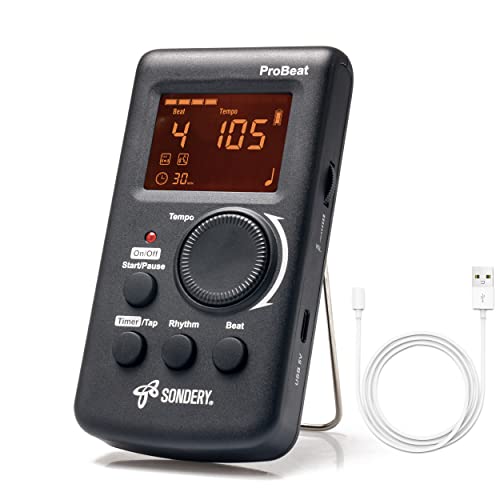
Feature-Rich Rechargeable Pick – Sondery ProBeat Metronome
The Sondery ProBeat adds visual, vocal, and headphone-friendly practice options to the metronome basics. For acoustic guitarists comparing metronomes for acoustic guitars, its rechargeable battery, tap tempo, timer, and selectable sounds make it well suited to structured practice.
Best For: Players who want adjustable sound options, visual tempo feedback, quiet headphone practice, and timed sessions.
Pros:
- Rechargeable lithium battery charges from a 5V USB power source.
- Offers vocal counting, three digital sounds, a large speaker, and an LED tempo indicator.
- Includes 40–208 BPM, tap tempo, and ten beat patterns.
- Features an earphone jack and practice timers from 15 to 60 minutes.
Cons:
- Its rechargeable design requires periodic charging.
- The digital feature set may be unnecessary for players seeking a simple click only.
With its pocket-sized form, 0.26-pound weight, and multiple practice controls, the ProBeat is a strong choice for guitarists who want more feedback and flexibility than a basic mechanical unit provides.
Cute, Loud Practice Pick – Cartoon Rechargeable Metronome
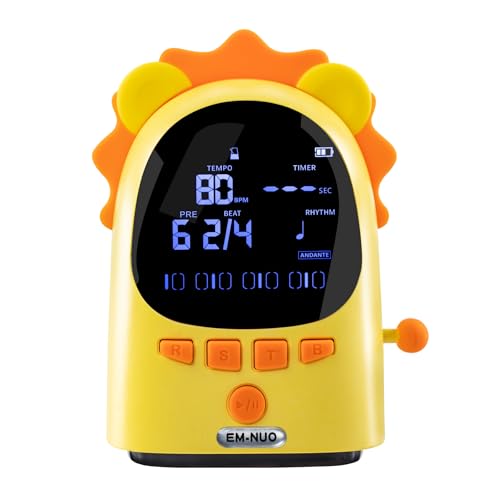
For players comparing metronomes for acoustic guitars, this ENO MUSIC model offers straightforward tempo control in a compact, playful design. It covers 30–300 BPM, includes four sound options, and produces a clear, loud beat for practice.
Best For: Beginners and acoustic guitar players who want simple controls, strong volume, and a fun rechargeable metronome.
Pros:
- Wide 30–300 BPM tempo range
- Four sounds: woodblock, mechanical, electric, and cowbell
- USB-C rechargeable battery and compact 5-by-3.5-inch design
- Loud sound suitable for guitar and other instruments
Cons:
- Does not include a tuner or tone generator
- Cartoon styling may not suit every practice setup
This is a practical choice when audible beats and uncomplicated operation matter most. Its broad tempo range and rechargeable format make it useful for regular rhythm work without the complexity of a multifunction device.
All-in-One Tuning Choice – Rechargeable Vocal Metronome
Among metronomes for acoustic guitars, the Sondery MetroTune stands out by combining rhythm practice with guitar tuning and tone generation. Its vocal counting, tap tempo, color display, and included pickup cord give players several ways to follow and check timing.
Best For: Acoustic guitarists who want one pocket-sized device for metronome practice, tuning, and pitch reference.
Pros:
- Combines a metronome, tuner, and tone generator
- Vocal counting, tap tempo, 30–260 BPM range, and eight rhythms
- Supports acoustic guitar tuning with the internal microphone or pickup cord
- Rechargeable USB-C power, kickstand, headphone output, and color display
Cons:
- More features may mean a steeper learning curve than a basic metronome
- Its tempo range tops out at 260 BPM rather than 300 BPM
The MetroTune is the most versatile option in this group for players who want to reduce the number of accessories in their practice bag. Vocal counting is especially useful when learning to internalize steady timing.
Clear Visual Timing – Rechargeable Vocal Digital Metronome
For acoustic guitar practice, this digital metronome focuses on readable feedback and quick tempo changes. It combines vocal counting, three digital tones, a flashing LED, and a scroll wheel covering 30–250 BPM.
Best For: Guitar students and teachers who need clear beat tracking, flexible volume, and easy tempo adjustment.
Pros:
- Human-voice counting helps reinforce each beat
- Scroll wheel provides smooth 30–250 BPM adjustment
- Three tones, flashing LED, and multiple time signatures support varied practice
- Rechargeable USB-C battery offers up to eight hours of use and includes a headphone jack
Cons:
- It is a pure metronome without a built-in tuner
- Its maximum tempo is lower than some models in this selection
This model is a strong fit when usability matters more than extra instrument functions. The large display, saved settings, adjustable volume, and visual beat indicator make it easy to adapt from quiet individual practice to louder sessions.
How We Picked the Best Metronomes for Acoustic Guitars
We focused on the features that matter most during real acoustic-guitar practice: clear beat projection, usable tempo adjustment, straightforward controls, portability, and dependable power. The selection includes compact digital models, rechargeable units with extra tuning or tone-generation functions, and mechanical metronomes for players who prefer a traditional visual and audible pulse.
Because product specifications and included accessories can vary, check the current listing for tempo range, charging or battery requirements, speaker volume, tuner modes, and warranty details before buying.
Quick Comparison
| Type | Best for | Main advantage | Potential drawback |
|---|---|---|---|
| Digital metronome | Most players | Easy tempo changes and compact controls | Sound quality varies by model |
| Rechargeable digital | Frequent practice | Convenient charging and reusable power | Needs periodic charging |
| Metronome with tuner | Guitarists who want one device | Combines timing and tuning | More functions can mean a busier interface |
| Mechanical metronome | Traditional practice setups | Visible pendulum and no electronics | Less portable and limited adjustment convenience |
Key Buying Factors for Metronomes for Acoustic Guitars
Volume and Sound Clarity
An acoustic guitar can easily cover a quiet click, especially during stronger strumming. Look for a model with a sufficiently loud speaker, adjustable volume, or a visual beat indicator. A headphone output can also help with private practice if available.
Tempo Control and Rhythm Options
Choose controls that let you make small, precise tempo changes. Basic click patterns are enough for steady timing, while selectable subdivisions, accent beats, or vocal counting can help with more structured exercises.
Tuner and Extra Functions
A built-in chromatic tuner is useful for players who want fewer accessories in their practice bag. Tone generators and rhythm settings may be helpful, but do not prioritize extra features over readable controls and a dependable beat.
Power, Size, and Visibility
Rechargeable models suit regular players who dislike replacing batteries, while battery-powered units may be easier to keep ready for travel. Consider screen brightness, button size, and whether the device can sit securely on a music stand or tabletop.
Who Should Buy Which Metronomes for Acoustic Guitars?
- Choose a rechargeable digital model if you practice often and want low ongoing battery hassle.
- Choose a metronome-tuner combination if you want one compact device for tuning and timing your acoustic guitar.
- Choose a mechanical model if you value a visible pendulum, traditional feel, and simple operation without charging.
- Choose a loud, easy-control electric model if you practice strumming, teach beginners, or need controls that are quick to operate between exercises.
For most acoustic guitarists, the best choice is the model that remains audible, makes tempo changes effortless, and fits naturally into daily practice. Confirm the current specifications and included power accessories before placing your order.