A dependable metronome can make practice more structured, whether you are building speed, improving timing, or learning to hold a steady pulse. Mechanical models add a tactile wind-up experience and an easy-to-follow visual pendulum.
We compared 10 mechanical metronomes for sound, tempo control, design, versatility, and value across piano, guitar, violin, drums, and other instruments.
Best 10 Mechanical Metronomes Picks for 2026
Best All-Rounder
Universal Black Mechanical Metronome

- 40–208 BPM range
- Five beat-bell settings
- 30-day returns and one-year warranty
Best For: Beginners and multi-instrument practice
Best Classic Look

- Classic wood-grain finish
- 40–208 BPM tempo range
- No-battery wind-up operation
Best For: Traditional practice spaces and multiple instruments
Best for Beginners

- Visible pendulum for intuitive practice
- 40–208 BPM range
- Transparent dust cover and metal movement
Best For: New musicians developing a sense of beat
Best Giftable Pick

- Loud, clear beat sound
- 40–208 BPM range
- Tower-style plastic design
Best For: Students, hobbyists, and music-related gifts
Best Precision Pick
Wood-Grain Mechanical Metronome

- Metal movement for dependable use
- 40–208 BPM with five beat options
- Beginner-friendly wind-up operation
Best For: Beginners practicing across multiple instruments
Best Loud-Sound Option
Ueteto Black Mechanical Metronome

- Clear click and bell sound
- Battery-free wind-up mechanism
- Metal body with broad tempo range
Best For: Players who prefer a prominent rhythmic reference
Easy-Use Rhythm Builder
Universal Mechanical Metronome
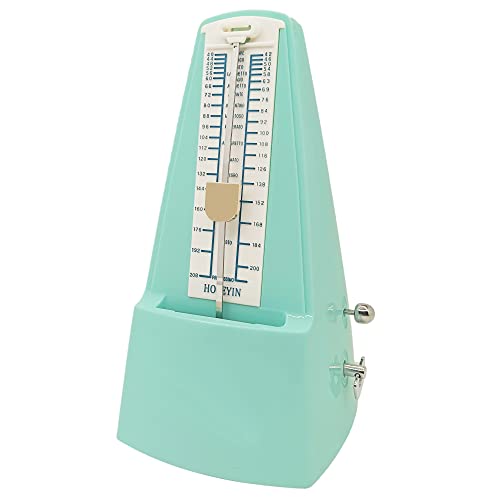
- 40–208 BPM tempo range
- Selectable 0, 2, 3, 4, and 6 beat bells
- Beginner-friendly plastic-and-metal construction
Best For: Beginners and multi-instrument practice
Classic Woodgrain Practice Pick
Donner DPM-1 Mechanical Metronome

- Wood-bodied pyramid design
- 40–208 BPM with selectable beat emphasis
- Loud, battery-free wind-up operation
Best For: Traditional practice and music learners
Best All-Rounder – Universal Black Mechanical Metronome
If you want a straightforward option for practicing with several instruments, this mechanical metronome covers a broad 40–208 BPM range and uses an audible bell to mark selected beats. Its simple operation and beginner-friendly design make it a practical choice for building steadier timing.
Best For: Beginners, children, and musicians practicing piano, guitar, violin, drums, or other instruments.
Pros:
- Wide 40–208 BPM tempo range
- Selectable 0, 2, 3, 4, and 6 beat bell settings
- Plastic-and-metal movement is designed for stable performance
- Includes a 30-day return policy and one-year manufacturer warranty
Cons:
- Plastic construction may feel less premium than a fully wooden design
- At 1.2 pounds, it is not especially lightweight
This is a versatile pick when you want broad instrument compatibility, clear beat accents, and simple controls without batteries. The warranty and return coverage also add reassurance for first-time buyers.
Best Classic Look – Wood-Grained Tower Metronome
This wood-grained tower-style metronome combines a traditional appearance with practical mechanical operation. It offers precise timing, selectable beat accents, and a wind-up mechanism that requires no batteries, making it well suited to regular music practice.
Best For: Players who want a classic-looking metronome for piano, violin, guitar, bass, drums, or other instruments.
Pros:
- Attractive wood-grained tower design
- 40–208 BPM range with 0, 2, 3, 4, and 6 beat selection
- Mechanical operation needs no batteries
- Timing tolerance is specified at less than 1%
Cons:
- A full wind lasts at least 18 minutes, depending on tempo
- Plastic housing may not match the appearance of a solid-wood metronome
Choose this model if visual style matters alongside dependable practice functions. Its classic finish can complement a music space, while the clear click and bell support tempo and rhythm development.
Best for Beginners – Walnut Precision Metronome
This walnut-color mechanical metronome is designed to make timing easy to hear and see. Its metal pendulum movement, transparent dust cover, and simple setup provide a practical introduction to rhythm practice across a wide range of instruments.
Best For: Beginners who want a visually intuitive mechanical metronome for piano, guitar, violin, drums, bass, saxophone, and more.
Pros:
- Clear, loud beat sound helps beginners recognize timing
- 40–208 BPM range with 0, 2, 3, 4, and 6 beat settings
- Metal movement is designed to resist rust and corrosion
- Transparent cover helps protect the mechanism from dust
Cons:
- Practice time per wind varies from 15 to 45 minutes depending on tempo
- Listed product dimensions appear unusually small, so buyers should confirm sizing before purchase
Its strongest advantage is the combination of audible feedback and visible pendulum motion, which can help new players connect beats with movement. The broad tempo range also allows the metronome to remain useful as skills improve.
Best Giftable Pick – AODSK Universal Metronome
The AODSK universal mechanical metronome provides a loud, clear beat for practicing rhythm without batteries. Its tower-style design, broad tempo range, and multiple accent settings make it a practical gift for musicians working on piano, guitar, violin, bass, drums, and other instruments.
Best For: Music students, hobbyists, and gift buyers seeking a simple metronome for general practice.
Pros:
- Works with a wide range of musical instruments
- 40–208 beats per minute tempo range
- Selectable 0, 2, 3, 4, and 6 beat settings
- Loud sound helps track beats and tempo
Cons:
- Plastic construction may offer a less premium feel
- Mechanical operation requires winding rather than batteries
This model focuses on the essentials: audible timing, adjustable tempo, and accent control. Its straightforward design and gift-oriented appeal make it a sensible choice for students or musicians building consistent practice habits.
Best Precision Pick – Wood-Grain Mechanical Metronome
For musicians comparing mechanical metronomes, this wood-grain model offers a broad 40–208 BPM range, selectable beat patterns, and a metal movement designed for consistent long-term use. Its straightforward wind-up setup also makes it approachable for beginners.
Best For: Beginners and players practicing piano, guitar, violin, bass, drums, or other instruments.
Pros:
- Metal movement supports durable, reliable operation.
- 40–208 BPM range accommodates slow and fast practice tempos.
- Offers 0, 2, 3, 4, and 6 beat selections.
- Simple setup is suitable for children and beginners.
Cons:
- Plastic and metal construction may feel less traditional than a fully wooden metronome.
- The supplied notes do not mention a bell accent feature.
This is a practical all-around choice when precise tempo control, broad instrument compatibility, and easy operation matter most.
Best Traditional Design – NALU Mechanical Metronome with Bell
This NALU model is a strong option among mechanical metronomes for shoppers who want classic styling alongside practical tempo control. Its all-metal movement requires no batteries, while the bell accent marks the first beat of each measure.
Best For: Musicians who want a traditional wood-grain look, clear downbeat emphasis, and broad instrument compatibility.
Pros:
- Classic wood-grain design suits a practice space or studio.
- All-metal mechanical movement operates without batteries.
- Adjustable 40–208 BPM range with 0, 2, 3, 4, and 6 beat patterns.
- Bell accent helps emphasize the first beat of each measure.
Cons:
- Its 9-inch height may require more storage space than smaller models.
- The bell accent may be unnecessary for players who prefer an unaccented click.
Choose this model if a classic appearance and audible measure marking are priorities in addition to dependable mechanical timing.
Best Loud-Sound Option – Ueteto Black Mechanical Metronome
For shoppers seeking mechanical metronomes with an audible practice reference, the Ueteto combines a click and bell ring with a durable metal body. Its 40–208 BPM range and five beat selections support practice on piano, strings, guitar, bass, drums, and more.
Best For: Beginners and instrumentalists who want a prominent click-and-bell sound without using batteries.
Pros:
- Audible click and bell ring help maintain rhythm while reading music.
- Wind-up mechanism requires no batteries.
- Provides 40–208 BPM and 0, 2, 3, 4, and 6 beat settings.
- Metal body is built for durability.
Cons:
- A full wind lasts at least 18 minutes depending on tempo, so repeated winding may be needed during longer sessions.
- The supplied notes do not specify a wood or decorative finish.
This is a focused choice for players who value a noticeable rhythmic reference and straightforward controls during everyday practice.
Easy-Use Rhythm Builder – Universal Mechanical Metronome
This universal mechanical metronome is a practical choice for beginners, children, and musicians practicing piano, guitar, violin, drums, or other instruments. Its 40–208 BPM range and selectable accent bells cover common practice needs without requiring batteries.
Best For: Beginners and families looking for a straightforward, colorful metronome with broad instrument compatibility.
Pros:
- Adjustable tempo from 40 to 208 BPM.
- Selectable 0, 2, 3, 4, and 6 beat bell settings.
- Plastic-and-metal movement is designed for stable, durable performance.
- Includes a 30-day unconditional return policy and one-year manufacturer warranty.
Cons:
- The body uses plastic and metal rather than a wood construction.
- Its 1.2-pound, 8.5-inch-tall design may be less convenient for compact storage.
With accessible controls, multiple color options, and a complete set of common rhythm settings, this is a sensible entry-level pick among mechanical metronomes.
Classic Woodgrain Practice Pick – Donner DPM-1 Mechanical Metronome
The Donner DPM-1 combines a classic woodgrain pyramid design with a loud beat sound suited to instrument practice. This mechanical metronome offers 40–208 BPM, selectable beat emphasis, and a wind-up spring mechanism, making it useful for learners who want a traditional, battery-free rhythm aid.
Best For: Students and musicians who prefer a classic wood-bodied metronome with a pronounced sound.
Pros:
- Supports tempos from 40 to 208 beats per minute.
- Offers 0, 2, 3, 4, and 6 beat selections with a five-position bell on/off setting.
- Produces a loud sound to help learners follow rhythm and accents.
- Wood body and pyramid styling provide a traditional appearance.
Cons:
- Requires manual winding rather than batteries or electronic power.
- At 9.45 inches tall, it is relatively large for portability.
A 1% tempo tolerance, loud beat projection, and familiar pendulum operation make the DPM-1 a strong traditional option for structured practice.
Modern High-Visibility Choice – TERENCE Transparent Mechanical Metronome
The TERENCE mechanical metronome stands out with a transparent ABS body, upgraded all-metal movement, and a metal accent bell for a clear, loud beat. Its 40–208 BPM scale and copper pendulum suit practice across piano, violin, guitar, saxophone, bass, drums, and dance training.
Best For: Musicians and teachers who want a visually distinctive mechanical metronome with metal components and a strong audible beat.
Pros:
- Upgraded all-metal mechanical movement is designed for extended use between windings.
- Clear, loud sound from the metal accent bell.
- Transparent ABS design keeps the metronome visually distinctive and resistant to yellowing.
- Features a 40–208 BPM range, metal knob, and copper pendulum.
Cons:
- The transparent ABS-and-metal design may not suit shoppers seeking a traditional wood finish.
- At 1.59 pounds, it is the heaviest of these three options.
For shoppers comparing mechanical metronomes, the TERENCE offers a modern look while emphasizing audible clarity, metal movement components, and broad instrument use.
How We Picked the Best Mechanical Metronomes
We focused on the features that matter during everyday practice: dependable tempo tracking, a readable pendulum, audible beats, stable construction, and compatibility with multiple instruments. The selection includes classic tower designs, wood-finish options, loud-sound models, bell-equipped versions, and general-purpose metronomes.
Because Mechanical Metronomes rely on a wind-up movement rather than batteries, we also considered ease of operation and whether the design is practical for repeated sessions. Product descriptions were compared for tempo range, beat or bell functions, materials, and intended use.
Quick Comparison
| Best For | What to Look For |
|---|---|
| General practice | Universal compatibility and a clear, steady beat |
| Loud instruments | Strong acoustic projection and a pronounced click |
| Visual learners | High-contrast pendulum and easy-to-read scale |
| Classic appearance | Wood-grain or traditional tower styling |
| Bell accents | Selectable bell marking for meter awareness |
Key Buying Factors for Mechanical Metronomes
Tempo Range and Accuracy
Choose a model with enough range for both slow exercises and faster passages. A clearly marked scale makes it easier to set the same tempo consistently from one session to the next.
Volume and Sound Projection
Acoustic clicks work well for many players, but drums, brass, and group practice may require a louder design. Consider where you will practice and whether the beat can be heard over your instrument.
Beat and Bell Functions
Some models provide selectable beat accents or a bell to mark the beginning of each measure. These features are useful for counting in compound rhythms, scales, and repertoire with strong meter.
Stability and Build Quality
A metronome should sit securely while the pendulum moves. Look for a balanced case, a smooth winding mechanism, and a scale that remains visible during use. Wood-grain finishes can add visual appeal, while plastic cases may be lighter and easier to handle.
Size and Maintenance
Mechanical units need periodic winding and should be stored away from moisture, dust, and extreme temperatures. A compact design suits small practice spaces, while a larger tower may offer better visibility and projection.
Who Should Buy Which Mechanical Metronomes?
Students and general-purpose players: Choose a universal model with a readable scale and steady acoustic volume for lessons, scales, and daily technique work.
Players of loud instruments: Prioritize loud-sound construction so the click remains audible while practicing guitar, drums, bass, or brass.
Traditionalists and décor-conscious musicians: Wood-grained tower designs provide the familiar mechanical experience and a classic appearance for a studio or music room.
Players working on meter: A bell-equipped or beat-accent model can reinforce the first beat of each bar and make rhythmic exercises easier to organize.
Whichever style you choose, place the metronome where the pendulum is easy to see and begin at a tempo slow enough to keep every note even. Consistent use matters more than choosing the most elaborate feature set.