A dependable metronome can make practice more focused by keeping tempo steady while you build timing, coordination, and musical confidence. Today’s digital models range from simple quartz units to rechargeable devices with vocal counting, tuners, memory, and sound-out modes.
We compare 10 digital metronomes for different practice styles, instruments, and budgets so you can choose the right balance of accuracy, visibility, portability, and extra functionality.
Best 10 Digital Metronomes Picks for 2026
Classic Choice

- Eight selectable metronome and practice sounds
- 19 beat patterns for varied rhythm work
- Built-in tuning tones with calibration control
Best For: Versatile practice and ear tuning
Reliable Tuner Pick

- 40–208 BPM range with a 39-position dial
- High and low click tones with volume control
- LED cue, earphone jack, and A/Bb tone generators
Best For: Simple tempo practice and basic tuning
Rechargeable Practice Tool
Sondery ProBeat Digital Metronome
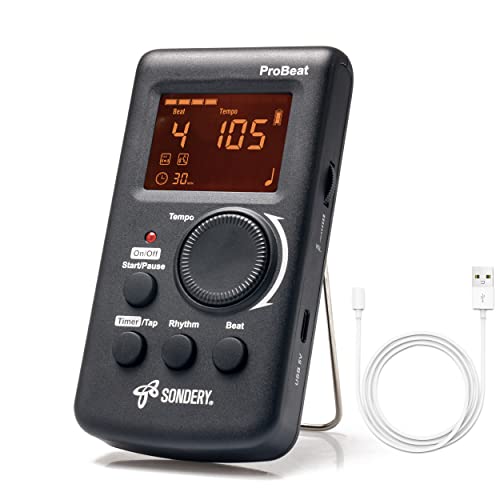
- Rechargeable USB-powered lithium battery
- Vocal counting, color screen, and LED tempo light
- Tap tempo, 10 patterns, and practice timer
Best For: Feature-rich portable practice
Portable Performance Pick

- Portable, rugged construction
- Visual practice assistance and odd-time support
- Phones jack and automatic power-off
Best For: Traveling musicians and odd-meter practice
Voice-Guided Pick

- English vocal counting or electronic beats
- 40–208 BPM with 10 rhythm patterns
- USB-C rechargeable with headphone output
Best For: Players who want spoken beat guidance and flexible practice settings
Tuner-Metronome Choice
Korg TM-70T Tuner and Metronome

- ±0.1-cent tuning accuracy
- 30–252 BPM tempo range
- Chromatic, transpose, and Sound Out modes
Best For: Band and orchestra players needing precise tuning and tempo control
Long-Battery Practice Pick
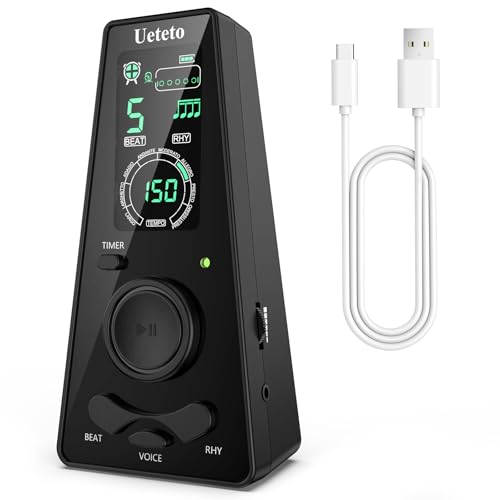
- Up to 16 hours of continuous use
- Nine rhythms, 10 beats, and practice timers
- Headphone jack, vocal counting, and flashing LED
Best For: Musicians wanting rechargeable endurance and flexible monitoring
Reliable Practice Pick

- Large display with beat visuals
- Loud buzzer and tap tempo
- Up to 400 hours on alkaline batteries
Best For: Orchestral and instrumental daily practice
All-In-One Tuning Choice
Cecilio Digital Metronome Tuner

- Chromatic tuner and tone generator
- 30–230 BPM pendulum metronome
- Headphone jack for silent practice
Best For: String players needing tuning and timing in one unit
Versatile 3-in-1 Option

- Tuner, metronome, and tone generator
- 30–260 BPM with eight rhythms
- Large angled display for visibility
Best For: Multi-instrumentalists and live-performance preparation
Classic Choice – Korg KDM-3 Digital Metronome
The Korg KDM-3 is one of the more versatile digital metronomes for musicians who want a traditional metronome appearance with modern practice features. It offers multiple sounds, broad beat-pattern coverage, tuning tones, and memory backup in a compact body.
Best For: Musicians who want flexible rhythm practice and built-in reference tones for tuning.
Pros:
- Eight sounds include mechanical metronome, cowbell, rimshot, and voice options.
- Nineteen beat patterns support 0–9 beats per measure, triplets, claves, and more.
- Sound Out mode provides C4–B4 reference tones with adjustable A4 calibration from 410–480 Hz.
- Memory backup saves tempo, beat, and tuning settings, while auto power-off activates after 20 minutes.
Cons:
- Uses a CR2 battery rather than a rechargeable power system.
- The compact body may offer less display space than larger practice units.
Choose the KDM-3 if you value sound variety, unusual rhythm patterns, and tuning support in a stylish portable design.
Reliable Tuner Pick – Seiko SQ50-V Quartz Metronome
The Seiko SQ50-V combines straightforward tempo control with useful tuning and monitoring features. Among digital metronomes, it is a practical choice for players who prefer a rotary tempo dial, visible LED beat cues, and an earphone connection.
Best For: Students and musicians who want simple tempo adjustment, visual guidance, and basic instrument tones.
Pros:
- 39-position rotary dial sets tempos from 40 to 208 BPM.
- Offers adjustable volume and high- or low-pitched click tones.
- Built-in A=440 Hz and optional Bb tone generators support tuning.
- Red LED beat indication and an earphone jack suit quiet or visual practice.
Cons:
- Includes only two tone-generator notes, A and Bb.
- Requires a 9V alkaline battery.
The SQ50-V is a focused, easy-to-operate option for players who want dependable tempo control without a large set of advanced rhythm functions.
Rechargeable Practice Tool – Sondery ProBeat Digital Metronome
The Sondery ProBeat is a feature-rich digital metronome designed for convenient daily practice. Its color screen, vocal counting, tap tempo, rechargeable battery, timer settings, and headphone output make it a flexible option for piano, guitar, drum, and vocal work.
Best For: Players who want rechargeable portability, vocal counting, and structured practice timers.
Pros:
- Rechargeable lithium-polymer battery charges from a 5V USB power source.
- Color screen, LED tempo indicator, three digital sounds, and vocal counting improve feedback.
- Supports 40–208 BPM, tap tempo, and 10 beat patterns from 0 through 9.
- Practice timer offers 15-, 30-, 45-, and 60-minute settings.
Cons:
- Its plastic-and-metal construction may not feel as traditional as a mechanical-style design.
- Charging depends on access to a 5V USB power source.
Consider the ProBeat when rechargeable convenience and guided practice features matter more than a minimalist control layout.
Portable Performance Pick – BOSS DB-30 Dr. Beat Metronome
The BOSS DB-30 Dr. Beat is a compact, ruggedly built choice for musicians who need portable timing support. It combines visual practice assistance, odd-time-signature support, play-along patterns, a phones jack, and auto power-off in a black portable body.
Best For: Musicians who need a durable travel metronome with visual cues and odd-meter practice support.
Pros:
- Supports practice with visual timing assistance.
- Includes odd-time-signature support for more varied rhythmic work.
- Phones jack enables private listening during practice.
- Auto power-off helps conserve battery power.
Cons:
- The supplied notes do not specify its tempo range or number of patterns.
- Uses a lithium metal battery rather than a rechargeable system.
The DB-30 is a sensible pick for players who prioritize portability, rugged construction, and visual or headphone-based practice features.
Voice-Guided Pick – SDREAM Digital Metronome
For musicians comparing digital metronomes, the SDREAM stands out with English vocal counting alongside electronic beats. Its separate tempo, beat, and rhythm controls make it practical for structured piano, guitar, or violin practice.
Best For: Players who want spoken beat guidance, flexible rhythm settings, and rechargeable operation.
Pros:
- English vocal counting can reinforce timing during practice.
- Offers 40–208 BPM, 10 rhythm patterns, and independent beat settings from 0 to 9.
- USB-C charging provides more than 8 hours of use in the supplied testing, with a 3.5mm headphone output for private listening.
Cons:
- Its 40–208 BPM range is narrower than some competing metronomes.
- The plastic body may feel less substantial than a metal-bodied unit.
The LCD and compact pyramid design keep the settings visible without taking much room in a practice area. Choose it if vocal cues and straightforward rechargeable use matter more than an especially broad tempo range.
Tuner-Metronome Choice – Korg TM-70T Tuner and Metronome
Korg TM-70T Tuner and Metronome w/Sound Out Mode, Transpose Mode, and Chromatic Mode - White
Check Price On AmazonThe Korg TM-70T combines a digital metronome with a highly accurate tuner, making it a versatile option among digital metronomes. Its chromatic, transpose, and Sound Out modes are useful for players who need timing and tuning in one compact device.
Best For: Band and orchestra players who want precise tuning plus a wide-ranging metronome.
Pros:
- Provides tuning accuracy of ±0.1 cents.
- Supports 30–252 BPM and adjustable calibration for different concert pitches.
- Includes chromatic, transpose, and Sound Out modes for tuning references and ear training.
Cons:
- Its extra tuning functions may be unnecessary for shoppers seeking a metronome only.
- The supplied notes do not list rechargeable operation or a headphone output.
The improved display, clearer metronome sound, and pocket-friendly design make the TM-70T easy to carry between rehearsals and lessons. It is the strongest fit here for musicians who value tuning precision as much as tempo control.
Long-Battery Practice Pick – Ueteto Digital Metronome
The Ueteto is a flexible choice for shoppers comparing digital metronomes for piano, guitar, drums, or other instruments. It pairs a clear LCD with a flashing LED, volume control, vocal counting, and timer options for both visual and audible practice support.
Best For: Musicians who want long rechargeable runtime, headphone monitoring, and broad instrument compatibility.
Pros:
- Offers 40–208 BPM, nine rhythm patterns, 10 beat settings, and 15/30/45/60-minute timers.
- Up to 16 hours of continuous use is stated, with approximately two hours needed for a full charge.
- Includes a 3.5mm headphone jack, adjustable volume, English vocal counting, and a flashing LED tempo reference.
Cons:
- The tempo range is narrower than the Korg TM-70T’s.
- At 5.8 ounces, it is slightly heavier than the supplied SDREAM specification.
The center wheel and automatic screen shutoff are practical touches for repeated practice sessions, while the compact body fits in a guitar bag. Consider it when battery life and monitoring flexibility are higher priorities than advanced tuning features.
Reliable Practice Pick – Korg MA-2 Digital Metronome
The Korg MA-2 is a focused choice for musicians who want dependable digital metronomes for daily rhythm practice. Its larger display, audible buzzer, tap tempo, timer mode, and long alkaline-battery life make it practical for rehearsals with louder instruments.
Best For: Orchestral and instrumental players who want a straightforward metronome with flexible rhythm settings and extended battery life.
Pros:
- 30% larger display with beat visuals for easier reading.
- Clear, louder buzzer designed to remain audible around high-volume instruments.
- Offers pendulum, full-step, and tap-tempo modes, plus 0–9 beats and eight rhythm types.
- Provides approximately 400 hours of continuous use with alkaline batteries.
Cons:
- Designed primarily as a metronome rather than a tuner combination unit.
- Uses AAA batteries instead of rechargeable power.
The MA-2 is a sensible pick when rhythm training is the priority. Timer and sound-out modes add useful practice flexibility without making the controls unnecessarily complicated.
All-In-One Tuning Choice – Cecilio Digital Metronome Tuner
The Cecilio 2-in-1 combines a chromatic tuner and digital metronome in one compact unit. For musicians comparing digital metronomes, its large LCD, 30–230 BPM range, instrument input, and headphone jack make it useful for both tuning and more private practice.
Best For: Guitar, bass, violin, cello, and viola players who want metronome and tuning functions together.
Pros:
- Combines a chromatic tuner, metronome, and eight-octave tone generator.
- Supports dedicated tuning modes for guitar, bass, violin, and cello/viola.
- Offers a 30–230 BPM pendulum-style metronome.
- Includes a 1/4-inch input and 3.5mm headphone jack for connected or silent practice.
Cons:
- Its tempo range is narrower than some competing models.
- Uses included AAA batteries rather than a rechargeable battery.
This Cecilio model is especially appealing if tuning is just as important as timing. The large LCD and headphone output add convenience for lessons, practice rooms, and instrument-focused work.
Versatile 3-in-1 Option – Donner DMT-01 Metronome Tuner
The Donner DMT-01 is a flexible 3-in-1 device combining a tuner, metronome, and tone generator. Among digital metronomes, it stands out for its broad 30–260 BPM range, eight rhythms, 0–9 beats per measure, and support for string, brass, and woodwind instruments.
Best For: Multi-instrumentalists and performers who need tuning, timing, and reference tones in a single portable unit.
Pros:
- Combines digital tuning, metronome, and tone-generation functions.
- Supports guitar, bass, ukulele, banjo, violin, mandolin, and wind instruments.
- Provides ±0.5-cent tuning accuracy according to the supplied specifications.
- Large LCD with a 45-degree bracket is designed for clearer viewing in strong light.
Cons:
- Requires only one AAA battery, so a spare may be useful for extended use.
- At 4.6 ounces, it is heavier than the Korg MA-2 listed here.
The DMT-01 offers the broadest feature set of these three options. Its jog dial and tone generator are useful for quick adjustments and ear training, while the wide tempo and instrument support suit varied practice setups.
How We Picked These Digital Metronomes
We selected models that cover the main needs of musicians: dependable tempo control, clear beat indication, useful tempo ranges, practical controls, and suitability for common instruments. The lineup includes compact practice metronomes, metronome-tuner combinations, rechargeable designs, and models with vocal counting or sound-out features.
We also considered whether each unit is convenient for daily practice. Display readability, portability, power options, output methods, and the ability to support different time signatures can matter as much as basic tempo accuracy.
Quick Comparison
| Best For | Look For |
|---|---|
| Simple tempo practice | Clear controls, audible beats, and visual indicators |
| Instrument players | Built-in chromatic tuner or instrument-friendly modes |
| Quiet practice | Headphone or sound-out connectivity |
| Frequent travel | Compact size, durable construction, and long battery life |
| Modern convenience | USB-C charging, memory backup, or rechargeable power |
Key Buying Factors for Digital Metronomes
Tempo and Rhythm Flexibility
Check the available tempo range and whether the metronome supports subdivisions, accents, compound rhythms, or multiple time signatures. Beginners may need straightforward beat patterns, while advanced players often benefit from more detailed rhythm options.
Sound, Display, and Counting
A loud, distinct click is useful in ensemble or acoustic settings, while vocal counting can make beat divisions easier to follow. A bright LCD and visible beat indicators help when you prefer to practice without relying entirely on sound.
Tuner and Connectivity Features
A combined tuner can reduce the number of accessories you need, especially for guitar, bass, violin, ukulele, and wind instruments. Sound-out, headphone, or output modes are useful for quieter practice and checking pitch.
Power and Portability
Battery-powered models are often convenient for lessons and travel; rechargeable units can be economical for frequent use. Consider the control layout, screen size, standability, and whether the device can survive being carried in an instrument case.
Who Should Buy Which Digital Metronomes?
Choose a basic compact metronome if you mainly need reliable tempo practice with minimal setup. A metronome tuner is the better choice for players who regularly tune an instrument and want one device for both tasks. Vocal-counting models suit beginners, rhythm learners, and musicians who find spoken subdivisions easier to follow than clicks.
For orchestral or acoustic instrument practice, prioritize clear visual feedback, flexible tuning modes, and a strong audible signal. If you practice late at night, look for sound-out or headphone support. Players who travel frequently should favor lightweight rechargeable models or compact units with dependable battery access.