The best capture cards for PC make it easier to stream console gameplay, record clean footage, or add a second video source to your setup without compromising responsiveness.
This roundup covers internal and USB models, from affordable 1080p options to HDMI 2.1 devices built for 4K and high-refresh gaming. Use the guide below to match capture quality, passthrough, connectivity, and price to your workflow.
Best 10 Capture Cards for PC Picks for 2026
Best Premium Internal Card

- 4K60 HDR10 capture with 8K60 passthrough
- Up to 1080p240 recording and VRR support
- PCIe card for Windows dual-PC setups
Best For: High-end PC streaming and high-refresh gaming
Best Flexible USB Value
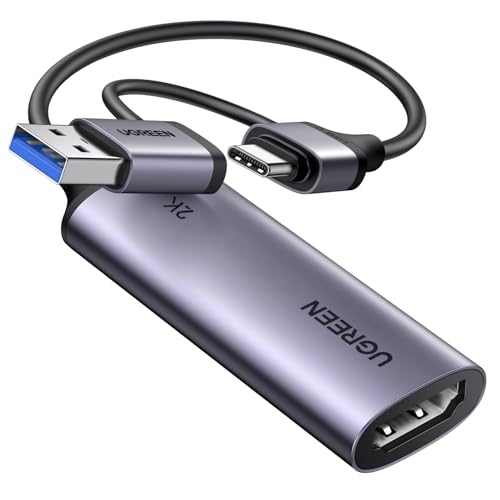
- Captures up to 2K30 or 1080p60
- USB-A and USB-C connectivity
- Works with Windows, macOS, Linux, and mobile devices
Best For: Multi-device streaming and everyday recording
Best Console-Focused Option

- 4K60 capture with HDR10 support
- 1440p120 and 1080p240 passthrough
- 3.5mm analog audio input
Best For: Current-console streaming and recording
Best for Low-Latency Loop-Out

- 4K30 HDMI input and loop-out
- Records up to 2K30 or 1080p60
- USB-A/C support with plug-and-play setup
Best For: Low-latency monitoring and console streaming
Premium HDMI 2.1 Pick

- 4K144 capture and HDMI 2.1 passthrough
- Up to 1080p240 capture with VRR support
- Works with major streaming apps and platforms
Best For: High-refresh-rate PC and console gaming
Versatile Value Pick

- 1080p60 capture with 4K60 HDMI loop-out
- Plug-and-play USB 3.0 setup
- Mic input and broad device compatibility
Best For: Affordable gaming, camera, and meeting capture
Easy HDR Passthrough Pick

- 4K60 HDR passthrough with 1080p60 capture
- USB-A and USB-C connectivity
- Mic input, headphone output, and no-driver setup
Best For: Simple PC or Mac streaming with HDR passthrough
Best Low-Latency Pick
Newhope 1080p 60FPS Capture Card

- 1080p capture at 60fps
- HDMI loop-out for monitoring
- Plug-and-play with mic input
Best For: Console streaming and commentary-focused PC setups
Best Portable Option
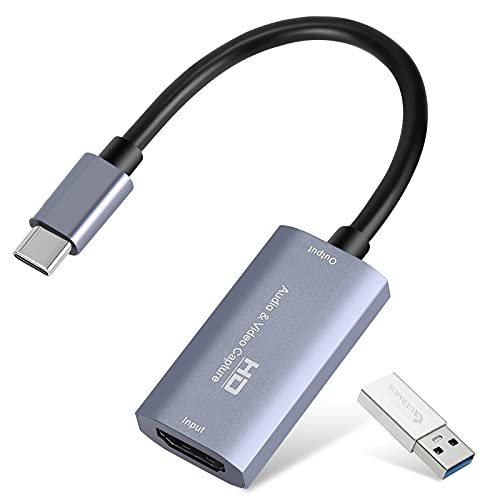
- 1080p 60fps output
- USB 3.0 and USB-C connectivity
- Compact aluminum design
Best For: Traveling streamers and flexible PC recording setups
Best for Beginner Streaming
Dcyfol 1080p 60FPS Capture Device
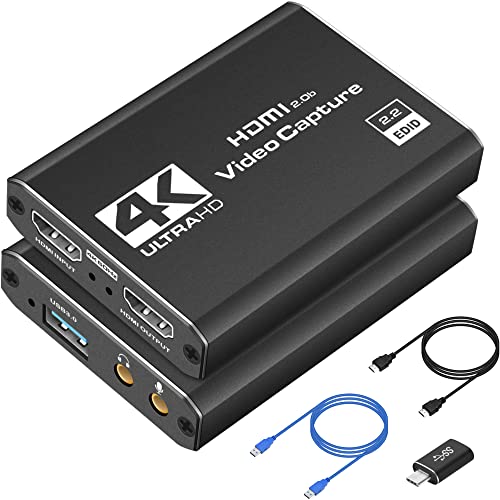
- 1080p capture at 60fps
- HDMI pass-through monitoring
- Plug-and-play software support
Best For: New streamers using consoles, PCs, or cameras
Best Premium Internal Card – Elgato 4K Pro
The Elgato 4K Pro is a high-end choice among capture cards for PC users who want internal PCIe installation, high-refresh passthrough, and detailed recordings. Its HDMI 2.1 connectivity supports 8K60 passthrough, 4K60 HDR10 capture, and recording up to 1080p240.
Best For: PC streamers, dual-PC setups, and gamers using high-refresh HDMI 2.1 devices.
Pros:
- Supports 4K60 HDR10 capture and 8K60 passthrough.
- Handles up to 1080p240 recording and VRR passthrough.
- Works with popular streaming apps and supports dual-PC setups.
Cons:
- Requires a Windows 10 PC with an available PCIe slot.
- Its internal installation is less portable than USB capture cards.
The 4K Pro is the strongest fit when performance and smooth passthrough matter more than portability. It is especially well suited to a dedicated Windows streaming computer.
Best Flexible USB Value – UGREEN 2K USB Capture Card
This UGREEN model is a practical option for capture cards for PC when you need broad device compatibility and USB-A or USB-C connectivity. It accepts up to 4K30 input, outputs up to 2K30, and supports 1080p60 for everyday streaming and recording.
Best For: Streamers using laptops, desktops, tablets, phones, or consoles with USB connectivity.
Pros:
- Supports 4K30 input, 2K30 output, and 1080p60 capture.
- Includes both USB-A and USB-C interfaces.
- Works without drivers across Windows, macOS, Linux, and compatible mobile devices.
Cons:
- It supports HDMI input to USB output only.
- iPadOS USB-C compatibility requires iPadOS 17 or later.
- Console use may require HDCP to be disabled.
With its dual USB interfaces and wide operating-system support, this is a convenient general-purpose capture card. Its 2K ceiling makes it better for practical streaming than for 4K recording.
Best Console-Focused Option – Elgato 4K S
The Elgato 4K S is a compact USB-C option for capture cards for PC, built around current consoles and cross-platform recording. It captures at 4K60, supports 1440p120 or 1080p240 passthrough, and adds HDR10 support plus an analog audio input.
Best For: PS5, Xbox Series X/S, and Switch 2 users who want high-quality capture with console-friendly connectivity.
Pros:
- Captures 4K60 video with HDR10 support.
- Supports 1440p120 and 1080p240 passthrough.
- Includes a 3.5mm analog audio input for chat or commentary.
Cons:
- Requires Windows 11, macOS 13 or later, or a compatible iPadOS device.
- Needs a USB 3.0 Type-C connection and a sufficiently capable computer.
The 4K S balances strong console capture features with a portable USB-C design. It is a particularly appealing choice if HDR, high-refresh passthrough, and analog audio are priorities.
Best for Low-Latency Loop-Out – UGREEN 2K HDMI Capture Card
This UGREEN unit is a useful choice among capture cards for PC when local monitoring is important. It accepts 4K30 input, provides HDMI loop-out for real-time viewing, and records up to 2K30 or 1080p60 through USB 3.0.
Best For: Gamers and streamers who want low-latency monitoring through an HDMI display while recording to a PC.
Pros:
- Provides 4K30 input and 4K30 HDMI loop-out.
- Supports 2K30 and 1080p60 recording.
- Uses USB-A and USB-C recording connections with plug-and-play setup.
Cons:
- It does not support 4K recording.
- PS4 and PS5 use requires HDCP to be turned off.
- It is not compatible with Fire TV Stick.
The loop-out connection makes this model well suited to setups where you want to play on a monitor without relying on the captured preview. Choose it for convenient monitoring rather than native 4K recording.
Premium HDMI 2.1 Pick – Elgato 4K X
If you want one of the most capable capture cards for PC gaming, the Elgato 4K X is built for high-refresh-rate setups. It supports 4K144 capture and passthrough, HDMI 2.1, VRR passthrough, HDR10, and up to 1080p240 capture, making it a strong fit for modern consoles and gaming PCs.
Best For: PC and console gamers who need HDMI 2.1, high frame rates, and ultra-low-latency passthrough.
Pros:
- Supports 4K144 capture and passthrough with HDMI 2.1.
- Captures up to 1080p240 and supports VRR passthrough for smoother gameplay.
- Works with OBS, Streamlabs, Twitch Studio, Zoom, Teams, and other popular apps.
- Compatible with Windows, macOS, iPadOS, PS5, Xbox Series X, Nintendo Switch, and PC.
Cons:
- Requires a USB 3.2 Gen 2 port for its full capabilities.
- Its advanced features may be more than casual streamers need.
The Elgato 4K X stands out when high refresh rates and next-generation HDMI features matter. It is a particularly strong choice for a powerful PC setup paired with a PS5, Xbox Series X, or high-end display.
Versatile Value Pick – VIXLW 1080p60 Capture Card
For shoppers seeking practical capture cards for PC streaming, this VIXLW model combines 1080p60 capture with 4K60 HDMI loop-out. Its plug-and-play setup, USB 3.0 connection, microphone input, and broad device compatibility make it useful for gaming, meetings, cameras, and basic recording.
Best For: Budget-conscious streamers who want 1080p60 capture, 4K60 passthrough, and wide compatibility.
Pros:
- Captures up to 1080p60 and supports 4K60 HDMI input and loop-out.
- Plug-and-play design requires no driver or external power supply.
- Includes a 3.5mm microphone input and HDMI loop-out for live gameplay.
- Works with Windows, macOS, Linux, Android, major consoles, cameras, OBS, and Streamlabs.
Cons:
- Does not support 4K120 or 4K144 input.
- The microphone input does not record party chats.
- Audio setup may require restarting OBS if sound output is missing.
This VIXLW capture card offers a well-rounded feature set for standard 1080p streaming without requiring a complicated installation. Its 4K60 loop-out is useful if you want to play on a display while recording through your PC.
Easy HDR Passthrough Pick – NEWCARE HDMI Capture Card
This NEWCARE model is a straightforward option among capture cards for PC, offering 1080p60 recording while passing through 4K60 HDR video. USB-A and USB-C connectivity, no-driver setup, and built-in microphone and headphone connections make it convenient for gaming streams and live commentary.
Best For: Streamers who want 4K60 HDR passthrough, 1080p60 capture, and simple PC or Mac setup.
Pros:
- Supports 4K60 HDR HDMI input and passthrough while recording at 1080p60.
- Offers both USB 3.0 and USB-C connections for flexible setup options.
- Includes 3.5mm microphone input and headphone output for commentary and monitoring.
- Requires no drivers or external power and works with OBS, Streamlabs, QuickTime Player, and VLC.
Cons:
- Capture resolution is limited to 1080p60.
- Its operating-system compatibility is listed for Windows and macOS, rather than Linux or other systems.
The NEWCARE card is a convenient middle ground for gamers who want HDR gameplay passthrough without recording at 4K. The included HDMI cable, dual USB connector options, and one-year warranty add practical value for a new streaming setup.
Best Low-Latency Pick – Newhope 1080p 60FPS Capture Card
If you want capture cards for PC that balance smooth gameplay with simple setup, the Newhope is a practical option. It captures at up to 1080p at 60fps, includes HDMI loop-out for playing on an external display, and works with common streaming software such as OBS.
Best For: PC users streaming console gameplay, teaching online, or recording video while monitoring on a separate display.
Pros:
- Captures 1080p video at 60fps for smooth recordings and streams.
- HDMI loop-out supports real-time monitoring with low latency.
- Plug-and-play operation works without drivers or external power.
- Includes a 3.5mm TRS microphone input for commentary.
Cons:
- The microphone input accepts only standard 3.5mm TRS headsets.
- Its capture output is focused on 1080p at 60fps, despite 4K pass-through support.
With broad Windows, macOS, Linux, and iPadOS compatibility, this is a versatile choice for straightforward capture and streaming setups. The loop-out and microphone input make it especially useful for gaming creators.
Best Portable Option – 4K HDMI to USB-C Capture Card
For shoppers comparing capture cards for PC, this compact HDMI-to-USB capture device offers flexible connectivity and portable operation. It accepts up to 4K at 30Hz and outputs up to 1080p at 60Hz or 2K at 30Hz for recording and streaming through capture software.
Best For: Mobile creators and PC users who need USB 3.0 or USB-C connectivity for gaming, meetings, teaching, or live streaming.
Pros:
- Supports up to 1080p at 60fps or 2K at 30fps output.
- Includes USB 3.0 and USB-C connection options through the included adapter.
- Compact, lightweight aluminum design is convenient for travel.
- Works with Windows, macOS, Linux, Android, OBS, VLC, and Zoom.
Cons:
- Requires capture software and cannot directly cast to a monitor or TV.
- USB 3.0 is recommended for the intended bandwidth and resolution.
- OBS may need to be restarted after audio setup.
This model is a useful travel-friendly choice when connection flexibility matters. Its one-way HDMI-to-USB design and software requirement are worth noting before purchase, particularly for users expecting standalone display casting.
Best for Beginner Streaming – Dcyfol 1080p 60FPS Capture Device
This Dcyfol device is among the more approachable capture cards for PC, with plug-and-play USB operation and compatibility with OBS Studio, Streamlabs, and XSplit. It records 1080p at 60fps and supports HDMI pass-through for monitoring gameplay while streaming.
Best For: Beginners and content creators who want a portable capture setup for PS5, Xbox, Switch, PC, or camera sources.
Pros:
- Captures smooth 1080p video at 60fps.
- Supports HDMI pass-through for low-latency gameplay monitoring.
- Works without drivers and supports popular streaming software.
- Includes HDMI and USB extension accessories plus a USB-to-Type-C adapter.
Cons:
- Requires a USB 3.0 port and is listed as compatible with Windows and Mac systems.
- Its 4K capability is described as HDMI preview or input support, while recording is 1080p at 60fps.
Its simple setup, broad device compatibility, and included accessories make it a sensible starting point for new streamers. Users should have a USB 3.0 port available and set expectations around the 1080p capture output.
How We Picked the Best Capture Cards for PC
We compared these Capture Cards for PC by looking at their advertised capture resolution and frame rate, passthrough capabilities, connection type, compatibility, latency-focused features, and intended use. We also separated internal PCIe cards from portable USB devices because installation and performance expectations differ substantially.
Resolution numbers alone do not tell the whole story. A card may accept a 4K signal while capturing at 1080p, or provide high-refresh passthrough while recording at a lower frame rate. Check both specifications before buying.
Quick Comparison
| Best For | Recommended Type | What to Prioritize |
|---|---|---|
| Competitive PC or console gaming | HDMI 2.1 or high-refresh model | Low-latency passthrough and 1440p/4K support |
| Typical streaming | USB 3.0 capture card | 1080p60 capture and reliable software compatibility |
| Permanent desktop setup | Internal PCIe card | Stable bandwidth and minimal cable clutter |
| Portable or laptop streaming | USB capture card | Bus-powered operation and USB 3.0 connectivity |
| Budget recording | Basic HDMI-to-USB model | Supported input resolution, audio handling, and driver-free operation |
Key Buying Factors for Capture Cards for PC
Capture Resolution and Frame Rate
For standard streaming, 1080p at 60 frames per second remains a practical target. Choose a 4K-capable model if you record high-resolution footage, want room to downscale, or expect to upgrade your console and display. Confirm whether 4K refers to input, passthrough, or actual capture.
Passthrough and Refresh Rate
Passthrough sends the gaming signal to your display while the PC captures it. Look for passthrough support matching your monitor, especially if you play at 120Hz, 144Hz, or higher. A card that captures smoothly but limits your gaming output can be a poor fit for fast-paced games.
Connection and Installation
Internal PCIe cards suit desktop users who want consistent bandwidth and a tidy setup. USB 3.0 models are easier to move between systems and work well with laptops, but use a direct high-speed port rather than an unpowered hub whenever possible.
Compatibility and Software
Verify support for your console, camera, operating system, and streaming application. Most modern cards work with common software such as OBS Studio, but features like HDR, variable refresh rate, HDCP handling, and multichannel audio may vary.
Who Should Buy Which Capture Cards for PC?
Choose an internal Elgato model for a dedicated desktop streaming or recording station, particularly when you need high bandwidth, 4K support, or high-refresh passthrough. Choose an Elgato 4K S or a comparable USB model for console-focused streaming with a simpler setup. The Elgato 4K X is the strongest match for HDMI 2.1 sources and demanding high-refresh workflows.
For affordable 1080p60 streaming, the UGREEN, Newhope, and generic USB 3.0 options can be sensible starting points, provided their input and passthrough limits match your equipment. Before purchasing, confirm every link in the chain—source, capture card, display, USB or PCIe connection, and streaming software—supports the resolution and frame rate you plan to use.