Headphone amplifiers with optical input are a smart choice when you want a clean digital connection from a TV, console, or PC into a compact desktop audio setup.
In this roundup, we focus on models that balance sound quality, connectivity, power, and value for everyday listening, gaming, and home audio use.
Best 10 Headphone Amplifiers with Optical Input Picks for 2026
Best all-around desktop DAC/amp

- Optical, coaxial, and USB inputs
- 1400mW output for up to 350 ohms
- 4.4mm balanced and 6.35mm outputs
Best For: Desktop users wanting a powerful optical-input DAC/amp
Wireless desktop option
AIYIMA DAC A7 with Bluetooth 5.4
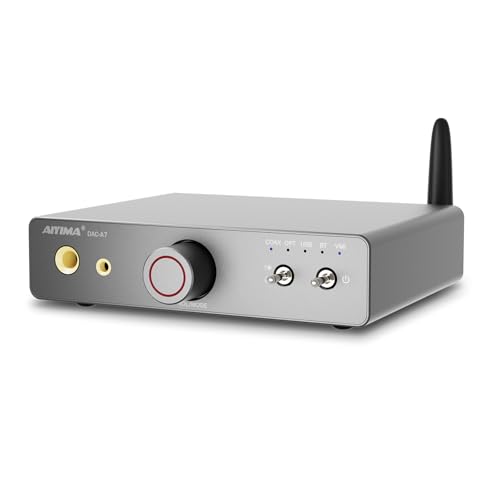
- Optical input plus Bluetooth 5.4 with LDAC
- 1500mW output supports 16–600 ohm headphones
- Dual headphone jacks and speaker output switching
Best For: Users wanting optical input with Bluetooth and high power
Budget home stereo choice
BT-398A with optical and coaxial in

- Optical, coaxial, RCA, Bluetooth, and USB inputs
- RMS 60W x2 compact class D amplifier
- Remote control plus bass and treble knobs
Best For: Budget systems needing a compact optical-input stereo amp
Simple plug-and-play pick

- Optical, coaxial, and USB inputs
- Plug-and-play with RCA and 3.5mm outputs
- Bass and treble controls for easy tuning
Best For: PC, TV, and gaming setups needing a simple optical DAC/amp
Desktop Power Amplifier
FiiO JadeAudio GIGAS 1 Desktop Headphone Amplifier

- Up to 4600mW+4600mW balanced output
- Class AB discrete circuit for natural sound
- Works with external DACs via RCA or 3.5mm input
Best For: Desktop users who need a powerful amp and already have an optical-capable DAC or source
All-in-One Optical DAC/Amp
Douk Audio K5 USB DAC Headphone Amp

- USB and SPDIF optical inputs in one unit
- Headphone amp, DAC, and preamp functions
- PCM 384kHz and DSD256 support with gain modes
Best For: Desktop users who want a compact all-in-one DAC/headphone amp with optical input
Mini DAC with Tone Control
Nobsound Q3 USB/Optical/Coaxial Amp

- USB, optical, and coaxial inputs
- Treble and bass tone controls
- RCA and 3.5mm headphone outputs
Best For: Desktop users who want a compact DAC/amp with easy tone shaping
Gaming DAC Amp Combo
Fosi Audio K5 Pro USB-C/Optical/Coaxial DAC
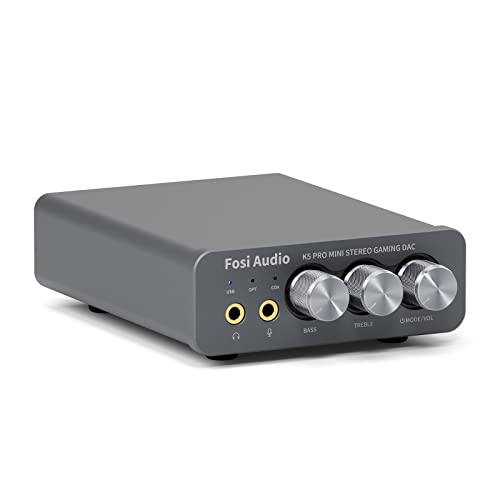
- USB-C, optical, and coaxial inputs
- Mic input plus bass and treble controls
- Drives headphones from 16 ohm to 300 ohm
Best For: Gamers and desktop users who need optical input and mic support
Entry-Level DAC Amp
Fosi Audio Q4 Desktop Converter

- USB, optical, and coaxial inputs
- Bass and treble tone controls
- RCA and 3.5mm outputs in a compact metal shell
Best For: Budget desktop setups needing simple optical DAC/amp connectivity
Best all-around desktop DAC/amp – FiiO K11 for home audio or PC
If you’re shopping for headphone amplifiers with optical input, the FiiO K11 is a straightforward desktop option built for PC, TV, and home audio use. It accepts optical, coaxial, and USB inputs, and its 6.35mm and balanced 4.4mm headphone outputs make it flexible for a range of setups.
Best For: Desktop listeners who want an easy-to-use DAC/amp with optical input, strong power, and multiple output options.
Pros:
- Supports optical, coaxial, and USB inputs for flexible source connections
- Up to 1400mW output can drive headphones up to 350 ohms
- Includes 6.35mm, 4.4mm balanced, and RCA connections
- VA display shows sampling rate, volume, gain, and output mode
Cons:
- Designed for desktop use rather than portable listening
- Best suited to headphones in the 8–350 ohm range
Overall, the K11 is a practical pick if you want a compact unit that can handle headphones and speakers from the same box. Its optical input support and high power rating make it a strong fit for everyday home or desk audio.
Wireless desktop option – AIYIMA DAC A7 with Bluetooth 5.4
Among headphone amplifiers with optical input, the AIYIMA DAC A7 stands out for combining digital wired connections with modern wireless playback. It uses a flagship ES9038Q2M decoding chip, supports optical input, and adds Bluetooth 5.4 with LDAC and aptX-HD for flexible desktop listening.
Best For: Listeners who want an optical-input desktop DAC/amp with Bluetooth streaming and high-output headphone drive.
Pros:
- Supports optical input plus Bluetooth 5.4 with LDAC and aptX-HD
- High-power 1500mW output at 32 ohms, rated for 16–600 ohm headphones
- Dual 3.5mm and 6.35mm headphone jacks
- Can switch between headphone and active speaker output modes
Cons:
- Requires DC 5V/2A input power
- More feature-rich than a basic DAC/amp, so it may be more than some users need
This model makes sense if you want more than just an optical input and headphone jack. Its mix of wireless support, strong output, and desktop-friendly controls gives it broad utility for music, PC audio, and gaming.
Budget home stereo choice – BT-398A with optical and coaxial in
If you need headphone amplifiers with optical input for an affordable home or small-room setup, the BT-398A is a compact stereo amplifier with broad source compatibility. It supports optical, coaxial, RCA, Bluetooth, and USB playback, making it a flexible option for budget-minded buyers.
Best For: Small home systems, bedrooms, offices, and karaoke setups that need optical input on a budget.
Pros:
- Includes optical and coaxial inputs along with RCA, Bluetooth, and USB
- Compact class D design with RMS 60W x2 output
- Remote control and treble/bass adjustment knobs
- Built-in LED display for easy status viewing
Cons:
- More of a stereo amplifier than a dedicated desktop headphone DAC/amp
- USB flash drive support is limited to 64GB max
The BT-398A is a practical pick if you want one small unit to handle multiple sources, including optical. Its emphasis is on versatility and value, so it works best when you need a simple stereo hub rather than a premium headphone-focused DAC.
Simple plug-and-play pick – AIYIMA DAC-A2 for PC and TV
The AIYIMA DAC-A2 is a straightforward choice if you want headphone amplifiers with optical input for a PC, TV, or gaming setup without extra software. It converts optical, coaxial, and USB digital signals into RCA or 3.5mm analog output, and it’s designed for easy plug-and-play use.
Best For: Users who want a compact optical-input DAC/amp for gaming, TV, or desktop audio with simple setup.
Pros:
- Plug-and-play operation with no drivers or software required
- Supports optical, coaxial, and USB inputs
- Independent bass and treble controls
- Drives headphones from 16 to 200 ohms with 160mW RMS at 32 ohms
Cons:
- Lower output power than some larger desktop amplifiers
- Requires 5V power input
For buyers who value simplicity, the DAC-A2 keeps the formula focused and easy to live with. Its optical input support, tone controls, and compact metal chassis make it a solid everyday desktop audio upgrade.
Optical-to-Analog DAC Bridge – PROZOR 192KHz Optical to RCA Converter
If you need headphone amplifiers with optical input support at the source level, this PROZOR unit is a practical way to turn a Toslink signal into analog audio for a headphone amp, powered speakers, or a 3.5mm headset connection. It is built around PCM-only digital-to-analog conversion, so it works best when your TV or player is set correctly and you want a simple, low-cost bridge from optical output to analog gear.
Best For: TV owners, console users, and home-cinema setups that need a straightforward optical-to-analog adapter for feeding a headphone amp or analog input.
Pros:
- Converts optical or coaxial digital audio to RCA L/R and 3.5mm analog output.
- Supports up to 192kHz/24-bit PCM for high-resolution stereo playback.
- Upgraded chipset and dual op-amp design aim for cleaner output and lower distortion.
- Aluminum alloy housing and gold-plated connectors add durability and shielding.
Cons:
- Requires the source device to be set to PCM/LPCM output.
- Not intended for analog-to-digital conversion or 5.1 decoding.
- Needs 5V USB power and a proper wall adapter for best performance.
For simple optical integration, this is a no-frills solution that gets digital TV or console audio into analog headphone or amp gear. It is most compelling when you value easy setup and stereo playback over advanced surround decoding or extra control features.
Desktop Power Amplifier – FiiO JadeAudio GIGAS 1 Desktop Headphone Amplifier
For buyers comparing headphone amplifiers with optical input, the FiiO JadeAudio GIGAS 1 is the amp stage itself, built to pair with an external DAC that can provide the optical connection. Its focus is power and control: a Class AB discrete circuit, balanced 4.4mm output, and enough output to handle planar magnetic and high-impedance headphones while still offering a single-ended option.
Best For: Desktop listeners who already have a DAC or optical-capable source and want a powerful amp for demanding headphones.
Pros:
- Up to 4600mW+4600mW balanced output for difficult-to-drive headphones.
- Class AB discrete amplification for a smooth, natural sound signature.
- Offers both 4.4mm balanced and 3.5mm outputs, with mic pass-through on the 3.5mm jack.
- Flexible gain modes and USB-C power options, including PD 12V support.
Cons:
- No built-in optical input on the amplifier itself.
- Requires an external DAC or source component for digital optical playback.
- Desktop-focused design is less convenient for portable use.
This is the strongest choice here if your priority is amplifier performance rather than source conversion. Pair it with an optical DAC and it becomes a serious desktop driver for planars and high-impedance headphones.
All-in-One Optical DAC/Amp – Douk Audio K5 USB DAC Headphone Amp
If you want headphone amplifiers with optical input in one compact box, the Douk Audio K5 is the most direct fit in this roundup. It combines USB and SPDIF optical input with headphone amp, DAC, and preamp functions, so it can accept a digital optical source and feed headphones, speakers, or another amp without extra boxes.
Best For: Listeners who want a compact desktop DAC/headphone amp with optical input and flexible output options.
Pros:
- Includes SPDIF optical input plus USB input for versatile digital sources.
- Outputs to optical, RCA, 6.35mm, and 3.5mm connections.
- ESS9038Q2M-based design supports up to PCM 384kHz and DSD256.
- Dual gain modes and tone control with a PURE bypass switch.
Cons:
- Power output is moderate compared with high-power desktop amps.
- Best performance may require proper external power, not just bus power.
- Tone controls add flexibility, but some users may prefer a simpler signal path.
The K5 stands out as the most complete optical-input option here because it handles conversion and amplification in one device. It is especially useful if you want one unit to serve as a DAC, headphone amp, and preamp in a small desktop setup.
Mini DAC with Tone Control – Nobsound Q3 USB/Optical/Coaxial Amp
If you want headphone amplifiers with optical input for a compact desktop setup, the Nobsound Q3 is a practical all-in-one DAC and amp. It accepts PC-USB, optical, and coaxial signals, then sends audio to RCA or 3.5mm headphone output, with volume plus treble and bass controls for quick tuning.
Best For: Small home stereo setups, desktop listeners, and buyers who want simple tone control in a mini footprint.
Pros:
- Supports USB, optical, and coaxial inputs for flexible source connections.
- Includes treble and bass knobs for easy sound shaping.
- Designed for headphones plus RCA output from the same unit.
- Compact aluminum case fits cleanly on a desk.
Cons:
- Runs on 5V power, so it is built more for desktop use than portable listening.
- No microphone input or gaming-focused features are listed.
The Q3 is a straightforward pick if you need optical input and want basic control without a bulky stack. Its value is in simple connectivity, tone adjustment, and a small form factor that suits everyday home audio.
Gaming DAC Amp Combo – Fosi Audio K5 Pro USB-C/Optical/Coaxial DAC
Among headphone amplifiers with optical input, the Fosi Audio K5 Pro stands out as a gaming-friendly DAC/amp combo with USB Type-C, optical, and coaxial support. It converts those digital sources to 3.5mm AUX and RCA outputs, and also adds microphone support plus bass and treble controls for a more flexible desktop setup.
Best For: PS5, PC, and Mac users who want a compact DAC/amp with mic support and front-panel controls.
Pros:
- USB Type-C, optical, and coaxial inputs cover common modern sources.
- Microphone input adds functionality that many simple DACs lack.
- Bass, treble, and master volume controls make tuning easy.
- Listed headphone drive range covers 16 ohm to 300 ohm loads.
Cons:
- Best suited to desktop and gaming setups rather than travel use.
- Audio source must be connected to the USB-A/C port when using phone compatibility.
If you want a compact unit that does more than basic playback, the K5 Pro is a strong fit. Its mix of optical input, headphone amplification, and mic support makes it especially useful for gaming desks and general computer audio.
Entry-Level DAC Amp – Fosi Audio Q4 Desktop Converter
The Fosi Audio Q4 is an approachable choice if you are comparing headphone amplifiers with optical input for a simple desktop system. It offers USB, optical, and coaxial inputs, plus RCA and 3.5mm outputs, so it can connect to a TV, computer, powered speakers, or a home stereo amplifier.
Best For: Budget-minded buyers who want a compact entry-level DAC/amp with broad basic connectivity.
Pros:
- Supports USB, optical, and coaxial inputs for versatile source pairing.
- Includes bass and treble controls for quick sound adjustments.
- Compact metal shell keeps the unit small and sturdy on a desk.
- Rated for 24-bit/192kHz audio with low jitter support.
Cons:
- Headphone drive is listed from 16 ohm to 200 ohm, so it is less flexible than some higher-output models.
- No microphone input is included.
The Q4 is a sensible entry point if you mainly need optical input, basic amplification, and simple tone control. It focuses on easy setup and everyday compatibility rather than extra features.
How We Picked the Best Headphone Amplifiers with Optical Input
We looked for Headphone Amplifiers with Optical Input that offer practical desktop use, reliable digital-to-analog conversion, and enough output power for common headphones. Priority went to models with useful extras such as balanced outputs, USB and coaxial inputs, tone controls, and simple controls that make them easy to live with.
Quick Comparison
For a fast decision, think in three buckets: compact budget DAC-amps for basic headphone and speaker use, gaming-oriented units with easy TV or console hookups, and higher-power desktop amps for tougher-to-drive headphones. The best choice depends on whether you value connection flexibility, output power, or a cleaner signal path from optical sources.
Key Buying Factors for Headphone Amplifiers with Optical Input
Input and Output Options
Optical input is the main feature, but the rest of the I/O matters just as much. Check for USB, coaxial, RCA line out, 3.5mm, 6.35mm, or balanced outputs if you want to connect multiple devices or upgrade later.
Power and Headphone Match
More power helps with high-impedance or planar headphones, while lower-power models can still be excellent for efficient everyday headphones. Look at the amp’s output rating, but also consider whether you actually need that much headroom.
DAC Quality and Sound Controls
Many Headphone Amplifiers with Optical Input also function as DACs, so the digital section matters. Some units include bass and treble controls, while others aim for a cleaner, more neutral signal. Choose based on whether you want tuning flexibility or a simpler signal path.
Desktop Convenience
Size, volume knob feel, gain options, and plug placement can affect daily use more than specs on paper. If the unit will sit beside a monitor, look for an easy front-panel layout and a stable chassis.
Who Should Buy Which Headphone Amplifiers with Optical Input?
Buy a compact DAC-amp if you mainly want a straightforward upgrade for a PC or powered speakers. Choose a gaming-friendly model if you want easy optical hookup from a console or TV and quick desktop control. Step up to a higher-power amplifier if you use demanding headphones and want stronger dynamic performance. If you mostly need to convert optical to analog for another amp or speaker system, a simpler DAC may be the better value.
In short, the best option is the one that matches your source devices, headphone requirements, and how much desktop flexibility you actually need.