Touring musicians need stands that protect valuable instruments without adding unnecessary bulk to an already crowded vehicle or stage setup. The right choice balances stability, portability, fast setup, and compatibility with your instrument.
This roundup covers 10 options for guitars, basses, banjos, brass, orchestral instruments, and percussion, with practical buying advice for rehearsals, performances, and frequent transport.
Best 10 Instrument Stands for Touring Musicians Picks for 2026
Compact Electric Guitar Support
Hercules Travelite Electric Guitar Stand

- Folds flat for touring and storage
- Steel frame with protective foam contact points
- Compact support for one electric guitar
Best For: Electric guitarists needing a lightweight, space-saving stand
Professional Horn Stand
K&M 14985 Folding Trombone Stand
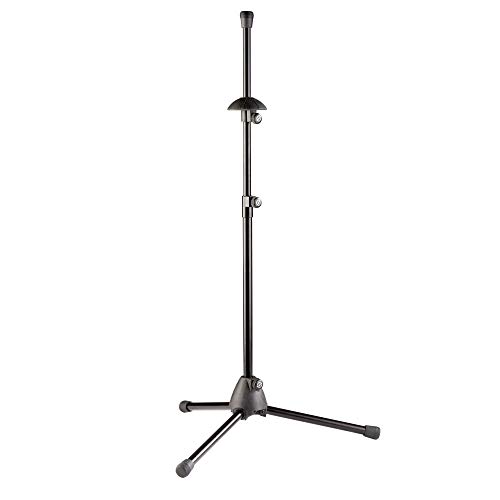
- Adjusts from 23 to 38 inches
- Folding legs simplify transport
- Protective support helps prevent marks
Best For: Trombone and marching baritone players touring with a dedicated horn stand
Folk Instrument Travel Stand
Hercules GS303B TravLite Folk Instrument Stand

- Folding format is easy to transport
- Rubber foam protects contact points
- Non-slip pads support stability
Best For: Folk-instrument players needing a compact padded stand
Multi-Guitar Touring Rack
GUITTO GGS-06T Triple Guitar Stand

- Supports three instruments
- Auto Gravity Lock speeds setup
- Folds and adjusts from 33 to 51 inches
Best For: Touring players carrying multiple guitars or other compatible stringed instruments
Touring-Ready Orchestral Support
Hercules DS538B Multi Orchestral Stand

- Locking folding yoke
- Adjustable backrest
- 20 kg load capacity
Best For: Touring orchestral musicians needing secure, adjustable support
Compact Guitar Transport
Amazon Basics Folding Guitar Stand

- Three width settings
- Folds flat for travel
- Padded foam protection
Best For: Guitarists seeking a portable acoustic and electric stand
Portable Percussion Workspace
Hercules DS800B Percussion Table Stand
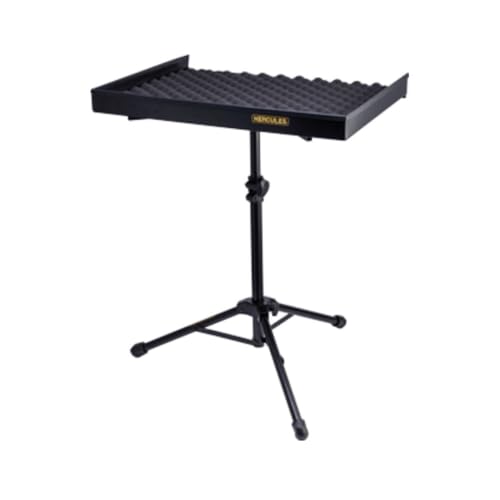
- 18.5-by-23.6-inch table
- 25 kg load capacity
- Folding, height-adjustable design
Best For: Touring percussionists needing a spacious equipment platform
Dual-Guitar Roadie

- Holds two instruments with padded supports
- Folds compactly and weighs 2.4 pounds
- Includes strap, picks, capo, and headband
Best For: Touring guitarists carrying two instruments
Compact Stage Companion
OnStage GS5000 Fold-Flat Stand

- Designed specifically for small instruments
- Folds to 1.25 inches thick
- Lightweight 1.5-pound steel-wire design
Best For: Traveling musicians with small instruments
Brass Tour Anchor

- Supports tubas and baritones up to 55 pounds
- Adjustable arms, width, and height
- Folds for travel and uses protective padding
Best For: Touring brass players with large instruments
Compact Electric Guitar Support – Hercules Travelite Electric Guitar Stand
For touring musicians who need instrument stands that pack efficiently, the Hercules Travelite Electric Guitar Stand is a compact option for one electric guitar. Its steel construction, protective foam contact points, and flat-folding design suit quick load-ins, rehearsals, and tight storage spaces.
Best For: Electric guitarists prioritizing minimal packing space and straightforward portability.
Pros:
- Folds flat for carrying and storage.
- Steel construction with foam on contact points.
- Lightweight, compact one-instrument design.
Cons:
- Designed for electric guitars rather than multiple instruments.
- Listed load capacity is 0.8 kg.
This is a practical choice when portability matters more than capacity or adjustability. Its small folded footprint makes it especially useful for touring setups with limited case and vehicle space.
Professional Horn Stand – K&M 14985 Folding Trombone Stand
The K&M 14985 is one of the more specialized instrument stands for touring musicians, supporting trombones and marching baritone horns. It combines a height-adjustable design, folding legs, a reinforced base, and a non-marring support for dependable use between gigs, in studios, or on stage.
Best For: Trombone and marching baritone players who need an adjustable, protective stand for regular performance use.
Pros:
- Height adjusts from 23 to 38 inches.
- Fiberglass-reinforced base and steady folding legs.
- Protective plastic and non-marring rubber support.
- Also suitable for marching trumpets.
Cons:
- Heavier than compact guitar-focused stands at 1.17 kg.
- Specialized design is less suitable for general instrument storage.
With its adjustable height and protective contact points, this German-made stand is built around secure horn placement and repeat setup. It is a strong fit for players who want a dedicated stand rather than a general-purpose option.
Folk Instrument Travel Stand – Hercules GS303B TravLite Folk Instrument Stand
The Hercules GS303B TravLite is a folding option for touring musicians seeking instrument stands for folk instruments. Rubber foam contact points and non-slip pads help protect the instrument and keep the compact stand steady during rehearsals, sessions, and performance-day setup.
Best For: Folk-instrument players who want a portable, padded stand with a simple folding design.
Pros:
- Folding design supports easier transport and storage.
- Rubber foam contact points help cushion the instrument.
- Non-slip rubber pads add stability.
Cons:
- Listed load capacity is 5 pounds.
- Single-level design is intended for one instrument.
This stand keeps the feature set focused on portability and contact protection. Its modest weight and folding format make it convenient for musicians carrying a folk instrument from venue to venue.
Multi-Guitar Touring Rack – GUITTO GGS-06T Triple Guitar Stand
For touring musicians carrying several instruments, the GUITTO GGS-06T offers a heavy-duty alternative to single-instrument stands. It holds three guitars or compatible stringed instruments, folds for transport, and uses an Auto Gravity Lock system, adjustable height, foam padding, and a wide tripod base for stage or studio use.
Best For: Players and bands transporting multiple acoustic, electric, bass, banjo, mandolin, or ukulele-style instruments.
Pros:
- Holds up to three instruments.
- Auto Gravity Lock system supports quick placement.
- Adjusts from 33 to 51 inches.
- Folds for transport and has soft foam padding.
Cons:
- Heavier and bulkier than single-instrument stands at 3.7 kg.
- Its multi-instrument capacity may be unnecessary for solo players.
The GGS-06T is aimed at capacity and flexibility rather than the smallest footprint. Its 99-pound listed load capacity and adjustable, padded supports make it useful when a touring rig needs several instruments ready at once.
Touring-Ready Orchestral Support – Hercules DS538B Multi Orchestral Stand
For musicians comparing instrument stands for touring musicians, the Hercules DS538B focuses on secure support and a foldable design. Its locking pin, adjustable backrest, and 20 kg load capacity make it suited to transporting and setting up larger orchestral instruments.
Best For: Touring orchestral musicians who need a folding stand with adjustable support and a substantial load capacity.
Pros:
- Folding upper yoke locks securely into position.
- Adjustable backrest supports the instrument safely.
- 20 kg (44 lb.) load capacity.
- Folds by pressing the locking pin.
Cons:
- At 4.7 pounds, it is not the lightest stand for frequent carrying.
- Its 15.6-inch height and multi-orchestral design may be more specialized than needed for smaller instruments.
The DS538B is a practical choice when stability and instrument support matter more than minimal packed weight. Its folding mechanism and manufacturer lifetime limited warranty add useful reassurance for regular touring use.
Compact Guitar Transport – Amazon Basics Folding Guitar Stand
For instrument stands for touring musicians, this Amazon Basics A-frame stand offers a straightforward balance of portability and protection. It fits most acoustic and electric guitars, folds flat, and requires no assembly for quick load-ins and storage.
Best For: Guitarists who want a lightweight, adjustable stand for acoustic or electric guitars during rehearsals, gigs, and travel.
Pros:
- Three adjustable width settings accommodate most guitar shapes.
- Folds flat for transport and storage.
- Soft foam arms and backrest help protect the instrument.
- Non-slip rubber feet and metal construction provide practical stability.
Cons:
- Its 10 kg load capacity is intended for guitars rather than heavier instruments.
- The A-frame format provides one stand level and does not offer height adjustment.
The GFS70 is a sensible touring option for guitarists who prioritize quick setup and compact packing. Its fully assembled design and padded contact points make it especially convenient for routine gigging.
Portable Percussion Workspace – Hercules DS800B Percussion Table Stand
Musicians looking for instrument stands for touring musicians may prefer a table-style solution when a simple cradle is not enough. The Hercules DS800B provides a folding 18.5-by-23.6-inch percussion table, adjustable height, and a 25 kg load capacity for transporting and performing with percussion equipment.
Best For: Percussionists who need a foldable, height-adjustable surface for touring setups.
Pros:
- Generous 18.5-by-23.6-inch folding table surface.
- Supports up to 25 kg (55.1 lbs.).
- Height-adjustable design adapts to different setups.
- Tripod base and stainless steel construction.
Cons:
- At 13 pounds, it is relatively heavy for frequent transport.
- The table-style design takes more packed space than a compact instrument cradle.
The DS800B makes the most sense when touring percussionists need a stable, spacious platform rather than a minimal stand. Its folding table and adjustable height support flexible stage and rehearsal layouts, though the 13-pound weight should be considered when packing gear.
Dual-Guitar Roadie – Portable Double Guitar Stand
For touring musicians who carry more than one guitar, this double stand offers a practical way to keep two instruments together onstage or in the studio. Its adjustable tripod design, folding frame, and included accessories make it a versatile option among instrument stands for touring musicians.
Best For: Guitarists and multi-instrumentalists who need a portable stand for two guitars, basses, banjos, or smaller instruments.
Pros:
- Holds two instruments with spacing designed to reduce contact between them.
- Folds to approximately 4.3 x 3.9 x 28.3 inches and weighs 2.4 pounds.
- Adjusts from 24.8 to 43.3 inches and includes neck and base padding.
- Includes a strap, four picks, capo, and headband.
Cons:
- The dual-instrument design takes more floor space than a single stand.
- The supplied notes do not specify a maximum load capacity.
This is a strong touring choice when minimizing the number of stands and bags matters. Its main appeal is the combination of two-instrument capacity, compact folding, and flexible height adjustment.
Compact Stage Companion – OnStage GS5000 Fold-Flat Stand
The OnStage GS5000 is a lightweight, fold-flat option for musicians who need simple small-instrument support while traveling. Its 7 mm steel-wire construction and compact folded dimensions make it easy to include with other instrument stands for touring musicians.
Best For: Touring players who need a basic, space-saving stand for a small instrument.
Pros:
- Folds to approximately 11.42 x 11 x 1.25 inches for transport.
- Weighs 1.5 pounds.
- Uses 7 mm thick steel wire construction.
- Includes a tripod base and three-year warranty.
Cons:
- Designed for small instruments rather than full-size guitars or large instruments.
- The supplied notes do not list padding or adjustable height.
Choose this model when portability and straightforward storage are more important than adjustability. It is a compact, uncomplicated stand for a narrowly defined small-instrument role.
Brass Tour Anchor – K&M Adjustable Tuba Stand
Large brass instruments need more than a generic support, and this K&M stand is built around the weight and shape of tubas and baritones. Adjustable arms, a foam base, leveling feet, and a foldable design make it one of the more specialized instrument stands for touring musicians.
Best For: Tuba, baritone, trombone, and horn players who need stable support for instruments up to 55 pounds.
Pros:
- Supports instruments up to 55 pounds.
- Adjustable height from 12.2 to 16.3 inches and adjustable width.
- Rubber-covered arms and a foam base help protect the instrument.
- Folds to 17.72 inches and is made in Germany.
Cons:
- At 5.5 pounds, it is heavier than the compact small-instrument stand in this roundup.
- Its specialized design is not intended for general guitar or small-instrument use.
- The carrying case is optional.
This is the most appropriate pick here for touring brass players who prioritize secure, adjustable support over minimum weight. Its robust capacity and protective contact points suit demanding stage and travel setups.
How We Picked These Instrument Stands for Touring Musicians
We selected stands across several instrument categories and compared the features that matter most on the road: folding design, portability, support points, padding, adjustability, footprint, and suitability for repeated setup and teardown. The list includes single-, double-, and triple-instrument stands, along with dedicated supports for trombone, tuba, percussion, and other orchestral instruments.
Because touring conditions vary, no single stand is ideal for every performer. A lightweight A-frame may be perfect for a guitarist traveling by air, while a heavier multi-instrument or specialty stand may be better for a fixed stage rig or full ensemble setup.
Quick Comparison
- Most portable guitar options: Hercules Travelite and On-Stage GS5000 designs suit compact loadouts and quick stage changes.
- For multiple guitars: The double and triple guitar stands reduce floor clutter but require more room and careful placement.
- For folk instruments: A dedicated folk-instrument stand can provide a more suitable cradle than a standard guitar A-frame.
- For orchestral and brass instruments: K&M and Hercules specialty stands are designed around the shape and balance of larger instruments.
- For percussion setups: A percussion table stand offers a broader working surface than a conventional instrument cradle.
Key Buying Factors for Instrument Stands for Touring Musicians
Portability and Setup Speed
Look for fold-flat or folding designs, low packed weight, and a setup process that does not require tools. A stand that is easy to carry and deploy is especially valuable when changing venues, sharing crowded backstage areas, or loading in under time pressure.
Stability and Footprint
Check the base width, leg design, and weight distribution. Multi-instrument stands save space in some setups but can become less stable if overloaded or placed where performers, cables, and cases can hit them. Non-slip feet and secure locking mechanisms are useful on smooth stage floors.
Protection and Fit
Padded contact points help prevent scratches, while rubber-covered arms or cradles can protect finishes and provide grip. Confirm that the stand supports your instrument’s body, bell, neck, or lower bout correctly. Specialty instruments should generally use stands designed for their shape and balance.
Adjustability and Capacity
Adjustable height and width can improve compatibility, but moving parts should lock firmly and remain easy to operate. For double or triple stands, verify the stated capacity and consider the combined weight of the instruments rather than relying only on the stand’s appearance.
Who Should Buy Which Instrument Stands for Touring Musicians?
Solo guitarists and compact touring acts should prioritize a lightweight folding guitar stand that fits easily in a gig bag or equipment case. Bands carrying several guitars may benefit from a double or triple stand when stage space and transport protection are available.
Folk and acoustic players should choose a cradle that matches the instrument’s body shape and neck support needs. Brass and orchestral musicians should favor dedicated stands with appropriate contact points, width, and height adjustment rather than adapting a generic guitar stand.
Percussionists should consider a stable table-style support for mallets, accessories, or smaller instruments. Whichever model you choose, test it with your actual instrument before touring, tighten adjustable components regularly, and place the stand away from walkways, cable paths, and speaker vibrations.