A good pop filter helps reduce harsh plosive sounds—especially the bursts caused by “P” and “B” sounds—without forcing you to change your speaking style. The right choice depends on your microphone, mounting setup, and whether you record at a desk, in a studio, or while handling a handheld mic.
We selected 10 microphone pop filters for podcasting that cover common use cases, including Blue Yeti and PodMic accessories, dual- and triple-layer screens, foam windscreens, and larger acoustic shields. Use the guide below to narrow the list by compatibility, design, and recording environment.
Best 10 Microphone Pop Filters for Podcasting Picks for 2026
Best Dual-Layer Clamp-On Filter

- Dual-layer screen helps reduce plosives
- 360-degree gooseneck offers flexible positioning
- Clamp fits various booms and microphone stands
Best For: Podcasters and vocal performers needing adjustable placement
Best Foam Covers for AT2020 Mics
Audio-Technica AT2020 Pop Filter

- Includes two foam windscreen covers
- Designed for several AT2020-series microphones
- Helps protect against dust and moisture
Best For: AT2020 owners wanting compact replacement covers
Best Value Handheld Mic Covers
Mudder 5-Pack Foam Windscreens

- Five foam covers offer useful spares
- Fits most standard handheld microphones
- Helps block saliva and moisture
Best For: Handheld microphones used in interviews and live settings
Best Adjustable Studio Filter
NEEWER Professional Pop Filter

- Dual-layer screen targets plosive air blasts
- Steel gooseneck allows precise positioning
- Clamp fits many booms and microphone stands
Best For: Studio podcasting and vocal recording setups
Compact Metal Shield

- Curved metal screen helps reduce plosives and air blasts
- Fits compatible mics measuring 40–70 mm
- Includes two extra rubber bands
Best For: Compatible FIFINE and similarly sized condenser microphones
Isolation Ball Design
Penypeal Microphone Pop Filter

- Five-sided design helps reduce noise and reflections
- Fits compatible microphones measuring 50–75 mm
- Lightweight and mountable on several stand types
Best For: Podcast and studio setups seeking enclosed acoustic shielding
Blue Yeti Specialist
YOUSHARES Blue Yeti Pop Filter Set

- Six-layer filter helps reduce plosives and unwanted noise
- Includes a foam windscreen for added coverage
- Adjustable gooseneck and swivel clip aid positioning
Best For: Blue Yeti podcasting, streaming, and voice recording
PEMOTech Three-Layer Shield

- Three-layer foam, metal mesh, and etamine design
- Fits microphones measuring 45–61 mm
- Helps reduce plosives, wind, breath sounds, and saliva exposure
Best For: Compatible studio microphones used for recording or streaming
Aokeo Recording Shield
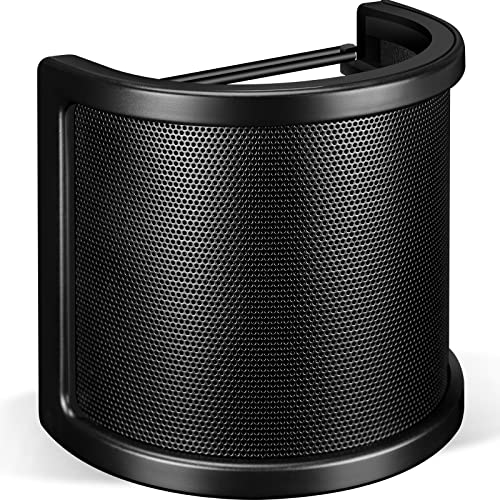
- Three-layer construction helps reduce plosives and breath noise
- Fits microphones measuring 45–63 mm
- Removable design helps protect the microphone from saliva
Best For: Compatible microphones used for podcasting, vocals, gaming, or streaming
Best Dual-Layer Clamp-On Filter – Aokeo Professional Pop Filter
For creators comparing microphone pop filters for podcasting, the Aokeo Professional Pop Filter offers a flexible, clamp-on setup and a dual-layer screen designed to reduce air blasts from plosive sounds. Its adjustable gooseneck also makes it easy to position around different microphones and stands.
Best For: Podcasters, streamers, singers, and voice performers who want adjustable placement and broad stand compatibility.
Pros:
- Dual-layer design helps disperse and contain plosive air pressure.
- Flexible 360-degree gooseneck supports angle and distance adjustments.
- Rotating clamp fits a variety of tubular booms and microphone stands.
- Swivel mount simplifies installation, removal, and repositioning.
Cons:
- Its clamp-and-gooseneck design requires a suitable boom or stand.
- The 6.4-ounce metal-and-plastic construction may be more setup than a simple foam cover.
The Aokeo is a practical choice when positioning flexibility matters as much as pop reduction. It is especially useful for fixed recording setups where you want to fine-tune the filter’s distance from the microphone.
Best Foam Covers for AT2020 Mics – Audio-Technica AT2020 Pop Filter
Audio-Technica AT2020 Pop Filter - 2 Windscreens for AT2020 & AT-2035 Microphones (Black)
Check Price On AmazonThese two foam windscreen covers are a straightforward option for microphone pop filters for podcasting, particularly when using an Audio-Technica AT2020, AT2020USB, or AT2020USB+ microphone. The washable quilted material is intended to help protect the microphone from dust and moisture while supporting clearer recordings.
Best For: AT2020-series owners who prefer compact foam covers for podcasting, voiceovers, interviews, and online calls.
Pros:
- Designed for AT2020, AT2020USB, and AT2020USB+ microphones.
- Includes two foam windscreen covers.
- Durable, easy-clean quilted material helps guard against dust and moisture.
- Suitable for podcasting, vocals, instruments, interviews, and conference calls.
Cons:
- Microphone is not included.
- Foam covers offer less placement adjustment than a clamp-mounted pop filter.
- The supplied notes identify specific AT2020-series compatibility rather than universal fit.
This two-pack makes sense for AT2020 users who want a low-profile cover and a spare. Choose it for convenience and microphone protection rather than the adjustable positioning of a dual-screen studio filter.
Best Value Handheld Mic Covers – Mudder 5-Pack Foam Windscreens
For handheld microphones, these Mudder covers provide a simple and economical alternative among microphone pop filters for podcasting. The five-piece set uses soft, thick foam designed to fit most standard handheld microphones and help keep saliva and moisture away from the mic.
Best For: Handheld microphones used for interviews, conference rooms, karaoke, stage performances, and portable recording.
Pros:
- Five covers provide convenient spares for frequent use or multiple microphones.
- Soft, elastic foam is designed for a snug fit on standard handheld microphones.
- Helps shield the microphone from saliva and moisture.
- Suitable for interviews, singing, karaoke, conferences, and stage use.
Cons:
- Not intended for headset microphones.
- Foam covers are less suitable for studio microphones that require a stand-mounted filter.
- They may need time to regain their shape after being compressed in the package.
The Mudder set is best when you need several inexpensive covers for handheld microphones rather than a positionable studio screen. Its five-pack format is useful for shared equipment and public-facing recording environments.
Best Adjustable Studio Filter – NEEWER Professional Pop Filter
The NEEWER Professional Microphone Pop Filter is a strong option for microphone pop filters for podcasting when you want a traditional, adjustable studio screen. Its dual-layer construction is designed to reduce plosives, while the clamp and gooseneck allow placement changes around compatible microphone stands and booms.
Best For: Podcasters, singers, streamers, and actors using a stand or boom-mounted microphone.
Pros:
- Dual-layer screen helps contain air blasts from plosive sounds.
- Adjustable steel gooseneck supports flexible angle and distance control.
- Scratch-proof rotating clamp fits various tubular booms and microphone stands.
- Swivel mount makes installation, removal, and repositioning straightforward.
Cons:
- Microphone is not included.
- Requires a compatible boom or stand for the clamp.
- Its metal construction is less minimal than a slip-on foam windscreen.
The NEEWER is a sensible studio-style pick for users who want repeatable filter placement and broad mounting flexibility. It is particularly well suited to podcast desks and vocal recording setups where plosive control is a priority.
Compact Metal Shield – FIFINE U1 Pop Filter
The FIFINE U1 is a compact option for microphone pop filters for podcasting, especially when you want plosive control without much obstruction between you and the mic. Its curved metal screen mounts with a rubber band and is designed for compatible microphones measuring 40–70 mm in diameter.
Best For: Podcasters and streamers using compatible FIFINE or similarly sized condenser microphones.
Pros:
- Helps block wind, air blasts, plosive noise, and moisture from saliva.
- Compact curved design creates less mic and face obstruction.
- Includes two replacement rubber bands for different microphone sizes.
- Soft interior padding helps protect the microphone from scratches.
Cons:
- Not recommended for dynamic microphones such as the FIFINE AM8, K688, or TANK3.
- Microphone is not included.
The U1 is a practical, low-profile choice if your microphone fits its size range. Check compatibility carefully before buying, particularly if you use a dynamic mic.
Isolation Ball Design – Penypeal Microphone Pop Filter
This Penypeal isolation-ball filter takes a more enclosed approach to microphone pop filters for podcasting. Its five-sided foam design and double-layered opening are intended to reduce plosives, wind interference, reflections, and saliva while fitting many microphones with removable jackets measuring 50–75 mm.
Best For: Home studios, podcast setups, and voice recording environments needing broader acoustic shielding.
Pros:
- Five-sided seal helps reduce noise from multiple directions.
- Double-layered opening helps control divergent sound during recording.
- Compatible with many XLR and USB microphones in the stated size range.
- Lightweight 120 g design can mount to desks, tripods, arms, or floor stands.
Cons:
- Requires a microphone with a removable jacket measuring 50–75 mm.
- The enclosed foam design may be less convenient than a simple clip-on screen for some setups.
Choose this model when reducing sound and airflow from several directions matters more than having the smallest possible pop filter. Confirm your microphone’s dimensions and removable-jacket design first.
Blue Yeti Specialist – YOUSHARES Blue Yeti Pop Filter Set
Designed specifically for the Blue Yeti, the YOUSHARES set combines a six-layer pop filter with a foam windscreen. It is a focused choice among microphone pop filters for podcasting when you want added plosive, saliva, dust, and vapor control around a Blue Yeti microphone.
Best For: Blue Yeti owners recording podcasts, voiceovers, streams, or video content.
Pros:
- Six-layer construction uses metal mesh and high-density windproof sponge.
- 360-degree adjustable gooseneck allows flexible positioning.
- L-style swivel clip is designed to mount securely and resist sliding.
- Includes both a pop filter and a foam windscreen.
Cons:
- Specifically designed for the Blue Yeti, limiting broad microphone compatibility.
- Its multi-layer construction may be more setup than needed for users wanting a basic screen.
For Blue Yeti users, this is a versatile two-piece package with adjustable positioning and layered protection. It makes the most sense when you want both a pop filter and a dedicated foam cover in one purchase.
PodMic Plosive Shield – Custom Foam Cover
For creators comparing microphone pop filters for podcasting, this custom foam cover is a straightforward option for the Rode PodMic. Its porous foam is designed to reduce plosives, breath, wind, and some background noise while helping protect the microphone from moisture and dust.
Best For: Rode PodMic owners who want a snug, low-profile foam windscreen for podcasting, streaming, or gaming.
Pros:
- Designed to fit the Rode PodMic.
- Helps reduce plosives, breath sounds, wind, and pop noise.
- Protects against flying spittle, dust, and moisture.
- Lightweight foam construction weighs about 10 grams.
Cons:
- Not a universal pop filter; it is customized for the Rode PodMic.
- The Rode PodMic is not included.
This is a practical pick if compatibility with the Rode PodMic matters most. Buyers using another microphone should choose a model designed for their microphone’s dimensions instead.
PEMOTech Three-Layer Shield – Universal Mic Cover
This PEMOTech model is a versatile choice among microphone pop filters for podcasting, with a three-layer foam, metal mesh, and etamine design. It fits microphones measuring 45 to 61 mm in diameter and is intended to reduce plosives, breath sounds, wind interference, crackles, and saliva exposure.
Best For: Users with compatible 45–61 mm microphones who want a removable, layered shield for recording, speaking, singing, or streaming.
Pros:
- Three-layer construction combines foam, metal mesh, and etamine.
- Fits a broad range of microphones measuring 45–61 mm.
- Elastic bands and an inner rubber ring help secure it to the microphone.
- Helps keep the microphone cleaner by limiting saliva exposure.
Cons:
- Not compatible with the Blue Yeti.
- Microphone is not included.
- Compatibility depends on the microphone’s diameter.
With its layered construction and broad stated fit range, this is a useful option for compatible studio microphones. Confirm your microphone’s diameter before ordering, especially because Blue Yeti compatibility is specifically excluded.
Aokeo Recording Shield – Three-Layer Mic Cover
For shoppers seeking microphone pop filters for podcasting, the Aokeo B-7 provides a three-layer cover for compatible microphones from 45 to 63 mm in diameter. Its foam, metal mesh, and etamine layers are intended to reduce plosives, pops, crackles, wind interference, and breath sounds during recording or streaming.
Best For: Podcasters, streamers, and vocalists using a compatible 45–63 mm microphone and wanting a removable protective shield.
Pros:
- Three-layer design targets plosives, pops, breath, and wind noise.
- Fits microphones measuring 45–63 mm, including several listed studio models.
- Rubber bands and an inner ring help hold the cover securely.
- Metal mesh and synthetic rubber bands are designed for durability.
Cons:
- Will not fit the Blue Yeti.
- Compatibility must be checked against the microphone’s diameter.
- Microphone is not included.
The Aokeo stands out for its slightly wider stated fit range and removable three-layer construction. It is a sensible choice for compatible microphones, provided the Blue Yeti exclusion and measurements are acceptable.
How We Picked These Microphone Pop Filters for Podcasting
We focused on practical factors that affect spoken-word recording: plosive reduction, microphone compatibility, installation, coverage, and portability. The selection includes both external mesh filters that mount in front of a microphone and foam covers that fit over the grille. We also considered whether each design suits a fixed podcast setup, streaming desk, studio recording, or handheld use.
Because microphone shapes and mounts vary, compatibility matters as much as filter material. A filter made for a Blue Yeti, AT2020, or Rode PodMic may not fit another microphone securely, so check dimensions and mounting details before ordering.
Quick Comparison
| Filter type | Best for | Main advantage |
|---|---|---|
| Gooseneck mesh shield | Desk podcasting and streaming | Adjustable positioning and broad coverage |
| Foam windscreen | Simple setups and portable recording | Fast installation with no stand required |
| Microphone-specific cover | Blue Yeti, PodMic, and similar models | Closer fit and cleaner appearance |
| Handheld mic cover | Interviews, live use, and presentations | Lightweight protection against breath noise and wind |
| Isolation-style shield | Home studios | Additional control around the microphone capsule |
Key Buying Factors
Compatibility and Fit
Confirm the product is designed for your microphone or has a universal mounting system. Foam covers need the correct diameter, while clamp-on filters need enough room on the desk or stand and a flexible arm that can reach the microphone.
Filter Construction
Mesh screens are typically useful for close vocal work and let you position the filter at a consistent distance. Foam windscreens are quicker to fit and more portable, but they can alter the microphone’s high-frequency response slightly. Multi-layer designs may provide additional plosive control, though proper microphone technique still matters.
Mounting and Positioning
A pop filter should sit between your mouth and the microphone, usually a few inches from the capsule. Look for a sturdy clamp, flexible gooseneck, or secure microphone-specific fit. Avoid placing the screen so close that it touches the microphone or restricts your normal movement.
Recording Environment
For a quiet desk setup, a standard mesh shield is often sufficient. If you record near a fan, air conditioner, or outdoors, a foam windscreen may provide useful additional protection. An isolation-style product can help limit some nearby reflections, but it cannot replace acoustic treatment or good microphone placement.
Who Should Buy Which Microphone Pop Filters for Podcasting?
Desk podcasters and streamers: Choose an adjustable mesh filter such as the Aokeo, NEEWER, or FIFINE-style designs if you want repeatable positioning and broad microphone coverage.
Blue Yeti owners: A model-specific foam cover or shield is usually the simplest option, provided the listed dimensions match your microphone.
Rode PodMic users: Select the customized PodMic cover for a close fit and straightforward installation.
AT2020 owners: The Audio-Technica-compatible option is a sensible choice when you want a filter designed around that microphone family.
Handheld performers and interviewers: Foam or multi-layer handheld windscreens are compact, easy to replace, and better suited to moving between locations.
Home-studio users: Consider a larger isolation-style shield if you need more surrounding coverage, but pair it with controlled mic distance and a treated recording space for the best results.