A reliable wireless in-ear monitor system helps singers hear pitch, timing, and cues without relying on loud wedge monitors. The right setup can also reduce stage clutter and make movement easier during rehearsals, gigs, and performances.
This roundup compares 10 systems across wireless bands, channel options, stereo support, operating range, battery design, and multi-receiver flexibility so you can choose a setup that fits your stage and budget.
Best 10 Wireless in Ear Monitor System for Singers Picks for 2026
Best Overall

- 24-bit/48 kHz audio with under 5 ms latency
- True Diversity reception supports stable stage monitoring
- Up to six channels with flexible mixer connectivity
Best For: Singers seeking clear, responsive, and adaptable stage monitoring
Best for Bands
Phenyx Pro PTM-33-4B UHF System

- Four receivers support simultaneous performer monitoring
- Up to four standalone mixes from one transmitter
- Rack-mountable UHF design with IR syncing
Best For: Bands and worship teams needing separate mono mixes
Best for Small Gigs
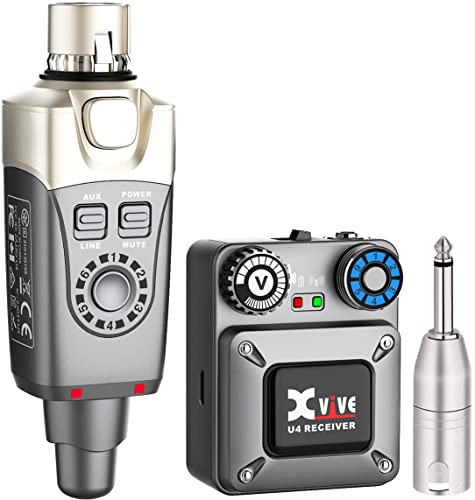
- Compact 2.4 GHz transmitter-and-receiver kit
- Under 5 ms latency and six available channels
- Up to five hours of rechargeable battery life
Best For: Solo singers and performers in small venues
Best Budget Multi-Receiver
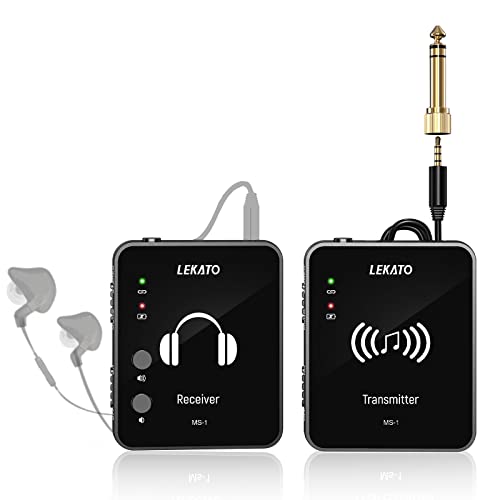
- One transmitter supports multiple receivers
- Stereo or mono transmission with auto-pairing
- Up to 100 feet of open-area range and five-hour battery life
Best For: Small groups sharing a wireless rehearsal or stage monitor feed
RF-Ready Stage Performer
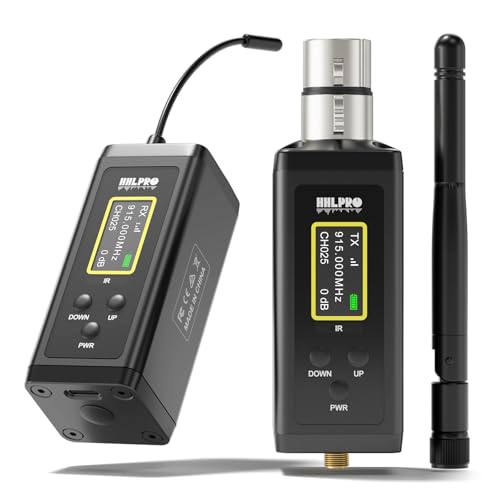
- 902–927MHz UHF with under 5ms latency
- 300-foot range and 50 channels
- Rugged metal build with auto-scan setup
Best For: Singers and bands needing stable mono monitoring for live venues
Versatile Stereo Monitor

- Mono/stereo switching for vocals or instruments
- Color receiver screen and under 6ms latency
- Up to 10 hours with broad audio connectivity
Best For: Singers wanting flexible stereo monitoring for rehearsals and studio use
Band-Building Battery Pick

- Includes two receivers and a charging case
- Up to 30 hours of combined usage
- OTG input plus mono/stereo switching
Best For: Bands needing multiple portable receivers for rehearsals and live shows
Best UHF Value
POGOLAB 7-Channel Wireless IEM

- 1ms latency with 48kHz/24-bit audio
- Seven selectable UHF channels
- XLR and AUX/LINE connectivity
Best For: Singers needing flexible stage connectivity and extended UHF range
Best Battery Life
Voxfull M6S Stereo Wireless IEM

- Automatic transmitter-receiver pairing
- Up to 10 hours of stated battery life
- Includes in-ear headphones
Best For: Singers wanting an easy, long-running monitoring package
Best for Multiple Performers

- One transmitter supports up to four receivers
- Under 4.5ms mono latency
- 6–8 hours of claimed battery life
Best For: Bands and rehearsal groups sharing one transmitter
Best Overall – Xvive U45 True Diversity IEM
The Xvive U45 is a strong wireless in ear monitor system for singers who want detailed audio, low latency, and added RF stability for live performance. Its 5.8 GHz True Diversity design, smart channel scan, and flexible mixer connections make it adaptable across rehearsals and venues.
Best For: Singers and performers who prioritize clear, responsive monitoring and reliable stage connectivity.
Pros:
- 24-bit/48 kHz audio with less than 5 ms latency
- True Diversity reception and dual antennas help maintain a stable connection
- Smart channel scan helps locate a suitable RF channel quickly
- Supports up to six channels and balanced XLR or 1/4-inch inputs
Cons:
- Battery life is listed at approximately five hours
- Uses RF wireless rather than Bluetooth connectivity
- Does not include noise control
With high-resolution sound and versatile connectivity, the U45 is a well-rounded choice for singers building a dependable wireless monitoring setup.
Best for Bands – Phenyx Pro PTM-33-4B UHF System
The Phenyx Pro PTM-33-4B is a wireless in ear monitor system for singers and bands that need several independent monitor feeds. Its four-channel transmitter, four bodypack receivers, and left/right inputs are designed to support multiple performers from one mixer setup.
Best For: Four-member bands, worship teams, stage productions, and other groups needing separate monitor mixes.
Pros:
- Includes four UHF bodypack receivers for multi-performer monitoring
- Provides up to four standalone mixes with no stated audio delay
- Offers 4×25 UHF frequencies and a listed 140–164 ft line-of-sight range
- Rack-mountable transmitter includes loop outputs and IR syncing
Cons:
- Provides mono monitoring only
- Range can be reduced by thick walls, glass, and metal obstacles
- Requires four auxiliary mixer outputs for the integrated monitoring setup
This is a practical package for ensembles that want individual mono mixes and multiple receivers without assembling a system piece by piece.
Best for Small Gigs – Xvive U4 Wireless IEM
The Xvive U4 is a compact wireless in ear monitor system for singers performing in small clubs, rehearsal spaces, and similar venues. It uses 2.4 GHz wireless transmission, offers a listed range of over 90 feet, and keeps latency below 5 ms for a responsive onstage feel.
Best For: Solo singers and small-stage performers who want a simple, portable monitoring kit.
Pros:
- Compact transmitter-and-receiver set is easy to transport
- Less than 5 ms latency helps keep monitoring responsive
- Supports six channels for personal or team monitoring
- Rechargeable units provide up to five hours of battery life
Cons:
- The set includes one receiver, so additional performers require more receivers
- Its listed working range is over 90 feet, shorter than some larger systems
- Does not include noise control
For singers who need straightforward wireless monitoring without a larger rack-based setup, the U4 offers a portable and easy-to-deploy option.
Best Budget Multi-Receiver – LEKATO MS-1 Stereo IEM
The LEKATO MS-1 is a flexible wireless in ear monitor system for singers who want to send one monitor feed to multiple receivers. It supports stereo or mono transmission, auto-pairing, and up to six simultaneously operating device sets, making it suitable for rehearsals, churches, and small or medium gigs.
Best For: Small bands and rehearsal groups that want shared wireless monitoring with stereo support.
Pros:
- One transmitter can pair with multiple receivers
- Supports stereo transmission and one-key stereo/mono switching
- Offers 24-bit/48 kHz audio, a 20 Hz–20 kHz response, and under 12 ms latency
- Provides up to 100 feet of open-area range and over five hours of battery life
Cons:
- Its stated latency is higher than systems rated below 5 ms
- True stereo requires a stereo audio source and stereo cable
- Plastic enclosure may feel less rugged than metal alternatives
The MS-1 stands out when several performers need the same feed and the flexibility of stereo or mono operation matters more than ultra-low latency.
RF-Ready Stage Performer – UHF Wireless IEM System
For singers looking for a wireless in ear monitor system for singers that can handle busy venues, this UHF model emphasizes signal stability, fast setup, and long-range movement. Its 902–927MHz frequency range, auto-scan function, and low-latency performance make it suited to demanding live work.
Best For: Vocalists, drummers, and full bands performing in bars, churches, rehearsal spaces, and other larger venues.
Pros:
- 902–927MHz UHF transmission, under 5ms latency, and a stated 300-foot range.
- One transmitter can support unlimited receivers, with 50 selectable channels for band use.
- Auto-scan and one-touch sync simplify setup in unfamiliar RF environments.
- Metal construction, hard case, and 5–8 hours of battery use support frequent gigging.
Cons:
- The mono design is less flexible than a stereo monitoring system.
- Battery life is shorter than some competing systems, at approximately 5–8 hours.
- Earphones are not specifically listed among the included accessories.
This is a practical choice when dependable range and coordinated band monitoring matter more than stereo flexibility. Dual volume controls and included adapters add useful flexibility for live performers.
Versatile Stereo Monitor – Donner CV-3 Wireless IEM
The Donner CV-3 is a versatile wireless in ear monitor system for singers who want stereo or mono monitoring, a compact receiver, and clear on-device feedback. Its 2.4GHz connection, color display, and broad input compatibility suit rehearsals, studio work, and live performance.
Best For: Singers and instrumentalists who want lightweight stereo-capable monitoring for band rehearsal, studio sessions, and smaller live setups.
Pros:
- Supports mono and stereo modes for flexible vocal and instrument monitoring.
- 192kHz sampling, 24-bit depth, 110dB SNR, and less than 6ms latency are specified.
- Color screen provides real-time audio visualization and system information.
- Rechargeable battery offers up to 10 hours of use, with 1/4-inch, 1/8-inch, and XLR connectivity.
Cons:
- The 100-foot working range is shorter than some long-range UHF alternatives.
- Its 2.4GHz band may be less suitable for especially crowded wireless environments.
- The system is supplied as one transmitter and one receiver, limiting immediate multi-performer use.
Choose the CV-3 if stereo flexibility and a readable receiver interface are priorities. Its lightweight zinc-alloy build and 10-hour battery make it especially convenient for rehearsals and shorter performance days.
Band-Building Battery Pick – LEKATO MS-20 IEM System
For singers and bands comparing a wireless in ear monitor system for singers, the LEKATO MS-20 stands out for its included two receivers, charging case, and extended combined battery life. Auto-pairing, OTG support, and one-to-many transmission make it convenient for shared monitoring setups.
Best For: Bands, singers, and rehearsal groups that need two receivers, portable charging, and simple 2.4GHz setup.
Pros:
- Includes one transmitter and two receivers, with support for up to 10 device pairs.
- Charging case provides up to 30 hours of usage and the system uses auto-pairing.
- Supports mono/stereo switching, OTG input, and 24-bit/48kHz audio.
- 150-foot open-area range and low-noise, low-latency monitoring support stage movement.
Cons:
- Earphones are not included, so compatible in-ear headphones must be supplied separately.
- The 2.4GHz connection may be less suitable for heavily congested wireless environments.
- It is not water resistant.
The MS-20 is a strong portability-focused option for groups that can use multiple receivers. Its charging case and two-receiver bundle reduce the need for separate hardware during rehearsals and performances.
Best UHF Value – POGOLAB 7-Channel Wireless IEM
For singers seeking a dependable wireless in ear monitor system for singers, the POGOLAB MWB-1 combines UHF transmission, very low latency, and flexible mixer connectivity. Its balanced XLR input and selectable channels make it a practical choice for live stages, rehearsals, and worship settings.
Best For: Singers and performers who need reliable UHF range, XLR input support, and quick channel selection.
Pros:
- 1ms latency with 48kHz/24-bit audio and distortion below 0.5%.
- Seven selectable UHF channels and a stated line-of-sight range of up to 164 feet.
- Balanced XLR input, AUX/LINE switch, USB-C charging, and belt-clip receiver.
Cons:
- Battery life is rated for up to 5 hours, which may require recharging during longer events.
- Earbuds or in-ear monitors are not listed among the included accessories.
The POGOLAB stands out when low latency and professional-style XLR connectivity matter most. Its shorter battery rating is the main tradeoff, but the seven-channel UHF design and included adapters make it versatile for stage use.
Best Battery Life – Voxfull M6S Stereo Wireless IEM
The Voxfull M6S is a convenient wireless in ear monitor system for singers who want automatic pairing and included earphones. Its 2.4GHz wireless design supports mono or stereo input, while the rechargeable battery is suited to extended rehearsals and performances.
Best For: Singers, church teams, and small stage groups that prioritize simple setup, included earphones, and longer operating time.
Pros:
- Automatic transmitter-receiver pairing without manual channel selection.
- Up to 10 hours of stated battery life after a full charge.
- Includes in-ear headphones and supports mono/stereo input switching.
Cons:
- Its 2.4GHz wireless design may offer less channel flexibility than a multi-channel UHF system.
- Charging takes approximately 3 hours according to the supplied details.
With automatic pairing, a long claimed battery life, and earphones included, the M6S is a straightforward starter package. It is especially appealing for singers who want less setup work and do not already own compatible in-ear monitors.
Best for Multiple Performers – LEKATO MS-02 Wireless IEM
The LEKATO MS-02 is a useful wireless in ear monitor system for singers working with bands, trainees, or small and medium stages. Its one-to-more setup can support multiple receivers, and mono/stereo modes plus a compact beltpack make it adaptable for rehearsals and performances.
Best For: Small bands, singers, and teaching or rehearsal setups where several performers need monitoring from one transmitter.
Pros:
- One transmitter can send to up to four receiver pairs simultaneously.
- Mono latency is stated at under 4.5ms with 24-bit/48kHz audio.
- Offers 6–8 hours of claimed operation, volume and battery LEDs, mute, and mono/stereo modes.
Cons:
- Earbuds are not included and must be purchased separately.
- Its stated open-area range is 100 feet, shorter than some UHF alternatives.
The MS-02 is the strongest fit here for shared monitoring because one transmitter can serve multiple receivers. Remember to budget for separate earbuds, and consider its 100-foot open-area range when planning a larger stage.
How We Picked the Best Wireless in Ear Monitor System for Singers
We focused on the features that matter most in live vocal monitoring: dependable wireless transmission, practical operating range, low latency, usable battery life, easy pairing, and compatibility with common mixer outputs. We also considered whether each system supports mono or stereo monitoring, multiple receivers, rechargeable components, and flexible input connections such as XLR, line, or auxiliary inputs.
Wireless performance depends on venue layout, interference, antenna placement, and local regulations, so published range figures should be treated as best-case estimates rather than guarantees.
Quick Comparison
| Feature | Why It Matters | What to Look For |
|---|---|---|
| Wireless band | Affects interference resistance and regional suitability | UHF or 2.4/5.8 GHz systems with a clear channel plan |
| Monitoring mode | Determines how much control you have over the mix | Stereo for spacious mixes; mono for simpler vocal monitoring |
| Latency | Delays can make singing feel disconnected | Low-latency designs, especially for close vocal timing |
| Receiver count | Controls how many performers can monitor the signal | One-to-many support for bands and group performances |
| Power system | Determines rehearsal and show convenience | Rechargeable batteries, charging cases, and clear battery indicators |
Key Buying Factors for a Wireless In-Ear Monitor System for Singers
Choose the Right Frequency and Channels
UHF systems can offer useful range and channel flexibility, but they may require more careful frequency planning. 2.4 GHz and 5.8 GHz systems are often simpler to set up, though crowded venues can create congestion. For frequent touring or professional stage work, select a system with multiple selectable channels and a clear pairing process.
Check Mono, Stereo, and Input Compatibility
Mono is often sufficient for a lead vocal, click track, or basic cue mix. Stereo is more useful when you need separation between vocals, instruments, and effects. Confirm that the transmitter accepts the outputs from your mixer, audio interface, or stage box, and check whether balanced XLR connections are available when you need longer cable runs.
Prioritize Low Latency and Stable Range
Even small delays can be distracting when singing. Look for a stated low-latency design and test the system at the distances and angles you expect on stage. Keep the transmitter elevated and unobstructed, and avoid assuming that a maximum range rating will apply in a crowded room.
Plan for Battery Life and Fit
Receivers should last through a complete performance with reserve power. Charging cases can simplify band-wide maintenance, while belt clips help keep packs secure. Your earbuds or in-ear monitors are equally important: a good wireless system cannot compensate for uncomfortable earpieces, poor isolation, or an unsuitable sound signature.
Who Should Buy Which Wireless in Ear Monitor System for Singers?
- Solo singers and small setups: Choose a straightforward, low-latency mono or stereo kit with simple pairing and a durable beltpack.
- Bands: Look for one-to-many support, multiple channels, and enough receivers for every performer who needs monitoring.
- Touring or frequent gigging musicians: Favor selectable UHF channels, robust connectors, dependable range, and replaceable or long-lasting power options.
- Home rehearsal and content creators: A compact 2.4 GHz system with automatic pairing and rechargeable components may offer the easiest setup.
- Performers needing detailed mixes: Select stereo transmission and use a mixer capable of creating separate monitor sends for vocals, instruments, and cues.
Before buying, confirm the number of performers, mixer outputs, required range, local frequency rules, and whether your preferred in-ear headphones use the receiver’s connector. Those checks will narrow the list more effectively than range or battery claims alone.