Thick soundproofing mats can reduce vibration, block airborne noise, absorb echoes, or add thermal insulation—but no single material excels at every job. The right choice depends on where you plan to install it and whether your priority is blocking, damping, or absorption.
This roundup compares mass-loaded vinyl, butyl deadening mats, closed-cell foam, and acoustic panels across thickness, coverage, installation, and intended use. Use the guide below to narrow the options before buying.
Best 10 Thick Soundproofing Mats Picks for 2026
Best Full-Car Roll
VEVOR Noise Grabber Mass Barrier

- 5.1mm-thick three-layer foam construction
- 36 sq. ft. roll for custom vehicle coverage
- Peel-and-stick installation with aluminum foil surface
Best For: Large or irregularly shaped automotive soundproofing projects
Best Maximum Thickness
GOSCHE 394 Mil Sound Deadening Mat

- 394-mil, 10mm-thick closed-cell foam
- 15 pre-sized sheets cover 16 sq. ft.
- Designed for vibration, noise, and heat reduction
Best For: Targeted automotive insulation on flat metal surfaces
Best for Studio Echo
2-Inch Pyramid Acoustic Foam Panels

- Two-inch pyramid foam absorbs echo and reverberation
- 24 panels provide 24 sq. ft. of coverage
- Flame-retardant polyurethane foam construction
Best For: Studios, podcast rooms, gaming setups, and home theaters
Best Easy-Install Butyl Mats

- 33-piece kit covers 36 sq. ft.
- Three-layer butyl and reinforced foil construction
- High-tack peel-and-stick installation
Best For: Broad, low-complexity vehicle sound and vibration treatment
Best Acoustic Panels
BXI High-Density Sound Absorber Panels

- NRC 0.95 for echo and reverb control
- Six cuttable polyester-fiber panels
- Covers 7.7 square feet
Best For: Recording rooms, gaming spaces, offices, and home theaters
Best Automotive Mat
Storystore 394-Mil Car Sound Deadening Mat

- 10 mm thick and covers 16.5 square feet
- Reduces vehicle noise and vibration
- Adds heat insulation with included roller
Best For: Car doors, hoods, roofs, trunks, floors, and engine areas
Best for Easy DIY Installs

- 4mm closed-cell foam reduces noise and vibration
- Blocks up to 98% of radiant heat
- 6 sq. ft. with strong adhesive backing
Best For: Targeted insulation projects in cars, trucks, and RVs
Best Heavy-Duty Pick

- 10mm foam offers a substantial insulation layer
- Foil-faced surface helps block heat
- Self-adhesive panel covers about 6 sq. ft.
Best For: Targeted automotive heat and sound protection
Best for Large Coverage
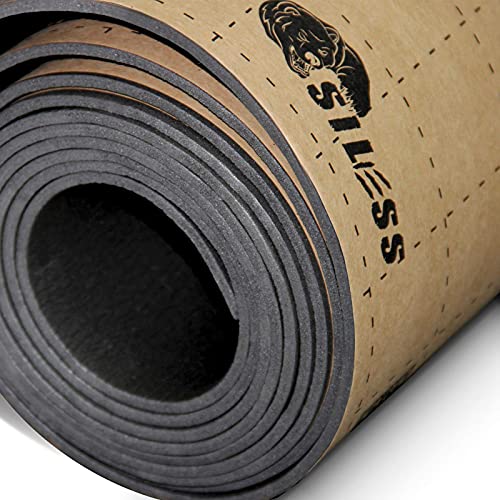
- 36 sq. ft. roll covers multiple vehicle areas
- Waterproof closed-cell PE foam resists moisture
- Self-adhesive and flexible for DIY installation
Best For: Broad insulation projects across doors, floors, roofs, and trunks
Best Full-Car Roll – VEVOR Noise Grabber Mass Barrier
For shoppers comparing thick soundproofing mats for vehicle projects, the VEVOR Noise Grabber offers a 5.1mm foam roll with 36 square feet of coverage. Its three-layer construction combines aluminum foil, high-density foam, and adhesive backing for noise reduction, heat insulation, and easier custom fitting.
Best For: Vehicle owners who want a sizable, cut-to-fit roll for doors, floors, trunks, or other irregular areas.
Pros:
- 5.1mm-thick foam provides substantial material for vehicle sound control.
- 36-square-foot roll can cover small and large vehicle projects.
- Self-adhesive backing simplifies installation without additional adhesive.
- Aluminum foil surface supports heat resistance, waterproofing, and fire resistance.
Cons:
- A rolling tool is not included for securing an especially even fit.
- The roll format may require more measuring and cutting than pre-sized sheets.
This is a practical choice when coverage and flexibility matter more than ready-cut convenience. Its odorless construction and multi-purpose barrier design add appeal for a complete automotive insulation project.
Best Maximum Thickness – GOSCHE 394 Mil Sound Deadening Mat
Among thick soundproofing mats for cars, this GOSCHE kit stands out with 394-mil, 10mm-thick material supplied as 15 pre-sized sheets. The closed-cell foam is designed to damp vibrations, reduce road and engine noise, and limit heat transfer on suitable flat metal surfaces.
Best For: DIY vehicle projects where very thick pre-cut sheets are preferred for doors, floors, firewalls, or similar flat areas.
Pros:
- 10mm thickness helps damp vibrations and unwanted vehicle noise.
- 15 sheets make handling and section-by-section installation straightforward.
- 16 square feet of coverage suits targeted automotive applications.
- Peel-and-stick design requires only cutting, peeling, and pressing.
Cons:
- Coverage is lower than the larger 36-square-foot roll options.
- Pre-sized 9.8-by-15.7-inch sheets may be less convenient for unusually shaped spaces.
Choose this kit when maximum listed thickness and manageable sheet sections are priorities. It is particularly suited to focused insulation work rather than covering an entire vehicle with one continuous roll.
Best for Studio Echo – 2-Inch Pyramid Acoustic Foam Panels
These 2-inch pyramid panels are thick soundproofing mats in a wall-mounted acoustic-foam format, intended primarily to absorb echo and reverberation. The 24 polyurethane foam panels provide 24 square feet of coverage for studios, podcast rooms, gaming spaces, offices, and home theaters.
Best For: Improving room acoustics and reducing echoes in recording, podcasting, gaming, and entertainment spaces.
Pros:
- 2-inch-thick pyramid design increases surface area for sound absorption.
- 24 panels cover 24 square feet of wall or ceiling space.
- Flame-retardant foam is designed with safety in mind.
- Lightweight panels can be installed without professional assistance.
Cons:
- Adhesive or nano double-sided tape is not included.
- Designed for echo control, not full soundproofing or outside-noise isolation.
These panels make sense for controlling reflections inside a room rather than blocking sound from entering or leaving it. Their pyramid profile also adds a distinctive visual treatment to a studio or media space.
Best Easy-Install Butyl Mats – 80mil Car Sound Deadening Mat
For a straightforward automotive upgrade, these thick soundproofing mats use an 80-mil, three-layer butyl construction with reinforced aluminum foil and high-tack adhesive. The 33-piece kit covers 36 square feet and is designed to reduce road, engine, wind, and vibration noise while also helping with heat insulation.
Best For: Car owners seeking broad vehicle coverage and a simple peel-and-stick installation.
Pros:
- 36 square feet of coverage suits doors, trunks, and other vehicle areas.
- Butyl core absorbs vibrations while reinforced foil helps reflect heat.
- High-strength adhesive is designed for a durable bond without a roller.
- Waterproof material has a listed working range of -50°F to 300°F.
Cons:
- At 80 mils, it is thinner than the 200-mil and 394-mil automotive options listed here.
- Surface preparation and firm pressing are still needed for proper adhesion.
This kit is a balanced option for DIYers who value generous coverage, manageable individual pieces, and quick installation. Its 2mm profile may also help limit added bulk while treating common sources of vehicle noise.
Best Acoustic Panels – BXI High-Density Sound Absorber Panels
For treating echo and reverb rather than blocking sound transmission, these thick soundproofing mats provide a practical wall- or ceiling-mounted option. The six polyester-fiber panels cover 7.7 square feet and can be cut to fit a recording, gaming, or home-theater setup.
Best For: Reducing echo and mid-to-high-frequency noise in rooms, studios, offices, podcast spaces, and vocal booths.
Pros:
- High-density 200 kg/m³ polyester-fiber construction with a listed NRC of 0.95.
- Absorbs sound energy to reduce reverb and echo.
- Odorless, non-toxic, formaldehyde-free, and Class B1 flame retardant.
- Cuttable and compatible with construction adhesive or 3M VHB tape.
Cons:
- Six panels cover only 7.7 square feet, so larger rooms may require multiple packs.
- Designed for acoustic absorption, not mass-based sound blocking.
- Mounting adhesive or tape is sold separately.
This is a strong choice when your priority is improving room sound quality and controlling reflections. Its compact panels are easy to arrange, but it is less suited to blocking noise passing through walls.
Best Sound Barrier – TroyStudio Mass Loaded Vinyl
For projects that need added mass to help block sound, this flexible 1 lb/sq. ft. mass-loaded vinyl is a more barrier-oriented alternative to absorbent panels. The 1/8-inch sheet covers 8 square feet and can be installed on walls, ceilings, floors, doors, ducts, or vehicle surfaces.
Best For: Sound blocking and vibration control in walls, ceilings, doors, HVAC systems, vehicles, studios, and home theaters.
Pros:
- One-pound-per-square-foot density and a listed STC rating of 28.
- Thin, flexible construction adds mass without taking up much space.
- Damping rubber component helps reduce vibration.
- Cuttable, waterproof, flame retardant, and supplied with a nonwoven fabric backing for adhesive application.
Cons:
- The 8-square-foot roll may not cover large wall or ceiling projects.
- Seams and joints require acoustic caulking or barrier tape for best results.
- Installation requires careful cutting and attachment with adhesive, nails, or screws.
This is the most suitable option here for blocking or dampening transmitted noise because its dense construction adds mass. Plan for sealed seams and a secure mounting method to get the intended performance.
Best Automotive Mat – Storystore 394-Mil Car Sound Deadening Mat
For automotive projects, this thick soundproofing mat combines noise and vibration reduction with thermal insulation. The 394-mil, or 10 mm, material covers 16.5 square feet and includes a roller for applying the self-adhesive mat to vehicle panels.
Best For: Reducing road and engine noise while insulating doors, hoods, roofs, trunks, firewalls, wheel arches, and other vehicle areas from heat.
Pros:
- 10 mm thickness and 16.5-square-foot coverage suit broad automotive applications.
- Designed to reduce noise and vibration while limiting thermal radiation.
- Strong self-adhesive backing supports a five-step installation process.
- Fire- and water-resistant, odorless, and supplied with an installation roller.
Cons:
- Primarily intended for vehicles rather than household walls or ceilings.
- Thicker material may require careful trimming around tight-clearance areas.
- Installation requires surface removal and cleaning before cutting and sticking.
This mat makes the most sense for vehicle owners who want both acoustic and heat insulation. Its generous coverage and included roller simplify installation, while the automotive-focused design limits its usefulness for general room soundproofing.
Best for Easy DIY Installs – 4mm Car Foam Deadener
For shoppers comparing thick soundproofing mats, this 157-mil, three-layer foam deadener offers a practical balance of coverage, flexibility, and thermal protection. Its 4mm closed-cell foam is designed to reduce road noise and vibrations while fitting doors, floors, hoods, trunks, and firewalls.
Best For: DIY vehicle owners who want a flexible 6-square-foot mat for targeted sound and heat insulation.
Pros:
- 4mm high-density closed-cell foam helps reduce road noise and vibrations.
- Blocks up to 98% of radiant heat, according to the supplied product information.
- Strong, heat-resistant adhesive and material that is easy to cut and trim.
- Suitable for cars, trucks, and RVs, including tight or complex contours.
Cons:
- The 6-square-foot coverage is smaller than a full-vehicle roll.
- Installation requires surface cleaning, cutting, and panel removal or disassembly.
This mat is a useful choice when you need thick soundproofing mats for selected vehicle areas rather than a large whole-cabin project. The closed-cell construction and adhesive backing make it straightforward to install, while the modest coverage suits focused repairs or upgrades.
Best Heavy-Duty Pick – 10mm Aluminum Foil Foam Mat
Among thick soundproofing mats, this 10mm aluminum-foil foam panel emphasizes substantial insulation for automotive heat and sound protection. The self-adhesive mat is intended to help block engine, exhaust, and sunlight heat while dampening transmitted noise and vibration.
Best For: Vehicle owners prioritizing a thicker heat barrier for automotive insulation and cabin comfort.
Pros:
- 10mm thickness provides a substantial foam insulation layer.
- Aluminum foil and fiberglass surface are described as heatproof.
- Helps keep heat out in summer and retain warmth in winter.
- Self-adhesive format supports installation without separately specified adhesive.
Cons:
- Approximately 6 square feet of coverage limits it to smaller or targeted areas.
- The thicker construction may be less convenient for tight panel clearances.
This is a strong fit when thickness and thermal protection matter more than broad coverage. Its 10mm profile and foil-faced foam make it particularly suited to focused areas exposed to engine, exhaust, or solar heat.
Best for Large Coverage – Siless 4mm Foam Roll
For larger vehicle projects, this 157-mil roll is one of the more practical thick soundproofing mats because it provides 36 square feet of waterproof, self-adhesive closed-cell foam. It is designed for doors, roofs, trunks, floors, and firewalls, helping limit radiant heat while supporting sound and vibration control.
Best For: Full or multi-area vehicle installations that require extensive foam coverage.
Pros:
- 36 square feet of coverage is suitable for broad installation areas.
- Waterproof, oil-resistant closed-cell polyethylene foam does not absorb moisture.
- Self-adhesive backing and flexible roll format simplify fitting around vehicle surfaces.
- Blocks up to 98% of radiant heat and operates up to 215°F, according to the supplied notes.
Cons:
- At 4mm thick, it is thinner than the 10mm option in this roundup.
- The long roll may require careful measuring, cutting, and storage during installation.
This roll stands out when coverage is the main priority. Its waterproof closed-cell construction and adhesive backing make it a practical foundation layer for insulating several parts of a vehicle without buying multiple small mats.
How We Picked These Thick Soundproofing Mats
We grouped the selected products by their acoustic function rather than treating thickness as the only measure of performance. Mass-loaded vinyl and foil-backed barriers are primarily designed to add mass and block sound transmission. Butyl mats help damp metal panels and reduce resonance, while closed-cell foam can provide decoupling and thermal insulation. Acoustic foam panels are intended mainly to absorb reflections and control echo inside a room.
We also considered coverage, listed thickness, material type, likely installation surface, and whether each product suits a vehicle, wall, ceiling, floor, enclosure, or recording space. Product specifications can vary by seller, so verify dimensions, adhesive requirements, and fire or heat ratings before installation.
Quick Comparison
| Material type | Best use | Main benefit | Watch for |
|---|---|---|---|
| Mass-loaded vinyl | Walls, floors, barriers | Blocks transmitted noise | Heavy and often needs separate attachment |
| Butyl deadening mat | Vehicle panels and metal surfaces | Reduces vibration and resonance | Requires careful rolling and surface preparation |
| Closed-cell foam | Vehicle interiors and decoupling layers | Lightweight insulation and separation | Usually does not block low-frequency noise alone |
| Acoustic foam panels | Interior walls and studios | Reduces echo and reflections | Does not soundproof a room by itself |
Key Buying Factors for Thick Soundproofing Mats
Choose the Acoustic Function First
For sound transmission through a wall, door, or floor, prioritize a dense barrier such as mass-loaded vinyl. For rattling body panels, a conformable butyl mat is generally more appropriate. For room echo, use absorptive foam panels, ideally with additional bass trapping and wall treatment.
Check Thickness, Density, and Coverage
A thicker product is not automatically better. Density and total installed mass matter for blocking, while coverage determines how much of a surface you can treat. Compare square-foot coverage, roll dimensions, and the number of layers required instead of relying only on a millimeter or mil rating.
Match the Material to the Installation Area
Vehicle applications need flexible sheets that adhere securely to clean metal and tolerate expected temperatures. Walls and floors may need mechanically secured barriers, seams that are properly overlapped, and a decoupling layer. Never cover ventilation, drains, access panels, wiring, or safety equipment.
Plan for Installation Weight and Finish
Dense mats can add substantial weight, especially when layered. Confirm that doors, trim, ceilings, and mounting surfaces can support the finished system. Measure carefully, budget for a roller, gloves, sealant, or compatible adhesive, and follow the manufacturer’s safety instructions.
Who Should Buy Which Thick Soundproofing Mats?
For vehicle vibration: Choose a butyl sound-deadening mat for doors, floors, roofs, trunks, and other resonant metal panels. A roller and thorough surface cleaning are essential.
For blocking noise between spaces: Choose a dense mass-loaded vinyl barrier, then install it continuously with sealed seams and minimal gaps. It works best as part of a layered wall, floor, or ceiling assembly.
For vehicle insulation: Pair a vibration-damping mat with closed-cell foam when you need separation, heat insulation, and reduced trim noise. Foam alone is not a substitute for a dense barrier.
For echoes in a room: Select acoustic absorption panels rather than a heavy barrier. Place them at reflection points and combine them with appropriate furnishings or bass treatment for more balanced results.