Choosing the right stereo bus compressor can transform a good mix into a cohesive, polished master. The best models add glue, punch, and control without flattening the music.
This roundup focuses on 10 standout options for studio mixing, bus processing, and finishing duties, from transparent mastering-grade units to characterful VCA designs.
Best 10 Stereo Bus Compressor Picks for 2026
Flagship SSL Control
Premium stereo bus compressor with extra mixing tools

- 2181 THAT VCAs
- Four compression modes
- Dynamic Analogue Equalizer
Best For: Engineers who want classic SSL-style bus compression with added tone shaping
Recall-Friendly 500-Series
WesAudio Dione 500 stereo compressor
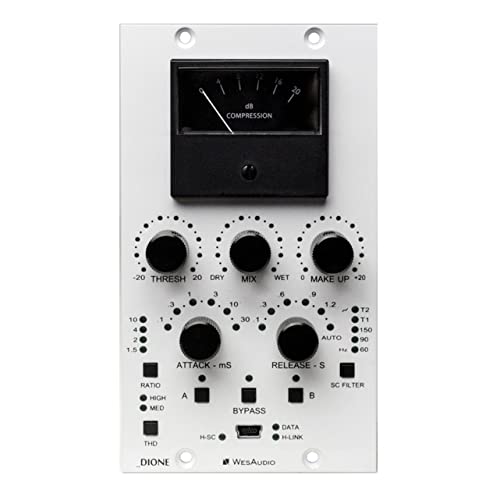
- 500-series analog design
- Digital recall support
- Stereo bus compression
Best For: 500-series users who want analog compression with recall convenience
Most Flexible SSL Choice
Solid State Logic BusPlus compressor

- 2181 THAT VCAs
- Four operating modes
- Three coloration options
Best For: Mix engineers who want maximum SSL-style compression flexibility
Clean 500-Series Dynamics
elysia xpressor neo 500 stereo compressor

- Class A topology
- Parallel processing
- Variable release curves
Best For: 500-series users who want clean, flexible stereo compression
Mix Control Utility

- Overeasy compression for smooth dynamics.
- AutoDynamic controls reduce setup guesswork.
- Sidechain insert and XLR/TRS I/O add flexibility.
Best For: studio or live users who want a versatile compressor/gate
Master Bus Polish
elysia xmax Stereo Master Bus Compressor

- True 2-channel stereo master bus compressor.
- Multiband design with Soft Clipper.
- VariLink adds extra stereo control.
Best For: mix engineers needing a mastering-oriented stereo bus compressor
Balanced Stereo Control

- Peak/RMS detection for responsive compression.
- Sidechain highpass filter helps control low-end pumping.
- Dry/wet blend supports parallel-style bus processing.
Best For: mix bus users who want flexible stereo compression and blend control
Desktop Multiband Control
elysia xmax qube Series Stereo Master Bus Compressor

- 2-channel multiband master bus compressor
- Soft clipper with VariLink control
- Desktop chassis for outboard use
Best For: Mix engineers who want multiband stereo bus compression in a desktop unit
Transformer VCA Classic
Warm Audio Bus-Comp 2-channel Stereo VCA Bus Compressor

- 2-channel stereo VCA bus compressor
- Five ratios plus side chain input filter
- CineMag transformers for added character
Best For: Mixing and recording setups that want a classic stereo VCA bus compressor
Transformer-Stepped Dynamics
Successor Stereo Bus Compressor

- Diode-bridge stereo bus compressor
- Stepped controls for repeatable settings
- Carnhill transformer-balanced I/O
Best For: Engineers who want precise, repeatable stereo bus compression
Flagship SSL Control – Premium stereo bus compressor with extra mixing tools
If you want a stereo bus compressor that goes beyond simple glue, the SSL Bus+ is built for mix-bus shaping with added control. It uses 2181 THAT VCAs and adds four operating modes, three compression coloration options, and the new Dynamic Analogue Equalizer for more detailed processing.
Best For: Engineers who want classic SSL-style bus compression with modern flexibility and extra tone-shaping options.
Pros:
- Authentic SSL bus compressor circuit with 2181 THAT VCAs
- Four modes of operation for different stereo bus workflows
- Three distinct coloration options for more tonal choices
- Includes Dynamic Analogue Equalizer and advanced sidechaining tools
Cons:
- Feature set is more complex than a basic compressor
- May be more than you need if you only want straightforward glue
The Bus+ is the most feature-rich option here, so it makes sense for users who want one stereo bus compressor to handle both classic mix glue and more advanced processing tasks.
Recall-Friendly 500-Series – WesAudio Dione 500 stereo compressor
The WesAudio Dione 500 is a stereo bus compressor in a 500-series format, and its big draw is digital recall. If you need analog bus compression for a modular rack setup and want settings that can be revisited more easily, this unit is aimed at that workflow.
Best For: 500-series users who want analog stereo bus compression with digital recall convenience.
Pros:
- 500-series analog stereo compressor design
- Digital recall support for repeatable settings
- Compact module format suits modular rack setups
Cons:
- Requires a compatible 500-series rack
- Supplied notes provide fewer feature details than some rivals
For engineers already working in 500-series hardware, the Dione stands out as a practical stereo bus compressor with the added benefit of recall-focused workflow support.
Most Flexible SSL Choice – Solid State Logic BusPlus compressor
This stereo bus compressor is built for engineers who want the SSL bus-compressor sound with a wide range of routing and timing choices. The BusPlus uses the authentic SSL circuit with 2181 THAT VCAs, adds four operating modes, and gives you multiple attack and release options, including Auto 2, plus three coloration choices.
Best For: Mix engineers who want the broadest set of SSL bus compression options in one unit.
Pros:
- Authentic SSL bus compressor circuit with 2181 THAT VCAs
- Four modes: Classic Stereo, S/C Stereo, Dual Mono, and Mid-Side
- Multiple attack and release options, including Auto 2
- Three compression coloration options for tonal flexibility
Cons:
- Best value depends on whether you will use the expanded feature set
- USB-focused connectivity may not fit every hardware workflow
If you want a stereo bus compressor that can cover more than standard mix-bus glue, the BusPlus is the most flexible SSL option in this group.
Clean 500-Series Dynamics – elysia xpressor neo 500 stereo compressor
The elysia xpressor neo 500 is a stereo bus compressor for users who want a clean, feature-rich 500-series option. Its Class A topology, parallel processing, side chain I/O, and variable release curves make it useful when you want control over how the bus compressor reacts.
Best For: 500-series owners looking for a clean stereo compressor with flexible dynamics control.
Pros:
- 500 Series analog stereo compressor design
- Class A topology for a refined hardware approach
- Parallel processing and side chain I/O support
- Variable release curves for shaping compression behavior
Cons:
- Requires a 500-series setup
- Less focused on SSL-style glue than the SSL-branded units
The xpressor neo is a strong pick if you value precision and flexibility over classic SSL coloration in a stereo bus compressor.
Mix Control Utility – dbx 266xs Compressor/Gate
If you need a stereo bus compressor-style tool that can also handle gates and sidechain duties, the dbx 266xs is built for practical studio and live use. Its Overeasy compression and AutoDynamic attack/release controls are aimed at smooth, musical leveling, while the sidechain insert can help tighten up busy low-end material.
Best For: Engineers who want an affordable, rackmount compressor/gate for vocals, drums, guitars, and general mix cleanup.
Pros:
- Overeasy compression is designed for smooth, musical results.
- AutoDynamic attack and release controls simplify setup.
- Sidechain insert helps clarify overlapping frequencies.
- XLR and 1/4-inch TRS I/O make it easy to integrate.
Cons:
- It is a compressor/gate rather than a dedicated master bus compressor.
- More utilitarian than a high-end mastering-style unit.
Overall, the 266xs is a flexible dynamics processor when you want dependable compression, gating, and sidechain options in one 1U rack unit. It makes sense for users who value straightforward control and broad compatibility over specialized mastering features.
Master Bus Polish – elysia xmax Stereo Master Bus Compressor
The elysia xmax is positioned squarely as a stereo bus compressor for mastering and mix-bus work. Its multiband design, soft clipper, and VariLink functionality point to a more refined, mix-shaping approach than a basic channel compressor.
Best For: Mix engineers looking for a rackmount stereo master bus compressor with mastering-oriented features.
Pros:
- Built specifically as a 2-channel master bus compressor.
- Multiband design adds more control over the stereo image.
- Soft clipper can help manage peaks at the bus stage.
- VariLink offers additional stereo compression flexibility.
Cons:
- More specialized than a general-purpose compressor.
- Larger rackmount unit may be more than casual users need.
This is the most obviously mix-bus-focused option in the group, so it suits engineers who want dedicated stereo compression tools rather than a multifunction dynamics processor. If your priority is bus shaping and mastering-style control, the xmax is the strongest fit here.
Balanced Stereo Control – 7721 Stereo VCA Compressor
For a stereo bus compressor with more hands-on shaping options, the 7721 Stereo VCA Compressor offers peak/RMS detection, a side chain highpass filter, and dry/wet blend control. Those features make it practical for bus work when you want to add glue without losing too much punch or clarity.
Best For: Users who want a flexible stereo compressor with blend control and sidechain filtering for mix bus duties.
Pros:
- Peak/RMS detection helps tailor response to program material.
- Side chain highpass filter can reduce low-end pumping.
- Dry/wet blend control supports parallel-style compression.
- Ratio controls and soft/hard knee switch add versatility.
Cons:
- Lacks the more specialized master-bus branding of dedicated mastering units.
- No detailed feature set is provided beyond the core dynamics controls.
The 7721 stands out as a flexible stereo compressor for users who want practical bus control and easy parallel mixing options. It’s a good pick when you want to shape the mix bus with enough adjustment to stay musical and controlled.
Desktop Multiband Control – elysia xmax qube Series Stereo Master Bus Compressor
The elysia xmax qube Series is a stereo bus compressor built for master bus work in a desktop chassis. With 2-channel multiband compression, VariLink, and a soft clipper, it gives you flexible control when you want to shape a mix or final buss with more precision than a basic stereo compressor.
Best For: Producers and engineers who want a desktop stereo bus compressor with multiband control and soft clipping.
Pros:
- 2-channel multiband master bus compression
- Includes VariLink for linked stereo processing
- Built-in soft clipper for added control
- Desktop chassis suits outboard setups
Cons:
- More specialized than a simple full-band bus compressor
- Desktop form factor may not suit rack-focused studios
Overall, this model stands out if you need a stereo bus compressor with extra shaping tools and a compact desktop layout. Its feature set is geared toward controlled mastering-style handling rather than a stripped-down workflow.
Transformer VCA Classic – Warm Audio Bus-Comp 2-channel Stereo VCA Bus Compressor
The Warm Audio Bus-Comp is a 2-channel stereo VCA bus compressor aimed at audio mixing and recording. It offers five ratios, a side chain input filter, and CineMag transformers, making it a practical choice when you want a stereo bus compressor with a classic hardware feature set.
Best For: Mix and recording setups that want a stereo VCA bus compressor with transformer coloration and sidechain filtering.
Pros:
- 2-channel stereo VCA bus compression
- Five compression ratios for flexible use
- Side chain input filter included
- CineMag transformers add a hardware bonus
Cons:
- Heavier unit at 9.7 pounds
- More traditional feature set than modern multiband designs
This is a straightforward pick if you want a stereo bus compressor with familiar controls and transformer-equipped circuitry. It fits well in mixing and recording chains where a classic VCA approach makes sense.
Transformer-Stepped Dynamics – Successor Stereo Bus Compressor
The Successor Stereo Bus Compressor is built around a diode-bridge design with stepped controls and transformer-balanced I/O. As a stereo bus compressor, it is geared toward precise, repeatable adjustments and a balanced signal path for mix bus duties.
Best For: Engineers who want a stereo bus compressor with stepped control and transformer-balanced I/O.
Pros:
- Diode-bridge stereo bus compressor design
- Stepped controls support repeatable settings
- Carnhill transformer-balanced I/O
Cons:
- Stepped controls offer less continuous adjustment
- Feature set is focused on core bus compression only
For buyers who value precision and recall, this model keeps the workflow focused and hardware-oriented. Its stepped control layout and transformer-balanced I/O make it a strong fit for controlled stereo bus compression tasks.
How We Picked the Best Stereo Bus Compressor
We focused on Stereo Bus Compressor models that are widely used for mix bus and master bus duties, with attention to sonic transparency, musical coloration, control layout, and workflow. We also considered channel-linking behavior, sidechain options, headroom, build quality, and whether each unit fits project, hybrid, or pro studio use.
Quick Comparison
Some compressors on this list are built for clean glue and subtle dynamic control, while others are better for adding density, bite, or obvious character. Rack units typically offer broader connectivity and more hands-on control, while 500-series models can be more compact and modular. If you want a simple set-and-forget Stereo Bus Compressor, look for fewer controls and predictable behavior. If you want shaping flexibility, prioritize variable sidechain filtering, mix control, and detailed ratio/attack/release options.
Key Buying Factors for a Stereo Bus Compressor
Sound Character
Decide whether you want transparent leveling or audible color. Transparent units are better for mastering-style polish, while more colored designs can thicken drums, tighten bass, and add attitude to the whole mix.
Control Range
Attack and release behavior matter more on the bus than on individual tracks. Fast settings can add punch but may clamp down too hard; slower settings often preserve transients and dynamics. A sidechain filter can prevent low-end energy from driving the compression too aggressively.
Linking and Stereo Imaging
Good stereo linking helps keep the image stable. If the link behavior is poor, the mix can shift left or right as compression engages. For mastering or final mix bus work, stable imaging is essential.
Workflow and I/O
Consider whether you need balanced analog connections, bypass options, metering, and recall-friendly controls. Engineers who move quickly may prefer units with straightforward gain reduction and output trim, while hybrid studios may value external sidechain and insert flexibility.
Who Should Buy Which Stereo Bus Compressor?
Mix engineers who want subtle polish should lean toward cleaner, mastering-oriented designs. Producers working on drums, rock, or electronic music may prefer a more assertive VCA-style Stereo Bus Compressor for punch and density. If you are building a compact setup, a 500-series option can save space without giving up serious mix-bus capability. For budget-conscious buyers, choose the simplest model that still offers reliable stereo linking and enough headroom for your workflow.