A great take can happen anywhere, but the right recorder depends on what you need to capture. A rehearsal may call for simple stereo recording, while a live session needs enough inputs for separate microphones and instruments.
These 10 options cover handheld field recorders and portable multitrack workstations. Use the guide below to narrow your choice by input count, recording workflow, and the features you will actually use.
Best 10 Professional Music Recorder Picks for 2026
Best for Hands-On Level Control
Zoom H6 6-Track Portable Recorder

- Four XLR/TRS inputs with individual controls
- X/Y and mid-side capsules included
- 24-bit/96kHz WAV and USB interface
Best For: Multisource recording with manual level control
Best for Six-Track 32-Bit Float

- Six-track 32-bit float recording
- Four XLR/TRS inputs plus X/Y mics
- USB interface with simultaneous SD recording
Best For: Bands and live events with changing levels
Best for Songwriting Practice
Roland BR-80 Portable Digital Recorder
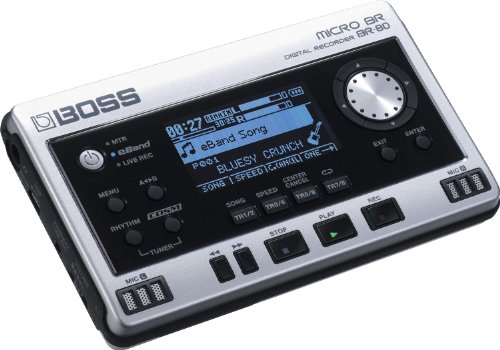
- MTR, eBand, and Live Recorder modes
- 64 V-Tracks and eight-track playback
- Built-in rhythms, amps, and effects
Best For: Solo songwriting and play-along practice
Best for Detailed Stereo Capture

- Large 19.4 mm X/Y mics
- 32-bit float with dedicated gain knobs
- Up to four tracks at 192kHz WAV
Best For: Portable stereo music and location recording
Flexible Stereo Pick
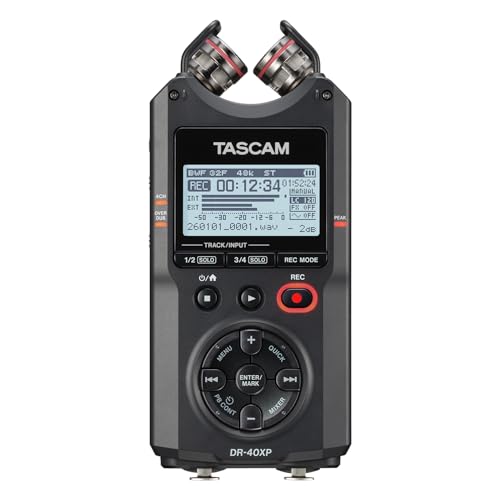
- Adjustable A-B or X-Y stereo mics
- Four-channel 32-bit float recording
- Two XLR/TRS inputs and USB-C interface
Best For: Musicians seeking flexible stereo placement and external inputs
Accessible Workflow Pick

- Four tracks with 32-bit float audio
- Spoken menu guidance
- USB-C device recording alongside SD capture
Best For: Creators wanting guided menus and an SD-card copy
Built-In Effects Pick

- Four-track recording with X/Y mics
- Built-in effects and WAV/MP3 formats
- Two XLR/TRS inputs and PC/Mac USB interface
Best For: Musicians wanting on-board effects and MP3 recording
Best for Flexible Field Recording

- Three built-in mics; nine recording patterns
- 32-bit float recording up to 96kHz
- USB mic mode with simultaneous SD backup
Best For: Versatile handheld recording for musicians and creators
Best for Layering Ideas

- Four-track recording with a dedicated bounce track
- 32-bit float audio and two combo inputs
- Over 80 drum patterns built in
Best For: Solo musicians building layered demos
Best for Standalone Songwriting

- Eight tracks with touchscreen editing
- 150 drum loops and 18 FM synth instruments
- Two XLR/TRS inputs and USB-C interface mode
Best For: Portable songwriting and onboard arrangement
Best for Hands-On Level Control – Zoom H6 6-Track Portable Recorder
If you want a professional music recorder with physical control over multiple inputs, the Zoom H6 is a practical choice. It combines four XLR/TRS inputs with included X/Y and mid-side microphone capsules and records to SD cards.
Best For: Musicians recording rehearsals or small ensembles who want adjustable input levels and a choice of stereo mic setups.
Pros:
- Dedicated gain knobs, pads, and phantom power for each input.
- Records up to 24-bit/96kHz WAV audio, with MP3 also available.
- Works as a stereo or multichannel USB audio interface.
Cons:
- Its stated maximum recording resolution is 24-bit/96kHz, rather than 32-bit float.
- Camera hot-shoe mounting requires an optional adapter.
Choose this H6 if input-level control and the two included mic capsules matter more to you than 32-bit float recording.
Best for Six-Track 32-Bit Float – Zoom H6 Essential
The Zoom H6 Essential is a professional music recorder suited to capturing several sources when levels may change unexpectedly. Its six-track 32-bit float recording pairs built-in X/Y microphones with four XLR/TRS combo inputs.
Best For: Bands and live-event recordists who need multiple inputs and the flexibility of 32-bit float files.
Pros:
- Records six tracks in 32-bit float.
- Built-in X/Y mics handle up to 135 dB SPL.
- Functions as a USB audio interface while recording to an SD card.
- Spoken menu guidance supports accessible operation.
Cons:
- Alternative capsules are optional purchases.
- The supplied details do not list dedicated gain knobs for each input.
This is the stronger fit when six-track 32-bit float capture and simultaneous USB-and-SD recording take priority over a traditional knob-driven layout.
Best for Songwriting Practice – Roland BR-80 Portable Digital Recorder
For musicians who want more than straightforward capture from a professional music recorder, the Roland BR-80 brings recording, practice, and onboard effects together. Its MTR, eBand, and Live Recorder modes support different stages of working on a song.
Best For: Solo musicians building ideas and practicing with backing tracks away from a computer.
Pros:
- Offers 64 V-Tracks and eight simultaneous playback tracks.
- Includes backing and rhythm patterns plus COSM amps and effects.
- Built-in stereo condenser mics make quick captures possible.
- Also works as a USB audio interface with effects.
Cons:
- SD/SDHC card support is limited to 32 GB.
- The supplied notes do not list XLR/TRS microphone inputs.
Its strength is self-contained music creation and practice; choose a recorder with documented external mic inputs if those are essential to your setup.
Best for Detailed Stereo Capture – Zoom H5 Studio Handy Recorder
The Zoom H5 Studio is a professional music recorder to consider when the built-in stereo microphones are central to your setup. Its 19.4 mm X/Y mic capsule, dedicated gain knobs, and 32-bit float recording combine portable capture with hands-on control.
Best For: Musicians and filmmakers who want a portable recorder for detailed stereo sound and multitrack WAV recording.
Pros:
- Large 19.4 mm X/Y microphone capsule.
- 32-bit float recording accommodates a wide dynamic range.
- Dedicated gain knobs allow quick level adjustments.
- Records up to four tracks simultaneously at up to 192kHz in WAV format.
Cons:
- Four-track simultaneous recording offers fewer tracks than the six-track H6 Essential.
- Requires four AA batteries for battery-powered use.
The H5 Studio makes sense if large built-in stereo mics and physical gain controls are worth more to you than a higher simultaneous track count.
Flexible Stereo Pick – TASCAM DR-40XP
The TASCAM DR-40XP is a professional music recorder for capturing rehearsals, performances, and location audio with flexible mic placement. Its adjustable built-in microphones switch between A-B and X-Y configurations, while two XLR/TRS inputs let you add external sources.
Best For: Musicians who want adjustable stereo mics alongside external inputs.
Pros:
- Records four channels using the built-in microphones and external inputs simultaneously.
- Supports 32-bit float WAV recording at up to 96 kHz.
- Works as a 2-in/2-out USB-C audio interface.
Cons:
- microSD card and batteries are not included.
The adjustable mic patterns make this the most adaptable stereo setup of the three when you want to change how the recorder captures a room without swapping microphones.
Accessible Workflow Pick – Zoom H4 Essential
The Zoom H4 Essential is a professional music recorder suited to creators moving between performances, interviews, and video projects. It combines built-in stereo microphones, two XLR/TRS inputs, four tracks, and 32-bit float recording in a handheld unit.
Best For: Creators who value spoken menu guidance and recording to a device while saving to SD card.
Pros:
- Spoken menu guidance supports more accessible navigation.
- USB-C connection supports recording or streaming to a phone, tablet, or computer while saving to SD card.
- Built-in stereo microphones and two XLR/TRS inputs offer multiple source options.
Cons:
- Requires two AA batteries.
Its standout advantage is workflow: simultaneous device and SD-card recording gives you a local copy, while spoken guidance makes menus easier to navigate.
Built-In Effects Pick – Zoom H4n Pro
The Zoom H4n Pro is a professional music recorder for musicians who want four-track capture plus on-board sound-shaping tools. Built-in X/Y microphones and two XLR/TRS combo inputs cover stereo and multitrack setups, with WAV recording up to 24-bit/96 kHz.
Best For: Musicians who want portable multitrack recording with built-in effects and MP3 support.
Pros:
- Offers compression/limiting, low-cut filtering, reverb/delay, amp models, and other effects.
- Records BWF-compliant WAV or MP3 files.
- Functions as a 2-in/2-out USB audio interface for PC or Mac.
Cons:
- WAV recording tops out at 24-bit/96 kHz rather than offering the 32-bit float mode listed for the other two recorders.
- Rated battery life is up to 5.5 hours, or up to 8 hours in Stamina mode.
Choose this model when built-in processing and MP3 recording matter more to your workflow than 32-bit float capture.
Best for Flexible Field Recording – Zoom H2essential
If your professional music recorder also needs to handle interviews or location sound, the Zoom H2essential offers three built-in microphones and nine selectable recording patterns. It captures up to 32-bit float/96kHz audio without requiring gain adjustments.
Best For: Musicians and creators who want a handheld recorder for varied acoustic settings.
Pros:
- Nine patterns cover mono, stereo, and surround recording needs.
- USB microphone mode can run while recording a backup to SD card.
- Audible menu navigation is available in seven languages.
Cons:
- Built-in microphones make it less suited to sessions requiring external mic inputs.
- Its handheld design is not a substitute for a multitrack production recorder.
Choose the H2essential for adaptable capture and a simultaneous SD backup; look to a multitrack model if layering instruments is the priority.
Best for Layering Ideas – Zoom R4 Multi-Track Recorder
The Zoom R4 is a professional music recorder for musicians who build songs one part at a time. Record up to four tracks, then mix and bounce them to a dedicated track to make room for more layers.
Best For: Solo musicians sketching and layering songs away from a computer.
Pros:
- 32-bit float recording removes the need to set gain before tracking.
- Two combo inputs accommodate microphones and instruments.
- More than 80 drum patterns provide a built-in rhythm section.
- Also works as a 2-in/2-out USB audio interface.
Cons:
- Four available tracks may feel restrictive before bouncing.
- Sessions requiring more than two external sources at once need another setup.
The R4 makes sense when quick overdubs matter more than a large track count. Its bounce workflow extends a compact recorder, though it adds a step to arranging.
Best for Standalone Songwriting – Zoom R12 Portable Recorder
For a professional music recorder that supports fuller arrangements without a computer, the Zoom R12 offers eight tracks and touchscreen editing. Its built-in drum loops and FM synth instruments help turn an initial idea into a more developed demo.
Best For: Musicians who want portable, hands-on song production and onboard editing.
Pros:
- Eight tracks and touchscreen tools support cutting, copying, looping, and mixing.
- Includes 150 drum loops and 18 FM synth instruments.
- Two XLR/TRS inputs offer phantom power; input 1 also supports Hi-Z instruments.
- Can serve as a stereo USB-C audio interface and DAW control surface.
Cons:
- Only two inputs are available for recording external sources.
- Rated battery operation is up to five hours on four AA batteries.
Pick the R12 if arranging and editing on the recorder appeal to you. Its eight tracks offer more room for a song, while the two-input layout suits overdubbing better than capturing many performers at once.
How We Picked the Best Professional Music Recorder
We compared the listed models by the decisions that matter most when recording music: available microphone and instrument inputs, portable versus multitrack workflow, built-in microphones, recording format, and connection options. This is a feature-based buying guide, not a claim that we tested every recorder side by side. Check current specifications and included accessories before ordering, as similarly named models can differ substantially.
Quick Comparison: Which Type Fits Your Session?
For quick stereo captures, the Zoom H2 Essential is a compact place to start. The Zoom H4 Essential, H4n Pro, H5 Studio, and TASCAM DR-40XP offer built-in microphones plus external-input options for more flexible setups. If you need four external XLR/TRS inputs, compare the Zoom H6 and H6 Essential. The Roland BR-80, Zoom R4, and Zoom R12 are better starting points when arranging and overdubbing tracks matters more than simply documenting a performance.
Key Buying Factors for a Professional Music Recorder
Inputs and Track Count
Count the sources you need to record separately and at the same time. A stereo room recording is different from giving a vocalist, guitar, and drum microphones their own tracks. Also distinguish simultaneous recording inputs from the total number of tracks a device can play back or build through overdubs. Confirm the input types you need, including XLR, ¼-inch instrument connections, and phantom power for condenser microphones.
Recording Format and Level Control
32-bit float recording, available on some models here, can give you more room to recover an unexpectedly loud or quiet take in compatible editing software. It does not fix clipping that occurs before conversion, poor microphone placement, or background noise. With conventional recording formats, leave adequate headroom and monitor levels during soundcheck.
Portable Workflow and Connections
Think through the whole session: battery runtime, storage media, headphone monitoring, controls you can operate quickly, and how files move to your computer. A USB audio interface function can be useful if you also record into a DAW, but verify the channel support and computer compatibility for the exact model. Built-in effects, drum loops, and bouncing tools are valuable for songwriting; they may be unnecessary for straightforward concert capture.
Who Should Buy Which Professional Music Recorder?
For rehearsal notes and ambient stereo recordings: consider the H2 Essential or a handheld model with built-in microphones. For small ensembles and location sessions: look at the H4-series, H5 Studio, or DR-40XP, then check whether their simultaneous external inputs cover your setup. For more independently miked sources: start with the H6 or H6 Essential and verify the input configuration. For building songs without relying on a computer: compare the BR-80, R4, and R12 by their overdubbing controls and available tracks. The best Professional Music Recorder is the one that captures your required sources without making the recording process harder than it needs to be.