Choosing the right patch bay can make live sound faster, cleaner, and far easier to manage during setup, changeovers, and troubleshooting.
Below, we focus on balanced, rack-friendly options that help streamline routing at front of house, on stage, and in compact production rigs.
Best 10 Patch Bays for Live Sound Picks for 2026
Balanced TRS Routing Hub
Samson S-Patch Plus 48-Point Balanced TRS Patch Bay

- 48-point fully balanced TRS patch bay
- Normalled, half-normalled, and thru modes
- 1U rack design simplifies live sound wiring
Best For: Live sound racks that need flexible balanced TRS routing
XLR Routing Simplified
Black Lion Audio PBR XLR 16-Point Gold-Plated Patchbay

- 16-point patchbay with 32 gold-plated XLR connectors
- Designed for recording and live sound routing
- Easy-patch layout keeps connections simple
Best For: Compact XLR routing in live sound or studio rigs
Shielded Balanced Rack Option
ART Pro Audio P48 48-Point Balanced Patch Bay

- 48-point balanced patch bay with full shielding
- Helps organize cables and reduce connector wear
- Suitable for live sound, PA, AV, and home theatre
Best For: Installed live sound and PA racks needing simple balanced routing
Flexible XLR Rack Panel
DIYTECH 16 Port Reversible XLR Patchbay

- 16-port rackmount XLR patchbay
- Reversible male/female connectors increase flexibility
- Steel chassis and included screws suit pro installs
Best For: Live sound, theater, and broadcast racks needing adaptable XLR I/O
Flexible 48-Point Patchbay
Behringer Ultrapatch Pro PX3000

- 48 balanced points for cleaner routing
- Selectable Parallel, Half-normalled, Normalled, and Open modes
- Rugged build with high-quality jack connectors
Best For: Live and studio engineers who need flexible TRS patch routing
8-Channel Snake for Stage Routing

- Carries 8 balanced channels in one cable
- 10-foot run with numbered labels
- Metal XLR connectors and OFC conductors
Best For: Crews needing a compact XLR multicore for live routing
Rugged XLR Rack Patchbay

- 32 XLR connectors in a 1U rack format
- Fully shielded all-steel enclosure
- Reversible rack ears for easier mounting
Best For: Rack-mounted live sound systems built around XLR connections
Balanced TRS Rack Patch
Art Pro Audio TPatch 8-Point Balanced Patch Bay
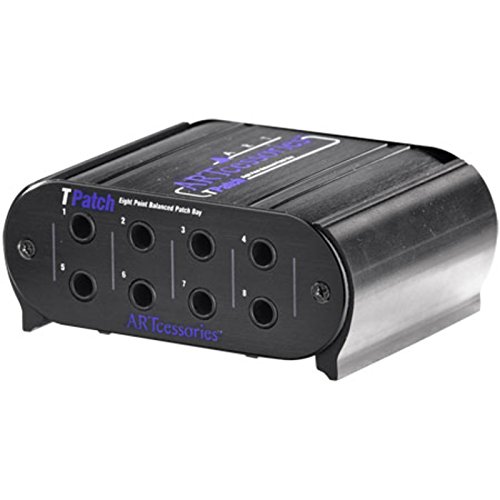
- Eight balanced direct signal points
- Switchable half-normal and normal modes
- Rugged extruded aluminum case
Best For: Small live sound racks needing balanced TRS routing
Front-Access XLR Rack Bay
Hosa PDR-369 12-Point XLR Balanced Patchbay

- Reversible 12-point XLR patchbay
- Brings hard-to-reach inputs to the front
- Steel one-unit rack chassis
Best For: Front-panel XLR access in live sound racks
Modular XLR Routing Panel
AA AUDIO ACCESSORY AP16 16-Channel XLR Patchbay

- Factory-assembled modular blocks
- Configurable 4 to 16 channel layouts
- Full-steel chassis with reversible rack ears
Best For: Flexible live sound routing with easy maintenance
Balanced TRS Routing Hub – Samson S-Patch Plus 48-Point Balanced TRS Patch Bay
Samson S-Patch Plus Balanced 48-Point 1/4" Patch Bay | 1/4 Inch Phone Connections
Check Price On AmazonFor patch bays for live sound, the Samson S-Patch Plus gives you a central 48-point TRS hub that helps keep rack wiring organized and signal routing fast. Its fully balanced design and front-panel toggle switches make it easier to reconfigure gear without reaching behind the rack.
Best For: Engineers who want a flexible 1U balanced patch bay for live sound racks and mixed audio setups.
Pros:
- 48-point, fully balanced TRS patch bay for clean signal routing
- Toggle switches support normalled, half-normalled, or thru operation
- 19-inch, 1U rack-mount format keeps wiring centralized
- Front and rear 1/4-inch connections help reduce back-of-rack cable access
Cons:
- Uses 1/4-inch TRS connections, so it is not an XLR-focused solution
- Best suited to users comfortable configuring patch modes
Overall, the S-Patch Plus is a practical choice when you need flexible routing and a tidy rack layout. Its balanced design and configurable modes make it a strong fit for live sound workflows that still demand a clean signal path.
XLR Routing Simplified – Black Lion Audio PBR XLR 16-Point Gold-Plated Patchbay
If you need patch bays for live sound built around XLR connections, the Black Lion Audio PBR XLR offers a simple 16-point layout with 32 gold-plated XLR connectors. It is designed to make patching and signal routing easier in recording or live sound studios without adding extra clutter.
Best For: Users who want a compact XLR patchbay for live sound and studio routing.
Pros:
- 16-point patchbay with 32 gold-plated XLR connectors
- Made for audio signal routing in recording or live sound studios
- Easy patching approach keeps connections straightforward
- Compact, rack-friendly format for centralized I/O
Cons:
- Smaller 16-point layout than some higher-capacity patch bays
- XLR-only design may not suit TRS-heavy setups
This is a focused XLR option for people who want dependable routing without unnecessary complexity. If your live sound rig already relies on XLR cabling, the PBR XLR fits neatly into that workflow.
Shielded Balanced Rack Option – ART Pro Audio P48 48-Point Balanced Patch Bay
Among patch bays for live sound, the ART P48 is a straightforward 48-point balanced unit designed to organize cables and reduce wear on your gear’s connectors. It is fully shielded and rack-mountable, making it a practical fit for installed audio and live sound applications.
Best For: Installations and live sound setups that need a shielded 48-point balanced patch bay.
Pros:
- 48-point balanced patch bay for organized routing
- Fully shielded construction helps support cleaner installations
- Saves wear and tear on audio equipment connectors
- Works in live sound, PA, AV, and home theatre systems
Cons:
- Basic feature set compared with models that offer switchable modes
- XLR connector design may not fit TRS-centric racks
The P48 focuses on the essentials: balanced routing, shielding, and rack organization. That makes it a sensible choice when you want a dependable live sound patch bay without extra complexity.
Flexible XLR Rack Panel – DIYTECH 16 Port Reversible XLR Patchbay
For patch bays for live sound that need flexible XLR routing, the DIYTECH 16 Port patchbay is built as a durable rackmount panel with reversible connectors. It is aimed at professional studios, live sound rigs, theaters, houses of worship, and broadcast carts, with balanced 3-pin wiring to help keep the signal path clean.
Best For: Live sound rigs and mobile audio setups that benefit from reversible XLR patching.
Pros:
- 16-port rackmount XLR patchbay for professional routing
- Reversible male/female connectors add configuration flexibility
- Heavy-duty steel chassis is built for touring wear
- Includes mounting screws for standard 19-inch rack installation
Cons:
- Smaller 16-port format than larger patch bays
- Designed around XLR, so it is less useful for TRS-based systems
This model stands out for simple hardware and adaptable connector orientation. If you want a rugged XLR patch panel that can move between live sound environments, the DIYTECH is a practical pick.
Flexible 48-Point Patchbay – Behringer Ultrapatch Pro PX3000
Behringer ULTRAPATCH PRO PX3000 Multi-Functional 48-Point 3-Mode Balanced Patchbay
Check Price On AmazonIf you’re looking at patch bays for live sound, the Behringer Ultrapatch Pro PX3000 is built for centralized TRS routing and cleaner cable management. Its selectable Parallel, Half-normalled, Normalled, and Open modes give you the flexibility to organize signal flow around a rack, stage, or front-of-house setup without constant rewiring.
Best For: Engineers who want a flexible 48-point balanced patchbay for organized live and studio signal routing.
Pros:
- 48-point balanced patchbay helps reduce cable clutter.
- Each channel can be switched between Parallel, Half-normalled, Normalled, and Open modes.
- Uses high-quality jack connectors and rugged construction for long life.
- TRS-based design suits balanced audio networking setups.
Cons:
- TRS-focused design may not suit every XLR-heavy live rig.
- Best value depends on whether you need the selectable routing modes.
The PX3000 stands out when you need one unit that can adapt to different routing jobs instead of forcing a fixed wiring layout. For live sound workflows that prioritize order, flexibility, and durable rack mounting, it offers a practical way to keep connections under control.
8-Channel Snake for Stage Routing – GEARit 10ft XLR Snake
For patch bays for live sound setups that need fast channel runs, this GEARit 8-channel XLR snake offers a simple way to move multiple balanced lines together. The 10-foot length, numbered labels, and metal XLR connectors make it a practical choice when you want tidy connections between a mixing console, patch bay, speakers, or monitors.
Best For: Live sound crews and venue rigs that need a compact 8-channel XLR multicore for organized signal runs.
Pros:
- Eight-channel multicore reduces cable mess in live and studio setups.
- 10-foot length is useful for short-to-medium routing distances.
- Numbered labels help keep channels easy to identify.
- Metal XLR connectors and OFC conductors suit pro audio use.
Cons:
- Fixed 10-foot length may be too short for some stage layouts.
- XLR-only design won’t replace a true patchbay with routing modes.
This snake is more about clean multicore routing than flexible patching, so it makes sense when you need reliable channel organization between gear. In a live sound environment, that can be just as important as the patchbay itself.
Rugged XLR Rack Patchbay – ART P16 Balanced Patchbay
If your live sound rack needs an XLR-based patching solution, the ART P16 is a straightforward balanced patchbay with a fully shielded steel enclosure. Its 32 XLR connectors, 1U rack format, and reversible rack ears make it a practical way to bring front and rear connections into one organized space.
Best For: Rack-based live sound systems that need a durable, XLR-only balanced patchbay.
Pros:
- 32 XLR connectors provide a lot of balanced patching capacity.
- 1U rack mount design saves space in a live rack.
- Fully shielded all-steel enclosure adds durability.
- Reversible rack ears help with installation flexibility.
Cons:
- XLR-only layout is less flexible than multi-format patchbays.
- PCB-wired construction may not be ideal for users wanting other wiring approaches.
The P16 is a strong fit when your priority is clean, rack-mounted XLR management rather than multiple routing options. For live sound applications that already rely on balanced XLR connections, it keeps the patching setup simple and sturdy.
Balanced TRS Rack Patch – Art Pro Audio TPatch 8-Point Balanced Patch Bay
For patch bays for live sound, the Art Pro Audio TPatch is a compact way to bring balanced lines into a more accessible front-panel format. It offers eight points of balanced direct signals, with four channels of linked input/output pairs and switchable half-normal and normal modes for flexible routing.
Best For: Small live sound rigs and rack setups that need balanced TRS patch access with simple, switchable routing.
Pros:
- Eight balanced direct signal points for practical signal routing
- Four linked input/output pairs for organized patching
- Switchable half-normal and normal modes add flexibility
- Rugged extruded aluminum case for rack use
Cons:
- Uses 1/4-inch TRS connectors, so it is not an XLR-only solution
- Eight channels may be limited for larger live sound systems
Overall, the TPatch is a straightforward option if you want balanced TRS patching in a durable enclosure. Its strength is simple front-panel access and configurable normaling rather than high channel count or specialty connectivity.
Front-Access XLR Rack Bay – Hosa PDR-369 12-Point XLR Balanced Patchbay
If you’re shopping patch bays for live sound, the Hosa PDR-369 is built to make hard-to-reach XLR mixer inputs easier to access from the front of a rack. It provides a reversible 12-point XLR balanced patchbay layout, which is useful when you want cleaner access to mixer, interface, or preamp connections.
Best For: Live sound racks that need front-panel XLR access for mixers, interfaces, and microphone preamps.
Pros:
- 12-point reversible XLR patchbay layout
- Designed to bring hard-to-reach mixer inputs to the front of the rack
- Compatible with audio mixers, audio interfaces, and microphone preamps
- Steel rack chassis for a sturdy installation
Cons:
- XLR-focused design is less versatile than TRS patch solutions
- Single 12-channel layout may not be enough for larger systems
This is a practical pick when your live sound workflow centers on XLR gear and you want simpler rack access. Its biggest advantage is convenience: it front-loads connections without adding extra complexity.
Modular XLR Routing Panel – AA AUDIO ACCESSORY AP16 16-Channel XLR Patchbay
For patch bays for live sound, the AA AUDIO ACCESSORY AP16 stands out because it is built around modular XLR blocks instead of traditional cut-and-modify wiring. The 16-channel balanced patch panel can be configured in 4, 8, 12, or 16 channels, and its reversible rack ears support front or rear mounting in standard 19-inch racks.
Best For: Live sound racks that need modular XLR routing, easier maintenance, and flexible rack mounting.
Pros:
- Factory-assembled modular blocks require no PCB cutting
- Configurable in 4/8/12/16 channel layouts
- 24K gold-plated XLR pins for corrosion resistance
- Heavy-duty full-steel chassis for studio or live environments
Cons:
- Designed specifically around XLR balanced routing
- May be more patchbay than needed for smaller rigs
For users who want a more serviceable live sound patching setup, this model emphasizes modularity and durability. It is especially appealing if you value clean cabling, flexible system zones, and a rack-friendly build that can adapt as your setup changes.
How We Picked These Patch Bays for Live Sound
We prioritized balanced signal handling, practical connector layouts, build quality, and easy integration into common live audio workflows. For Patch Bays for Live Sound, reliability matters as much as channel count, so we favored units that help reduce cable clutter and speed up repatching without adding unnecessary complexity.
We also looked for flexibility: XLR and 1/4-inch options, clear labeling, rack-mount compatibility, and formats that suit both permanent installs and touring use.
Quick Comparison
Higher-channel models are better for larger FOH racks, stage racks, and installed systems, while smaller patch panels are often a better fit for split racks, utility routing, or compact live rigs. If you need fast mic-level or line-level access, choose a format that matches your existing cables and snakes so you are not forced into extra adapters.
Key Buying Factors for Patch Bays for Live Sound
Connector Type and Signal Flow
XLR patch bays are ideal for balanced mic and line connections, while 1/4-inch balanced bays can work well for outboard gear, inserts, and line-level routing. Make sure the bay matches the way your system already routes signals.
Channel Count and Layout
Think about not just how many points you need today, but how many you may need during a busy show week. Extra channels can prevent daisy-chaining and keep your rack cleaner.
Balanced Design and Noise Control
Balanced connectivity is a major advantage in live audio because it helps maintain signal integrity over longer cable runs and in electrically noisy environments. That is especially important when patch bays sit near power distribution, wireless racks, or stage boxes.
Mounting, Labeling, and Serviceability
A good live-sound patch bay should be easy to mount, easy to label, and easy to service. Clear numbering and accessible rear connections save time during load-in and troubleshooting.
Who Should Buy Which Patch Bays for Live Sound?
Choose a larger balanced bay if you manage FOH, monitor world, or an installed venue system and need frequent repatching. Pick a compact XLR patch panel if you want simple access points for a small rack or utility setup. If your workflow includes both stage and studio gear, a flexible multi-mode design may offer the best balance of convenience and future-proofing.
In short, the best Patch Bays for Live Sound are the ones that match your signal type, rack space, and pacing on show day. Prioritize dependable connectors, clear labeling, and a layout that helps your team work faster with fewer mistakes.