If you’re looking for an easy way to explore new tones without building a full pedalboard, guitar effects processors can be the fastest path to better sound.
This roundup focuses on beginner-friendly models that balance simple controls, useful presets, and enough flexibility to grow with your playing.
Best 10 Guitar Effects Processors for Beginners Picks for 2026
Beginner-Friendly Starter Multieffects
Zoom G1X Four Guitar Multi-Effects Processor with Expression Pedal

- 71 effects and 13 amp models for broad tone options
- 30-second looper plus 68 rhythm patterns for practice
- Includes an expression pedal and headphone-friendly setup
Best For: Beginners who want an easy all-in-one effects pedal with lots of room to explore
Preset Learning Pedalboard
MOOER GE100 Multi-Effects Guitar Pedal

- 80 preset and 80 user patches for easy tone storage
- 66 effect types plus 8 modules for flexible sound shaping
- Includes looper, drum machine, and scale/chord learning
Best For: Beginners who like presets, practice tools, and straightforward tone saving
Compact Advanced Beginner Option
Valeton GP-50 Multi-Effects Processor
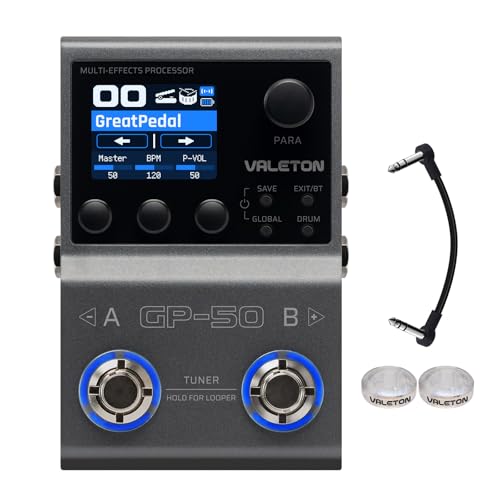
- 100+ HD effects with up to 9 modules at once
- NAM and IR loading for expanded tone options
- BT app control and compact metal housing
Best For: Beginners who want modern features and room to grow
Practice Amp With Built-In Effects

- 14 amp models and 9 effects in one portable unit
- 30-second looper, 36 drum patterns, and tuner included
- Bluetooth and OTG recording support practice and content creation
Best For: Beginners who want a portable practice amp with built-in effects
Starter-Friendly DSP Workhorse
SORAN Dual Stomp Multi Effects Guitar Pedals

- 99 presets with 11 simultaneous modules
- Expression pedal plus looper and drums
- USB audio interface with ASIO support
Best For: Beginners who want an all-in-one processor for practice and recording
Smart Editing Pick

- 130+ effects with 100 preset slots
- App and desktop editing with IR/NAM support
- Looper, tuner, metronome, and drum rhythms
Best For: Beginners who want app-based editing and a portable effects box
AI Tone Assistant Pick
AME-100 Guitar Multi-Effects Processor

- AI Tone Companion helps generate tones
- 147 effects with 80 preset slots
- Looper, drum machine, and Bluetooth support
Best For: Beginners who want guided tone creation and built-in practice tools
Compact Practice Multi-Effects
LEKATO 36-Preset Guitar Processor

- 36 presets with editable effect modules
- App-based preset and IR management
- Battery-powered with Bluetooth and recording support
Best For: Beginners who want a portable all-in-one practice pedal
Performance-Control Multi-Effects

- 200 presets and 170 effects for broad tone choice
- Four footswitches plus expression pedal for control
- Looper, tuner, drum machine, and USB recording support
Best For: Beginners who want a processor that can grow with them
Ultra-Portable Starter Multi-Effects

- 9 amp models with 8 IR cabinet simulations
- Preset, edit, and live modes for easy setup
- Battery power, Bluetooth, and headphone output
Best For: Beginners who want a compact quiet-practice pedal
Beginner-Friendly Starter Multieffects – Zoom G1X Four Guitar Multi-Effects Processor with Expression Pedal
If you want one of the most approachable guitar effects processors for beginners, the Zoom G1X Four gives you a huge effects library without making setup feel overwhelming. With 71 effects, 13 amp models, an expression pedal, and a 30-second looper, it covers practice, tone-building, and simple songwriting in one compact unit.
Best For: New players who want lots of tones, an expression pedal, and an easy all-in-one practice tool.
Pros:
- 71 built-in effects and 13 amp models for a wide range of starter tones.
- 30-second looper and 68 rhythm patterns make practice more interactive.
- Expression pedal adds hands-on control without needing extra gear.
- Works for silent practice with headphone use and external audio input.
Cons:
- Editing patches is done through Zoom Guitar Lab, so some tone shaping happens off-device.
- Battery-powered convenience is useful, but you may still want a stable power setup for regular use.
Overall, this is a strong beginner pick if you want variety and practice features in a single pedal. It offers enough depth to grow with you while staying simple enough for daily use.
Preset Learning Pedalboard – MOOER GE100 Multi-Effects Guitar Pedal
The MOOER GE100 is a practical choice among guitar effects processors for beginners who want preset-based simplicity with room to learn. It combines 80 preset patches, 80 user patches, 66 effect types, a looper, and a drum machine, so you can start playing right away and save tones as you go.
Best For: Beginners who want a preset-heavy processor with learning tools and easy tone saving.
Pros:
- 80 preset patches and 80 user patches make it easy to build a personal sound library.
- 66 effect types and 8 effect modules provide plenty of tonal variety.
- 180-second looper and drum machine support practice and simple songwriting.
- Scale and chord learning function adds a useful study feature for new players.
Cons:
- The feature set is broad, so first-time users may need some time to learn the layout.
- It relies on external power or batteries rather than a built-in rechargeable design.
For beginners who like the idea of preset tones and built-in learning support, this pedal is easy to recommend. It gives you enough depth to keep experimenting without forcing you into complex gear choices.
Compact Advanced Beginner Option – Valeton GP-50 Multi-Effects Processor
If you are shopping for guitar effects processors for beginners but want something that can grow with you, the Valeton GP-50 brings more advanced features in a compact format. It offers over 100 HD effects, NAM and IR loading, 9 simultaneous modules, and app-based editing, which makes it a strong pick for players ready to move beyond basic presets.
Best For: Beginners who want a compact processor with modern amp/cab loading and deeper editing control.
Pros:
- Over 100 HD effects with distortion, delay, reverb, and modulation options.
- NAM and IR loading expand tone possibilities beyond stock effects.
- BT app control, color LCD, and multiple I/O options improve usability.
- Compact metal body and rechargeable battery support portable use.
Cons:
- Its advanced features may be more than a total first-timer needs.
- Some of its flexibility depends on app editing and external file management.
This is a smart choice if you want a beginner-friendly footprint but don’t want to outgrow the unit quickly. It leans more advanced than basic starter pedals, yet still offers the kind of compact convenience many new players appreciate.
Practice Amp With Built-In Effects – JOYO JAM Buddy II Orange
The JOYO JAM Buddy II is a useful all-in-one option if you want guitar effects processors for beginners that also work as a portable practice amp. It combines 14 amp models, 9 effects, a 30-second looper, 36 drum patterns, Bluetooth playback, and OTG recording in a compact unit designed for practice, creation, and light live use.
Best For: Beginners who want a practice amp, effects processor, and recording tool in one portable device.
Pros:
- 14 amp models and 9 effects cover a wide range of starter tones.
- 30-second looper and 36 drum patterns help make practice more musical.
- OTG recording and Bluetooth support are helpful for content creation and backing tracks.
- Headphone output, balanced output, and line out make it flexible for different practice setups.
Cons:
- As a combo amp/pedal unit, it may be less pedalboard-focused than a standalone processor.
- Its compact 2-inch speakers are best suited to practice rather than big-room volume.
This is a strong option if your main goal is easy daily practice with extra creative tools built in. It simplifies the beginner setup by combining amplification, effects, backing rhythms, and recording features in one box.
Starter-Friendly DSP Workhorse – SORAN Dual Stomp Multi Effects Guitar Pedals
If you’re comparing guitar effects processors for beginners, the SORAN Dual Stomp stands out for packing a lot of tools into a straightforward, screen-based layout. It combines 99 presets, 125 effects, dual-mode expression control, a looper, drum patterns, and USB audio, so a new player can practice, record, and experiment without buying multiple pedals right away.
Best For: Beginners who want an all-in-one processor for practice, basic recording, and expressive effects control.
Pros:
- 99 presets and 11 simultaneous modules give plenty of room to explore different sounds.
- Dual-mode expression pedal supports wah and volume control in one unit.
- 40-second stereo looper and 100 drum patterns make practice and songwriting easier.
- USB audio interface with ASIO support adds recording and live-streaming flexibility.
Cons:
- The many features may feel overwhelming if you only want a very basic pedal.
- Battery life is listed at 6 hours, which may be limiting for longer sessions away from power.
- IR and NAM import support is useful, but beginners may not need those advanced options immediately.
Overall, this is a versatile choice for beginners who want room to grow. Its combination of presets, practice tools, and USB recording support makes it a practical entry point into multi-effects processing.
Smart Editing Pick – SONICAKE QME-20 Smart Box
The SONICAKE QME-20 is a strong option for guitar effects processors for beginners who want modern editing tools without giving up a pedalboard-style feel. It offers 130+ effects, 100 preset slots, amp and cab IR support, plus app and desktop control, which makes it easier to shape tones as you learn.
Best For: Beginners who want app-based editing, lots of presets, and a portable all-in-one effects box.
Pros:
- Over 130 effects and 100 preset slots offer plenty of room to experiment.
- PC/Mac software and mobile app support make editing and preset management more approachable.
- Built-in looper, tuner, metronome, and 100 drum rhythms add useful practice features.
- USB audio interface, stereo outputs, and rechargeable battery support flexible use at home or on the go.
Cons:
- Firmware guidance is specific, since the brand advises avoiding Windows 11 updates for now.
- Battery runtime is listed at up to 3.5 hours, so it is not the longest-lasting portable option.
- The feature set is broad, which may be more than a first-time user needs right away.
For beginners who like the idea of controlling tones from an app and having plenty of practice tools built in, the QME-20 is a flexible pick. It balances portability with deeper editing features better than many starter processors.
AI Tone Assistant Pick – AME-100 Guitar Multi-Effects Processor
The AME-100 is one of the more beginner-friendly guitar effects processors for beginners because it adds an AI Tone Companion that helps you describe and generate tones through the AUDOTA STUDIO app. Along with 147 effects, 80 preset slots, IR and ADT support, and built-in practice tools, it gives new players an easier path to finding sounds and building routines.
Best For: Beginners who want guided tone creation, wireless control, and practice features in one compact unit.
Pros:
- AI Tone Companion can generate and modify tones from conversational descriptions in the app.
- 147 effects and 80 presets give beginners lots of sounds to explore.
- 20-second looper, 40 drum styles, and 10 metronome types support practice and jamming.
- Bluetooth streaming and USB connectivity support recording and playback workflows.
Cons:
- The AI tone feature requires login through the AUDOTA STUDIO app.
- It runs on 5V/2A or battery power, so users need to pay attention to power setup.
- Its many app and wireless features may be more advanced than a simple plug-and-play pedal.
If you want a beginner processor that helps you discover tones instead of forcing you to dial everything in manually, the AME-100 is compelling. Its AI-assisted workflow and practice tools make it especially useful for learning, recording, and experimenting at your own pace.
Compact Practice Multi-Effects – LEKATO 36-Preset Guitar Processor
If you want guitar effects processors for beginners that are easy to live with at home or on the go, this LEKATO pedal offers a lot of flexibility in a small package. It gives you 36 presets, editable effect modules, Bluetooth playback, and built-in recording support, so you can experiment with tones without needing a full pedalboard.
Best For: Beginners who want a compact all-in-one practice pedal with editing, recording, and Bluetooth playback.
Pros:
- 36 presets with editable modules for noise gate, amp, chorus, phaser, tremolo, delay, reverb, and IR cab
- App support for editing, sharing, importing/exporting presets, and loading or deleting IR files
- Headphone, USB, XLR, and audio output options make it useful for practice and recording
- Built-in 3000mAh battery rated for up to 12 hours of use
Cons:
- Only four modules are editable in the chain, which may limit deep sound design
- Best suited to practice and simple recording rather than advanced live control
Overall, this is a practical beginner-friendly multi-effects unit if you want a portable way to learn tones, save presets, and practice quietly. Its mix of app control, battery power, and broad connectivity makes it especially appealing for first-time users.
Performance-Control Multi-Effects – MOOER GE150 Pro Processor
Among guitar effects processors for beginners, the MOOER GE150 Pro stands out if you want room to grow into more advanced control. It combines 200 presets, 170 effects, amp and cab modeling, looper tools, and an expression pedal, so you can start simple and explore more as your playing develops.
Best For: Beginners who want a feature-rich processor they can keep using as their skills and needs expand.
Pros:
- 200 factory presets and 170 effects provide a wide starting library
- Four multi-purpose footswitches and an expression pedal add hands-on control
- Built-in tuner, 80-second looper, drum machine, and metronome support practice and jamming
- USB OTG and Type-C connectivity support recording, tone editing, and firmware updates
Cons:
- More advanced than a basic beginner pedal, so it may take more time to learn
- Standard version is mains-powered, so portable use depends on the Li battery model
This is a strong option if you want a beginner-friendly processor that doesn’t feel limited after the first few months. The combination of footswitch control, modeling options, and practice tools makes it a versatile long-term pick.
Ultra-Portable Starter Multi-Effects – LEKATO CUBE BABY Pedal
If you’re comparing guitar effects processors for beginners and want something simple, small, and affordable-feeling, this LEKATO CUBE BABY is built around straightforward practice use. It includes 9 amp models, IR loading, preset and live modes, Bluetooth playback, and headphone output, making it easy to learn with at home.
Best For: Beginners who want a tiny practice pedal with basic tone shaping and quiet headphone use.
Pros:
- 9 amp models and 8 IR cabinet simulations give it a useful tone range
- Preset, edit, and live modes let you store and tweak sounds
- Built-in battery supports 6-8 hours of use and can charge while working
- 3.5mm headphone output and Bluetooth playback are convenient for quiet practice
Cons:
- Three preset modes are simpler than the larger multi-effects units
- Battery life is shorter than some larger competitors
For first-time users, this pedal keeps the learning curve manageable while still offering amp, delay, reverb, and overdrive tools. Its compact size and headphone-friendly design make it a sensible starter processor for daily practice.
How We Picked the Best Guitar Effects Processors for Beginners
We focused on Guitar Effects Processors for Beginners that are easy to understand, quick to set up, and useful for everyday practice. Priority went to units with clear preset handling, a manageable control layout, built-in tuner support, amp and cab simulation, USB or app features where helpful, and enough effect variety to learn without feeling overwhelmed.
Quick Comparison: What Matters Most
For new players, the best choice is often the one you will actually use. Some models are better for simple plug-and-play practice, while others are more expandable for recording, editing, and future tone shaping. Think in terms of ease of use first, then compare tone options, portability, and connectivity.
Typical Beginner-Friendly Strengths
Look for presets that sound good immediately, a few editable signal blocks, headphone or amp output options, and onboard tools such as tuner, drum patterns, or rhythm support. If you plan to record later, USB and IR loading can be useful, but they are not mandatory for a first processor.
Key Buying Factors for Guitar Effects Processors for Beginners
1. Simplicity of Controls
A beginner processor should not require deep menu diving. Buttons, knobs, and clear display feedback matter more than huge effect counts. If a unit has app control, make sure the hardware still feels easy to operate on its own.
2. Core Effects and Amp Models
Most new players benefit from a solid set of essentials: overdrive, distortion, chorus, delay, reverb, and a few amp models. Extra effects are nice, but the core tones should be the priority.
3. Practice-Friendly Features
Headphone output, built-in tuner, rechargeable power, Bluetooth audio, and recording support can make practice easier and more consistent. These features are especially helpful if you live in a small space or play late at night.
4. Editing Depth Vs. Learning Curve
Some Guitar Effects Processors for Beginners offer simple presets with limited editing, while others provide more control over the chain. If you want to learn tone building gradually, choose a unit that lets you edit a few key modules without forcing you into advanced setup.
Who Should Buy Which Guitar Effects Processors for Beginners?
Choose a straightforward model if you want the fastest path to playable tones and home practice. Pick a more advanced processor if you plan to record, experiment with IRs, or explore amp modeling more seriously over time. If portability matters most, a rechargeable or compact unit is usually the best fit. If you want all-in-one convenience, a pedal-and-amp combo can be the easiest option for a first setup.
In short, the best beginner processor is the one that makes practicing easier, not more complicated. Start with simple tools, then expand as your ear and playing style develop.