A good pop filter helps tame harsh plosive sounds without forcing you to change your delivery. The right model can also make microphone placement easier and protect your capsule from moisture during long recording sessions.
We selected 10 microphone pop filters ranging from affordable dual-layer screens to metal studio designs and specialized acoustic shields, so you can match the filter to your microphone, workspace, and recording style.
Best 10 Microphone Pop Filters Picks for 2026
Flexible Dual-Layer Pick

- Dual-layer screen contains air blasts
- 360° gooseneck enables precise positioning
- Clamp fits various stands and booms
Best For: Singers, streamers, and actors needing adjustable plosive control
Simple Studio Essential

- 4.75-inch dual-layer nylon screen
- Flexible 8-inch gooseneck
- Universal mic stand adapter
Best For: Studio vocal recording with most microphones
Metal-Mesh Upgrade

- Metal mesh disperses vocal plosives
- Sturdy gooseneck holds placement
- Swivel C-clamp fits stands and boom arms
Best For: Podcasts, voice-overs, broadcasts, and singing
Enclosed Noise-Control Pick
Penypeal Microphone Isolation Ball

- Five-sided foam design reduces reflections
- Double-layer opening limits plosives
- Fits compatible 50–75 mm microphones
Best For: Recording setups needing broader acoustic shielding
Flexible Dual-Layer Control
Adjustable Gooseneck Pop Filter

- Dual-layer mesh helps reduce P and B plosives
- 360° gooseneck supports precise positioning
- Clamp fits surfaces up to 1.57 inches thick
Best For: Streaming, podcasting, vocals, and home recording setups
Professional Airflow Shield

- Two screens help disperse and contain air blasts
- Steel gooseneck supports adjustable placement
- Rotating clamp fits compatible stands and booms
Best For: Singers, streamers, actors, and vocal recording
Three-Layer Mic-Mounted Protection
PEMOTech Three-Layer Microphone Shield

- Foam, metal mesh, and etamine layers reduce airflow noise
- Fits compatible microphones from 45–61 mm
- Direct-mount design helps protect against saliva
Best For: Compatible vocal microphones used for recording, YouTube, and streaming
Best Adjustable Double-Layer Filter
Professional 360° Microphone Pop Filter

- Six-layer design helps reduce plosives, sibilance, and noise
- Flexible arm supports 360° positioning and over 10,000 bends
- Clamp fits tubes up to 1.38 inches and includes EVA padding
Best For: Flexible studio, broadcasting, singing, and streaming setups
Best Handheld Mic Shield
Aokeo Three-Layer Microphone Pop Filter
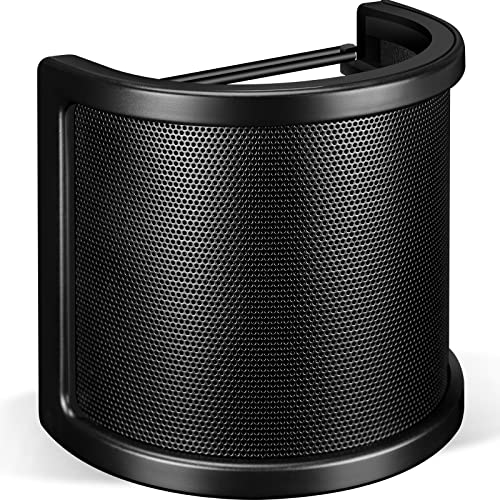
- Three layers help reduce plosives, wind interference, and breath sounds
- Elastic bands and rubber ring simplify installation
- Fits microphones approximately 45 mm to 63 mm in diameter
Best For: Compatible handheld and studio microphones used for vocals or streaming
Best Gooseneck Mount
Aokeo 360° Three-Layer Microphone Pop Filter

- Three-layer screen helps control plosives, hiss, and lisping sounds
- Gooseneck and filter each rotate 360° for positioning flexibility
- Clamp and swivel mount support installation on various microphone stands
Best For: Adjustable vocal, streaming, and performance microphone setups
Flexible Dual-Layer Pick – Aokeo Professional Pop Filter
For singers, streamers, and actors comparing microphone pop filters, the Aokeo Professional Pop Filter uses two screens to help contain air blasts before they reach the microphone. Its adjustable clamp and gooseneck make positioning practical across compatible stands and booms.
Best For: Performers and streamers who want adjustable placement, plosive control, and broad stand compatibility.
Pros:
- Dual-layer design disperses remaining air pressure between screens.
- Flexible 360° gooseneck supports angle and distance adjustments.
- Adjustable, scratch-resistant clamp fits various tubular booms and stands.
- Helps reduce plosives, hissing, and lisping sounds.
Cons:
- The clamp-and-gooseneck design may be more hardware than a basic setup needs.
- The supplied notes do not specify the screen diameter.
This is a versatile microphone pop filter for users who need flexible positioning and protection from vocal plosives and saliva during close recording.
Simple Studio Essential – Samson PS04 Pop Filter
The Samson PS04 is a straightforward choice among microphone pop filters, pairing a 4.75-inch dual-layer nylon mesh screen with an 8-inch flexible gooseneck. It is designed for use with most microphones in a studio setting and helps reduce vocal P-pops.
Best For: Studio users who want a compact, adjustable nylon-mesh filter for clear vocal transmission.
Pros:
- Dual-layer nylon mesh helps reduce P-pops.
- Eight-inch gooseneck makes filter positioning easy.
- Universal mic stand adapter supports use with most microphones.
- Steel construction offers durability.
Cons:
- The 4.75-inch screen is smaller than some larger pop-filter designs.
- Nylon mesh may appeal less to buyers specifically seeking a metal screen.
The PS04 keeps the feature set focused: useful pop reduction, flexible positioning, and a universal stand adapter for typical studio vocal work.
Metal-Mesh Upgrade – 512 Audio 512-POP Pop Filter
512 Audio by Warm Audio 512-POP Professional Metal Pop Filter w Gooseneck Clamp
Check Price On AmazonThe 512 Audio 512-POP stands out among microphone pop filters with an elegant metal mesh screen designed to disperse plosives. Its sturdy gooseneck and adjustable swivel C-clamp support stable placement on mic stands, boom arms, and desk stands.
Best For: Podcasters, voice-over artists, broadcasters, and singers who prefer a metal filter with secure, set-and-forget positioning.
Pros:
- Metal mesh disperses plosives for cleaner, natural-sounding capture.
- Flexible yet sturdy gooseneck supports stable placement.
- Swivel C-clamp attaches to mic stands, boom arms, and custom desk stands.
- Suitable for close-range speech and singing.
Cons:
- Its metal construction weighs more than the listed Samson PS04.
- The supplied notes do not specify the filter’s screen diameter.
Choose this microphone pop filter when durable metal construction and a secure clamp matter more than having the lightest possible accessory.
Enclosed Noise-Control Pick – Penypeal Microphone Isolation Ball
The Penypeal microphone isolation ball takes a different approach to microphone pop filters, surrounding much of the microphone with five-sided sound-absorbing foam and a double-layered opening filter. It is intended to reduce plosives, wind interference, reflections, and saliva spray with compatible microphones.
Best For: Home or professional recording setups seeking broader acoustic shielding for compatible 50–75 mm microphones.
Pros:
- Five-sided seal design helps reduce noise and reflections from different directions.
- Double-layered opening helps limit divergent sound and plosives.
- Compatible with many XLR and USB microphones measuring 50–75 mm with a removable jacket.
- Lightweight 120 g design mounts on stands, tripods, arms, and desktops.
Cons:
- The enclosure is limited to microphones within the stated 50–75 mm size range.
- Its larger isolation-ball format may be less convenient than a standard mesh screen.
- Installation requires checking microphone fit and using the included holder.
This is a specialized microphone pop filter for users who want more surrounding acoustic isolation than a conventional two-dimensional screen can provide.
Flexible Dual-Layer Control – Adjustable Gooseneck Pop Filter
This clamp-on option is a practical choice among microphone pop filters for home studios, podcasts, streaming, and voiceovers. Its dual-layer mesh helps soften bursts from P and B sounds, while the flexible gooseneck lets you position the screen precisely.
Best For: Blue Yeti users and creators who want an adjustable filter that mounts to a stand, boom arm, or desk edge.
Pros:
- Dual-layer mesh helps disperse plosive airflow.
- 360° gooseneck allows flexible angle and distance adjustments.
- Clamp opens to 1.57 inches and supports easy repositioning.
- Suitable for vocals, podcasts, gaming, streaming, and voiceovers.
Cons:
- Requires a compatible stand, boom arm, or mounting surface.
- The clamp is limited to surfaces up to 1.57 inches thick.
Choose this model if mounting flexibility is as important as basic plosive control. Its compact dual-layer screen and adjustable neck make it easy to place between your mouth and microphone without committing to a fixed position.
Professional Airflow Shield – NEEWER Dual-Layer Pop Filter
The NEEWER Professional Microphone Pop Filter Shield uses two screens and an adjustable metal gooseneck to help control air blasts during recording. It is a useful microphone pop filters pick for singers, streamers, and actors who need adjustable placement on a compatible stand or boom.
Best For: Vocalists and content creators seeking a sturdy, repositionable dual-layer filter with a rotating clamp.
Pros:
- Dual-layer design helps contain remaining air pressure after the first screen.
- Steel gooseneck supports angle and distance adjustments.
- Rotating clamp attaches to compatible tubular booms or microphone stands.
- Helps address plosives and hissing or lisping sounds.
Cons:
- Microphone is not included.
- Requires a compatible tubular mounting boom or microphone stand.
This filter stands out for its metal construction and swivel-mounted setup. It is a straightforward option when you want to fine-tune the screen’s position while recording vocals or spoken content.
Three-Layer Mic-Mounted Protection – PEMOTech Three-Layer Microphone Shield
Unlike clamp-on microphone pop filters, this PEMOTech model mounts directly over compatible microphones with elastic bands and an inner rubber ring. Its foam, metal mesh, and etamine layers help reduce plosives, wind interference, breath sounds, and crackles during vocal recording.
Best For: Owners of 45–61 mm diameter microphones who want a compact, directly mounted shield for vocals, YouTube, or streaming.
Pros:
- Three-layer construction combines foam, metal mesh, and etamine.
- Helps reduce plosives, breath sounds, wind interference, and crackles.
- Elastic bands and an inner rubber ring make setup and removal quick.
- Metal mesh helps keep saliva away from the microphone.
Cons:
- Not compatible with Blue Yeti microphones.
- Designed for microphones measuring 45–61 mm in diameter.
- Direct-mount design is less suitable for users seeking a separate adjustable screen.
This is a targeted choice for compatible handheld and studio microphones rather than a universal filter. Check your microphone’s diameter before buying, especially because Blue Yeti compatibility is specifically excluded.
Best Adjustable Double-Layer Filter – Professional 360° Microphone Pop Filter
For creators who need flexible placement, this microphone pop filter combines six filtering layers with a long, shapeable metal arm. It is designed to reduce plosives, sibilance, hiss, and unwanted moisture during recording, broadcasting, singing, or streaming.
Best For: Recording setups that need extensive positioning flexibility and broad clamp compatibility.
Pros:
- Six-layer filtering design uses dual metal mesh and high-density foam to help reduce pops, sibilance, and noise.
- 360° carbon-steel arm can be shaped to different angles and is rated for over 10,000 bends.
- Rotating L-shaped clamp fits tubes up to 1.38 inches and includes an anti-scratch EVA pad.
- Large 5.91-inch outer diameter and 13.39-inch flexible arm support versatile positioning.
Cons:
- The extended setup can reach over 21 inches, which may be more than compact desks require.
- Clamp compatibility is specified for tube diameters up to 1.38 inches.
Choose this model if adjustability and layered protection matter more than having the smallest possible filter. Its long arm and rotating clamp make it especially practical for varied studio and streaming positions.
Best Handheld Mic Shield – Aokeo Three-Layer Microphone Pop Filter
This microphone pop filter is a slip-on shield for compatible handheld and studio microphones. Its three-layer construction helps reduce plosives, crackles, wind interference, and breath sounds while the included bands and inner rubber ring hold it around the microphone.
Best For: Users seeking a compact microphone-mounted shield for compatible vocal, video, gaming, or streaming microphones.
Pros:
- Three-layer construction combines foam, metal mesh, and etamine to help control pops and breath noise.
- Elastic bands and an inner rubber ring are designed for quick installation and removal.
- Fits microphones measuring approximately 45 mm to 63 mm in diameter.
- Helps keep saliva away from the microphone and uses durable rubber bands and synthetic metal mesh.
Cons:
- It is not designed to fit the Blue Yeti.
- Compatibility depends on the microphone’s diameter and shape.
This Aokeo shield is a straightforward choice when you want the filter attached directly to the microphone rather than mounted on a separate arm. Confirm your microphone’s dimensions before ordering, especially for models outside the listed compatibility range.
Best Gooseneck Mount – Aokeo 360° Three-Layer Microphone Pop Filter
For microphone setups that benefit from easy repositioning, this microphone pop filter uses a three-layer screen and dual 360° adjustment. The gooseneck and circular filter can be rotated to change the angle and distance, while the clamp mounts to various microphone stands.
Best For: Singers, streamers, and actors who want an adjustable stand-mounted filter for controlling plosives and harsh S sounds.
Pros:
- Three-layer screen is designed to block airflow and help control plosives, hiss, and lisping sounds.
- Both the steel gooseneck and circular filter rotate 360° for flexible positioning.
- Right-angle screw mount and scratch-resistant clamp support installation on various microphone stands.
- Swivel mounting allows relatively easy installation, removal, and location adjustment.
Cons:
- The supplied notes do not specify the clamp’s maximum tube diameter.
- It provides a one-year warranty, shorter than some longer-term coverage options.
This is a practical middle ground for users who want arm-mounted flexibility without the larger six-layer design of the first option. Its dual 360° adjustment makes it convenient to position close to the microphone during changing vocal or streaming sessions.
How We Picked These Microphone Pop Filters
We focused on the features that matter most in everyday recording: effective plosive control, secure mounting, adjustment range, build quality, and compatibility with common microphones. The lineup includes mesh, metal, foam, and multi-layer designs for different voices and recording environments.
We also considered practical details such as gooseneck flexibility, clamp stability, screen diameter, portability, and whether a filter is better suited to a desk-mounted condenser microphone or a handheld vocal mic. Since prices and availability can change, use the product listings to confirm current specifications before buying.
Quick Comparison
| Filter Type | Best For | Advantages | Potential Trade-Off |
|---|---|---|---|
| Dual-layer mesh | Podcasts, streaming, home studios | Balanced airflow control and affordability | May need occasional cleaning |
| Metal mesh | Frequent studio use | Durable and easy to maintain | Can cost more than fabric screens |
| Three-layer designs | Strong plosive control | Combines multiple filtering materials | May slightly reduce high-frequency openness |
| Foam or isolation shields | Close-mic recording and untreated rooms | Helps manage breath noise and reflections | Bulkier and less portable |
Key Buying Factors for Microphone Pop Filters
Filter Material and Layers
Mesh filters are a dependable choice for speech and vocals, while metal screens offer durability and easy cleaning. Multi-layer filters can provide stronger protection against plosives, but thicker designs may subtly affect the sound’s upper frequencies. A foam shield can be useful when breath noise or nearby reflections are also concerns.
Mounting and Adjustment
Look for a sturdy clamp that fits your stand, boom arm, or desk edge. A flexible gooseneck should hold its position instead of sagging toward the microphone. A 360-degree adjustment range is useful when you need to position the filter a few inches in front of the capsule without blocking your view.
Size and Microphone Compatibility
Check the screen diameter and arm reach before ordering. Large studio microphones generally need a broad filter, while handheld microphones may work better with a fitted cover or compact shield. Confirm that the clamp and mounting hardware suit your setup, especially if you use a Blue Yeti or another USB microphone with limited desk space.
Cleaning and Long-Term Use
Metal screens are usually easiest to wipe clean. Fabric and foam materials can collect moisture and dust, so they need more careful maintenance and may eventually require replacement. Regardless of material, position the filter close enough to work effectively while leaving space between it and the microphone.
Who Should Buy Which Microphone Pop Filters?
- For podcasts and streaming: Choose a dual-layer mesh filter with a stable clamp and flexible arm.
- For studio vocals: Consider a durable metal filter or a three-layer model for stronger plosive control.
- For handheld microphones: Select a fitted windscreen or handheld shield designed to stay secure during movement.
- For untreated rooms: An isolation-style foam filter may help alongside sensible microphone placement.
- For beginners on a budget: A basic adjustable mesh screen usually delivers the best balance of price, performance, and ease of use.