Metal microphone pop filters help reduce plosive bursts, vocal breath noise, and distracting air movement without forcing you to change your microphone technique. The right model can make spoken-word recordings and vocals sound cleaner before editing.
We selected 10 options ranging from compact streaming accessories to larger studio filters, focusing on mesh construction, layered protection, arm stability, clamp design, and compatibility with common microphone setups.
Best 10 Metal Microphone Pop Filters Picks for 2026
Best Multi-Layer Coverage
NEEWER MS044 Six-Layer Metal Pop Filter

- Six-layer filtration reduces plosives, dust, and saliva.
- 360-degree flexible arm enables precise positioning.
- L-shaped clamp fits most mic stands and shock mounts.
Best For: Creators seeking extensive filtration and adjustable placement
Best Universal Clamp
Stedman PS101 V1 Alloy Pop Filter

- Universal clamp fits boom arms up to 1.5 inches wide.
- Works with round, square, and thicker boom arms.
- Alloy construction delivers a metal-based design.
Best For: Users with varied or oversized microphone boom arms
Best Handheld Mic Fit
Aokeo B-7 Three-Layer Metal Mesh Filter
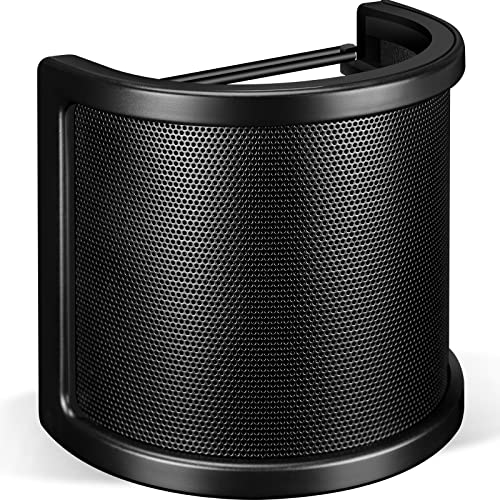
- Three layers target plosives, wind, breath, and crackles.
- Fits compatible microphones from 45 mm to 63 mm.
- Installs with elastic bands and an inner rubber ring.
Best For: Owners of compatible studio microphones wanting direct mounting
Best Oversized Screen
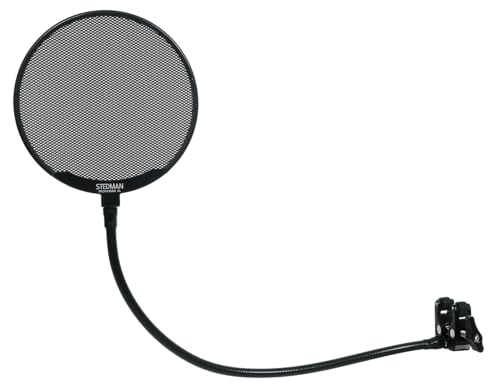
- 6.125-inch metal screen provides broad vocal coverage.
- Reinforced 16.5-inch gooseneck is designed to resist sagging.
- Clamp fits round or square boom arms up to 1.5 inches wide.
Best For: Vocal and broadcast setups needing wide, stable coverage
Layered Mic Protection
PEMOTech Three-Layer Metal Pop Filter

- Three-layer foam, metal mesh, and etamine design
- Fits compatible microphones measuring 45–61 mm
- Not compatible with Blue Yeti
Best For: Vocal recording, singing, YouTube, and streaming
Flexible Studio Positioning
Gator Frameworks Metal Pop Filter

- Angled metal slats divert air downward
- 12.4-inch gooseneck enables precise positioning
- Clamp fits stands or boom shafts up to 18 mm
Best For: Podcasts, broadcasts, streaming, and vocal recordings
Compact Desk Setup
FIFINE U1 Metal Mesh Pop Filter

- Curved metal mesh reduces plosives and air blasts
- Fits compatible microphones measuring 40–70 mm
- Includes two extra rubber bands
Best For: FIFINE microphones, streaming, gaming, and voice-overs
Best Overall
512-POP Professional Metal Pop Filter

- Metal mesh helps disperse plosives
- Flexible, sturdy gooseneck
- Adjustable swivel C-clamp
Best For: Podcasts, voice-overs, singing, and close-range speech
Best for Boom-Arm Flexibility
SUUNTOK Upgraded Metal Pop Filter
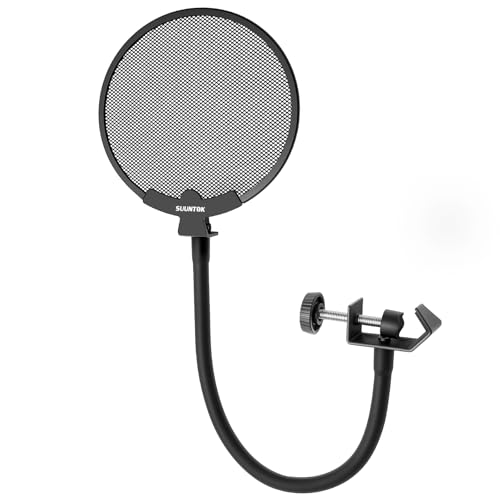
- Steel screen helps block plosives
- 12.2-inch reinforced gooseneck
- Fits boom arms up to 1.5 inches
Best For: Streaming, broadcasting, and flexible home-studio setups
Best for Layered Protection

- Three-layer screen for airflow control
- 360-degree rotating filter and gooseneck
- Includes two screens, mount, and clamp
Best For: Singers, streamers, and actors needing flexible positioning
Best Multi-Layer Coverage – NEEWER MS044 Six-Layer Metal Pop Filter
For shoppers comparing metal microphone pop filters, the NEEWER MS044 stands out with a six-layer design combining two metal meshes, two windproof foams, and two additional filters. It is built to reduce plosives while helping block saliva and dust during recording, streaming, podcasting, and voice-over work.
Best For: Creators who want layered filtration, flexible positioning, and broad studio or streaming versatility.
Pros:
- Six-layer construction targets plosives, saliva, dust, and wind interference.
- 360-degree flexible arm supports precise angle and distance adjustments.
- L-shaped clamp fits most microphone stands and shock mounts.
- Metal construction helps keep dust away from recording equipment.
Cons:
- The six-layer construction may be more than needed for simple setups.
- At 7.8 ounces, it adds some weight to a mic stand or mount.
The MS044 is a feature-rich choice when adjustable placement and extensive filtration matter more than minimal size. Its clamp and flexible arm make it practical for changing microphone positions.
Best Universal Clamp – Stedman PS101 V1 Alloy Pop Filter
The Stedman PS101 V1 is a straightforward option among metal microphone pop filters, with an alloy construction and a universal clamp designed for a wide range of boom-arm shapes. Its clamp accommodates standard round arms, squared-off booms, and thicker arms up to 1.5 inches wide.
Best For: Home and studio users who need a metal filter with broad boom-arm compatibility.
Pros:
- Universal clamp attaches to round, square, and larger boom arms.
- Fits boom arms up to 1.5 inches wide.
- Alloy material provides a metal-based construction.
Cons:
- The supplied notes provide fewer filtration details than some competing models.
- Its 9.6-ounce weight may be noticeable on lighter boom arms.
The PS101 V1 is best evaluated for its mounting flexibility. If your setup uses an unusual or oversized boom arm, the universal clamp is its clearest practical advantage.
Best Handheld Mic Fit – Aokeo B-7 Three-Layer Metal Mesh Filter
The Aokeo B-7 takes a different approach to metal microphone pop filters: it fits directly over compatible microphones rather than using a stand-mounted arm. Its three-layer foam, metal mesh, and etamine construction is designed to reduce plosives, crackles, wind, and breath sounds while helping keep the microphone clean.
Best For: Owners of compatible 45 mm to 63 mm microphones who want a compact, directly mounted filter for vocals, streaming, or video work.
Pros:
- Three-layer design combines foam, metal mesh, and etamine.
- Elastic bands and an inner rubber ring provide tool-free installation.
- Compatible with many listed models, including AT2020, AT2035, NT1A, NT-USB, and MXL 770.
- Helps protect the microphone from saliva and maintain cleanliness.
Cons:
- It will not fit the Blue Yeti.
- Compatibility is limited to microphones measuring approximately 45 mm to 63 mm in diameter.
- As a mic-mounted design, it may be less flexible than an arm-mounted filter.
The B-7 is a practical pick when direct microphone mounting and broad compatibility with common studio models are priorities. Check your microphone’s diameter before ordering.
Best Oversized Screen – Stedman Proscreen XL V2
The Stedman Proscreen XL V2 is a premium-style option among metal microphone pop filters, using a 6.125-inch metal screen to redirect airflow downward and reduce harsh “P” and “B” sounds. Its reinforced 16.5-inch gooseneck and universal clamp are designed for stable positioning on a wide range of boom arms.
Best For: Vocalists, voice-over artists, podcasters, and streamers who want a large metal screen and a firm, adjustable mount.
Pros:
- Oversized 6.125-inch screen covers a broad vocal area.
- Metal screen is designed to reduce plosives without reducing vocal clarity.
- 16.5-inch reinforced gooseneck is designed to resist sagging.
- Universal clamp fits round or square boom arms up to 1.5 inches wide.
Cons:
- The large screen and long gooseneck may be excessive for compact setups.
- At 9 ounces, it may require a sturdy boom arm or stand.
The Proscreen XL V2 makes sense when coverage and long-session stability are key. Its tool-free setup and broad clamp compatibility add convenience, while the all-metal construction is intended for long-term use.
Layered Mic Protection – PEMOTech Three-Layer Metal Pop Filter
For creators comparing metal microphone pop filters, the PEMOTech model adds three filtering layers—a foam layer, metal mesh, and etamine—to reduce plosives, breath sounds, wind interference, crackles, and pops. Its wraparound design also helps keep saliva away from the microphone.
Best For: Vocal recording, singing, YouTube videos, and streaming with compatible microphones measuring 45–61 mm in diameter.
Pros:
- Three-layer construction targets pops, breath noise, and wind interference.
- Elastic bands and an inner rubber ring provide a quick, secure setup.
- Helps keep the microphone clean by limiting saliva exposure.
- Fits several popular microphones, including AT2020, Rode NT-USB, and MXL 770.
Cons:
- Not designed for Blue Yeti microphones.
- Compatibility is limited to microphones approximately 45–61 mm in diameter.
- Microphone is not included.
Choose this shield if you want layered protection and broad compatibility within its stated size range. Confirm your microphone’s diameter before ordering, especially because Blue Yeti is specifically excluded.
Flexible Studio Positioning – Gator Frameworks Metal Pop Filter
The Gator Frameworks GFW-POPFILTER-MTL is a practical choice among metal microphone pop filters when precise placement matters. Its angled metal slats divert air downward, while the 12.4-inch gooseneck lets you position the filter for podcasts, broadcasts, streams, and vocal takes.
Best For: Content creators who need an adjustable filter for microphone stands or boom shafts up to 18 mm in diameter.
Pros:
- Angled metal grille helps divert air downward for cleaner vocal sound.
- Flexible 12.4-inch gooseneck supports precise positioning.
- Universal clamp attaches to compatible stands and boom shafts up to 18 mm.
- Includes a limited lifetime warranty.
Cons:
- Stand or boom compatibility is limited to shafts up to 18 mm in diameter.
- Microphone is not included.
This model makes the most sense for a fixed recording setup where you want to reposition the filter without changing the microphone. Check your stand or boom shaft diameter before buying.
Compact Desk Setup – FIFINE U1 Metal Mesh Pop Filter
The FIFINE U1 is a compact option for shoppers seeking metal microphone pop filters for streaming, gaming, podcasts, or voice-overs. Its curved metal mesh screen helps block wind, air blasts, and plosive noise, while the wraparound frame helps protect the microphone from moisture.
Best For: FIFINE microphones and other compatible models measuring 40–70 mm in diameter, particularly desk or boom microphone setups.
Pros:
- Curved metal mesh screen helps reduce wind, air blasts, and plosives.
- Rubber bands and a custom handle make installation straightforward.
- Includes two extra rubber bands for different microphone diameters.
- Soft inner rubber padding helps protect the microphone from scratches.
Cons:
- Not suggested for dynamic microphones such as the FIFINE AM8, K688, or TANK3.
- Microphone is not included.
- Best fit depends on a microphone diameter between 40 and 70 mm.
The U1 is a convenient fit-focused accessory for compatible FIFINE and similarly sized microphones. Its extra bands add flexibility, but dynamic-mic users should verify their model before choosing it.
Best Overall – 512-POP Professional Metal Pop Filter
512 Audio by Warm Audio 512-POP Professional Metal Pop Filter w Gooseneck Clamp
Check Price On AmazonFor shoppers comparing metal microphone pop filters, the 512-POP stands out as a straightforward, durable option for controlling plosives during close-range speech, singing, podcasts, and voice-overs. Its metal mesh is designed to disperse bursts of air while the flexible gooseneck supports reliable placement.
Best For: Podcasters, broadcasters, voice-over artists, and singers who want a set-and-forget metal filter.
Pros:
- Metal mesh helps reduce intrusive plosives from sounds such as “p,” “f,” and “s.”
- Flexible, sturdy gooseneck enables precise positioning.
- Adjustable swivel C-clamp attaches to mic stands, boom arms, and custom desk stands.
- Includes a one-year manufacturer warranty.
Cons:
- The supplied details do not indicate tool-free installation.
- Its clamp-based design may be more setup than users who want a permanently integrated microphone accessory need.
The 512-POP is a well-rounded choice when sturdy positioning and broad stand compatibility matter. It combines a metal mesh screen with a practical clamp and gooseneck for repeatable recording setups.
Best for Boom-Arm Flexibility – SUUNTOK Upgraded Metal Pop Filter
Among metal microphone pop filters, the SUUNTOK is geared toward flexible boom-arm setups. Its steel screen is paired with a reinforced 12.2-inch gooseneck and a redesigned clamp that fits standard round, square, and oversized arms up to 1.5 inches wide.
Best For: Home studios, broadcasters, and streamers who need extended reach and broad boom-arm compatibility.
Pros:
- Steel metal screen is designed to block plosive sounds and support vocal clarity.
- 12.2-inch reinforced gooseneck offers extended reach and firm positioning.
- Clamp fits round, square, and oversized boom arms up to 1.5 inches wide.
- Tool-free setup includes the filter, clamp, and gooseneck.
Cons:
- The longer gooseneck may be more reach than compact setups require.
- The supplied details do not specify a warranty.
The SUUNTOK makes the most sense when clamp compatibility and positioning range are priorities. Its all-in-one design is also convenient for users who want to attach and adjust a filter without tools.
Best for Layered Protection – Aokeo Mic Mask Shield
The Aokeo Mic Mask Shield takes a layered approach to metal microphone pop filters, combining two screens with a mount and clamp. Its 360-degree rotating filter and steel gooseneck let singers, streamers, and actors adjust the angle and distance for their preferred recording position.
Best For: Vocalists, streamers, and actors seeking adjustable positioning plus added control over plosives and harsh “s” sounds.
Pros:
- Three-layer screen structure is designed to improve airflow blocking and noise control.
- Filter and steel gooseneck rotate 360 degrees for flexible positioning.
- Helps address plosives, hissing, and lisping during vocal performance.
- Includes two screens, a mount, and a clamp, plus a one-year warranty.
Cons:
- The multi-layer design may be less minimal than a single-screen filter.
- Its materials include plastic as well as metal.
- The supplied details do not specify the clamp’s maximum width.
The Aokeo is a strong fit for users who value adjustability and layered screening. The rotating components make it easy to fine-tune placement, while the included mounting pieces support a complete setup.
How We Picked These Metal Microphone Pop Filters
We compared the selected filters by looking at their protective design, adjustment hardware, mounting flexibility, and intended use. Metal mesh can provide a durable front barrier against plosives, while foam and fabric layers may add another level of breath and wind control. We also considered gooseneck length, clamp stability, screen size, and whether each model is better suited to a desktop, boom arm, handheld, or studio setup.
Because pop filters affect workflow as much as sound, we favored designs that can be positioned close to the microphone without blocking the performer or requiring complicated installation.
Quick Comparison
- Best for studio vocals: Choose a larger, rigidly mounted screen such as the Stedman Proscreen XL V2 or 512-POP.
- Best for podcasting and streaming: Look for a flexible gooseneck, dependable clamp, and a screen that fits your microphone distance.
- Best for layered protection: Three-layer or six-layer models can combine metal mesh with foam and fabric-style filtering.
- Best for compact setups: A smaller filter like the FIFINE U1 may be easier to fit around a desktop microphone.
- Best for flexible positioning: Models with longer goosenecks or 360-degree adjustment are useful when multiple speakers share a setup.
Key Buying Factors for Metal Microphone Pop Filters
Mesh and Layer Construction
Metal mesh is durable and easy to clean, but the number of layers matters less than the overall design and placement. Multi-layer filters can provide broader protection from plosives and breath noise, while a single metal screen may offer a more open, straightforward setup.
Arm Length and Stability
A flexible arm should hold its position rather than sag toward the microphone. Check the advertised gooseneck length and make sure it can reach the ideal position—typically a few inches in front of the capsule—without putting excessive leverage on the stand or desk clamp.
Clamp and Compatibility
Confirm that the clamp fits your microphone stand, boom arm, or desk thickness. Also check whether the filter has enough clearance for your microphone body, shock mount, and cable. Larger screens are useful for vocals, but compact models may be easier to position around broadcast microphones.
Cleaning and Everyday Use
Metal screens are generally practical for frequent recording because they can be wiped clean. Avoid placing any filter so close that it touches the microphone grille, and reposition it when switching between seated, standing, and handheld recording.
Who Should Buy Which Metal Microphone Pop Filters?
Podcasters and streamers should prioritize a stable clamp and flexible arm. Vocalists may prefer a larger studio screen that covers the microphone consistently during movement. Home-recording beginners can save space with a compact, layered filter. Mobile or multi-microphone users should look for easy repositioning and broad compatibility. If durability and a professional studio workflow matter most, choose a robust metal screen with a firm mount rather than the lightest available option.