A quality pop filter can make vocal recordings sound cleaner by reducing harsh plosive bursts caused by sounds such as “P” and “B.” The right design also helps protect your microphone from moisture while keeping your recording setup comfortable and consistent.
This roundup compares 10 microphone pop filters for vocal recording, including dual-layer screens, three-layer designs, foam shields, gooseneck-mounted filters, and isolation-style options. Consider your microphone, mounting space, and recording environment before choosing.
Best 10 Microphone Pop Filters for Vocal Recording Picks for 2026
Best Flexible Dual-Layer Pick

- Dual-layer screen helps contain air blasts
- 360-degree gooseneck allows precise positioning
- Clamp fits many booms and microphone stands
Best For: Flexible vocal recording setups
Best Compact Studio Option

- 4.75-inch dual-layer nylon mesh screen
- Flexible 8-inch gooseneck
- Universal mic stand adapter
Best For: Compact studio vocal setups
Best Handheld Mic Fit
PEMOTech Three-Layer Pop Filter

- Three-layer foam, mesh, and etamine design
- Fits microphones measuring 45–61 mm
- Quick elastic-band and rubber-ring attachment
Best For: Compatible handheld and studio microphones
Best Adjustable Stand-Mount Value
NEEWER Professional Pop Filter

- Dual-layer screen reduces air blasts and plosives
- Adjustable steel gooseneck positions the filter
- Rotating clamp fits various booms and stands
Best For: Flexible stand-mounted vocal recording
Best for Easy Setup
SUUNTOK 360° Gooseneck Pop Filter
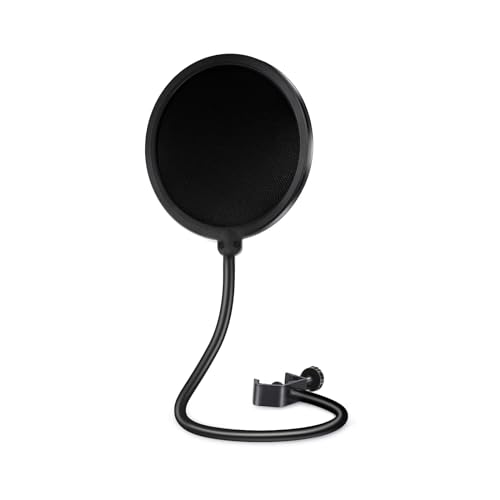
- Dual nylon mesh layers reduce plosives and wind interference
- 360° steel gooseneck enables flexible positioning
- Useful for vocals, podcasts, streaming, and gaming
Best For: Creators who want an adjustable filter arm for vocal recording
Enclosed Noise-Control Pick
Penypeal Microphone Isolation Ball

- Five-sided foam design helps reduce noise and reflections
- Double-layered opening targets plosives and breath noise
- Fits compatible 50–75 mm microphone jackets
Best For: Recording setups seeking broader acoustic coverage around the microphone
Three-Layer Mic Shield
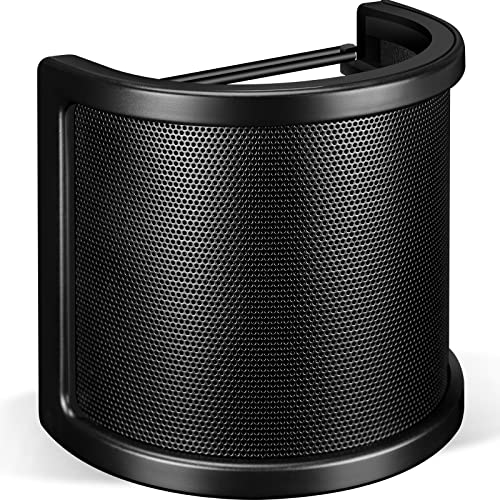
- Foam, metal mesh, and etamine layers target vocal noise
- Direct-fit bands and rubber ring simplify attachment
- Fits many 45–63 mm microphones, but not Blue Yeti
Best For: Owners of compatible studio microphones wanting a compact fitted shield
Budget Vocal Shield
Adjustable Double-Screen Pop Filter

- Double screen helps reduce plosives and sibilance
- 360-degree swivel with flexible gooseneck
- Affordable and broadly compatible
Best For: Home vocal recording on a budget
Three-Layer Vocal Filter

- Three-layer screen targets plosives and noise
- Filter and gooseneck rotate 360 degrees
- Adjustable clamp fits various microphone stands
Best For: Flexible vocal and spoken-word recording setups
Best Flexible Dual-Layer Pick – Aokeo Professional Pop Filter
For shoppers comparing microphone pop filters for vocal recording, the Aokeo Professional Pop Filter offers a dual-layer screen, broad mounting compatibility, and a flexible arm for precise positioning. Its clamp-based design can work with tubular booms or microphone stands, including Blue Yeti setups.
Best For: Singers, streamers, and actors who need adjustable pop protection and a flexible mounting setup.
Pros:
- Dual-layer design helps disperse air pressure from plosives.
- 360-degree steel gooseneck supports angle and distance adjustments.
- Scratch-proof rotating clamp fits various booms and microphone stands.
- Helps reduce harsh S sounds, lisping, and B/P plosives.
Cons:
- Requires a compatible tubular boom or microphone stand for clamping.
- The relatively large filter and arm may take up noticeable desk or stand space.
The Aokeo is a practical choice when adjustability matters as much as basic pop reduction. Its included clamp and gooseneck make it especially useful for flexible vocal recording positions.
Best Compact Studio Option – Samson PS04 Pop Filter
The Samson PS04 is a straightforward option for anyone seeking microphone pop filters for vocal recording in a studio setting. It combines a 4.75-inch dual-layer nylon mesh screen with an 8-inch flexible gooseneck and a universal mic stand adapter.
Best For: Studio vocalists who want a compact, adjustable filter for reducing P-pops.
Pros:
- Dual-layer nylon mesh screen is designed to reduce P-pops.
- Flexible 8-inch gooseneck makes positioning easy.
- Universal mic stand adapter supports use with most microphones.
- Steel construction is intended for durability.
Cons:
- The 4.75-inch screen is smaller than some full-size pop filters.
- The supplied notes focus on studio use rather than broad mounting scenarios.
The PS04 keeps the feature set simple and focused: dual-layer pop protection, a flexible neck, and a universal stand adapter. It is a sensible fit for a conventional studio microphone arrangement.
Best Handheld Mic Fit – PEMOTech Three-Layer Pop Filter
Among microphone pop filters for vocal recording, the PEMOTech stands out for its three-layer construction and direct-fit design. It is made for microphones measuring 45 to 61 mm in diameter and uses elastic bands with an inner rubber ring for attachment.
Best For: Vocalists, YouTube creators, and streamers using compatible handheld or studio microphones.
Pros:
- Three layers combine foam, metal mesh, and etamine to address plosives, wind, and breath sounds.
- Designed to help protect the microphone from saliva and keep it clean.
- Elastic bands and an inner rubber ring provide a quick attachment method.
- Fits a range of microphones from 45 to 61 mm in diameter.
Cons:
- Not compatible with Blue Yeti microphones, according to the supplied notes.
- Compatibility depends on the microphone measuring within the 45–61 mm range.
- It mounts directly to the microphone rather than using a stand clamp or gooseneck.
The PEMOTech is a strong choice for users who prefer a fitted microphone cover instead of a separate stand-mounted screen. Confirm your microphone’s diameter before buying, especially if you use a Blue Yeti.
Best Adjustable Stand-Mount Value – NEEWER Professional Pop Filter
The NEEWER Professional Pop Filter is a practical contender among microphone pop filters for vocal recording, pairing a dual-layer screen with an adjustable steel gooseneck. Its rotating clamp is designed for use with a variety of tubular booms and microphone stands.
Best For: Singers, streamers, and actors who want a stand-mounted filter with adjustable placement.
Pros:
- Dual-layer construction helps contain air blasts and reduce plosives.
- Steel gooseneck supports adjustments to angle and microphone distance.
- Rotating clamp with scratch-proof gripper supports various mounting stands and booms.
- Swivel mount allows installation, removal, and location changes.
Cons:
- Microphone is not included.
- Requires a compatible tubular boom or microphone stand for installation.
- The supplied notes do not specify a separate warranty.
The NEEWER offers the core features needed for flexible vocal recording without requiring a microphone-specific fit. Its clamp and gooseneck make it a useful choice for users who frequently adjust their recording position.
Best for Easy Setup – SUUNTOK 360° Gooseneck Pop Filter
For vocal recording, the SUUNTOK pop filter uses two nylon mesh layers to help reduce plosives, wind interference, and saliva spray. Its flexible gooseneck makes it practical for adjusting the filter’s position around compatible microphones.
Best For: Singers, streamers, podcasters, voiceover artists, and gamers who want an adjustable desktop-style pop filter.
Pros:
- Double-layer nylon screen helps reduce plosives and wind interference.
- 360° adjustable steel gooseneck supports positioning flexibility.
- Helps protect the microphone from saliva spray during close vocal work.
- Suitable for singing, podcasts, vlogging, broadcasting, and gaming.
Cons:
- The supplied details do not specify compatibility with every microphone model.
- The 6.9-inch-wide screen and gooseneck require suitable space near the microphone.
The SUUNTOK is a straightforward choice when placement control matters. Its dual-layer screen and adjustable arm cover the core needs of vocal recording, while the notes specifically mention Blue Yeti and other microphones.
Enclosed Noise-Control Pick – Penypeal Microphone Isolation Ball
The Penypeal isolation ball takes a more enclosed approach to microphone pop filters for vocal recording. Its five-sided foam design is intended to reduce noise and reflections from multiple directions while the double-layered opening helps control plosives and breath noise.
Best For: Home and professional recording setups using compatible 50–75 mm XLR or USB microphones.
Pros:
- Five-sided seal design helps reduce noise from different directions.
- Foam enclosure is designed to absorb sound and reduce reflections.
- Double-layered opening helps address plosives, wind interference, and saliva spray.
- Lightweight 120 g design can mount to desktop stands, tripods, arms, and floor stands.
Cons:
- Compatibility is limited to microphones with removable jackets measuring 50–75 mm in diameter.
- The enclosed design may be less convenient than a simple clip-on mesh screen.
This model is suited to users who want more surrounding acoustic coverage than a conventional front-facing pop filter. Confirm your microphone’s diameter and removable-jacket design before choosing it.
Three-Layer Mic Shield – Aokeo B-7 Pop Filter
The Aokeo B-7 combines metal mesh, foam, and etamine layers to address pops, crackles, wind interference, and breath sounds during vocal recording. It mounts directly around compatible microphones with elastic bands and an inner rubber ring.
Best For: Owners of compatible 45–63 mm microphones such as many AT, Rode, MXL, CAD, and BM-800 models.
Pros:
- Three-layer construction combines foam, metal mesh, and etamine.
- Designed to reduce plosives, breath sounds, wind interference, and crackles.
- Direct-fit design uses elastic bands and an inner rubber ring for attachment.
- Helps keep saliva away from the microphone and is easy to assemble or remove.
Cons:
- It does not fit the Blue Yeti according to the supplied notes.
- Compatibility is limited to microphones approximately 45–63 mm in diameter.
- Because it mounts on the microphone, it offers less arm-positioning flexibility than a gooseneck filter.
The Aokeo B-7 is a practical option when your microphone falls within its stated size range. Its layered construction provides broad pop-control coverage, but checking compatibility is essential, especially for Blue Yeti users.
Budget Vocal Shield – Adjustable Double-Screen Pop Filter
Pop Filter For Studio Microphone, Pop Shield Mic Wind Screen For Better Vocal Recordings
Check Price On AmazonIf you need microphone pop filters for vocal recording without spending much, this adjustable double-screen model is a practical choice. Its 6-inch screen, flexible gooseneck, swivel mount, and clamp help position it between your voice and the microphone to reduce plosives, hisses, and lisps.
Best For: Home studios, singers, and creators seeking an affordable pop filter for USB and condenser microphones.
Pros:
- Double-screen design helps reduce pops, hisses, and lisps.
- 360-degree swivel mount and 13.5-inch gooseneck support flexible positioning.
- Secure screw and adjustable clamp help keep the filter in place.
- Compatible with many microphones and stands, including Blue Yeti and Rode PSA1 setups.
Cons:
- Microphone and stand are not included.
- Its 6-inch screen may offer less coverage than larger isolation shields.
This is a straightforward, low-cost option when your main goal is cleaner vocal takes and basic microphone protection from spit.
Room Reflection Control – Foldable Microphone Isolation Shield
For microphone pop filters for vocal recording that also address nearby sound reflections, this Aokeo isolation shield combines an acoustic foam front with a vented metal back plate. Its folding panels can be angled around the microphone and mounted to a tabletop or microphone stand.
Best For: Vocalists, streamers, and home-recording users who want a larger reflection-control shield with flexible mounting options.
Pros:
- Absorbing cotton insulation helps reduce sound reflection during recording.
- Folding panels allow angle adjustment and make the shield easier to carry.
- Premium steel construction and high-quality screws support durability.
- Can be used on a flat surface or attached to a microphone stand.
Cons:
- At 1.5 kg, it is substantially heavier than a basic pop screen.
- Microphone, headphones, and stand are not included.
- It may require more setup space than a simple gooseneck filter.
This is the more substantial choice for users who want pop filtering equipment that also helps manage reflected sound around the microphone.
Three-Layer Vocal Filter – 360-Degree Mic Pop Screen
This three-layer screen is designed for microphone pop filters for vocal recording where precise positioning matters. The 360-degree filter and steel gooseneck can rotate independently, while the adjustable clamp fits various microphone stands and helps control plosives and harsh sibilance.
Best For: Singers, streamers, and actors who want a highly adjustable pop filter for different microphone setups.
Pros:
- Three-layer construction is designed to block airflow and control noise.
- Filter and steel gooseneck both rotate 360 degrees for flexible placement.
- Scratch-resistant clamp and right-angle mount support secure installation.
- Helps reduce plosives from B, T, and P sounds along with S-related hissing.
Cons:
- Microphone and stand are not included.
- The supplied notes do not specify the filter diameter or gooseneck length.
With its layered screen and broad range of adjustment, this model is a strong fit when consistent placement is important across vocal, streaming, and spoken-word sessions.
How We Picked These Microphone Pop Filters for Vocal Recording
We focused on the features that matter most during spoken-word and vocal recording: effective plosive reduction, secure mounting, useful adjustability, microphone compatibility, and practical maintenance. The selection includes traditional mesh screens, layered metal-and-foam filters, handheld microphone covers, and larger acoustic shields.
Because microphones and recording spaces vary, no single design is ideal for everyone. A compact gooseneck filter may suit a desk-mounted USB microphone, while a larger isolation shield can be more useful in an untreated room. We also considered whether each style is easy to position, clean, and store.
Quick Comparison
| Filter style | Best suited to | Main advantage | Potential limitation |
|---|---|---|---|
| Dual-layer mesh | Home vocal recording | Balanced plosive control and airflow | Requires a stable clamp |
| Three-layer screen | Strong plosive reduction | Multiple filtering materials | May sit farther from the microphone |
| Foam windscreen | Handheld or close-mic use | Simple and portable | Can slightly affect high-frequency detail |
| Isolation shield | Reflective or untreated rooms | Helps reduce nearby reflections | Larger and heavier than a basic filter |
Key Buying Factors
Microphone and Mount Compatibility
Check the clamp opening, arm length, and mounting method. USB microphones such as the Blue Yeti typically work well with flexible gooseneck filters, but the filter must not block controls, headphone ports, or the microphone’s front-facing pickup area. For handheld microphones, a fitted foam or layered cover may be more practical than a clamp-on screen.
Filter Construction
Metal mesh screens are durable and easy to clean. Foam layers can add another barrier against bursts of air, while fabric or fine-mesh layers may provide additional control. A two- or three-layer design is not automatically better; excessive distance or thickness can make positioning awkward, so prioritize a filter that can sit correctly between your mouth and the microphone.
Arm Stability and Adjustment
A flexible arm should hold its position without sagging or vibrating when you move near it. Look for a firm clamp, a suitable arm length, and enough rotation to align the screen directly in front of the capsule. Stability matters especially for singing, podcasting, and repeated takes.
Size, Cleaning, and Room Use
Choose a screen large enough to cover the microphone’s pickup area without obstructing your performance. Washable or wipe-clean materials are useful for frequent vocal work. Isolation shields can help in reflective rooms, but they do not replace acoustic treatment or correct poor microphone placement.
Who Should Buy Which Microphone Pop Filters for Vocal Recording?
- USB microphone users: Choose a dual-layer gooseneck filter that clamps securely to your desk or stand.
- Singers and voice-over artists: Consider a larger layered screen with stable positioning and enough coverage for close-mic technique.
- Handheld microphone users: A foam or layered windscreen is convenient for mobile recording, live-style vocals, and quick setup.
- Recording in an untreated room: An isolation shield may help limit nearby reflections, provided your stand and desk can support its size.
- Budget-conscious beginners: Start with a basic metal or mesh pop screen; correct microphone distance and angle often matter more than premium construction.
For the cleanest results, place the filter a few inches in front of the microphone and sing or speak slightly off-axis. This combination of positioning and suitable equipment will usually deliver a greater improvement than relying on the filter alone.