A good microphone isolation shield can help reduce nearby reflections and unwanted room sound, giving live streams, podcasts, and voiceovers a cleaner, more focused vocal track.
These 10 options range from compact foam reflectors to foldable shields with pop filters, stands, and broad microphone-thread compatibility. The right choice depends on your room, microphone setup, desk space, and recording goals.
Best 10 Microphone Isolation Shields for Live Streaming Picks for 2026
Flexible Stand Setup

- Triple-layer foldable shield for reducing reflections
- Adjustable tripod supports seated or standing use
- Includes pop filter, tray, and microphone adapter
Best For: Streamers needing a flexible full-stand setup
Compact Panel Flexibility

- Configurable three- or five-panel design
- Layered foam helps reduce recording interference
- Works on desktops or compatible microphone stands
Best For: Streamers wanting adjustable panel coverage
Enclosed Vocal Control
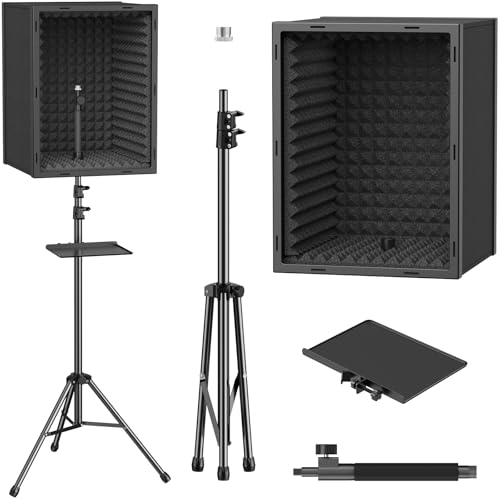
- Five-panel box design controls reflections and reverb
- Stable steel tripod with adjustable telescopic pole
- Spacious interior fits microphones of various sizes
Best For: Stable home streaming and voice-over setups
Lightweight Pop-Filter Shield

- 200-gram portable design for compact setups
- Integrated dual-layer pop filter reduces plosives
- Fits 45–70 mm microphone capsules
Best For: Portable streaming and podcasting setups
Large Shield Versatility
Aokeo Foldable Triple-Insulation Mic Shield

- Large 23.2-by-11-inch shield
- Desktop stand included
- 3/8-inch and 5/8-inch mounting support
Best For: Streamers and musicians wanting broad, flexible coverage
All-in-One Vocal Setup
Foldable Shield with Pop Filter and Tripod

- Shield, pop filter, and tripod included
- Foam panels target room noise and echo
- Folding design supports storage
Best For: Vocal streamers wanting an included accessory bundle
Adjustable Streaming Fit
Moukey Foldable Reflection Filter

- Three-panel foldable construction
- Desktop or microphone-stand mounting
- 3/8-inch and 5/8-inch compatibility
Best For: Streamers prioritizing adjustable positioning and portability
Stable Desktop Pick

- Three-layer design helps reduce reflections
- Stable desktop or microphone-stand mounting
- Foldable five-panel construction
Best For: Streamers needing a stable, flexible desktop setup
Extra-Large Coverage

- Approximate 30-inch-wide XL coverage
- High-density foam with three-layer construction
- Folds and adjusts without tools
Best For: Creators wanting broad coverage around the microphone
Complete Stand Bundle

- Includes shield, pop filter, and tripod
- Adjustable height for seated or standing use
- Foldable five-panel, triple-insulation design
Best For: Streamers wanting an all-in-one recording setup
Flexible Stand Setup – Dmsky Foldable Mic Shield
For streamers who need adaptable microphone isolation shields for live streaming, the Dmsky combines a foldable five-panel shield, pop filter, and adjustable tripod stand. Its reflective, filtering, and absorbing layers are designed to reduce ambient sound and audio reflections around the microphone.
Best For: Live streamers and creators who record from both seated and standing positions.
Pros:
- Triple-layer construction helps reduce external noise and reflected audio.
- Adjustable height supports desk, seated, or standing recording setups.
- Includes a pop filter, storage tray, and 3/8-inch to 5/8-inch adapter.
- Heavy-duty tripod and anti-slip support points improve stability.
Cons:
- The stand and shield take up more space than a compact desktop-only unit.
- The manufacturer notes that the upgraded stand tube may differ from the product image.
The Dmsky is a versatile choice when you want a complete isolation setup rather than a shield alone. Its adjustable stand and included accessories make it particularly practical for flexible streaming spaces.
Compact Panel Flexibility – XTUGA MIS02 Isolation Shield
The XTUGA MIS02 is one of the more configurable microphone isolation shields for live streaming, with foldable panels that can be arranged in three- or five-panel configurations. Its layered foam and reflection-control design is intended to help produce cleaner recordings in varied environments.
Best For: Streamers who want to adjust the shield shape and mount it on a desk or microphone stand.
Pros:
- Three-layer construction is designed to reduce interference and outside reflections.
- Foldable end panels allow three- or five-panel configurations.
- Arch angle can be adjusted for different recording environments.
- Can be installed on desktops, countertops, or compatible microphone stands.
Cons:
- The supplied details do not include a stand or specific height range.
- Its plastic body may feel less substantial than a metal-backed shield.
The MIS02 suits creators who value positioning flexibility over an all-in-one stand package. Its adjustable panel layout can help tailor coverage to a streaming desk or recording position.
Enclosed Vocal Control – TONOR Box-Style Mic Shield
For creators seeking microphone isolation shields for live streaming with more enclosure around the microphone, the TONOR uses a box design with five high-density foam and sound-absorbing panel boards. The spacious interior is built to accommodate microphones of various sizes while helping limit echo and room reflections.
Best For: Streamers, podcasters, and voice-over creators who want a stable, height-adjustable vocal booth setup.
Pros:
- Box-style design with five absorbing panels helps control reverb and reflections.
- Heavy-duty steel tripod and hardened plastic frames support stability.
- Telescopic pole adjusts from 51.2 to 74.8 inches for seated or standing use.
- Includes a 3/8-inch to 5/8-inch adapter and a pole that can hold a phone or tablet.
Cons:
- The enclosed design and tripod require more room than a small desktop shield.
- At about 4,600 grams, it is less portable than lightweight shield-only options.
The TONOR is a strong fit when stability and enclosed vocal coverage matter more than minimal size. Its larger interior and adjustable stand make it useful for dedicated streaming or home-studio stations.
Lightweight Pop-Filter Shield – Adjustable Foam Mic Cover
This lightweight option takes a compact approach to microphone isolation shields for live streaming. It combines a five-sided acoustic foam enclosure with an integrated dual-layer pop filter, making it useful for creators who want to reduce reflections, plosives, breath noise, and saliva spray without modifying the room.
Best For: Podcasters, vocalists, and streamers using compatible condenser or dynamic microphones in compact setups.
Pros:
- Lightweight 200-gram design is easy to move between streaming setups.
- Dual-layer pop filter helps control plosives, breath noise, and sibilance.
- Designed for microphones with 45–70 mm capsule diameters.
- Compatible with boom arms, tripod stands, floor stands, and desktop setups.
Cons:
- It does not include a dedicated tripod or floor stand.
- Compatibility depends on the microphone capsule diameter and mounting hardware.
- The supplied performance figures are manufacturer claims rather than independent test results.
The shield is appealing for portable streaming stations where low weight and integrated pop filtering are priorities. Check your microphone’s capsule size and mounting setup before buying.
Large Shield Versatility – Aokeo Foldable Triple-Insulation Mic Shield
For creators comparing microphone isolation shields for live streaming, the Aokeo AO-505 combines a large 23.2-by-11-inch panel with a desktop stand and flexible microphone mounting. Its foam front and ventilated metal back are designed to help reduce unwanted reflections around the microphone.
Best For: Streamers, podcasters, singers, and musicians who want a relatively large shield that can also accommodate instruments such as guitars and violins.
Pros:
- Large shield size provides broad coverage for vocal and instrument recording.
- Sound-absorbing foam and a ventilated metal back panel help reduce recording reflections.
- Includes a desktop stand plus 3/8-inch and 5/8-inch mounting compatibility.
- Foldable, portable metal-and-foam construction.
Cons:
- At 1.3 kg, it may be less convenient to move than lighter shields.
- The included stand and mounting setup may require space on a desktop.
The Aokeo is a practical choice when coverage and compatibility matter more than having the smallest setup. Its included stand and broad panel make it particularly adaptable for home streaming and varied recording tasks.
All-in-One Vocal Setup – Foldable Shield with Pop Filter and Tripod
TIZECO Microphone Isolation Shield, Foam Protection with Pop Filter, Tripod Stand, Foldable Design
Check Price On AmazonThis microphone isolation shield for live streaming is aimed at buyers who want a complete vocal-recording setup in one package. It includes a foam protection panel, double-layer pop filter, and adjustable tripod stand, while the folding design helps with storage and transport.
Best For: Streamers and vocal creators who need an included stand and pop filter alongside basic room-noise and echo reduction.
Pros:
- Complete set includes the shield, pop filter, and adjustable tripod stand.
- High-density foam panels are designed to reduce unwanted room noise and echo.
- Double-layer pop filter helps reduce breath noise and harsh consonants.
- Foldable panels support easier storage and transport.
Cons:
- The listed package weight is 8.43 pounds, making it relatively substantial to carry.
- Supplied notes do not specify microphone thread sizes or detailed compatibility.
This model is convenient for buyers building a straightforward vocal station rather than sourcing accessories separately. The included pop filter and adjustable tripod make it especially appealing for a ready-to-use streaming desk.
Adjustable Streaming Fit – Moukey Foldable Reflection Filter
The Moukey MPFBK3 is a flexible option for shoppers comparing microphone isolation shields for live streaming. Its three-panel foldable design can sit on a desktop or mount to a microphone stand, while reflective, filtering, and absorbing layers are intended to reduce audio-wave bounce and ambient interference.
Best For: Streamers, broadcasters, and home-recording users who want adjustable panel positioning and broad stand compatibility.
Pros:
- Three-panel design folds for storage and transport.
- Adjustable arch angle helps users position the shield for their setup.
- Can be fixed to a desktop or mounted to a microphone stand.
- Includes 3/8-inch-to-5/8-inch conversion nuts for compatibility with many stands and shock mounts.
Cons:
- It is a reflection filter rather than a complete microphone or recording package.
- Users may need to provide their own stand or desktop arrangement depending on the setup.
Moukey stands out for mounting flexibility and easy adjustment. The ABS back panel and non-slip support points also make it a sensible pick for creators who want a sturdy, repositionable shield without giving up portability.
Stable Desktop Pick – CAHAYA Foldable Mic Shield
For creators comparing microphone isolation shields for live streaming, the CAHAYA offers a flexible setup for desktop recording or microphone-stand use. Its three-layer construction is designed to reduce reflections, while the foldable five-panel design makes storage and transport straightforward.
Best For: Streamers who want a stable, adjustable shield that can move between a desk and a microphone stand.
Pros:
- Three-layer reflective, filter, and acoustic-foam construction helps reduce sound reflections.
- Thick ABS housing, steel base, and reinforced screws provide a stable setup.
- Folds down for portability and supports multiple adjustment angles.
- Includes a 3/8-inch to 5/8-inch adapter and supports desktop or stand mounting.
Cons:
- At 2.1 pounds, it may be less convenient to carry than lighter shields.
- The larger desktop-oriented structure may require more setup space.
The CAHAYA is a practical choice when stability and mounting flexibility matter more than having the smallest possible shield. Its extended support bar also leaves room for routing the microphone cable behind the unit.
Extra-Large Coverage – LZSIG XL Foldable Mic Shield
The LZSIG XL is a strong option for microphone isolation shields for live streaming when broad coverage is a priority. Its approximately 30-inch-wide, five-panel design combines a reflective layer, filter layer, and high-density acoustic foam core, with tool-free angle adjustment for desk or stand recording.
Best For: Streamers, podcasters, and voiceover creators seeking an extra-large shield with portable folding panels.
Pros:
- XL dimensions provide a broad isolation area around the microphone.
- Three-layer structure and high-density acoustic foam are designed to reduce echo, ambient noise, and sound bounce.
- Five adjustable panels fold for storage and transportation.
- Includes two 3/8-inch to 5/8-inch adapters for compatibility with many stands and mounts.
Cons:
- Its nearly 30-inch width may be cumbersome on smaller desks.
- The supplied notes do not mention an included tripod or microphone stand.
Choose the LZSIG when coverage is more important than compact dimensions. The arched, adjustable layout lets you fine-tune the shield around your recording position, while the foldable panels make the XL format easier to store.
Complete Stand Bundle – Moukey Shield with Tripod
The Moukey combines a foldable isolation shield, pop filter, and adjustable tripod stand in one package, making it a convenient starting point for microphone isolation shields for live streaming. Its three-layer insulation design is paired with a heavy-duty stand for seated or standing recording.
Best For: Streamers who need an all-in-one shield and stand setup with adjustable height.
Pros:
- Includes a foldable shield, pop filter, and tripod stand.
- Triple insulation uses reflective, filter, and absorbing layers with high-density acoustic foam.
- Five panels adjust through a 180-degree range and can be used on a desk or microphone stand.
- Height-adjustable stand supports positions from approximately 42 to 71.5 inches.
Cons:
- At 7.26 pounds, it is substantially heavier than a shield-only setup.
- The included tripod requires more floor or desktop space than a compact shield alone.
The Moukey is the most complete option here for creators building a recording station from scratch. Its included stand and height range add flexibility, while the foldable shield can adapt to both seated streaming and standing performance.
How We Picked These Microphone Isolation Shields for Live Streaming
We focused on the features that matter most during real-world streaming: sound-absorbing construction, reflection control, microphone compatibility, stability, adjustability, and ease of setup. Foldable designs received attention because they are easier to store or reposition, while included pop filters and tripod stands can add value for creators building a complete setup.
It is important to set expectations: an isolation shield is not a fully soundproof booth. It primarily reduces some reflections and surrounding noise reaching the microphone from certain angles. Room acoustics, microphone directionality, placement, and gain settings still have a major effect on results.
Quick Comparison
| Feature | What to look for | Why it matters |
|---|---|---|
| Shield design | Foldable panels or curved reflective filters | Controls reflected sound and improves portability |
| Absorbing material | Dense acoustic foam or layered insulation | Helps reduce some nearby reflections |
| Mounting | Tripod stand, holder, or threaded adapter | Determines setup stability and microphone placement |
| Accessories | Pop filter, mic thread adapters, and hardware | Can reduce plosives and avoid extra purchases |
Key Buying Factors for Microphone Isolation Shields for Live Streaming
Size and Acoustic Coverage
Larger or multi-panel shields can provide more coverage around the microphone, but they also take up more desk space and may be heavier. Compact shields suit small streaming desks, while broader five-panel or triple-insulation designs may be preferable in rooms with noticeable reflections.
Microphone and Stand Compatibility
Check whether the shield supports your microphone arm, shock mount, or included stand. Models with 3/8-inch and 5/8-inch threaded adapters offer wider compatibility, but the shield must still fit comfortably around the microphone body and mount.
Pop-Filter and Stand Quality
A bundled pop filter can help soften plosive sounds such as “p” and “b,” while a tripod stand may simplify placement. Look for firm hinges, stable feet, and adjustable hardware so the shield does not shift when you reach across the desk.
Room Placement
Position the shield behind and around the microphone according to the microphone’s pickup pattern. Keep the setup away from bare walls when possible, and combine it with curtains, rugs, or other soft furnishings for better overall control.
Who Should Buy Which Microphone Isolation Shields for Live Streaming?
Choose a foldable shield with a pop filter and tripod stand if you want an uncomplicated starter kit for streaming, podcasting, or voice calls. Choose a multi-panel or triple-insulation design if reflection control and broader coverage matter more than minimal desk space. Choose a model with 3/8-inch and 5/8-inch adapters if you frequently change microphones or use different stands. Choose a compact foam shield if portability, storage, and a smaller workspace are your top priorities.
Before buying, measure your available desk area and confirm the mounting hardware. The best Microphone Isolation Shields for Live Streaming are the ones that fit securely, position correctly around your microphone, and match the acoustic limitations of your room.