Choosing mandolins for recording is about more than looks or price. The right instrument should track cleanly, stay in tune, and give you a tone that sits well in a mix.
Below, we focus on models that are useful for home studios, overdubs, and performance capture, with an emphasis on sound quality, playability, and recording-friendly features.
Best 10 Mandolins for Recording Picks for 2026
Studio-Ready Acoustic-Electric Pick
Vangoa Mahogany A-Style Mandolin

- AAA-grade mahogany body with warm resonance
- Built-in pickup for recording and amplification
- Includes tuner, cable, strap, strings, and gig bag
Best For: Players who want a budget-friendly acoustic-electric mandolin for recording
Vintage Straight-Into-Mic Choice
Recording King Dirty 30's A-Style

- Solid spruce top for responsive acoustic tone
- Maple body and satin finish for a classic build
- No pickup, so it’s best for mic’d recording
Best For: Traditional players recording with microphones
Budget Starter Session Pick

- Mahogany body with a warm, stable feel
- Starter bundle includes bag, tuner, strings, and picks
- No pickup, so recording is best done acoustically
Best For: Beginners needing an affordable starter bundle for basic recording
Pickup-Equipped Modern Session Pick
Sunsmile Sapele Acoustic-Electric Mandolin

- Magnetic pickup with tone controls for recording
- Lightweight sapele and okoume construction
- Includes cable, tuner, strap, strings, picks, and bag
Best For: Players wanting plug-in flexibility for recording and live use
Warm Beginner A-Style Option

- AAA mahogany build for warm mids, full lows, and crisp highs.
- Comfort-focused neck with rounded frets and adjustable truss rod.
- Includes tuner, gig bag, strings, picks, and cloth.
Best For: Beginners wanting a complete acoustic mandolin for warm, traditional tone.
Clear Spruce-Topped Choice

- Spruce top delivers clear, responsive tone with good dynamic range.
- Easy-tuning hardware and a removable tailpiece cover for string changes.
- Starter kit includes tuner, strap, padded bag, strings, and charts.
Best For: Beginners and casual players who want a clear-sounding acoustic kit.
Recording-Ready Acoustic-Electric
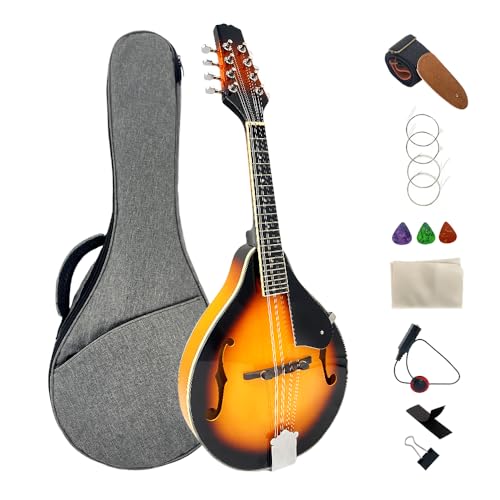
- Built-in pickup and 1/4-inch jack suit direct recording or amplification.
- All-sapele body is aimed at rich resonance and shimmering highs.
- Onboard volume and tone controls help shape the signal fast.
Best For: Musicians who need a plug-in mandolin for home studio or live use.
Studio-Ready F-Style

- Solid spruce top for clear resonance
- Mahogany body adds warmth and depth
- 29 frets and ebony hardware support smooth playability
Best For: Players who want projection and a polished acoustic sound for studio or stage
Plug-In Flexibility

- Built-in pickup for plugged-in recording
- Mahogany body with warm, balanced tone
- Comes with gig bag and starter accessories
Best For: Players who want acoustic practice plus easy amplified recording
Starter Kit Value

- Open-style pegs with 18:1 gear ratio
- Sapele body for warm, resonant tone
- Includes tuner, bag, strings, picks, and chart
Best For: Beginners who want a complete, easy-to-tune starter set
Studio-Ready Acoustic-Electric Pick – Vangoa Mahogany A-Style Mandolin
If you’re shopping for mandolins for recording, this Vangoa model is a practical pick because it combines a warm mahogany build with a built-in pickup for easy capture in both home and studio setups. The adjustable walnut bridge and 18:1 tuners also help keep the instrument playable and in tune while tracking.
Best For: Players who want an affordable acoustic-electric mandolin that’s ready for practice, recording, and small amplified sessions.
Pros:
- AAA-grade mahogany body for a rich, warm tone with strong resonance
- Built-in pickup for recording or amplified use
- Adjustable walnut bridge and 18:1 gear ratio tuners for easier setup and tuning
- Includes a full starter bundle with cable, tuner, strap, extra strings, and gig bag
Cons:
- Bundle-focused design may be more than you need if you already own accessories
- Best suited to players who want an electric-acoustic format rather than purely acoustic tone
This is a versatile all-in-one option for musicians who want a mandolin that can move from practice to recording without extra gear. The warm mahogany character and pickup make it especially useful when you need a simple path to getting sound into a track.
Vintage Straight-Into-Mic Choice – Recording King Dirty 30's A-Style
For mandolins for recording, the Recording King RAM-3-TS stands out if you want a straightforward acoustic instrument with a solid spruce top and maple body. Its satin finish and A-style build give it a classic look and feel, while the full-size format suits players who want a traditional mandolin sound for mic’d sessions.
Best For: Players who want a traditional acoustic mandolin for tracked takes, folk parts, and simple mic placement.
Pros:
- Solid spruce top for a responsive acoustic voice
- Maple back and body for a classic mandolin build
- Satin finish and A-style design keep it simple and traditional
- Full-size instrument with included ivory tuners and fretboard dots
Cons:
- No built-in pickup for direct recording
- Sold as a manual acoustic instrument, so it’s less flexible for stage amplification
This is a strong choice if your recording setup favors a microphone over onboard electronics. It keeps the focus on a classic acoustic mandolin voice and a no-frills build that fits traditional parts well.
Budget Starter Session Pick – Donner DML-1 Mahogany A-Style
If you’re looking at mandolins for recording on a budget, the Donner DML-1 offers a warm mahogany build and a bright overall sound profile that can work well for practice tracks and entry-level sessions. It also comes as a complete bundle, so you can get playing and capturing ideas quickly.
Best For: Beginners who want an inexpensive starter mandolin with useful accessories for basic recording and practice.
Pros:
- Mahogany body for a warm, stable sound
- Bright sound profile that suits a range of music styles
- Includes gig bag, strings, tuner, polishing cloth, and picks
- Chrome plated open gear tuners and adjustable bridge for easier setup
Cons:
- No built-in pickup for direct recording
- More of a starter bundle than a feature-rich studio instrument
This is a sensible entry-level option if you want a low-cost mandolin to learn on and occasionally record through a mic. It gives you the essentials without pushing the price or complexity too high.
Pickup-Equipped Modern Session Pick – Sunsmile Sapele Acoustic-Electric Mandolin
This acoustic-electric mandolin is a strong fit for recording when you want direct control and a ready-to-play package. The sapele top, magnetic pickup, and tone controls make it easier to shape a usable signal, while the included accessories help you get set up fast.
Best For: Players who want an affordable acoustic-electric mandolin with onboard controls for recording and live use.
Pros:
- Magnetic pickup with tone controls for amplified or recorded sound
- Sapele top and body with an okoume neck for a lightweight feel
- Adjustable compensating walnut bridge for easier setup
- Includes gig bag, cable, tuner, strap, strings, picks, and polish cloth
Cons:
- Modern pickup system may not appeal to players seeking a purely acoustic instrument
- Gloss finish and electronics add complexity compared with simple unplugged models
For home recording or quick session work, this model gives you useful onboard control without needing extra gear. It’s especially appealing if you want a lightweight mandolin that’s ready to plug in and start tracking.
Warm Beginner A-Style Option – Donner A-Style Mandolin Kit
If you’re comparing mandolins for recording, the Donner DML-100B is a practical acoustic option with a warm, balanced voice and a comfortable A-style build. Its AAA mahogany construction is aimed at rich mids, full lows, and crisp highs, while the included accessories make it easy to get set up quickly.
Best For: Beginners and casual players who want a complete acoustic mandolin with warm tone and recording-friendly simplicity.
Pros:
- AAA mahogany body is designed for warm mids, full lows, and bright highs.
- C-shaped neck, rounded frets, and adjustable truss rod help with comfortable playability.
- Chrome open-gear tuners and compensated bridge support stable tuning and fine adjustment.
- Bundle includes gig bag, strings, tuner, cloth, and picks for immediate use.
Cons:
- Acoustic-only design means no built-in pickup for direct studio recording.
- Sound profile is described as bright and traditional, which may not suit every recording style.
For simple acoustic tracking and practice, this Donner kit offers a good mix of tone, comfort, and starter accessories. It is a sensible pick if you want a dependable mandolin without adding extra gear right away.
Clear Spruce-Topped Choice – Vangoa A-Style Mandolin Kit
For shoppers comparing mandolins for recording, this Vangoa A-style model stands out for its spruce top and clear, responsive sound. The notes emphasize directional tone, strong clarity, and dynamic range, making it a straightforward acoustic choice for practice, solo playing, or simple captured performances.
Best For: Players who want a spruce-topped acoustic mandolin with a clear response and beginner-friendly bundle.
Pros:
- Spruce top is described as rich, directional, and responsive to different playing styles.
- Chrome-plated open-gear tuners are intended to make tuning and intonation maintenance easier.
- Tailpiece design is made for easier string changes.
- Kit includes tuner, strap, padded bag, spare strings, chord charts, and accessory storage bag.
Cons:
- Acoustic-only setup may be less convenient than a pickup-equipped model for direct recording.
- Most of the bundle focus is on beginner convenience rather than advanced studio features.
This is a sensible option if you want an easy-to-manage mandolin with a clear top-end character and a full starter package. It should suit players who value responsiveness and want a low-friction path into acoustic playing.
Recording-Ready Acoustic-Electric – Sapele Mandolin with Pickup
If you’re shopping mandolins for recording, this acoustic-electric model is the most studio-friendly of the group thanks to its built-in pickup and 1/4-inch output jack. The all-sapele body is described as delivering a rich, resonant midrange with shimmering highs, while onboard volume and tone controls make it easier to shape sound before you hit the interface or PA.
Best For: Players who want a mandolin they can plug in for home recording, rehearsal, or live performance.
Pros:
- Built-in pickup and 1/4" output jack make direct connection to an amp, PA, or recording setup possible.
- All-sapele construction is intended to provide rich resonance with shimmering highs.
- Volume and tone controls add quick onboard sound shaping.
- Includes padded gig bag, adjustable strap, picks, and extra strings.
Cons:
- It is still a mandolin-first instrument, so acoustic warmth and electronics need to be balanced in use.
- Finish and feature set are aimed more at versatility than at a stripped-down, purely traditional build.
This model makes the most sense if recording is a priority and you want the flexibility to go straight into a setup without relying on a microphone. Its pickup-equipped design gives it a clear edge for home studio use and amplified performance.
Studio-Ready F-Style – Solid Spruce Mandolin
If you want mandolins for recording with a brighter, more projecting voice, this Vangoa F-style model is built around a solid spruce top that delivers clear resonance and rich tone. The mahogany body adds warmth and depth, while the F-style body shape and arched back are designed to help the instrument stand out in studio or stage contexts.
Best For: Players who want a more resonant, visually striking mandolin for practice, studio work, and performance.
Pros:
- Solid spruce top for vibrant tone and crystal-clear resonance
- Mahogany body adds warmth and balanced depth
- F-style design supports strong projection for stage and studio use
- 29 frets with ebony fingerboard and bridge for extended note range and smooth playability
Cons:
- Made as a beginner-to-intermediate starter kit rather than a pure pro-only instrument
- At 2.5 kg, it may feel a bit substantial compared with lighter models
This is a strong choice if your priority is a mandolin that brings articulate tone and a more premium build to recording sessions. The included tuner, strings, strap, pick, and chord chart also make it easy to get set up quickly.
Plug-In Flexibility – Acoustic Electric Mandolin
For mandolins for recording where you may need both unplugged tone and easy amplification, this A-style acoustic-electric model is the most flexible pick in the group. Its mahogany body is tuned for bright highs, warm mids, and good resonance, and the built-in pickup lets you connect to an amp, speaker, or PA when you want a stronger recorded or live signal.
Best For: Players who need a mandolin they can practice with acoustically and plug in for recording or performance.
Pros:
- Built-in pickup adds acoustic-electric versatility for recording and stage use
- Mahogany body delivers warm mids, bright highs, and balanced resonance
- Comfortable neck profile and smooth fretboard are beginner-friendly
- Includes gig bag, strap, extra strings, pick, and cleaning cloth
Cons:
- Top and back are listed as basswood, not a premium solid-wood top
- Starter-kit focus means it’s aimed more at convenience than high-end customization
If you want one mandolin that can move from home practice to plugged-in recording without extra gear, this is the practical option. The included bag and accessories also make it travel-friendly for lessons and rehearsals.
Starter Kit Value – Easy-Tune A-Style Mandolin
If you’re shopping mandolins for recording on a budget, this A-style Kmise kit focuses on easy setup, stable tuning, and a warm, resonant voice. The sapele build is paired with open-style metal tuning pegs and an 18:1 gear ratio, which should make tuning adjustments more precise and beginner-friendly.
Best For: Beginners and casual players who want an easy-to-tune starter mandolin with useful accessories.
Pros:
- Open-style tuning pegs and 18:1 gear ratio support precise tuning
- Sapele body is described as producing a rich, warm tone with good resonance
- Rounded fret ends and dense fretboard aim for comfortable playability
- Includes tuner, picks, chord chart, extra strings, cleaning cloth, strap, and gig bag
Cons:
- Uses sapele rather than higher-end solid tonewoods
- A-style design and starter-kit positioning may be less distinctive for advanced studio players
This is a sensible pick if you want a full accessory bundle and straightforward tuning without overcomplicating the purchase. It’s a practical entry point for home practice and light recording use.
How We Picked These Mandolins for Recording
We prioritized instruments that make sense for capture work: consistent tuning stability, solid construction, comfortable action, and tonal character that records well without excessive harshness or muddiness. We also considered whether an acoustic-electric pickup, starter bundle, or more traditional acoustic build would better serve different recording setups.
Quick Comparison: What Matters Most
For studio use, the biggest decision is whether you want a straightforward acoustic mandolin for a natural microphone sound or an acoustic-electric model for direct input. Acoustic-only models often sound more organic in a room, while pickup-equipped versions can be faster to record and easier to control in noisy spaces. A-style bodies tend to be straightforward and affordable, while F-style models usually offer a more pronounced look and can bring a slightly different tonal response and feel.
Key Buying Factors for Mandolins for Recording
Tone and Top Wood
Top wood affects how an instrument responds under a microphone. Spruce tops are popular because they can project clearly and articulate note separation well, which helps when parts need to cut through a dense arrangement. Mahogany can sound a little warmer and rounder, which may suit rhythm parts or folk-style textures.
Pickup Versus Microphone Recording
If you plan to record directly into an interface, an acoustic-electric mandolin can save time. Just keep in mind that pickup tone may need EQ to sound natural. If your priority is the most acoustic character, a good microphone often captures more nuance than a built-in pickup.
Playability and Setup
For recording, easy fretting matters as much as tone. Clean intonation, comfortable action, and stable tuning reduce retakes and editing. A mandolin that feels easy to play will usually produce more confident performances, especially for layered parts and repeated takes.
Bundle Extras
Included tuners, gig bags, straps, and spare strings can be useful for beginners or fast session prep, but they should not outweigh core build quality. Treat bundles as convenience extras rather than the main reason to buy.
Who Should Buy Which Mandolins for Recording?
If you want the most flexible setup for home recording, choose an acoustic-electric model. If you prefer a more natural, microphone-first sound, an acoustic-only instrument is often the better fit. Players seeking warm rhythm textures may lean toward mahogany builds, while those wanting stronger projection and clearer note attack may prefer spruce-topped models. Beginners recording demos at home should focus on easy setup and tuning stability; more experienced players may want a model with better woods and finer fretwork for cleaner takes.
In short, the best Mandolins for Recording are the ones that make your parts easy to play and easy to capture. Prioritize tone, stability, and recording workflow over flashy extras, and you will end up with an instrument that works well both in the studio and on stage.