The best looper pedals for home studios make it easier to practice, arrange songs, and build layered performances without a full recording setup. The right model can provide anything from a simple one-button loop to synchronized drums, multiple tracks, and extensive onboard storage.
We compared these 10 options by recording time, controls, overdubbing features, rhythm functions, connectivity, and overall ease of use. Whether you want a compact practice looper or a more complete songwriting tool, this roundup highlights the key differences to consider.
Best 10 Looper Pedals for Home Studios Picks for 2026
Best Beginner Pick

- Simple controls for recording and overdubbing
- 12 minutes of stereo recording time
- 24-segment LED loop-status indicator
Best For: Beginners layering guitar, bass, or keyboard parts
Best Minimalist Option

- Five minutes of loop time
- Unlimited overdubs with undo and redo
- True bypass and analog dry-through
Best For: Guitarists wanting a compact, focused looper
Best With Drums

- 160 minutes of stereo recording
- Built-in drums with sync and quantization
- USB-C transfer and headphone output
Best For: Practice, songwriting, and rhythm-backed layering
Best Advanced Choice

- Four looping modes with dual-track operation
- Stores 128 loops and over three hours of audio
- Works as a 2-in/2-out USB audio interface
Best For: Advanced looping, vocals, streaming, and studio recording
Best Compact Value

- Nine loops and 40 minutes of total recording
- 48 kHz/24-bit audio with unlimited overdubs
- Built-in tuner and USB WAV file transfer
Best For: Home musicians wanting an affordable looper with tuning and computer connectivity
Best for Rhythmic Arrangements

- Stereo looper with 14 save slots and 140 minutes
- Built-in drum machine with 121 grooves
- Imports multiple audio formats and exports WAV
Best For: Guitarists and producers building stereo arrangements with drum accompaniment
Best for Extended Song Ideas

- Three slots with 90 minutes of recording
- Bright screen and one-footswitch control
- Unlimited overdubs and automatic loop saving
Best For: Songwriters needing long loops and simple visual control
Best All-in-One Practice Station
FLAMMA FS21 Stereo Looper & Drum Machine

- 160 minutes of total loop storage
- 100 grooves and 10 metronome settings
- USB editing with automatic saving
Best For: Home-studio players who want looping and rhythm functions together
Best Compact Looping Value
LEKATO Looper Pedal with Tuner
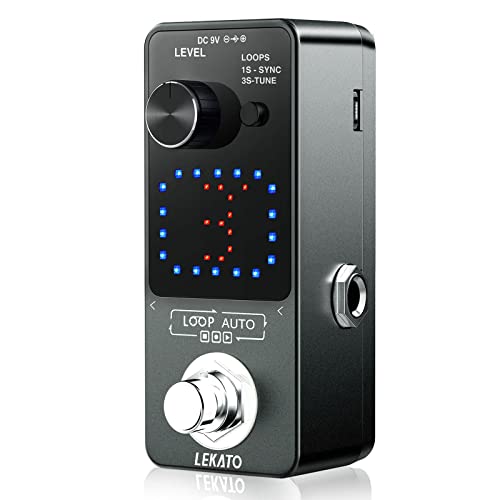
- Three loops and 18 minutes of storage
- Unlimited overdubs with undo and redo
- USB WAV transfer and built-in tuner
Best For: Players seeking a compact looper for basic home-studio layering
Best Feature-Rich Studio Looper
FLAMMA FF20 Looper Drum Machine

- 300 minutes across 100 loop slots
- 220 grooves in 11 drum styles
- Headphone out, time stretch, and auto record
Best For: Home-studio creators building layered arrangements and practicing silently
Best Beginner Pick – BOSS RC-1 Loop Station
The BOSS RC-1 is a straightforward choice for musicians seeking looper pedals for home studios. Its simple controls support recording, playback, overdubbing, undo, and redo, while the loop indicator helps you see the current mode.
Best For: Guitarists, bassists, and keyboard players who want an easy, compact looper for building layered ideas.
Pros:
- User-friendly operation with record, overdub, playback, undo, and redo functions
- 12 minutes of stereo recording time with memory retention after power-off
- Stereo inputs and outputs plus a 24-segment LED loop indicator
- Can run on the included 9V battery or an optional PSA-series adapter
Cons:
- Optional AC adapter is sold separately
- Single-foot-switch design may offer less hands-free control than dual-switch models
The RC-1 keeps the looping workflow uncomplicated, making it a practical entry point for home recording and practice. It is best suited to users who value ease of use over extensive storage or built-in rhythm features.
Best Minimalist Option – TC Electronic DITTO LOOPER
The TC Electronic DITTO LOOPER is a compact, guitar-focused option for shoppers comparing looper pedals for home studios. It provides five minutes of loop time, unlimited overdubs, undo/redo, and a transparent signal path through true bypass and analog dry-through.
Best For: Guitarists who want a small, uncomplicated looper with natural dry signal handling.
Pros:
- Five minutes of looping time with unlimited overdubs
- Undo and redo functions support flexible idea building
- True bypass and analog dry-through help preserve the dry signal
- Compact, lightweight design suited to small pedalboards
Cons:
- Requires a 9V power supply providing at least 100 mA, which is not included
- Offers less recording time and fewer listed connections than larger loopers
With its focused feature set, the DITTO is easy to integrate into a basic home setup. Choose it when quick guitar looping and signal transparency matter more than extensive memory or drum-machine functions.
Best With Drums – FLAMMA FF03 Looper Pedal
The FLAMMA FF03 combines looping and rhythm practice in one unit, making it a versatile choice among looper pedals for home studios. It offers long stereo recording capacity, memory slots, drum patterns, synchronization, and a headphone output for quieter sessions.
Best For: Home-studio musicians who want backing rhythms, extensive loop storage, and silent monitoring.
Pros:
- 160 minutes of 44.1kHz/16-bit stereo recording across 40 memory slots
- Built-in drum machine with 11 styles, 11 patterns per style, and metronome rhythms
- Sync, quantization, tap tempo, count-in, undo/redo, and fade-out features
- USB-C WAV file transfer and dedicated headphone output
Cons:
- Requires a 9V power source rated at 200 mA
- Its broader feature set may take longer to learn than a basic looper
The FF03 is a strong fit for practice, songwriting, and layered arrangements where rhythm support is useful. Its storage and USB-C transfer also make it more suitable than a basic looper for managing multiple home-studio ideas.
Best Advanced Choice – Sheeran Looper + Dual Track
The Sheeran Looper + is a feature-rich option for musicians evaluating looper pedals for home studios. Its dual-track workflow, four looping modes, internal storage, USB audio interface functions, and microphone and instrument connectivity support more complex recording and performance setups.
Best For: Performers and home-studio creators who need multitrack-style looping, vocal support, and computer connectivity.
Pros:
- Four modes: single, multi, sync, and song
- Stores up to 128 loops with more than three hours of total audio
- Functions as a 2-in/2-out USB audio interface for recording or streaming
- Includes microphone input, stereo instrument inputs, MIDI input, and loop-file transfer
Cons:
- Larger and heavier than compact single-loop pedals
- Uses a 9V, 500 mA power requirement when powered externally
- Its expanded workflow may be more than casual users need
The LOOPER + is designed for users who expect a pedal to bridge live looping and computer-based production. Its screen, dual pedals, storage, and USB functions make it the most capable choice here, though its size and complexity favor committed users.
Best Compact Value – LEKATO Looper with Tuner
For home studios seeking practical looper pedals for home studios, the LEKATO combines generous recording capacity, a built-in tuner, and USB file transfer in a compact pedal. Its 48 kHz/24-bit sampling and visual time indicator are useful for recording and organizing layered ideas.
Best For: Home musicians who want an affordable looper with tuning and computer-based WAV file management.
Pros:
- Provides nine loops, up to 10 minutes per loop, and 40 minutes total recording time.
- Supports 48 kHz/24-bit recording with unlimited overdubbing.
- Includes a built-in tuner and USB import/export for WAV files.
- Comes with a 9V power supply and USB cable.
Cons:
- Single-knob control and one-button foot commands may require learning the operating gestures.
- USB file transfer is limited to WAV loop files.
The LEKATO is a strong choice when compact size, straightforward looping, and easy computer transfers matter more than advanced drum-machine features.
Best for Rhythmic Arrangements – MOOER Groove Looper X2
The MOOER Groove Looper X2 stands out among looper pedals for home studios by pairing stereo looping with a built-in drum machine. Its save slots, tempo tools, audio import options, and separate routing make it suited to building fuller arrangements without additional rhythm hardware.
Best For: Producers and guitarists who want stereo loops, built-in drum grooves, and flexible practice or songwriting tools.
Pros:
- Offers 14 save slots with loops up to 10 minutes each and 140 minutes of stereo recording.
- Includes 121 drum grooves across 11 genres, with count-in, automatic, and normal recording modes.
- Time Stretch and Justify functions help align playback speed and drum-loop timing.
- Supports MP3, WAV, FLAC, and APE imports plus WAV exports through editor software.
Cons:
- Its larger footprint and expanded controls may be more than needed for basic looping.
- Requires a 9V DC, 300mA center-negative adapter, and editor software is needed for track management.
Choose the MOOER if rhythm accompaniment and stereo workflow are priorities; it offers considerably more arrangement capability than a basic single-purpose looper.
Best for Extended Song Ideas – Donner Triple Looper
The Donner Triple Looper is a straightforward option for looper pedals for home studios when long recording capacity and clearly visible status information are important. Three independent loop slots, automatic saving, and unlimited overdubs make it useful for developing song sections and layered parts.
Best For: Songwriters and solo players who need long loop storage with simple foot control and a readable screen.
Pros:
- Provides three loop slots, each supporting up to 30 minutes, for 90 minutes total recording time.
- Bright screen displays loop status, recording progress, and timing.
- Offers unlimited overdubs plus undo and redo functions.
- True bypass helps preserve the guitar signal when the pedal is off, and loops auto-save when powered down.
Cons:
- A power supply is not included, so a compatible 9V DC center-negative, 500mA supply is required.
- It has three slots rather than the MOOER’s 14 save slots.
The Donner favors accessible operation and extended recording over advanced rhythm features, making it a practical fit for rehearsing, songwriting, and layering guitar or bass parts at home.
Best All-in-One Practice Station – FLAMMA FS21 Stereo Looper & Drum Machine
For home studios needing both looping and rhythm support, the FLAMMA FS21 combines a stereo looper with a built-in drum machine. It offers high-quality 44.1kHz/24-bit recording, 160 minutes of total loop capacity, and computer-based audio management.
Best For: Guitarists who want a dedicated looper and drum machine in one pedal for arranging ideas, practicing, and building layered parts.
Pros:
- 160 minutes of total recording capacity across 40 preset slots.
- Includes 100 drum grooves across 10 musical styles plus 10 metronome settings.
- Dual footswitches separately control the looper and drum functions.
- Automatically saves recorded content after power loss and supports USB editing.
Cons:
- Exported files include looper audio, but not the drum-machine sounds.
- A 9V center-negative power adapter is required, and external footswitch control is optional.
The FS21 is a practical middle ground for home studios that want rhythm accompaniment without adding a separate device. Its large storage capacity and computer connectivity make it useful for developing and organizing song ideas.
Best Compact Looping Value – LEKATO Looper Pedal with Tuner
The LEKATO looper is a compact choice for home studios that prioritize straightforward overdubbing and easy storage. It provides three loops, up to 18 minutes of total recording time, USB WAV transfer, and a built-in tuner for guitar or bass setups.
Best For: Players who want an affordable, space-saving looper for layering parts, practicing, and managing loops from a computer.
Pros:
- Three loops provide up to 18 minutes of total recording time, with up to six minutes per loop.
- Supports unlimited overdubbing with undo and redo functions.
- SYNC recording can begin during playback, helping capture ideas without waiting for a loop to restart.
- USB import/export, automatic file saving, and a built-in tuner add useful studio convenience.
Cons:
- The power supply is not included and must be a 9V center-negative adapter.
- It has less total storage than the larger FLAMMA models in this roundup.
With its small footprint and focused controls, the LEKATO makes a sensible entry point for home-studio looping. It is best suited to musicians who need core loop functions rather than an integrated drum machine.
Best Feature-Rich Studio Looper – FLAMMA FF20 Looper Drum Machine
The FLAMMA FF20 is designed for home studios that need substantial loop storage, rhythm variety, and silent monitoring. Its stereo looper stores up to 300 minutes across 100 slots, while the full-color display, time stretch, auto record, USB transfer, and headphone output support detailed practice and production workflows.
Best For: Guitarists and bassists creating layered compositions, saving many loop ideas, or practicing with drums and headphones.
Pros:
- Stores up to 300 minutes of stereo loops across 100 memory slots.
- Includes 220 drum grooves across 11 styles for standalone practice and arranging.
- Two-inch color screen displays loop status, recording time, BPM, and drum patterns.
- Time stretch, auto record, USB WAV transfer, and headphone output expand its studio usefulness.
Cons:
- Its larger feature set may be more than needed for simple looping.
- Operation depends on a 9V center-negative power supply.
The FF20 is the strongest fit here for musicians who want a pedal that can serve as a compact idea library and practice workstation. Its headphone output is particularly useful for quiet home sessions, while the extensive memory and rhythm selection support more involved arrangements.
How We Picked the Best Looper Pedals for Home Studios
We focused on the features that matter most in a home recording and practice environment: loop length, overdub behavior, undo and redo functions, memory capacity, rhythm options, footswitch layout, and connection flexibility. We also considered whether each pedal is better suited to quick practice, live-style layering, songwriting, or more structured recording.
Simple models can be excellent choices when you want immediate hands-free looping and minimal setup. More advanced pedals add drum patterns, multiple tracks, stereo inputs and outputs, synchronization, tuners, or USB connections, but they may require more time to learn.
Quick Comparison
| What You Need | Look For | Best Fit |
|---|---|---|
| Simple practice looping | One-button control, clear status display, and true bypass | Compact single-loop pedals |
| Songwriting and arranging | Long recording time, multiple memories, and undo/redo | Advanced loop stations |
| Rhythm-backed practice | Built-in drum grooves, tap tempo, and metronome controls | Looper-and-drum-machine combinations |
| Stereo rigs or keyboards | Stereo inputs and outputs with flexible routing | Stereo loopers |
| Portable setups | Small footprint, straightforward power requirements, and durable switches | Compact guitar loop pedals |
Key Buying Factors for Looper Pedals for Home Studios
Loop Time and Memory
Check both the maximum length of a single loop and the number of saved loop slots. A short loop is enough for technique practice, while longer recording capacity is more useful for full song sections and layered arrangements.
Controls and Workflow
Footswitch timing affects how easy a looper is to use. Dedicated switches for record, overdub, stop, undo, and redo can make complex performances more reliable. A screen or clear LED indicators also help you confirm the current state without looking closely.
Drums, Sync, and Timing
Built-in rhythms can provide a stronger practice reference than a metronome alone. If you plan to combine loops with drum patterns, look for tap tempo, quantization, rhythm volume controls, and—when needed—sync features that keep parts aligned.
Connections and Sound Quality
True bypass and analog-dry-through help preserve your direct signal, while stereo connectivity is valuable for stereo effects, keyboards, and wider arrangements. USB can simplify backups or transfers on some models, but verify exactly what the connection supports before buying.
Who Should Buy Which Looper Pedals for Home Studios?
Beginners and focused practice users: Choose a straightforward single-loop pedal with intuitive controls and visible indicators. Fewer features can make it easier to learn timing and overdubbing.
Singer-songwriters: Prioritize longer loop times, multiple memories, undo/redo, and built-in rhythms. These features support developing complete sections without repeatedly rebuilding ideas.
Players who want backing tracks: A looper with drum grooves, tap tempo, and metronome functions can turn a guitar or bass into a self-contained practice station.
Advanced home-studio users: Look for stereo I/O, multiple tracks, synchronization, and USB functionality. These capabilities are worth the added complexity when the pedal will be part of a larger recording workflow.