A dependable tuner is one of the simplest ways to improve an electric guitar’s sound, practice sessions, and live performance. The right model makes accurate tuning quick without adding unnecessary gear or setup time.
We compared 10 guitar tuners for electric guitars across clip-on, rechargeable, multi-instrument, and pedal formats to help you find the best match for your playing style, pedalboard, and budget.
Best 10 Guitar Tuners for Electric Guitars Picks for 2026
Best Everyday Pick
Snark SN5X Color Clip-On Tuner

- Full-color display
- Guitar and bass frequency range
- Front or back headstock placement
Best For: Everyday guitar and bass tuning
Best Discreet Option
D'Addario Micro Headstock Tuner
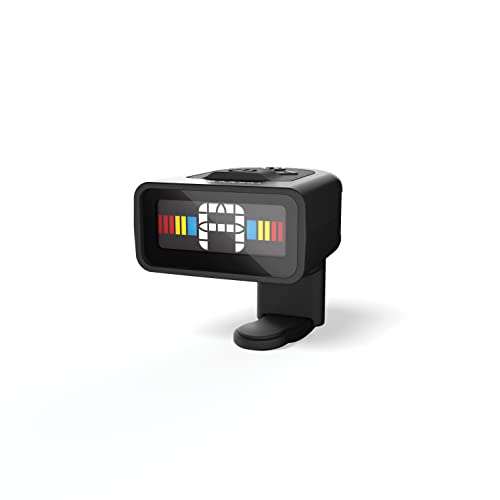
- Ultra-compact behind-headstock design
- Vibration-based piezo sensing
- Tri-color backlit screen
Best For: Low-profile tuning on electric guitars
Best Multi-Instrument Choice

- Vibration-based tuning
- Modes for five tuning applications
- Adjustable dual-hinge clip
Best For: Players using guitar and multiple instruments
Best Rechargeable Model

- Up to 24 hours per charge
- USB-C rechargeable design
- 360-degree rotating bright display
Best For: Frequent players avoiding disposable batteries
Stage-Ready Pedal
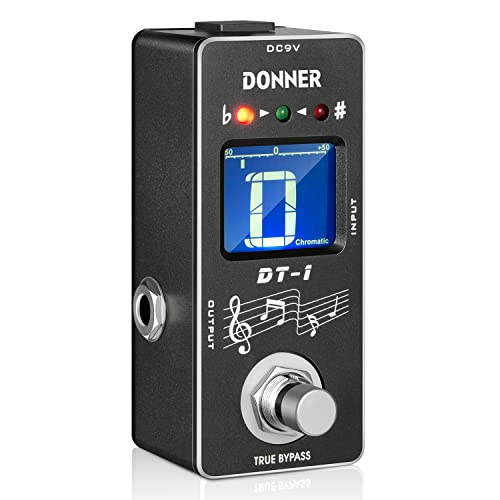
- Wide A0-C8 tuning range with strobe mode
- Silent tuning and true-bypass operation
- Bright display for stage or outdoor use
Best For: Pedalboard users who need visible, hands-free tuning
Adjustable Clip-On
D’Addario Eclipse Headstock Tuner
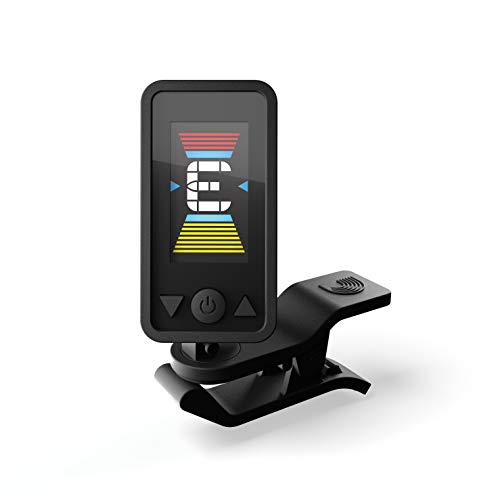
- Full-color display with dual swivel adjustment
- 435-450 Hz calibration range
- Strong clamp for multiple instrument types
Best For: Portable tuning with flexible headstock viewing
Versatile Clip-On
AARVI Multi-Instrument LCD Tuner

- Six instrument modes plus chromatic tuning
- 360-degree display with universal clip
- Auto-off and included CR2032 battery
Best For: Players tuning several stringed instruments
Rechargeable Precision Pick
D'Addario Eclipse Rechargeable Tuner

- Rechargeable battery offers up to 24 hours per charge
- Full-color display with dual swivels
- Adjustable 435–450Hz calibration range
Best For: Players wanting a rechargeable tuner with flexible viewing angles
Simple Road-Ready Choice

- One-button operation for quick setup
- Sensitive vibration clip supports accurate tuning
- Rotational display offers multi-angle viewing
Best For: Beginners and players needing a compact travel tuner
Flexible Multi-Instrument Pick
Rotatable Clip-On Guitar Tuner

- Works with guitars, bass, ukulele, banjo, and violin
- 360-degree rotatable screen
- Automatic shutoff after three minutes
Best For: Musicians tuning several stringed instruments
Best Everyday Pick – Snark SN5X Color Clip-On Tuner
If you want straightforward guitar tuners for electric guitars, the Snark SN5X offers a practical clip-on design with a full-color display. Its guitar- and bass-focused frequency range makes it a convenient choice for routine tuning, while the reversible headstock placement adds flexibility.
Best For: Electric guitarists seeking an uncomplicated, color-display tuner for guitar or bass.
Pros:
- Full-color display is easy to reference while tuning.
- Frequency range is tailored to guitar and bass.
- Can be used on the front or back of the headstock.
Cons:
- Uses a replaceable battery rather than a rechargeable design.
- Plastic construction may feel less premium than metal-bodied alternatives.
The SN5X is a sensible everyday option when clear visual feedback and simple headstock mounting matter more than advanced features.
Best Discreet Option – D'Addario Micro Headstock Tuner
Among guitar tuners for electric guitars, the D’Addario Micro stands out for its compact, behind-the-headstock design. It uses a piezo transducer to detect instrument vibration, so it can tune accurately without relying on the surrounding sound level.
Best For: Players who want a small, unobtrusive tuner that can stay on the instrument in its case.
Pros:
- Compact design blends behind the headstock.
- Piezo sensing picks up instrument vibration rather than sound.
- Tri-color display shows out-of-tune, close, and in-tune status.
- 360-degree swivel and adjustable padded clamp support flexible positioning.
Cons:
- Small display may be less noticeable than a larger-screen tuner.
- Requires a replaceable CR2032 battery.
This is a strong fit for electric guitarists prioritizing portability and discretion, especially when leaving a tuner attached between practice sessions.
Best Multi-Instrument Choice – Fender FCT-2 Clip-On Tuner
Fender FCT-2 Professional Multi-Instrument Clip-On Tuner for Guitar, Bass, Ukulele, and Violin
Check Price On AmazonThe Fender FCT-2 is a versatile choice for shoppers comparing guitar tuners for electric guitars and other instruments. Its vibration-sensing operation works in loud or quiet environments, while dedicated modes cover guitar, bass, ukulele, violin, and chromatic tuning.
Best For: Musicians who need one clip-on tuner for multiple instruments and playing environments.
Pros:
- Vibration sensing supports tuning in noisy venues and quiet rooms.
- Color LCD needle display provides quick visual feedback.
- Dedicated modes cover guitar, bass, ukulele, violin, and chromatic tuning.
- Dual-hinge clip adjusts for either side of the headstock.
Cons:
- Its multi-instrument features may be unnecessary for guitar-only players.
- Uses a replaceable CR2032 battery.
With a B0-to-B7 range, A440 calibration, and an included battery, the FCT-2 is a capable all-purpose tuner for players with varied setups.
Best Rechargeable Model – D'Addario Nexxus 360 Tuner
For guitarists who prefer to avoid disposable batteries, the D’Addario Nexxus 360 is a practical rechargeable option among guitar tuners for electric guitars. It provides up to 24 hours of tuning per charge, a bright display, and a strong clamp that rotates for easier viewing.
Best For: Electric and acoustic guitarists who want rechargeable power and flexible screen positioning.
Pros:
- Provides up to 24 hours of tuning per charge.
- USB-C charging avoids regular battery replacement.
- 360-degree rotating display supports different viewing angles.
- Strong clamp is designed to mount securely on the headstock.
Cons:
- Needs periodic recharging instead of using a readily replaceable battery.
- USB charging requires access to a USB power source.
The Nexxus 360 is especially appealing for players who tune frequently and value a bright, adjustable display with rechargeable convenience.
Stage-Ready Pedal – Donner DT-1 Chromatic Tuner
For players comparing guitar tuners for electric guitars, the Donner DT-1 is a pedal-format option designed for quick, visible tuning on stage or during practice. It supports a broad tuning range and offers both silent tuning and bypass operation.
Best For: Electric guitarists and bass players who want a pedal tuner with a large, easy-to-see display.
Pros:
- Tunes across A0 to C8 with strobe mode and stated ±1-cent accuracy.
- Silent tuning mode mutes the signal while adjustments are made.
- Bright LED display is designed for stage and outdoor visibility.
- True bypass helps return the guitar signal to the amplifier without reported tone loss.
Cons:
- Requires a 9-volt adapter, which is not included.
- There is no battery compartment.
The DT-1 makes sense for a pedalboard-based setup where hands-free control, signal muting, and display visibility matter. Budget for a compatible power adapter when purchasing.
Adjustable Clip-On – D’Addario Eclipse Headstock Tuner
The D’Addario Eclipse is a compact clip-on choice for shoppers comparing guitar tuners for electric guitars. Its vibration-based headstock mounting, full-color screen, and adjustable viewing angles make it convenient for practice, rehearsals, and varied playing positions.
Best For: Electric guitarists who want a readable, flexible clip-on tuner that also works with bass, acoustic guitar, and ukulele.
Pros:
- Offers quick and accurate tuning with a stated 435–450 Hz calibration range.
- Full-color vertical display provides adjustable viewing angles.
- Dual swivels support mounting for left- or right-handed players.
- Strong clamp is designed to stay in place on the headstock.
Cons:
- Requires one CR2 battery, although it is included.
- The supplied notes identify USB-C as a connector type, but do not describe USB charging functionality.
Choose the Eclipse when portability and screen positioning are more important than a pedal connection. Its included battery and universal instrument compatibility make it a practical grab-and-go tuner.
Versatile Clip-On – AARVI Multi-Instrument LCD Tuner
The AARVI clip-on tuner is a versatile pick for anyone comparing guitar tuners for electric guitars and other instruments. It combines an electric-guitar mode with six instrument-specific tuning modes, a rotating LCD, automatic shutoff, and vibration sensing for use in noisy environments.
Best For: Multi-instrument players who want one compact tuner for electric guitar, bass, acoustic guitar, and other stringed instruments.
Pros:
- Includes dedicated modes for electric guitar, acoustic guitar, bass, violin, banjo, and ukulele, plus chromatic mode.
- 360-degree rotating display and wide-opening clip help with positioning.
- High-sensitivity vibration sensor is intended to support tuning in noisy settings.
- Three-minute auto-off helps conserve the included CR2032 battery.
Cons:
- Plastic construction may feel less substantial than a metal pedal tuner.
- Its automatic shutoff activates after three minutes of inactivity, which may not suit every workflow.
The AARVI is a useful compact option when flexibility matters and the same tuner will serve several instruments. The included four guitar picks add a small practical bonus for electric guitar players.
Rechargeable Precision Pick – D'Addario Eclipse Rechargeable Tuner
For guitar tuners for electric guitars, the D’Addario Eclipse stands out with rechargeable convenience, a clear full-color display, and accurate vibration-based tuning. Its adjustable clamp and dual swivels make it easy to position on nearly any headstock.
Best For: Electric guitarists who want a rechargeable clip-on tuner with a highly adjustable screen.
Pros:
- Provides up to 24 hours of tuning per charge and includes a USB cable.
- Offers a full-color display with dual swivels for flexible viewing.
- Supports precise tuning with adjustable calibration from 435–450Hz.
- Strong adjustable clamp can mount securely in different headstock positions.
Cons:
- Requires recharging rather than a simple battery replacement.
- Its rechargeable design may be more than needed for occasional players.
The Eclipse is a practical premium choice when screen visibility, secure placement, and reduced battery replacement matter more than the simplest possible setup.
Simple Road-Ready Choice – Donner DT-2 Clip-On Tuner
Donner Guitar Tuner Clip on-Accurate Chromatic,Acoustic Guitar Bass Violin Ukulele Tuner DT-2
Check Price On AmazonThe Donner DT-2 is a straightforward option among guitar tuners for electric guitars, using one-button operation and a sensitive vibration clip for quick chromatic tuning. Its rotating display is useful when tuning from different positions.
Best For: Beginners, traveling musicians, and players who prefer uncomplicated battery-powered operation.
Pros:
- One-button control keeps setup and operation simple.
- Sensitive vibration detection supports fast, accurate tuning.
- Rotational display and clip provide multi-angle viewing.
- Backed by a six-month guarantee.
Cons:
- Uses a CR2032 battery, which must eventually be replaced.
- The mini design may offer fewer display features than larger tuners.
With its compact build and minimal controls, the DT-2 is a sensible low-fuss tuner for players who want to clip it on, power it up, and tune quickly.
Flexible Multi-Instrument Pick – Rotatable Clip-On Guitar Tuner
Guitar Tuner Clip On 1 Pack Tuners for Acoustic Electric Guitar Bass Ukulele Violin banjo Tuning
Check Price On AmazonThis clip-on model is a versatile choice among guitar tuners for electric guitars, with a vibration sensor designed for electric and acoustic guitars, bass, ukulele, banjo, and violin. Its 360-degree rotatable screen helps keep the display readable while tuning.
Best For: Stringed-instrument players who want one compact tuner for several instruments.
Pros:
- Supports electric and acoustic guitar, bass, ukulele, banjo, and violin.
- Vibration sensing helps it tune in noisy surroundings.
- 360-degree screen rotation allows flexible positioning.
- Automatic shutoff activates after three minutes without continued operation.
Cons:
- Plastic construction may feel less substantial than metal-bodied alternatives.
- Supplied notes do not specify battery type or battery life.
The SH03 is appealing for musicians with multiple stringed instruments, especially those who value a rotatable display and automatic shutoff in a compact package.
How We Picked the Best Guitar Tuners for Electric Guitars
We focused on the features that matter most in everyday use: tuning accuracy, display readability, response to electric guitar signals, ease of attachment or connection, portability, and power requirements. The lineup includes compact headstock tuners for practice and rehearsals, rechargeable options for fewer battery changes, and a pedal tuner for players who want a dedicated stage-ready setup.
We also considered versatility. Several picks support bass and other instruments, which can be useful for households, teachers, and musicians who switch between instruments. Since product specifications and included accessories can vary, check the current listing for battery, charging, and warranty details before buying.
Quick Comparison
| Tuner type | Best for | Main advantage |
|---|---|---|
| Clip-on | Practice, lessons, and rehearsals | Fast setup and portability |
| Rechargeable clip-on | Frequent players | Convenient charging and reduced battery waste |
| Multi-instrument clip-on | Players with several instruments | Flexible tuning modes |
| Pedal tuner | Live electric guitar rigs | Hands-free operation and pedalboard integration |
Key Buying Factors for Guitar Tuners for Electric Guitars
Detection Method and Accuracy
Clip-on tuners read vibrations through the instrument, so they can work well in noisy rooms where microphone-based tuners struggle. For an electric guitar, look for responsive chromatic detection and a clear center indicator. A pedal tuner receives the instrument signal directly and is often preferable onstage.
Display Visibility
A bright, high-contrast screen is easier to read under rehearsal or stage lighting. Rotating displays are helpful when the tuner is mounted at an awkward angle, while compact screens are convenient for travel but may be less visible from a distance.
Power and Battery Life
Standard-battery models are easy to keep running if you carry spares. Rechargeable tuners reduce ongoing battery purchases but need periodic charging. For gigging, confirm how the tuner indicates low power and whether charging can be completed between performances.
Size, Mounting, and Durability
Choose a low-profile clip that grips the headstock without obstructing tuning machines. If you use a pedalboard, consider a rugged pedal enclosure and true bypass if preserving your signal path when the tuner is off is important.
Who Should Buy Which Guitar Tuners for Electric Guitars?
- Choose a basic clip-on tuner if you want an affordable, portable option for home practice, lessons, or rehearsals.
- Choose a rechargeable clip-on if you play often and prefer charging over replacing button-cell batteries.
- Choose a multi-instrument tuner if you also play bass, ukulele, violin, banjo, or acoustic guitar.
- Choose a pedal tuner if you perform live, tune between songs, or want a permanent electric-guitar rig solution.
For most players, a readable chromatic clip-on tuner offers the best balance of convenience and value. Touring and gigging musicians may benefit more from a pedal model, while frequent practice players should prioritize quick response, compact size, and dependable power.