The best electronic drum pads make it easier to practice quietly, trigger samples, build beats, or add percussion to a compact performance setup. The products in this roundup range from portable roll-up kits to advanced multipads with MIDI and USB connectivity.
Before choosing, consider how you plan to play: structured beginner practice, finger drumming, live sample triggering, or a flexible electronic drum setup. Pad layout, response, sounds, connectivity, and included accessories can make a major difference.
Best 10 Electronic Drum Pads Picks for 2026
Most Versatile Electronic Drum Pads

- Nine dual-zone velocity-sensitive pads
- 592 sounds, 30 kits, and custom sample support
- MIDI, USB, trigger, AUX, and looper connectivity
Best For: Flexible performance and music-production setups
Best Sound Library for Electronic Drum Pads

- 1,061 drum, percussion, and effects sounds
- 216 keyboard sounds with mute and layer functions
- Five external trigger inputs and preset loops
Best For: Performers who prioritize sound variety and expansion
Best Beginner Drum Kit Feel
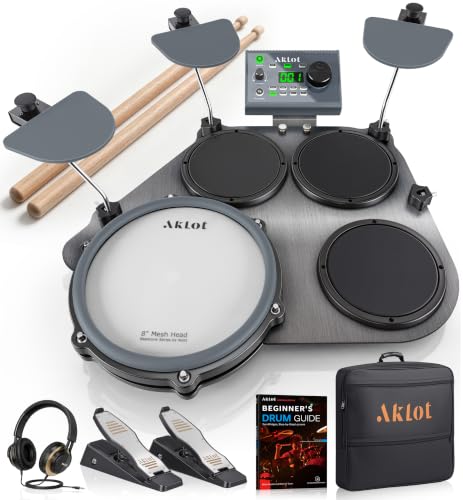
- 8-inch dual-zone three-layer mesh snare
- Full-size pedals and larger adjustable cymbals
- 30 kits, 360 sounds, USB-MIDI, and two-year warranty
Best For: Beginners wanting a compact but complete drum layout
Best Compact Sample Pad

- Four velocity-sensitive pads in a compact enclosure
- SD/SDHC sample expansion and eight kits
- Dual trigger input and MIDI output
Best For: Adding percussion and triggering sounds in limited space
Compact Core

- Four velocity-sensitive pads
- 50 drum and percussion sounds
- USB/MIDI connectivity with pedal inputs
Best For: Beginners and compact practice setups
Performance Ready
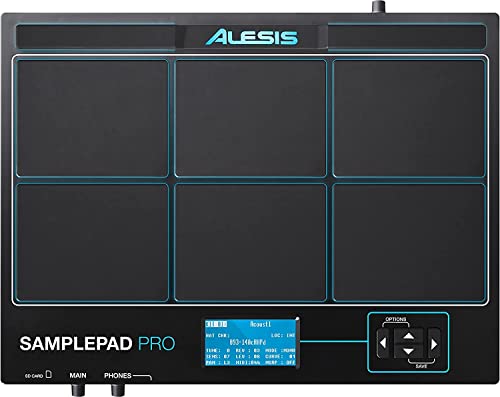
- Eight LED-lit velocity-sensitive pads
- 200+ built-in sounds and 10 kits
- SD card sample loading and expanded inputs
Best For: Live performers and sound-focused players
Portable Practice

- Nine velocity-sensitive LED pads
- Battery-powered with headphone support
- Bluetooth and USB-C MIDI connectivity
Best For: Beginners and portable computer-based practice
Best Portable Kids' Pick
ROCKSOCKI 7-Pad Roll-Up Electronic Drum Set
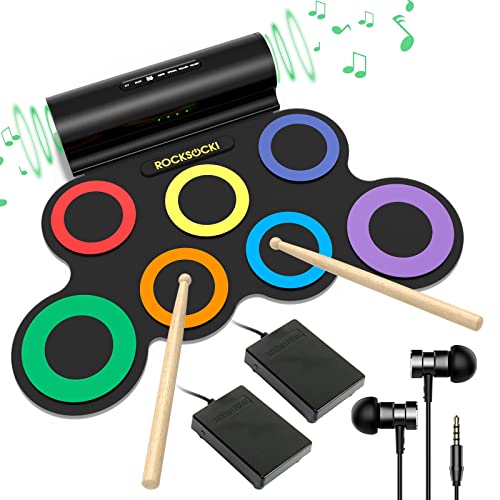
- Seven pads with two pedals and included headphones
- Up to 10 hours of battery-powered playtime
- USB MIDI and quiet-practice support
Best For: Kids who need a portable starter kit with quiet-practice and MIDI options
Best Feature-Rich Starter
Sboet 9-Pad Roll-Up Electronic Drum Kit

- Nine-pad layout with two crashes and two pedals
- Includes rhythms, demo songs, timbre choices, and recording
- Up to 10 hours of portable playtime
Best For: Beginners and children who want varied practice and recording features
Best for Guided Practice
Donner DED-20 7-Pad Electronic Drum Pad

- Includes 40 free Melodics drum lessons
- Offers recording, demo songs, and accompaniments
- Quiet silicone design with MIDI and headphone support
Best For: Beginners who want lessons alongside a portable electronic drum pad
Most Versatile Electronic Drum Pads – LEKATO PD705 Sample Pad
The LEKATO PD705 is a strong choice for shoppers seeking electronic drum pads that can cover practice, live triggering, and music production. Its nine dual-zone velocity-sensitive pads, broad sound library, MIDI connectivity, trigger inputs, looper, and sample-import support make it more adaptable than a basic tabletop pad.
Best For: Drummers and producers who want extensive sounds, expandable triggering, and computer-based integration in one multipad.
Pros:
- Nine dual-zone, velocity-sensitive pads with up to 592 sounds and 30 kits
- 5-pin MIDI, USB MIDI, trigger inputs, AUX, and looper support
- Imports custom samples and saves custom kits using WaveManager and external storage
- Individual pad LEDs and a dot-matrix LCD support hands-on control
Cons:
- Its 14.29-by-12.01-inch size and 3.17 kg weight make it less compact than smaller sample pads
- The extensive feature set may take more time for beginners to learn
The PD705 stands out when flexibility matters most. It is a capable electronic drum pad centerpiece for expanding with external triggers, controlling software, or building customized performance kits.
Best Sound Library for Electronic Drum Pads – Yamaha DTX-MULTI 12
The Yamaha DTX-MULTI 12 is designed for players who want electronic drum pads with a particularly broad built-in sound selection. It combines 1,061 drum, percussion, and effects sounds with 216 keyboard sounds, sequencing features, preset loops, and support for external pads.
Best For: Experienced performers who want a Yamaha multipad with extensive sounds, layering, looping, and expansion options.
Pros:
- Large library of 1,061 drum, percussion, and effects sounds
- Includes 216 keyboard sounds plus mute and layer functions
- Sequencer and preset loops support practice and performance
- Trigger inputs accommodate five external pads, with footswitch and hi-hat controller connections
Cons:
- Its feature-rich design may be more than beginners need
- The supplied notes list 64MB of flash memory for user samples, which is limited compared with some newer sample-focused units
The DTX-MULTI 12 is a compelling pick for sound variety and expansion. Choose it if built-in Yamaha sounds, layering, sequencing, and external-trigger support are higher priorities than a minimalist setup.
Best Beginner Drum Kit Feel – AKLOT B-CORE53 NEO
The AKLOT B-CORE53 NEO is a practical option for beginners comparing electronic drum pads with a more complete drum layout. Rather than using only flat tapping surfaces, it pairs an 8-inch dual-zone mesh snare with stabilized toms, larger cymbals, full-size pedals, USB-MIDI, headphones, and built-in practice guidance.
Best For: Beginners who want a compact electronic kit with a more familiar snare, cymbal, kick, and hi-hat playing experience.
Pros:
- 8-inch dual-zone, three-layer mesh snare offers a larger playing surface and differentiated head/rim response
- Full-size anti-slip pedals use metal springs and cushion pads for steadier practice
- Adjustable 4.5-inch cymbal stands and a solid aluminum-alloy base support a stable setup
- Includes 30 kits, 360 sounds, USB-MIDI, headphones, a drum guide, and a two-year warranty
Cons:
- Its complete layout requires more space than a single multipad
- The supplied notes identify it as a beginner-oriented system, so advanced sound-editing details are limited
The B-CORE53 NEO makes the most sense for learners who value realistic placement and foot-control feel over maximum portability. Its mesh snare and full-size pedals give it a more complete practice experience than many basic desktop electronic drum pads.
Best Compact Sample Pad – Alesis SamplePad 4
The Alesis SamplePad 4 is a straightforward choice for shoppers who need compact electronic drum pads for adding percussion sounds to an existing setup. Its four velocity-sensitive pads, built-in sounds, SD/SDHC expansion, dual trigger input, and MIDI output cover essential live-performance and sound-module duties.
Best For: Performers who want a small sample pad for percussion additions, external triggering, or MIDI control.
Pros:
- Four velocity-sensitive pads provide responsive playing in a compact 7.5-by-10.25-inch enclosure
- Includes 25 percussion and electronic drum sounds across eight ready-to-play kits
- SD/SDHC card support lets users add sound samples
- Dual trigger input and MIDI output enable expansion and external sound-module control
Cons:
- Four pads offer less hands-on coverage than larger multipads
- Its built-in library is considerably smaller than the sound collections in the other featured units
- The supplied notes list a robust plastic and rubber construction rather than a metal body
The SamplePad 4 is best viewed as an affordable, space-conscious expansion tool rather than a complete electronic drum set. It is a sensible fit when you need essential pads, sample loading, and MIDI functionality without a large footprint.
Compact Core – KAT KTMP1 Drum Pad
The KAT Percussion KTMP1 is a compact option for shoppers comparing electronic drum pads for basic drumming and percussion practice. It provides four velocity-sensitive pads, 50 built-in sounds, and USB/MIDI connectivity in a straightforward module.
Best For: Beginners and players who want an affordable, space-conscious pad with core drum and percussion sounds.
Pros:
- Four velocity-sensitive pads support expressive playing.
- Includes 50 drum and percussion sounds.
- Offers inputs for a hi-hat controller pedal and bass drum trigger.
- USB/MIDI connectivity supports integration with compatible equipment.
Cons:
- Has fewer pads and built-in sounds than larger electronic drum pad units.
- Additional pedals and controllers are not listed among the included components.
- Its compact pad layout may be limiting for players seeking a full kit-style setup.
Choose the KTMP1 if simplicity, compact size, and essential connectivity matter more than extensive onboard sounds or a large playing surface.
Performance Ready – Alesis SamplePad Pro
The Alesis SamplePad Pro is a versatile choice among electronic drum pads, combining eight illuminated velocity-sensitive pads with more than 200 built-in sounds. Its expanded inputs, MIDI connections, and SD card support make it suited to more involved performance and sound-customization needs.
Best For: Performers who want a larger pad layout, extensive built-in sounds, and the ability to load custom samples.
Pros:
- Eight isolated rubber pads feature active blue LED illumination.
- Includes more than 200 drum, cymbal, and percussion sounds across 10 kits.
- Provides inputs for two additional pads, kick pedal, and hi-hat pedal.
- SD card support allows storage of up to 512 sounds and 20 kits per 32GB card.
Cons:
- The SD card is not included.
- At 6.6 pounds, it is heavier than the supplied compact alternatives.
- Its broader feature set may be more than beginners need.
The SamplePad Pro stands out when expressive control, live-friendly visibility, and expandable sound options are priorities in an electronic drum pad setup.
Portable Practice – 9-Pad Tabletop Drum Kit
This 9-pad tabletop kit offers a portable way to explore electronic drum pads at home or on the go. It combines velocity-sensitive LED pads, included pedals, built-in sounds, headphone support, and Bluetooth or USB-C MIDI connectivity for computer-based playing.
Best For: Beginners, casual players, and rhythm enthusiasts who want a lightweight tabletop kit with portable and computer-friendly features.
Pros:
- Nine velocity-sensitive pads with LED lighting cover core drum and cymbal sounds.
- Includes two pedals and two drumsticks for a more complete starter setup.
- Built-in 2000mAh battery and 5V adapter power provide flexible use.
- Bluetooth and USB-C MIDI connectivity support Mac, PC, and compatible music software.
Cons:
- Its 2-pound tabletop design may offer less physical separation than a traditional drum setup.
- The supplied notes do not specify the total number of built-in sounds.
- Computer and VST compatibility depends on the connected software and device.
For shoppers seeking an accessible electronic drum pad with portability, quiet headphone practice, and MIDI integration, this kit offers a feature-rich starting point.
Best Portable Kids' Pick – ROCKSOCKI 7-Pad Roll-Up Electronic Drum Set
This ROCKSOCKI set is a practical choice for children ages 4–12 who want compact electronic drum pads for practice, play, and portable performances. It includes headphones, dual speakers, pedals, and USB MIDI connectivity.
Best For: Kids who need a portable starter kit with quiet-practice and MIDI options.
Pros:
- Includes seven drum pads, two pedals, sticks, headphones, and cables.
- Built-in 2,000mAh battery provides up to 10 hours of playtime.
- Headphone output, adjustable volume, and USB MIDI support offer flexible practice and connectivity.
Cons:
- Its kid-focused design may be limiting for advanced adult drummers.
- The set has fewer pads and built-in features than some nine-pad alternatives.
Choose this model when portability, included headphones, and straightforward MIDI access matter most. Its roll-up design and long battery life make it especially convenient for lessons, travel, or quiet home practice.
Best Feature-Rich Starter – Sboet 9-Pad Roll-Up Electronic Drum Kit
The Sboet is a versatile option for beginners looking for electronic drum pads with more playing surfaces and built-in practice tools. Its nine-pad layout, recording function, rhythms, demo songs, speakers, and headphone jack support varied practice sessions.
Best For: Beginners and children who want a nine-pad kit with recording and rhythm features.
Pros:
- Nine-pad layout includes two crashes, a hi-hat, ride, snare, toms, and bass functionality.
- Offers seven timbres, 10 demo songs, nine rhythms, adjustable tempo, and 180-second recording.
- Rechargeable battery supports up to 10 hours of play, while the roll-up design aids portability.
Cons:
- The 5V 2A power adapter is not included.
- Its miniature, toy-sized format may not suit players seeking a full-size setup.
This Sboet kit stands out when built-in variety is more important than advanced connectivity. Recording, rhythms, and adjustable tempo give young players several ways to stay engaged while developing timing and coordination.
Best for Guided Practice – Donner DED-20 7-Pad Electronic Drum Pad
The Donner DED-20 combines electronic drum pads with structured learning resources, making it useful for beginners who want more direction. It provides seven drum sets, demonstration songs, accompaniments, recording, headphone practice, and USB or standard MIDI connectivity.
Best For: Beginners who want lessons alongside a portable electronic drum pad.
Pros:
- Includes 40 free Melodics drum lessons, plus 12 demo songs and nine accompaniments.
- Dual stereo speakers, nine volume levels, and a 180-second recording function support practice and creativity.
- Soft silicone construction, headphone output, roll-up storage, and MIDI connections offer flexible use.
Cons:
- The strike force is single and does not change with playing force.
- The learning courses must be obtained through customer service.
- It has seven pads rather than the nine-pad layout found on some competing kits.
The DED-20 is a strong fit for players who value guided learning and quiet practice over expressive velocity response. Its included connectivity and compact form also make it practical for home use, travel, and basic music production.
How We Picked the Best Electronic Drum Pads
We compared these Electronic Drum Pads by looking at the features that matter most in everyday use: pad count and layout, velocity sensitivity, dual-zone response, onboard sounds, portability, connectivity, included pedals and sticks, and headphone support. We also considered whether each model is better suited to beginners, practice, sample triggering, or live performance.
Because these products serve different purposes, the “best” choice depends on your setup. A roll-up kit may be convenient for casual practice, while a dedicated multipad can offer substantially more control for experienced players.
Quick Comparison
| Best For | Look For |
|---|---|
| Beginners and children | Simple layouts, built-in speakers, lessons, and included accessories |
| Quiet practice | Headphone output, responsive pads, and compact pedal controls |
| Sample triggering | Sample storage, velocity sensitivity, and reliable pad assignments |
| Live performance | Durable construction, fast access to sounds, MIDI, and USB |
| Travel | Roll-up or lightweight designs with self-contained sounds |
Key Buying Factors for Electronic Drum Pads
Pad Response and Layout
Velocity-sensitive pads respond to playing strength, producing more natural dynamics than basic on-and-off triggers. Dual-zone pads can assign different sounds to the head and rim, while larger pads generally feel easier to play accurately. Check the layout before buying, especially if you want a familiar drum-kit arrangement.
Sounds, Kits, and Sampling
Built-in kits are useful for practice without extra equipment. If you want to perform with backing tracks or custom percussion, prioritize models with sample storage, multiple pad assignments, and straightforward kit editing. A larger sound library is helpful, but easy navigation matters just as much.
Connectivity and Monitoring
Headphone output is essential for quiet practice. USB or MIDI connections allow a pad to control music software, virtual instruments, or recording equipment. If you plan to connect external gear, verify the exact ports and whether the required cables are included.
Portability and Accessories
Roll-up pads are easy to store and transport, but compact multipads may provide a more consistent playing surface. Check whether pedals, sticks, power supplies, and headphones are included, since replacing missing accessories can increase the total cost.
Who Should Buy Which Electronic Drum Pads?
Choose a roll-up kit if portability, simple practice, and a low entry price matter most. These models are particularly practical for children, casual players, and small living spaces.
Choose a beginner-focused tabletop or full kit if you want multiple pads, pedals, built-in sounds, and a more recognizable drum arrangement for learning basic rhythms.
Choose a sample pad or multipad if you need custom sounds, MIDI or USB integration, and quick access to assigned samples. These are the strongest options for producers, performers, and drummers expanding an existing setup.
Finally, match your choice to your playing environment. Confirm available space, headphone and speaker needs, software compatibility, and whether the pad’s response feels suitable for your technique before purchasing.