The best digital synthesizers can cover everything from hands-on sound design and live performance to sequencing, sampling, and complete music production. This roundup includes compact instruments, hybrid keyboards, grooveboxes, and versatile MIDI controllers for different workflows and budgets.
Use the guide below to compare features that matter most, including polyphony, sequencing, portability, controls, connectivity, and ease of use.
Best 10 Digital Synthesizers Picks for 2026
Experimental Hybrid Pick
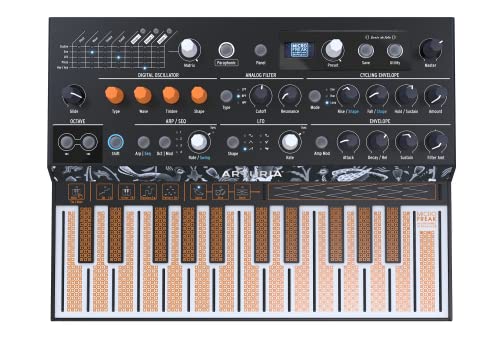
- Hybrid digital oscillator and analog-filter architecture
- 25-key touch keyboard with poly-aftertouch
- CV, USB, MIDI, modulation matrix, and sequencer
Best For: Advanced experimental sound design and modular-friendly setups
Portable Sample Sequencer
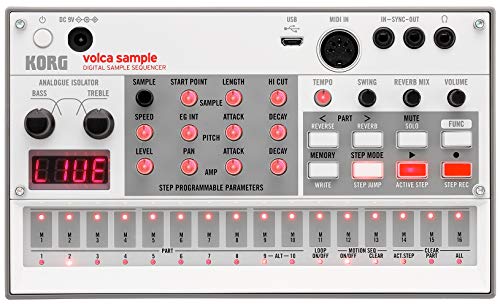
- 8-voice sample-based drum machine
- 16-step sequencer with pattern chaining
- Battery power, speaker, and headphone output
Best For: Portable sample-driven beatmaking and pattern creation
Polyphonic Hybrid Choice

- 37-key keyboard with six-voice polyphony
- Hybrid digital-and-analog sound profile
- Includes MiniFreak VST counterpart
Best For: Beginners and producers wanting hands-on hybrid playability
Portable FM Keyboard

- Six-operator FM engine with 32 algorithms
- 27 keys, arpeggiator, effects, and 16-step sequencer
- Rechargeable battery, speaker, and three MIDI options
Best For: Portable FM sound design, practice, and mobile production
Best Standalone Production Keyboard

- 37-key keyboard with 16 MPC pads and touchscreen
- Standalone MPC3 production with audio tracks and plugins
- USB-C audio, MIDI, sampling, and DAW integration
Best For: Producers wanting keys, pads, sampling, and sequencing in one standalone instrument
Best Sequencer-Centered Digital Synthesizer

- Four synth engines with 16 voices and 16 tracks
- Advanced sequencer with parameter locks and Song Mode
- Onboard effects plus MIDI, USB, and Overbridge support
Best For: Electronic musicians focused on detailed sequencing and sound design
Best Beginner-Friendly Music Creation Keyboard

- 61 touch-sensitive keys with over 1,000 ZEN-Core sounds
- More than 200 accompaniment styles and 300 chord presets
- Built-in speakers, Bluetooth, microphone input, and USB
Best For: Beginners and casual players seeking easy song creation and accompaniment
Best Compact MIDI Controller

- 25 velocity-sensitive slim keys
- RGB pads, encoders, faders, and arpeggiator
- Includes three useful software titles
Best For: Compact computer-based music production
Best Pocket Retro Synth

- Stylus-operated touch-sensitive surface
- Three octaves with optional vibrato
- Battery-powered with speaker and headphone output
Best For: Portable retro-sound experimentation
Best Standalone-Capable MIDI Controller

- 37 keys across three full octaves
- CV/Gate and MIDI I/O for external gear
- Built-in 64-step sequencer and RGB pads
Best For: Hybrid DAW, synthesizer, and modular setups
Experimental Hybrid Pick – Arturia MicroFreak
The Arturia MicroFreak is a compact choice for digital synthesizer shoppers who want unusual sound design tools rather than a traditional keyboard experience. Its digital oscillator engines, analog filter, pressure-sensitive touch keyboard, sequencer, and CV connectivity make it especially adaptable for experimental production and modular setups.
Best For: Advanced users exploring hybrid synthesis, evolving sequences, and expressive MIDI or CV-based setups.
Pros:
- Offers numerous oscillator modes spanning wavetable, physical modeling, vocoder, noise, and more.
- 25-key touch PCB supports individual poly-aftertouch expression.
- Includes modulation-matrix routing, automation recording, Spice and Dice sequencing, USB, MIDI, and CV connections.
- Compact 2.3-pound design is easy to fit into a small studio or live rig.
Cons:
- The touch-plate keyboard may feel less familiar than a conventional keybed.
- Its advanced modulation and sequencing features may require a learning curve.
- It has only 25 keys.
The MicroFreak stands out when you value experimentation, expressive control, and connection options over conventional playability. It is a particularly flexible digital synthesizer for sound designers who want both standalone creativity and integration with external gear.
Portable Sample Sequencer – Korg Volca Sample 2
Korg Volca Sample 2 Digital Sample Sequencer Drum Machine w/Pattern Chain Mode and 16-step Sequencer
Check Price On AmazonThe Korg Volca Sample 2 is a lightweight sample-based option for digital synthesizer buyers focused on drum patterns, loops, and portable beatmaking. Its 16-step sequencer, pattern chaining, expanded memory, built-in speaker, and battery operation make it practical for sketching ideas away from a full studio.
Best For: Producers making sample-driven beats in styles such as future bass, trap, and lo-fi hip-hop.
Pros:
- Provides 8-voice polyphony and a 16-step sequencer with pattern chain mode.
- Has double the previous model’s memory for additional samples and longer recordings.
- Includes digital reverb, a double filter, Librarian software, and micro USB connectivity.
- Built-in speaker, headphone output, and battery operation support standalone use.
Cons:
- It is sample-based, so it is less suited to traditional oscillator synthesis.
- The compact 16-step workflow may feel limited for longer arrangements.
- Its small form factor may not suit players seeking a full keyboard.
The Volca Sample 2 is best viewed as a compact groovebox rather than a conventional keyboard synthesizer. Choose it when quick sample sequencing, portability, and hands-on pattern creation matter most.
Polyphonic Hybrid Choice – Arturia MiniFreak 37-Key
Arturia MiniFreak 37 Key Polyphonic 6-Voice Hybrid Synthesizer Keyboard (Standard, 37 Key)
Check Price On AmazonThe Arturia MiniFreak is a compact polyphonic hybrid option for digital synthesizer shoppers who want more playing space than a mini 25-key instrument. With 37 keys, six-voice polyphony, USB connectivity, and an included VST counterpart, it is designed to bridge hands-on hardware performance with computer-based production.
Best For: Beginners and producers wanting a portable hybrid synthesizer with a larger key range and software companion.
Pros:
- Provides 37 keys and six-voice polyphony for fuller performance options.
- Combines digital and analog sound characteristics in a hybrid architecture.
- Includes the MiniFreak VST counterpart for software-based production.
- Portable design and USB connectivity support compact studio setups.
Cons:
- The supplied notes provide limited detail about its specific synthesis engines and sequencing features.
- Its corded-electric power source is less travel-friendly than a battery-powered instrument.
- It is larger and heavier than the MicroFreak.
The MiniFreak is a sensible middle ground for players who want a wider keybed and polyphonic hybrid sounds without moving to a large workstation. Its software counterpart also adds value for producers working inside a DAW.
Portable FM Keyboard – M-VAVE FM-1
The M-VAVE FM-1 is a portable digital synthesizer built around six-operator FM synthesis, making it a practical pick for shoppers seeking classic electric piano, bell, and bass tones in a compact format. Its rechargeable battery, built-in speaker, 27 keys, sequencer, and multiple MIDI options support use at home, on stage, or while traveling.
Best For: Mobile musicians and beginners who want FM sounds, onboard sequencing, and flexible controller connectivity.
Pros:
- Offers six operators, 32 algorithms, 128 presets, and SYSEX import.
- Includes 27 full-size silicone keys, six effects, and a seven-mode arpeggiator.
- Provides a 16-step sequencer with key-based note entry and a TFT color display.
- Rechargeable battery, built-in speaker, USB, Bluetooth, and 3.5mm MIDI support portable use.
Cons:
- FM synthesis can take time to master compared with simpler preset-based instruments.
- The 27-key layout may be limiting for two-handed performances.
- Its silicone keys may feel different from traditional synth-action keys.
The FM-1 is a feature-rich choice when portability and classic FM character are priorities. It combines self-contained play with MIDI-controller and sound-module functions, giving it flexibility beyond a basic battery-powered keyboard.
Best Standalone Production Keyboard – Akai MPC Key 37 G2
The Akai MPC Key 37 G2 is a strong choice for producers seeking digital synthesizers with hands-on sampling, sequencing, keys, and pads in one standalone instrument. Its MPC3 OS supports full track creation without a computer, while USB-C connectivity helps integrate it with a studio setup.
Best For: Producers who want a compact, standalone workflow for composing, sampling, arranging, and performing.
Pros:
- Combines a 37-key synth-action keyboard with 16 MPC pads, pitch and mod wheels, and a 7-inch touchscreen.
- Standalone MPC3 workflow supports up to 16 stereo audio tracks and 32 plugin instruments per project.
- USB-C provides multichannel audio streaming, expanded MIDI, and sampling from compatible devices.
- Includes more than 20GB of factory content, bundled plugins, and Ableton Live Control Mode.
Cons:
- Its broad production feature set may be more than beginners need from a keyboard.
- The 37-key layout offers less range than a 61-key instrument.
The MPC Key 37 G2 is best viewed as an all-in-one production centerpiece rather than a simple keyboard. It suits users who value tactile control and computer-free song building, with enough connectivity to transition into a DAW-based setup.
Best Sequencer-Centered Digital Synthesizer – Elektron Digitone II
The Elektron Digitone II is designed for experienced users who want digital synthesizers with deep sound shaping and a powerful hardware sequencer. Its four synth engines, 16 voices, and 16 tracks support everything from basses and leads to pads and drums.
Best For: Electronic musicians who prioritize detailed sequencing, sound design, and control of external MIDI gear.
Pros:
- Offers Wavetone, Swarmer, FM Tone, and FM Drum engines with 16-voice polyphony across 16 tracks.
- Provides parameter locks, trig conditions, Euclidean generation, micro timing, polymetric lengths, and Song Mode.
- Includes delay, reverb, chorus, master compression, and extensive MIDI and USB connectivity.
- Any track can send MIDI to external equipment, while Overbridge and class-compliant USB support computer recording.
Cons:
- The extensive sequencing and sound-design options may require a learning period.
- It is a module-style instrument rather than a keyboard with integrated keys.
The Digitone II stands out when sequencing is as important as synthesis. Its combination of FM-oriented engines, per-voice shaping, onboard effects, and external MIDI control makes it a flexible hub for electronic setups.
Best Beginner-Friendly Music Creation Keyboard – Roland GO:KEYS 3
The Roland GO:KEYS 3 offers an accessible entry point for shoppers exploring digital synthesizers and modern music creation keyboards. Its touch-sensitive 61-note keyboard, ZEN-Core sound engine, built-in speakers, and accompaniment features encourage quick playing without requiring prior experience.
Best For: Beginners, casual players, and performers who want accessible sounds, rhythms, and chord-based accompaniment.
Pros:
- Provides 61 touch-sensitive notes and more than 1,000 Roland sounds.
- Includes over 200 accompaniment styles and more than 300 chord-sequencer presets.
- Built-in stereo speakers, Bluetooth audio and MIDI, microphone input, and USB connectivity support flexible use.
- Battery or corded power options make it suitable for different playing environments.
Cons:
- Its emphasis on presets and accompaniment offers less detailed synthesis control than the other options.
- The 61-note keyboard and built-in speaker system make it less compact than a module-style synthesizer.
The GO:KEYS 3 is a practical choice for players who want immediate results rather than a complex sound-design workflow. Its large sound library and chord tools make sketching songs and playing along with styles straightforward.
Best Compact MIDI Controller – Arturia MiniLab 3
The Arturia MiniLab 3 is a compact choice for producers who want hands-on control in a digital synthesizers setup. Its 25 velocity-sensitive slim keys, pads, encoders, and software bundle make it useful for shaping virtual instruments without relying entirely on a mouse.
Best For: Beginners and producers who need a compact controller for Mac or Windows music production.
Pros:
- 25 velocity-sensitive slim keys with synth action
- Eight RGB-backed pads, eight rotary encoders, and four faders for hands-on control
- Built-in arpeggiator, pitch/modulation touch controls, and browsing display
- Includes Ableton Live Lite, Analog Lab Intro, and UVI Model D software
Cons:
- It is a MIDI controller rather than a standalone synthesizer
- USB connectivity requires a computer or compatible setup
- Its 25-key layout offers less range than larger keyboards
The MiniLab 3 is a practical all-in-one controller for virtual synth workflows, especially if desk space is limited. Choose it when software control and portability matter more than built-in sound generation.
Best Pocket Retro Synth – Stylophone Original
The Stylophone Original is a distinctive pocket option for anyone exploring digital synthesizers and electronic instruments. It uses a stylus on a touch-sensitive metal surface to produce its warm, vintage sound, making it approachable for beginners and fun for experienced musicians.
Best For: Portable experimentation, beginners, retro-sound fans, and electronic music gifts.
Pros:
- Compact design measures less than 12 cm wide
- Three octaves with optional vibrato effect
- Built-in speaker, headphone socket, and battery-powered operation
- Can connect to a computer or other gear through a 3.5mm stereo cable
Cons:
- Stylus-and-touch-surface playing differs from a conventional keyboard
- Runs on three AA batteries
- Its feature set is more limited than larger production controllers
The Stylophone is best viewed as a characterful portable instrument rather than a full studio centerpiece. Its unusual interface and retro analog-style sound make it a memorable way to sketch ideas or add quirky textures.
Best Standalone-Capable MIDI Controller – Akai MPK Mini Plus
The Akai Professional MPK Mini Plus is a flexible control center for digital synthesizers, DAWs, and external hardware. Its 37-key layout provides three full octaves, while CV/Gate, MIDI I/O, pads, knobs, and a built-in sequencer support both computer-based and hardware-focused workflows.
Best For: Producers who want expanded keyboard range and connections for software, modular gear, sound modules, or synthesizers.
Pros:
- 37-key layout covers three full octaves
- CV/Gate and MIDI I/O connect to external hardware
- Built-in 64-step sequencer supports drums and melodies or chords
- Includes RGB MPC pads, arpeggiator, chord and scale modes, and eight assignable knobs
Cons:
- It is a controller and sequencer, not a self-contained sound-generating synthesizer
- USB connection is required for computer-based operation
- Its broader feature set may be more than casual users need
The MPK Mini Plus is the most adaptable option here for a growing setup. Its extra keys and hardware connectivity make it a strong pick when you want one controller to bridge DAW production, external synthesizers, and modular equipment.
How We Picked These Digital Synthesizers
We selected these instruments and controllers based on their synthesis capabilities, workflow, portability, playability, connectivity, and suitability for common music-making setups. The list spans true synthesizers, sample-based grooveboxes, standalone production keyboards, and MIDI controllers so shoppers can compare different approaches rather than one narrow category.
We also considered whether each product is better suited to sound design, sequencing, live performance, learning, studio production, or compact mobile setups. A MIDI controller is not a synthesizer by itself, but it can be the right choice when paired with software or external hardware.
Quick Comparison
| Best For | Recommended Type | What to Look For |
|---|---|---|
| Hands-on sound design | Digital or hybrid synthesizer | Oscillator variety, modulation, filters, and performance controls |
| Beatmaking and sampling | Sampler or groovebox | Sequencing, pattern chaining, pads, effects, and sample memory |
| Complete standalone production | Production keyboard | Built-in sequencing, sampling, pads, sounds, and audio connectivity |
| Software-based production | MIDI controller | Key feel, pad layout, knobs, DAW integration, and portability |
| Travel and casual playing | Portable mini synthesizer | Battery operation, built-in speaker, compact size, and simple controls |
Key Buying Factors for Digital Synthesizers
Sound Engine and Polyphony
Check whether the instrument uses wavetable, FM, virtual analog, sample-based, or hybrid synthesis. Polyphony determines how many notes can sound together, while multitimbral parts matter if you want drums, bass, pads, and leads in one arrangement.
Sequencing and Production Features
A built-in sequencer is useful for creating complete patterns without a computer. Look for track count, pattern chaining, parameter automation, arpeggiation, sampling, effects, and hands-on editing if you plan to build songs inside the instrument.
Keyboard, Pads, and Controls
Consider key size, key count, velocity sensitivity, aftertouch, pads, knobs, and touch controls. Mini keys save space, while a larger keyboard may be more comfortable for chords and expressive playing. Controllers require external software or hardware to produce sound.
Connectivity and Portability
USB MIDI is important for computer integration, while traditional MIDI, CV/Gate, and audio outputs help connect hardware setups. Battery power, speakers, weight, and build quality can make a major difference for travel or live use.
Who Should Buy Which Digital Synthesizers?
Choose a compact digital or hybrid synthesizer if you want to explore sound design and play original patches. Pick a sampler or groovebox if rhythm programming, sample manipulation, and pattern-based composition are your priorities. A standalone production keyboard is the better fit for musicians who want sequencing, sounds, and arrangement tools without relying on a computer.
Beginners may prefer an approachable keyboard or portable instrument with straightforward controls and built-in sounds. Producers working mainly in a DAW should consider a MIDI controller with the key count, pads, and knobs that match their workflow. For travel, quick sketches, or playful experimentation, a battery-powered pocket instrument can provide the most convenient entry point.