The right vocal channel strip can help you shape a cleaner, more controlled signal before it reaches your interface or recorder. The best choice depends on your microphone, room, recording workflow, and how much hands-on processing you want during tracking.
We compared 10 options across tube and solid-state designs, onboard EQ and compression, connectivity, channel count, and home-studio practicality. Use the guide below to narrow the field by features rather than brand reputation alone.
Best 10 Channel Strips for Recording Vocals Picks for 2026
Versatile Digital Vocal Hub
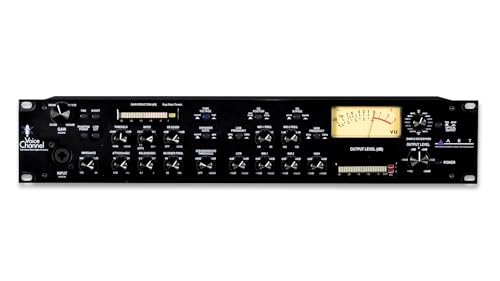
- Tube preamp adds warmth and definition
- Includes compressor, de-esser, expander, and gate
- Offers USB and multiple digital outputs
Best For: Studios needing flexible vocal processing and digital connectivity
Classic Tone-Shaping Preamp

- Class A mic, line, and instrument preamp
- Three-band EQ for vocal shaping
- Warm and punchy sound profile
Best For: Singers wanting focused analog preamp tone and EQ
All-in-One Tube Vocal Processor

- Class A 12AX7 tube preamp
- VCA compressor and three-band EQ
- Includes pad, high-pass filter, and phantom power
Best For: Studios wanting comprehensive vocal processing in one rack unit
Transformer Vocal Color

- CineMag input and output transformers
- Inductor-based program EQ
- Warm, rich profile with VU meter
Best For: Engineers seeking analog transformer character and simple EQ
SSL 500 Series Powerhouse

- Three SiX Channel modules included
- Mic preamp, EQ, and dynamics processing
- Compatible with standard 500 Series racks
Best For: Multi-channel studio tracking and rack expansion
British-Voiced Front End

- One-channel mic and line preamp
- Transformer-equipped signal path
- Three-band EQ with highpass filter
Best For: Characterful single-channel vocal tracking
Analog Noise Control

- Analog noise gate and expander
- Designed for post-preamp line-level use
- Compact solution for ambient-noise reduction
Best For: Quieter home-studio and podcast vocal chains
Best Multi-Channel Expansion

- Eight transparent HDIA preamps
- Individual phantom power and compression
- Analog and S/MUX optical outputs
Best For: Multi-input studios and interface expansion
Best USB Vocal Workflow

- Midas-designed mic preamp
- Built-in processor and compressor
- 192 kHz USB audio interface
Best For: Direct-to-computer vocal recording
Best Tube Tone Shaping
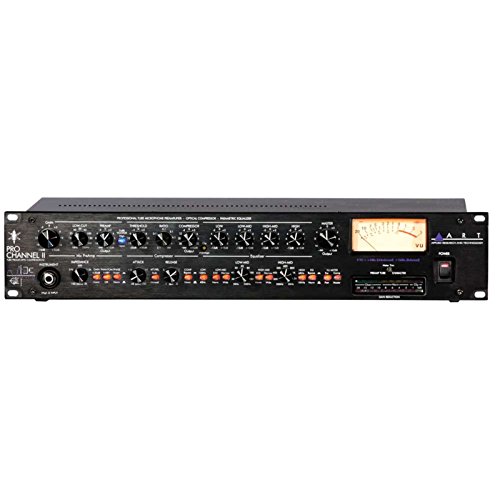
- Tube preamp, compressor, and EQ
- Switchable optical or tube compression
- Selectable VU metering
Best For: Warm, hands-on vocal tone shaping
Versatile Digital Vocal Hub – ART VoiceChannel
The ART VoiceChannel is a flexible choice for channel strips for recording vocals, combining a tube preamp with compression, expansion, de-essing, and gating. Its broad digital connectivity also makes it suitable for modern computer-based studios.
Best For: Vocalists and home or project studios that want tube warmth, dynamics control, and multiple digital output options in one unit.
Pros:
- Tube preamp design provides warmth and definition.
- Includes compressor, expander, de-esser, and gate.
- Supports ADAT, AES/EBU, S/PDIF, TOSLink, and USB connectivity.
- Offers a maximum sample rate of 192 kHz.
Cons:
- Single-channel design may be limiting for stereo tracking.
- Its extensive connectivity may be more than a simple vocal setup requires.
Choose the VoiceChannel when flexible routing and comprehensive vocal control matter as much as the character of the preamp. It is particularly appealing for studios integrating analog processing with digital systems.
Classic Tone-Shaping Preamp – Warm Audio WA73-EQ
The Warm Audio WA73-EQ is a focused option among channel strips for recording vocals, pairing a single-channel Class A mic, line, and instrument preamp with a three-band EQ. Its warm and punchy profile suits singers who want straightforward analog tone shaping.
Best For: Vocal recording setups that prioritize a warm preamp sound and simple three-band equalization.
Pros:
- Combines mic, line, and instrument preamp functions.
- Class A amplifier design is specified for the unit.
- Three-band EQ provides practical tonal adjustment.
- Warm and punchy sound profile.
Cons:
- Does not list onboard compression, de-essing, or gating.
- Only one output channel is specified.
The WA73-EQ is a good fit when the main goal is a characterful preamp and useful EQ rather than an all-in-one dynamics processor. It keeps the signal path focused and easy to understand.
All-in-One Tube Vocal Processor – PreSonus StudioChannel
The PreSonus StudioChannel brings together a high-voltage Class A 12AX7 tube preamp, VCA compressor, and three-band EQ, making it a versatile choice among channel strips for recording vocals. It also includes practical tracking features such as phantom power, polarity reverse, a high-pass filter, and a pad.
Best For: Project and professional studios seeking broad vocal shaping from a single rack-mounted channel strip.
Pros:
- Combines tube preamplification, compression, and EQ.
- Variable-Q mid-band EQ supports detailed tone shaping.
- Compressor includes auto attack/release and soft/hard knee options.
- Accepts mic, line, and instrument inputs.
Cons:
- Its 1U rack format requires suitable studio mounting space.
- The tube-based design may be more processing than users seeking a minimal signal path need.
For vocalists who want to shape tone and dynamics before recording, the StudioChannel offers an unusually complete feature set. Its combination of flexible EQ and VCA compression makes it adaptable to different voices and instruments.
Transformer Vocal Color – Black Lion Audio Eighteen
The Black Lion Audio Eighteen offers a distinctive approach to channel strips for recording vocals, combining input and output CineMag transformers with an inductor-based program EQ. Its warm, rich profile and VU meter make it suited to engineers who value analog color and straightforward monitoring.
Best For: Vocal tracking where transformer character, balanced low and high ends, and simple program EQ are priorities.
Pros:
- Uses CineMag transformers at the input and output.
- Inductor-based program EQ provides analog tone shaping.
- Built-in VU meter supports level monitoring.
- Offers a warm and rich sound profile.
Cons:
- The supplied notes specify a two-band EQ, limiting detailed corrective shaping.
- Compression and de-essing are not listed.
- Its transformer-focused sound may not suit users seeking a neutral preamp.
The Eighteen is best considered a color-focused preamp and EQ rather than a complete vocal dynamics strip. It makes sense for engineers who want transformer saturation and a musically voiced EQ in the recording chain.
SSL 500 Series Powerhouse – SiX Channel Bundle
For studios building a serious vocal front end, the Solid State Logic SiX Channel bundle brings three channel strips into a standard 500 Series setup. Each module combines a mic preamp, EQ, and dynamics processing, making it a flexible choice among channel strips for recording vocals.
Best For: Expanding a 500 Series rack for multi-channel tracking, mixing, or live use.
Pros:
- Includes three SiX Channel modules in one bundle.
- Combines SSL mic preamp, EQ, and dynamics processing.
- Fits standard 500 Series rack enclosures.
Cons:
- Requires a compatible 500 Series rack enclosure.
- A three-module bundle may be more than a small setup needs.
This is a strong fit when you want multiple channels and a recognizable SSL console-inspired signal path. Its rack compatibility also makes it practical for expanding an existing studio system.
British-Voiced Front End – 7603 Microphone Preamplifier
The Chameleon Labs 7603 is a one-channel microphone and line preamplifier with input and output transformers, a switchable mic impedance, and an inductor-based three-band EQ. It suits vocalists and engineers seeking a focused, British-sounding option among channel strips for recording vocals.
Best For: Single-channel vocal recording that benefits from transformer-equipped preamplification and hands-on EQ.
Pros:
- Supports both microphone and line-level sources.
- Includes input and output transformers for its signal path.
- Provides a three-band inductor-based EQ and highpass filter.
- Offers switchable microphone impedance.
Cons:
- Provides only one channel.
- Its corded, internally powered design may require dedicated rack or studio placement.
With its British-sounding profile and practical EQ features, the 7603 is geared toward shaping one source at a time. It is especially logical for a vocal chain where preamp character and front-end tone control matter.
Analog Noise Control – RO05 Preamp Noise Gate
The Rodweil RO05 is a compact analog noise gate and expander designed to follow a microphone preamp or sit in a line-level chain. For home studios, podcasting, and stage work, it adds noise control to a vocal setup alongside other channel strips for recording vocals.
Best For: Reducing ambient and preamp-floor noise after a suitable mic preamp in home or live recording chains.
Pros:
- Uses an all-analog signal path with no conversion stage.
- Designed for smoother, more continuous noise reduction than a basic cutoff gate.
- Compact enclosure and included XLR-to-TRS cable support flexible placement.
- Positioned as a hardware alternative to noise-reduction software subscriptions.
Cons:
- Cannot be connected directly to a microphone; it requires a preamp or line-level signal.
- Its higher power consumption can produce a slight circuit echo when powering off.
- It is a noise gate/expander rather than a complete mic preamp.
The RO05 can be useful when background noise is the main issue, but its placement is critical: put it after the mic preamp. Its compact, analog design makes it a targeted add-on rather than an all-in-one vocal channel strip.
Best Multi-Channel Expansion – 8-Channel Mic Preamp
Tascam Series 8P Dyna 8 Channel Microphone Preamplifier with Analog Compressor
Check Price On AmazonFor recording vocals across several inputs, the Tascam SERIES 8p Dyna is a practical choice among channel strips for recording vocals. It combines eight transparent HDIA microphone preamps with a single-control analog compressor on every channel, plus flexible analog and optical outputs.
Best For: Home and project studios that need multiple vocal or instrument channels and interface expansion.
Pros:
- Eight transparent, ultra-low-noise microphone preamps
- Individual +48V phantom power for each mic input
- Per-channel analog compression with true bypass
- Eight analog outputs and dual S/MUX optical outputs
Cons:
- It is a rack-oriented eight-channel unit rather than a compact single-channel strip
- Compression uses a single control, offering less adjustment than a full compressor
The SERIES 8p Dyna stands out when your setup needs channel count and routing flexibility. Its combination of eight inputs, compression, and high-resolution optical expansion makes it especially useful for growing recording systems.
Best USB Vocal Workflow – UV1 Voice Processor
Behringer UV1 Audiophile Mic Preamplifier, Voice Processor and 192 kHz USB Audio Interface
Check Price On AmazonThe Behringer UV1 is a convenient option for recording vocals directly to a computer. This channel strip combines a Midas-designed mic preamp, vocal processing, flexible compression, and a 192 kHz USB audio interface in one rack-format unit.
Best For: Vocalists, streamers, and home-recording users who want microphone processing and USB connectivity in one device.
Pros:
- Midas-designed preamp supports microphone and line-level sources
- Built-in mic processor helps optimize recordings
- Flexible compressor supports subtle or creative processing
- 192 kHz USB interface connects directly to a computer
Cons:
- The supplied notes describe a single mic preamp rather than multiple channels
- USB compatibility details are specifically listed for Windows
The UV1 is a streamlined choice when computer connectivity matters as much as front-end processing. It is less suited to multi-mic expansion, but its preamp, processor, compressor, and USB interface simplify a vocal-focused setup.
Best Tube Tone Shaping – Pro Channel II
ART Pro Channel II Microphone Preamp/Compressor/EQ Professional Tube Based Selectable VU Metering
Check Price On AmazonThe ART Pro Channel II is designed for singers who want hands-on tonal shaping while recording. Its single channel combines a tube microphone preamp, switchable optical or tube compression, and tube EQ, making it a versatile choice among channel strips for recording vocals.
Best For: Vocal recording setups that prioritize tube character and adjustable compression and EQ.
Pros:
- Three independent modules cover preamp, compression, and EQ
- Tube-based design delivers warm, smooth, and silky sound
- Switchable optical/tube compressor provides tonal flexibility
- Selectable VU metering monitors different signal stages
Cons:
- It provides one channel, so it is not intended for multi-mic recording
- Its 13.4-pound weight may be substantial for portable setups
- Tube-based processing may be less neutral than a transparent preamp
The Pro Channel II is the most tone-focused option in this group. Its separate tube modules and selectable metering give vocalists more control over character and dynamics, particularly when a deliberately warm sound is desired.
How We Picked the Best Channel Strips for Recording Vocals
We selected channel strips and closely related vocal-processing units that combine at least some of the core functions used when recording vocals: microphone preamplification, tone shaping, dynamics control, metering, or direct recording connectivity. The lineup includes single-channel units for detailed tracking, multi-channel preamps for larger sessions, 500 Series hardware, tube designs, and USB-equipped options.
Our comparison emphasizes gain range, input and output flexibility, compressor and EQ control, noise performance, metering, ease of use, and suitability for home studios, project rooms, podcasts, and professional recording setups. A more feature-packed unit is not automatically better if its controls are difficult to use or its connections do not match your system.
Quick Comparison
- For an all-in-one vocal front end: Look for a unit with a microphone preamp, EQ, compressor, and useful metering.
- For character and warmth: Tube-based designs can add coloration, but they may require more gain staging and maintenance.
- For clean, flexible recording: Solid-state preamps generally suit transparent capture and detailed post-production.
- For multiple microphones: Multi-channel preamps are more practical for ensembles, drums, interviews, and tracking several sources.
- For computer-based workflows: A model with USB output can reduce the need for a separate audio interface, provided its routing meets your needs.
Key Buying Factors for Channel Strips for Recording Vocals
Preamp Character and Gain
Check whether the circuit is intended to sound clean, colored, or variable. Make sure it provides enough gain for your microphone, particularly with passive ribbon or low-output dynamic microphones. Phantom power, polarity reversal, and a pad are also useful when working with different sources.
Compression and EQ Controls
Basic controls can be ideal for fast tracking, while adjustable threshold, ratio, attack, release, and makeup gain offer more control. For vocal EQ, sweepable midrange and selectable high-pass filtering are often more useful than a large number of fixed bands.
Connections and System Compatibility
Confirm the unit has the outputs your setup requires, such as balanced line, insert, digital, USB, or 500 Series connections. A channel strip is only useful if it integrates cleanly with your interface, patchbay, console, or DAW.
Noise, Headroom, and Metering
Low noise matters when recording quiet vocals or applying substantial compression. Adequate headroom helps prevent harsh clipping, while an accurate VU meter, LED meter, or clip indicator makes gain staging easier.
Workflow and Expandability
Choose front-panel controls if you adjust settings while performing or directing talent. Rackmount and 500 Series formats can save space, while multi-channel models may offer better long-term value for growing studios.
Who Should Buy Which Channel Strips for Recording Vocals?
Home vocalists and podcasters should prioritize simple operation, low noise, and direct compatibility with their interface or computer. A USB-enabled voice processor may be convenient for compact setups.
Singers seeking analog character may prefer a tube or transformer-colored design with enough EQ and compression to shape the sound while tracking. Use conservative settings so the recorded processing remains flexible.
Engineers who mix after recording should consider a clean preamp with bypassable or carefully adjustable processing. This approach preserves options in the DAW while still providing reliable gain and monitoring.
Project and commercial studios may benefit from multiple channels, flexible routing, and durable metering. Multi-channel preamps are especially useful when recording bands, backing vocals, interviews, or several performers at once.
Before buying, match the channel strip to your microphone and interface, then leave room in your budget for balanced cables, acoustic improvements, and proper monitoring. Those factors can affect vocal results as much as the processor itself.