The best cajons for live performances need more than a pleasant acoustic tone. They should project clearly, remain comfortable during long sets, and offer the control or amplification options your venue requires.
We selected 10 models spanning compact travel cajons, full-size professional instruments, bass-focused designs, adjustable snares, and pickup-equipped options. Use the guide below to match construction, sound, portability, and stage connectivity to your playing style.
Best 10 Cajons for Live Performances Picks for 2026
Best All-Around Pick

- Baltic birch body with balanced tone
- Fixed snares and rear sound port
- Compact, portable 6-pound design
Best For: Beginners, acoustic shows, and worship teams
Best Travel Option

- Round mahogany body with clear tones
- Internal snare string and dual sound holes
- Includes strap and carry bag
Best For: Travel, outdoor jams, and casual live playing
Best for Deep Bass

- Jumbo body for deep, controlled bass
- Bass reflex channels and front ports
- Walnut surface with crisp snare tones
Best For: Acoustic sets, worship music, and bass-focused players
Best for PA Connection

- Factory-installed passive piezo pickups
- Bass and snare controls for PA use
- Forward bass port and walnut playing surface
Best For: Larger venues and amplified live performances
Portable Tone Shaper

- Acacia top with birch body for balanced highs and lows
- Adjustable guitar snare system for customized tones
- Padded water-resistant carry bag included
Best For: Portable practice, small gigs, and players who want adjustable snare response
PA-Ready Bass Powerhouse
Pickup Vertical Subwoofer Cajon

- Passive piezo pickups with tone and volume controls
- Bass-reflex ports emphasize low-end projection
- 1/4-inch jack connects to an amp or PA
Best For: Amplified stage performances that need strong bass presence
Full-Size Electric Jammer
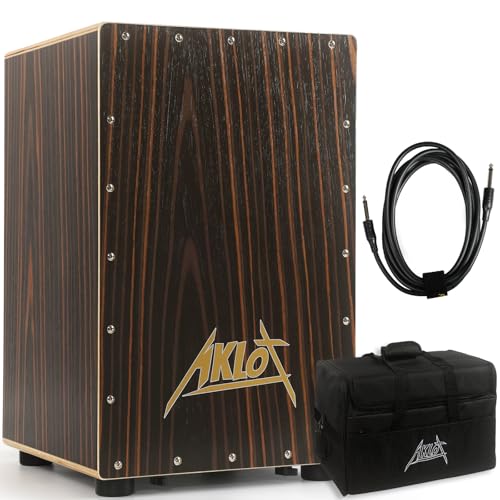
- Full-size 12 × 12 × 18-inch design for adult players
- Adjustable internal snares with tool-free tuning
- 12mm padded nylon gig bag included
Best For: Adult players performing at acoustic shows, jams, and stage settings
Professional Sound Control

- Switchable snare and hollow tones
- Baltic birch and walnut construction
- Full-size, stable live-performance design
Best For: Performers who need quick tone changes on stage
Portable Value Pick
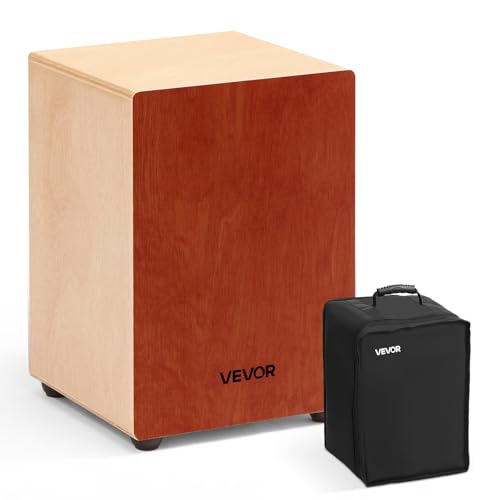
- Adjustable internal guitar strings
- Includes bag, cushion, and wrench
- Compact 17-inch, 10-pound design
Best For: Portable setups and players who want included accessories
Customizable Stage Tone

- Three adjustable internal snares
- Deep bass with flexible snare response
- Solid wood build with graphic front plate
Best For: Players who want customized snare tone for varied performances
Best All-Around Pick – Meinl Jam Cajon
For players seeking cajons for live performances, the Meinl Jam Cajon offers a compact, portable design with balanced bass and crisp snare response. Its Baltic birch body, rear sound port, and stable silicone feet suit acoustic shows, worship teams, and informal jams.
Best For: Beginners, acoustic performers, worship teams, and players who need a durable portable cajon.
Pros:
- Fixed steel snare wires provide crisp, snappy tones.
- Baltic birch construction delivers a balanced sound with prominent lows and highs.
- Rear sound port supports projection and convenient microphone placement.
- Compact 6-pound design is easy to transport and stable on varied surfaces.
Cons:
- Its compact body may not provide the deep bass of a jumbo cajon.
- It has no built-in pickup for direct PA or amplifier connection.
The Jam Cajon is a practical starting point for live playing, especially when portability and straightforward acoustic tone matter more than maximum low-end volume.
Best Travel Option – EASTROCK Portable Round Cajon
For cajons for live performances on the move, the EASTROCK Portable Travel Cajon emphasizes easy transport and flexible playing. Its round mahogany body, internal snare string, dual sound holes, carry bag, and strap make it suited to outdoor jams and musical gatherings.
Best For: Traveling musicians, casual live performances, outdoor jamming, and players of different experience levels.
Pros:
- Internal snare string adds a distinctive snare effect.
- Mahogany construction is designed for clear, powerful tones.
- Dual sound holes allow tone variation based on playing position.
- Includes an adjustable strap and carry bag for transport and storage.
Cons:
- The compact round design may offer less traditional bass projection than a larger box cajon.
- Its six-month warranty is shorter than the two-year warranties listed for the Meinl options.
This is a convenient choice when portability is central to your setup and you want a visually distinctive instrument with built-in snare character.
Best for Deep Bass – Meinl Subwoofer Bass Cajon
If your priority in cajons for live performances is a fuller low end, the Meinl Subwoofer Bass Cajon is built around deep, controlled bass. Its jumbo body, internal bass reflex channels, forward-facing sound ports, and walnut playing surface are designed for acoustic sets, worship music, outdoor jams, and recording.
Best For: Performers who want pronounced bass and a larger, comfortable cajon for acoustic or amplified-adjacent settings.
Pros:
- Jumbo body and bass reflex channels produce deep subwoofer-style lows.
- Forward-facing ports project bass toward the audience.
- Walnut playing surface combines warm bass with crisp snare response.
- Silicone feet help stabilize the instrument and reduce unwanted vibration.
Cons:
- At 17 pounds in the supplied notes, it is less portable than smaller cajons.
- The bass-focused profile may be more specialized than a balanced compact model.
- It does not include a built-in pickup or connector.
The Subwoofer Bass Cajon makes sense for players who want physical low-end impact without relying on electronics, provided the larger size fits their transport and stage needs.
Best for PA Connection – Meinl Pickup Slaptop Cajon
For cajons for live performances where stage volume is a concern, the Meinl Pickup Slaptop Cajon adds factory-installed passive piezo pickups. Its bass and snare controls, quarter-inch output, forward-facing bass port, and walnut playing surface help players shape their sound through a PA or amplifier.
Best For: Larger venues, amplified combos, performers who need adjustable volume, and players who want direct PA integration.
Pros:
- Internal pickups allow bass and snare tone control through a PA or amplifier.
- Requires no batteries; connect with a quarter-inch cable and adjust the dials.
- Walnut playing surface provides bass and snare zones for varied response.
- Forward-facing bass port helps project fuller low-end tone.
Cons:
- A quarter-inch cable is not included.
- It is about as loud as a traditional cajon acoustically, so amplification is needed for larger settings.
- Its pickup system adds more setup considerations than a purely acoustic cajon.
This is the strongest fit for performers who have outgrown the volume limits of an acoustic cajon and want practical control over their amplified live sound.
Portable Tone Shaper – Kmise Adjustable Snare Cajon
For shoppers comparing cajons for live performances, the Kmise offers a portable, adaptable setup with a solid acacia playing surface, birch body, and adjustable snare system. Its compact size, silicone feet, and included padded bag make it practical for rehearsals, small gigs, and home practice.
Best For: Players who want a lightweight cajon with adjustable snare tones and convenient gig transport.
Pros:
- Acacia and birch construction delivers bright highs with full mid-low resonance.
- Adjustable snare tension supports sharp slap and deeper buzzing tones.
- Silicone feet help stabilize the cajon and reduce unwanted floor vibrations.
- Included padded, water-resistant carry bag supports transport and storage.
Cons:
- Its 11.8 × 12.2 × 14.5-inch format may feel less comfortable for some adults than a full-size cajon.
- At approximately 7.2 pounds, it is portable but not the lightest option available.
This is a flexible choice when portability and tone adjustment matter more than full-size seating comfort. The one-year warranty and protective bag add practical value for regular use.
PA-Ready Bass Powerhouse – Pickup Vertical Subwoofer Cajon
Among cajons for live performances, this vertical subwoofer model stands out for its built-in electronics and bass-focused design. Passive piezo pickups, individual tone controls, a volume knob, and a 1/4-inch output let you connect it to an amp or PA system.
Best For: Performers who need amplified cajon sound with prominent low end for stage or PA use.
Pros:
- Passive piezo pickups provide tone control and a volume adjustment for amplified playing.
- Forward-facing vertical ports and an internal bass-reflex channel produce an ultra-low bass character.
- Baltic birch frontplate and MDF body provide a rich, full sound.
- Two sets of snare wires add crisp snare effects alongside the bass response.
Cons:
- At 12 pounds and 19.25 inches tall, it is less compact than portable cajon designs.
- Its bass-heavy profile may be less suitable for players seeking a neutral, balanced acoustic sound.
This is the most performance-oriented option in the group for amplified settings. Its larger vertical body and electronics favor stage volume and low-end presence over easy portability.
Full-Size Electric Jammer – AKLOT Electric Cajon
The AKLOT Electric Cajon combines a full-size 12 × 12 × 18-inch playing format with adjustable internal snares and electric-acoustic functionality. For cajons for live performances, its full-height design offers comfortable adult seating, while the padded bag supports transport to stages and jam sessions.
Best For: Adult players seeking a full-size cajon for acoustic shows, jams, and electric performance setups.
Pros:
- Full-size dimensions provide a more comfortable seating position for adult players.
- Adjustable tuning button allows snare response changes without a wrench.
- Ebony African blackwood construction is described as dense, durable, and resonant.
- Rubber feet improve stability, and the 12mm padded nylon bag aids transport.
Cons:
- Its 18-inch height and full-size build may be less convenient in tight transport or storage spaces.
- The supplied notes do not specify the connector type or detailed electronic controls.
With adult-friendly dimensions, adjustable tuning, and an electric-acoustic design, this cajon is well suited to players moving between unplugged sessions and performance use. The included padded bag makes that flexibility easier to manage.
Professional Sound Control – Meinl Snarecraft Professional
For cajons for live performances, the Meinl Snarecraft Professional stands out when you want fast control over your sound. Its side-mounted snare switch lets you move from crisp snare tones to a hollow, conga-like voice without changing instruments.
Best For: Acoustic shows, worship music, studio sessions, and outdoor jams where flexible tone and dependable projection matter.
Pros:
- Mechanical side dial quickly turns the internal snares on or off.
- 9-ply Baltic birch body and walnut frontplate provide a rich, crisp wood tone.
- Full-size design offers ample volume, while silicone feet improve stability and reduce vibration.
- Rounded top corners support comfortable hand placement and precise slap tones.
Cons:
- At about 11–12 pounds, it is less lightweight than some portable cajons.
- It does not include a carrying bag or other listed accessories beyond the cajon and feet.
This is a strong choice for performers who need one cajon to cover both snare-driven rhythms and more open percussion sounds. The two-year warranty adds useful reassurance for regular gigging.
Portable Value Pick – VEVOR Cajon Box Drum
Among cajons for live performances, the VEVOR Cajon Box Drum is a practical option for players who want adjustable strings and easy transport. Its included travel bag, seat cushion, and compact 17-inch height make it convenient for rehearsals, casual gigs, and mobile setups.
Best For: Beginners and professionals seeking a portable cajon with adjustable internal strings and included accessories.
Pros:
- Adjustable internal guitar strings let you fine-tune the bass tone with the included hex wrench.
- Birch construction is designed to produce warm bass and clear high tones.
- Silicone feet help keep the instrument stable on wood floors or rough concrete.
- Includes a carrying bag, seat cushion, hex wrench, and user manual.
Cons:
- No warranty is listed in the supplied details.
- The 17-inch height is shorter than the full-size Meinl and Clapbox options here.
The VEVOR makes a sensible portable package, especially when accessories and string adjustment are priorities. Its compact size and 10-pound weight should appeal to players who regularly carry their instrument to performances.
Customizable Stage Tone – Clapbox Cajon Drum Box
The Clapbox Cajon Drum Box is a compelling option for cajons for live performances when snare response needs to match different songs or playing styles. Its three adjustable internal snares support tonal changes from tight and bright to warmer, more muted sounds.
Best For: Flamenco, world music, acoustic, and contemporary performers who want adjustable snare response and a distinctive stage appearance.
Pros:
- Three internal snares provide broad control over snare response and tone.
- Solid wood construction is designed for tone projection and durability.
- Deep bass and adjustable snare response offer a versatile tonal range.
- Ergonomic seating position supports extended rehearsals and performances.
Cons:
- At approximately 4,000 grams, it is the heaviest option in this comparison.
- No carrying bag or other transport accessory is listed.
- Its graphic black front plate may not suit players seeking a plain finish.
Choose the Clapbox when hands-on snare customization and a bold visual design are more important than minimizing weight. The one-year manufacturer warranty provides some additional coverage for regular use.
How We Picked the Best Cajons for Live Performances
We compared these cajons by the features that matter most onstage: bass response, snare definition, projection, construction, playing comfort, portability, and amplification options. We also considered whether each design suits small acoustic sets, rehearsals, street performances, worship groups, or larger amplified stages.
Wood choice and body construction influence resonance and durability, while snare systems determine how sharply the instrument cuts through guitars, vocals, and other percussion. Pickup-equipped models received special consideration because they can simplify connection to a PA or amplifier.
Quick Comparison
| Type | Best For | What to Look For |
|---|---|---|
| Full-size acoustic cajon | General live use | Balanced bass, snare response, sturdy body |
| Bass or subwoofer cajon | Low-end-heavy performances | Deep internal chamber and strong projection |
| Pickup-equipped cajon | Amplified stages | Reliable electronics, output control, feedback management |
| Travel cajon | Busking and portability | Lower weight, compact dimensions, usable projection |
| Adjustable-snare cajon | Players who customize tone | Accessible tension or snare controls |
Key Buying Factors for Cajons for Live Performances
Sound and Projection
Choose a cajon with a distinct bass zone and a crisp slap area. For unamplified rooms, a larger body generally produces more volume and low-end authority. If your ensemble is loud, prioritize a focused attack that remains intelligible rather than simply choosing the deepest-sounding model.
Acoustic Versus Pickup-Equipped
Acoustic cajons are simple, dependable, and quick to set up. A pickup model is more practical when you regularly perform with amplified instruments or need consistent volume at a PA. Check the output layout, onboard controls, and whether the electronics require batteries or additional cables.
Comfort, Size, and Build
Because you sit on a cajon, playing height and edge comfort affect long performances. Verify the dimensions and weight before buying, especially if you travel by public transport. Birch, acacia, and other hardwood constructions can offer a useful balance of resonance and durability, but panel quality and internal bracing matter just as much as the wood name.
Snare Control
Adjustable snares or switchable snare systems let you move from a dry, hand-drum sound to a sharper backbeat. This flexibility is valuable for players covering multiple genres, while a fixed system may be preferable if you want a consistent, maintenance-light setup.
Who Should Buy Which Cajons for Live Performances?
- For most gigging players: Choose a full-size acoustic cajon with balanced bass and snare response.
- For amplified bands: Pick a pickup-equipped model to connect directly to a PA or amplifier.
- For bass-heavy arrangements: Consider a subwoofer or bass cajon with enhanced low-end projection.
- For frequent travelers: A compact, lightweight travel cajon is easier to carry and faster to deploy.
- For tonal experimentation: Select an adjustable-snare design that allows quick changes between songs.
- For beginners on a budget: Prioritize a solid, comfortable acoustic model over electronics you may not yet need.
Before ordering, confirm the instrument’s dimensions, included accessories, return policy, and connection requirements. The right choice is the cajon that fits your stage volume, transport routine, and preferred playing feel—not necessarily the model with the most features.