Choosing the right processor can make your live rig faster, cleaner, and easier to manage onstage. The best units balance great sounds, practical switching, and dependable outputs for real performance use.
Below, we focus on live-friendly features, from amp modeling and cab simulation to expression control, presets, and connectivity.
Best 10 Guitar Effects Processors for Live Performances Picks for 2026
Ultra-Portable Pick
BOSS GT-1 Compact Guitar Effects Processor

- Flagship-class BOSS sound in a compact floor unit
- Assignable control switch and expression pedal for live tweaks
- Up to 7 hours on four AA batteries for mobile gigs
Best For: traveling players, buskers, and compact live rigs
Feature-Packed Routing Pick
VALETON GP-200 Multi-Effects Guitar/Bass Pedal

- 240+ effects with 140 amp/cab sims and 100 stompbox effects
- Up to 11 simultaneous blocks with MIDI and FX loop support
- USB-C audio interface plus XLR, line, and headphone outputs
Best For: players who want deep control and broad connectivity
Pro Stage Workhorse
BOSS GX-100 Advanced Guitar Effects Processor

- 32 amp types and 170+ BOSS effects from the GT-1000 family
- 15 assignable blocks for flexible live routing
- Rugged metal chassis with touch display and onboard expression
Best For: players who want premium stage control and durable hardware
Simple Big-Screen Choice
Line 6 POD Go Guitar Multi-Effects Pedal

- Large color display with a simple, fast interface
- 270+ HX and legacy amp/effects models
- Compact build with stereo loop and built-in expression pedal
Best For: live players who want clear controls and an easy pedalboard layout
Budget Practice Grid
MOOER GE100 Multi-Effects Guitar Pedal

- 80 preset and 80 user patches
- 66 effects with expression pedal control
- 180-second looper and drum machine included
Best For: budget-minded players who want practice tools and patch storage
Stage Control Favorite
BOSS ME-90 Guitar Multi-Effects Processor
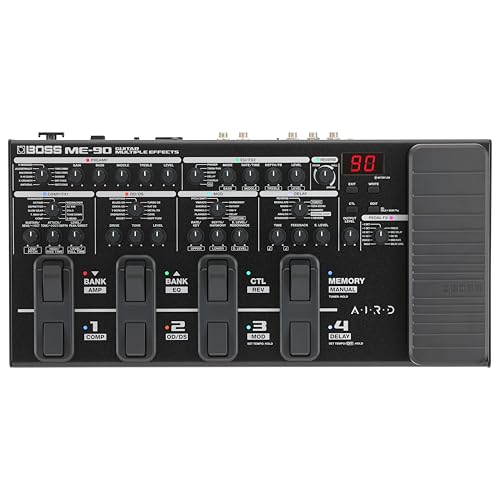
- 11 AIRD amp models and 60 effects
- Eight footswitches and redesigned expression pedal
- Effects loop and BOSS Tone Studio editing
Best For: gigging players who want hands-on control and premium BOSS tone
Compact Starter Floorboard
Zoom G1X Four with Expression Pedal

- 71 effects and 13 amp models
- 30-second looper with 68 rhythms
- Expression pedal plus USB patch editing
Best For: Portable players who need a simple multi-effects unit for practice and small gigs
Modern Modeling Pedal
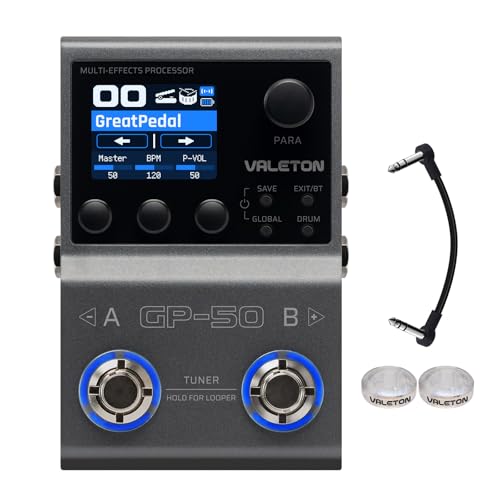
- 100+ HD effects with 9 simultaneous modules
- NAM and IR loading with app control
- Compact metal build with rechargeable power
Best For: Players who want modern amp-modeling flexibility in a compact gig-ready pedal
Stage-Ready Workhorse
Valeton GP-200 live multi-effects processor

- 240+ effects with 140+ amp/cab models
- 256 patch slots and 11 simultaneous modules
- 6-in/4-out USB-C interface with looper
Best For: Gigging players who need a full-featured processor for stage, looping, and recording
Ultra-Portable Pick – BOSS GT-1 Compact Guitar Effects Processor
If you want one of the most travel-friendly guitar effects processors for live performances, the BOSS GT-1 keeps the footprint small without giving up a flagship-class sound engine. It’s built for quick patch changes, hands-on tweaking, and easy transport, making it a strong fit for players who need dependable tones on stage or at casual gigs.
Best For: Guitarists who need a compact, lightweight processor for busking, small gigs, and easy live setup.
Pros:
- Compact, lightweight floor unit that’s easy to carry in a guitar bag
- BOSS GT-series engine provides a wide range of amps and effects
- Assignable control switch and expression pedal for real-time adjustments
- Four AA batteries can power it for up to seven hours for mobile gigs
Cons:
- Best suited to players who prioritize portability over a larger control surface
- Battery runtime is helpful, but it still depends on using AA cells
The GT-1 focuses on speed, portability, and practical live control, so it makes sense for players who want pro-level sounds in a simple format. Its quick-edit workflow and flexible connectivity help it stay useful beyond home practice.
Feature-Packed Routing Pick – VALETON GP-200 Multi-Effects Guitar/Bass Pedal
Valeton GP-200 Multi-Effects Processor for Guitar & Bass, Expression Pedal, MIDI, USB Interface
Check Price On AmazonThe VALETON GP-200 is built for players who want deep routing and lots of onboard processing in one of the more flexible guitar effects processors for live performances. With 240+ effects, amp and cab simulations, IR support, a looper, and multiple I/O options, it’s aimed at users who need an all-in-one pedalboard-style solution.
Best For: Guitarists and bassists who want a highly configurable multi-effects unit with modern connectivity and plenty of built-in options.
Pros:
- 240+ effects, 140 amp/cab sims, and 100 stompbox effects
- Adjustable signal chain with up to 11 simultaneous effect blocks
- 8 customizable LED footswitches plus expression, MIDI, and FX loop support
- Line, XLR, headphone, USB-C audio interface, and OTG mobile support
Cons:
- The feature set is broad, so it may be more complex than a simple stage rig
- Designed around corded power rather than battery use
This pedal stands out when flexibility matters more than simplicity. If your live setup benefits from preset management, stereo routing, and external control integration, the GP-200 offers a lot to build around.
Pro Stage Workhorse – BOSS GX-100 Advanced Guitar Effects Processor
For guitar effects processors for live performances that need strong tone quality and flexible control, the BOSS GX-100 is built like a serious stage unit. It combines detailed amp modeling, a large effects library, and a touch-driven interface with rugged construction for players who want a dependable performance board.
Best For: Performing guitarists and bassists who want advanced tone shaping, flexible routing, and durable stage hardware.
Pros:
- 32 amp types and over 170 BOSS effects derived from the GT-1000
- Ultra-flexible routing with 15 assignable blocks
- Color touch display and rugged metal chassis for stage use
- Onboard footswitches, expression pedal, and expansion support for more control
Cons:
- It’s larger and heavier than compact alternatives
- Designed as a corded unit rather than a battery-powered travel rig
The GX-100 is a strong fit when you want an effects processor that feels built for the stage first. Its mix of tone depth, routing freedom, and durable hardware makes it a practical choice for demanding live setups.
Simple Big-Screen Choice – Line 6 POD Go Guitar Multi-Effects Pedal
The Line 6 POD Go is a straightforward option among guitar effects processors for live performances if you want a simple interface with a large color display. It keeps the format compact while still offering a deep library of HX and legacy amp and effects models, plus IR loading for more tone-shaping flexibility.
Best For: Players who want an easy-to-use live processor with a clear screen and a portable pedalboard layout.
Pros:
- Large color display and simple interface for fast navigation
- 270+ HX and legacy amp/effects models
- Third-party IR loading and stereo effects loop support
- Compact, lightweight design with built-in expression pedal
Cons:
- Less expansive than some larger multi-effects systems
- Sold as a corded unit, so it is not aimed at battery-powered use
The POD Go is appealing if you want a stage-ready processor that stays easy to understand under pressure. Its mix of portability, screen clarity, and model selection makes it practical for straightforward live rigs.
Best for Easy Setup – BOSS GX-1 Ultra-Portable Guitar Effects Processor
If you want a compact option among guitar effects processors for live performances, the BOSS GX-1 is built for quick setup and flexible tone shaping. It combines 23 amp types, more than 140 BOSS effects, and AIRD modeling in a small unit that can run from AC, batteries, or USB bus power.
Best For: Players who need a portable, easy-to-carry processor with modern BOSS sounds and simple live control.
Pros:
- 23 amplifier types and over 140 BOSS effects for wide sound coverage
- AIRD engine with 24-bit AD, 32-bit DA, and 32-bit floating-point processing
- Color display and intuitive effect category buttons make editing straightforward
- 99 preset memories, 99 user memories, three footswitches, and assignable expression control
Cons:
- Designed as an ultra-portable unit, so it may feel minimal compared with larger stage rigs
- Best suited to players who like simple onboard control rather than deep menu-heavy editing
The GX-1 is a strong live-performance choice if portability and fast access matter more than a massive floorboard layout. It delivers a broad sound set in a compact format, making it easy to build practical stage presets without much fuss.
Budget Practice Grid – MOOER GE100 Multi-Effects Guitar Pedal
The MOOER GE100 is a practical, lower-cost option in guitar effects processors for live performances when you want presets, built-in rhythm tools, and easy tone saving. It offers 80 preset patches, 80 user patches, 8 effect modules, and 66 effect types, plus an assignable expression pedal for real-time control.
Best For: Players looking for an affordable multi-effects unit with looper, drum machine, and beginner-friendly learning tools.
Pros:
- 80 preset patches and 80 user patches for building a usable sound library
- 8 effect modules with 66 effect types for broad tone options
- 180-second looper and drum machine add practice and songwriting utility
- Adjustable output mode can help when playing without an amp
Cons:
- Uses analog signal format, which may not suit players specifically seeking digital processing
- Fewer live-control and premium processing features than higher-end stage processors
For players who want a straightforward multi-effects unit that covers rehearsal, writing, and basic live use, the GE100 gives you a lot of functions for the price. It is especially appealing if you value built-in practice features alongside patch storage.
Stage Control Favorite – BOSS ME-90 Guitar Multi-Effects Processor
BOSS ME-90 Guitar Multi-Effects Guitar Processor | All-In-One Guitar Processor
Check Price On AmazonThe BOSS ME-90 is a strong fit for guitar effects processors for live performances because it pairs hands-on control with advanced processing and a stage-ready layout. It includes eleven AIRD amp models, 60 effects from the GT-1000, an effects loop, eight multi-function footswitches, and a redesigned expression pedal for quick adjustments on stage.
Best For: Performing guitarists who want an intuitive, all-in-one processor with extensive control and premium BOSS sound.
Pros:
- 24-bit AD/DA and 32-bit floating-point processing for high-quality audio
- Eleven AIRD amp models and 60 effects derived from the GT-1000
- Eight multi-function footswitches plus a redesigned expression pedal with toe switch
- BOSS Tone Studio support for deeper editing and patch management
Cons:
- More feature-rich than simpler units, so setup may take longer for new users
- Battery-powered and compact, but still larger than ultra-portable tabletop-style processors
The ME-90 is the most stage-focused option here, especially if you want immediate physical control over your tones. It combines classic stompbox-style operation with enough processing depth to cover a wide range of live sounds.
Compact Starter Floorboard – Zoom G1X Four with Expression Pedal
If you want guitar effects processors for live performances that are simple to carry and easy to dial in, the Zoom G1X Four is a practical entry point. It combines a large effects library, amp models, a built-in expression pedal, and a looper in a small battery-powered unit that can also handle silent practice and quick preset changes.
Best For: Players who want an affordable, portable multi-effects unit for rehearsals, casual gigs, and practice-friendly live use.
Pros:
- 71 built-in effects and 13 amp models cover clean tones through high-gain sounds.
- 30-second looper and 68 rhythm patterns add useful performance and practice tools.
- Expression pedal gives you more hands-on control during songs.
- Aux input, headphone monitoring, and USB editing make it flexible for home and stage use.
Cons:
- Best suited to players who want straightforward functionality rather than deep pro-level routing.
- Battery-powered design is convenient, but it may not feel as robust as larger pedalboard units.
This is a strong pick if you want an all-in-one floor unit that can support practice now and small live setups later. It keeps the feature set broad without making the learning curve too steep.
Modern Modeling Pedal – Valeton GP-50 NAM & IR Loader
The Valeton GP-50 is built for players looking at guitar effects processors for live performances who want modern modeling features in a compact pedalboard-friendly format. With NAM loading, IR cabinet support, Bluetooth app control, and a color display, it focuses on fast tone shaping and flexible preset management for stage or studio work.
Best For: Guitarists and bassists who want a compact effects unit with NAM and IR loading plus app-based editing.
Pros:
- Over 100 HD effects and up to 9 modules can run at the same time.
- Supports up to 80 NAM files and 20 third-party cabinet IR files for expanded tone options.
- BT 5.0 app control, USB audio, and USB MIDI add modern connectivity.
- Rechargeable battery and compact metal casing make it easy to take to gigs.
Cons:
- Smaller footprint means fewer onboard controls than larger stage units.
- Advanced features may take time to configure if you prefer very simple presets.
For players who want current modeling tools without a large pedalboard footprint, the GP-50 offers a lot of capability in a travel-friendly design. It stands out for flexibility, especially if you plan to build and edit tones from a phone or computer.
Stage-Ready Workhorse – Valeton GP-200 live multi-effects processor
If you need guitar effects processors for live performances with a stronger stage focus, the Valeton GP-200 is the most feature-rich option here. It combines a large effects library, 256 patch slots, a built-in expression pedal, a color display, and a rugged metal chassis with the kind of connectivity that suits both pedalboard and recording setups.
Best For: Performers who want a full-featured multi-effects processor for live gigging, looping, and USB audio work.
Pros:
- Over 240 effects and 140+ amp/cab models offer broad tone coverage for guitar, bass, and acoustic use.
- 256 patch slots and up to 11 simultaneous modules support complex live presets.
- Built-in looper, 100 drum patterns, and chromatic tuner are useful on stage and in rehearsal.
- 6-in/4-out USB-C audio interface with loopback and re-amping adds strong recording flexibility.
Cons:
- Larger and heavier than the more compact processors in this roundup.
- Power is corded, so it is less convenient for players who want battery operation.
This is the most complete live-performance option of the three, especially if you want deep preset capacity and broad I/O. It is a better fit for players who expect to build multiple tones for different songs and rely on one unit for both stage and interface duties.
How We Picked These Guitar Effects Processors for Live Performances
For this roundup, we prioritized gear that makes sense on stage: solid foot control, fast preset access, usable amp and cab sounds, and flexible routing for direct-to-PA or amp-based setups. We also looked at whether each unit can handle common live needs such as expression control, stereo output, USB editing, and external effects loops.
Because Guitar Effects Processors for Live Performances need to work under pressure, we favored models with clear interfaces, practical preset limits, and enough onboard processing to cover a full gig without constant menu diving.
Quick Comparison
If you want the simplest rig, compact processors are best for straightforward tones and minimal setup. Midrange floor units usually offer the best balance of sound quality, editing depth, and live control. Larger processors are better if you need multiple scenes, advanced routing, MIDI, or integration with external pedals and direct recording.
Key Buying Factors for Guitar Effects Processors for Live Performances
Foot Control and Preset Switching
Live players should check how many footswitches are available, whether banks are easy to access, and how quickly you can move between sounds. For performance, the best processor is often the one that lets you change patches, toggle effects, and control volume or wah without hesitation.
Sound Quality and Amp/Cab Simulation
If you run direct to a mixer, solid amp modeling and IR or cab simulation matter a lot. Look for tones that stay consistent at stage volume and sit well in a band mix, not just in headphones.
Connectivity and Routing
Outputs, stereo support, MIDI, expression inputs, and an FX loop can all expand a live rig. If you already use drive pedals or time-based effects, routing flexibility becomes especially important.
Editing and Live Workflow
Some Guitar Effects Processors for Live Performances are easy to tweak on the fly, while others rely on software or deeper menus. Choose based on how often you need to edit sounds before or during a set.
Who Should Buy Which Guitar Effects Processors for Live Performances?
Beginners and players who want a simple all-in-one solution should look for compact, easy-to-use units with strong factory presets. Gigging musicians who need dependable tones and quick access to multiple sounds should favor floor processors with better switching and deeper editing. If you run a complex rig or want to go direct to front of house, choose a model with advanced routing, cab simulation, and MIDI or app control.
In short, the best choice depends on how much flexibility you need versus how simple you want your stage setup to be. Prioritize reliability, easy control, and sounds you can trust live.