The best wireless in-ear monitor systems with earbuds help performers hear a consistent mix without relying on floor wedges or crowded stage audio. The right setup can improve mobility, reduce feedback, and make rehearsals and live performances easier to manage.
These 10 systems span simple plug-and-play 2.4GHz kits, professional UHF models, stereo setups, and multi-receiver options. Use the guide below to compare range, battery life, channels, connectivity, and fit before choosing a system.
Best 10 Wireless in Ear Monitor Systems with Earbuds Picks for 2026
Compact 2.4GHz Pick
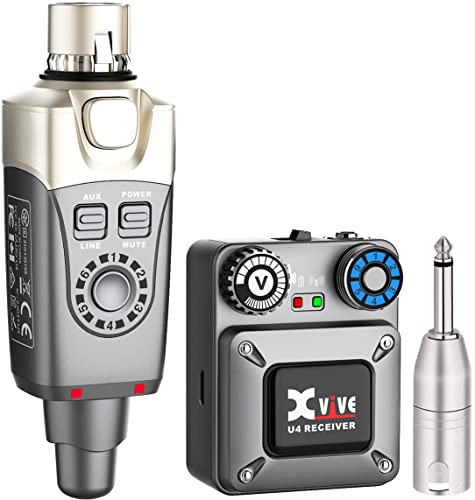
- Sub-5ms latency and over 90-foot range
- Six channels for simultaneous systems
- Up to five hours of rechargeable battery life
Best For: Portable small-venue monitoring
Focused Mono Choice

- Mono UHF monitoring with 50 selectable frequencies
- Up to 164-foot operating range
- Separate inputs and line outputs for signal pass-through
Best For: Stage, speech, church, and broadcast use
Long-Battery 2.4GHz Pick

- Automatic pairing with mono/stereo input selection
- Up to 10 hours of rechargeable battery life
- Supports up to six units simultaneously
Best For: Churches, bands, and quick setup
Feature-Rich UHF Stereo Pick

- Stereo/mono modes with EQ and balance controls
- 89 selectable frequencies and up to 160-foot range
- Rackmountable metal transmitter with included earbuds
Best For: Stage, studio, lecture, and professional setups
Best Overall
MELONARE PM-2 Wireless IEM System

- Up to 30 hours with the charging case
- 150-foot range with one-to-many support
- OTG input and mono/stereo switching
Best For: Mobile performers and group monitoring
Best for Low Latency
Xvive U4 Professional IEM System

- Less than 5ms latency
- XLR and 1/4-inch TS input support
- Metal housing with built-in limiter
Best For: Live bands and professional audio rigs
Best Multi-Receiver Kit
LEKATO MS-20 Wireless IEM System

- Includes one transmitter and two receivers
- Up to 30 hours with charging case
- 150-foot range and OTG support
Best For: Small bands and shared monitoring
Premium Low-Latency Pick

- Under 6ms latency with stereo/mono switching
- 192kHz, 24-bit audio and 110dB SNR
- Up to 10 hours of rechargeable battery life
Best For: Performers seeking detailed monitoring and flexible connections
Expandable Band Setup
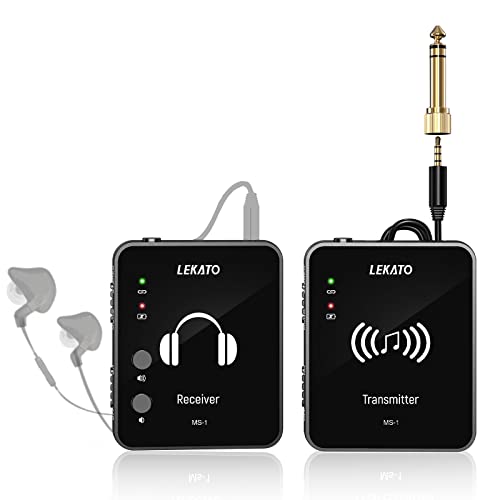
- One transmitter supports multiple receivers
- Automatic pairing simplifies setup
- Stereo audio with under 12ms latency
Best For: Small and medium groups sharing one monitor feed
Multi-User Practice System

- 24-bit/48kHz stereo audio under 14.9ms latency
- Up to four devices can operate simultaneously
- Transmitter lasts up to 24 hours
Best For: Guitar and bass practice or flexible small-stage monitoring
Compact 2.4GHz Pick – Xvive U4 Wireless IEM System
The Xvive U4 is a straightforward choice for shoppers comparing wireless in ear monitor systems with earbuds for small venues, rehearsals, and live performance. Its 2.4GHz connection offers a stated range of over 90 feet, while latency below 5ms helps keep monitoring responsive.
Best For: Performers and small teams needing a compact, easy-to-deploy monitor link.
Pros:
- Less than 5ms latency supports distraction-free performance.
- Six channels allow multiple systems to operate together.
- Rechargeable transmitter and receiver provide up to five hours of battery life.
- Metal construction and included carrying bag support portability.
Cons:
- Battery life is shorter than some competing systems in this roundup.
- The listed package includes one receiver, so additional performers require extra receivers.
- It uses 2.4GHz rather than a UHF connection.
The U4 stands out for its compact setup, low latency, and useful range. It is a practical fit when simplicity and portability matter more than extended battery life or advanced mixing features.
Focused Mono Choice – Phenyx Pro PTM-11 UHF IEM
The Phenyx Pro PTM-11 is a mono UHF option among wireless in ear monitor systems with earbuds, designed for focused monitoring in live, studio, broadcast, and presentation settings. Its 50 selectable frequencies and stated 164-foot operating range support flexible stage setups.
Best For: Speakers, pastors, broadcasters, and performers who prefer stable mono monitoring with signal pass-through.
Pros:
- Mono monitoring helps avoid phase-related blurring and distortion.
- Fifty selectable UHF frequencies support up to five systems working together.
- Separate left/right inputs and line outputs allow personal monitoring with signal pass-through.
- Metal transmitter, rackmount kit, and carrying case suit professional installations.
Cons:
- This is a mono system rather than a stereo monitoring solution.
- The supplied receiver uses two AA batteries.
- The package includes one transmitter and one receiver.
With UHF operation, separate outputs, and a long stated range, the PTM-11 is geared toward dependable, focused monitoring. Choose it when mono clarity and flexible routing are more important than stereo imaging.
Long-Battery 2.4GHz Pick – M6S Stereo Wireless IEM
The M6S combines automatic pairing, stereo or mono input selection, and included in-ear headphones in a compact 2.4GHz system. For shoppers seeking wireless in ear monitor systems with earbuds, its built-in rechargeable batteries and support for multiple receivers add practical convenience.
Best For: Church teams, bands, and performers wanting quick pairing and extended rechargeable operation.
Pros:
- 24-bit/48kHz processing is designed for low-noise, low-delay audio.
- Automatic pairing avoids manual channel setup.
- Built-in batteries provide up to 10 hours after a full charge, according to the supplied notes.
- One transmitter can pair with multiple receivers, with up to six units working simultaneously.
Cons:
- The notes do not specify a working range.
- The system uses the 2.4GHz band, which may not suit every venue.
- A full charge is listed as taking three hours.
The M6S is appealing for users who value convenience: the package includes earbuds, pairing is automatic, and battery life is rated higher than several alternatives here. Its main trade-off is less specified range information.
Feature-Rich UHF Stereo Pick – Phenyx Pro PTM-10 Stereo IEM
The Phenyx Pro PTM-10 is a stereo UHF system for shoppers comparing wireless in ear monitor systems with earbuds for stage, studio, speech, and exhibit use. It offers 89 selectable frequencies, up to 160 feet of stated coverage, stereo/mono modes, and controls for EQ, balance, limiter, and locking.
Best For: Performers and production teams that need stereo monitoring plus rack-ready installation features.
Pros:
- Stereo/mono mode selection supports different monitoring needs.
- 89 selectable 900MHz frequencies can support up to five systems simultaneously.
- EQ, balance, limiter, PAD, and lock functions provide useful control.
- Metal transmitter, hybrid XLR/6.3mm inputs, rack kit, earbuds, and carrying case are included.
Cons:
- The package includes one bodypack receiver.
- UHF operation may require more setup than automatic-pairing systems.
- The supplied details do not state receiver battery life.
The PTM-10 is the most control-oriented option in this group. Its stereo capability, frequency flexibility, and rackmount accessories make it a strong fit for more involved audio setups, provided you do not need a specified rechargeable runtime.
Best Overall – MELONARE PM-2 Wireless IEM System
The MELONARE PM-2 is a versatile choice among wireless in ear monitor systems with earbuds, combining a 150-foot range with HD 24-bit/48kHz audio and a portable charging case. Its OTG support also makes it practical for mobile setups using compatible phones, tablets, and laptops.
Best For: Performers, hosts, and stage crews who want long battery life, flexible device connectivity, and one-to-many monitoring.
Pros:
- Up to 30 hours of total runtime with the 2000mAh charging case.
- Supports one transmitter with multiple receivers and up to 10 simultaneous sets.
- Offers 24-bit/48kHz audio, 20Hz–20kHz response, and a 100dB signal-to-noise ratio.
- One-touch mono/stereo switching and automatic pairing simplify setup.
Cons:
- The system uses 2.4GHz wireless, which can be affected by crowded wireless environments.
- The supplied details do not specify water resistance.
Choose the PM-2 if portability and extended operating time matter most. Its charging case, OTG input, and scalable receiver support make it especially well suited to mobile performances and group monitoring.
Best for Low Latency – Xvive U4 Professional IEM System
The Xvive U4 is a straightforward option for wireless in ear monitor systems with earbuds, using a 2.4GHz connection with less than 5ms latency. Its XLR and TS input compatibility makes it a practical fit for mixers and other professional audio equipment.
Best For: Bands, studio users, and live performers who prioritize low latency, durable construction, and professional audio inputs.
Pros:
- Less than 5ms latency supports synchronized monitoring during performances.
- Accepts mono balanced XLR or mono unbalanced TS input.
- Provides 24-bit/48kHz audio, 20Hz–20kHz response, and up to 107dB signal-to-noise ratio.
- Metal housing and built-in limiter circuitry add practical protection for live use.
Cons:
- Battery life is about five hours, substantially less than the charging-case models here.
- The system supports six simultaneous channels rather than the larger capacity of some alternatives.
- It is not water resistant.
The U4 is the better match for conventional stage and studio rigs that use XLR or 1/4-inch outputs. Its short latency and metal enclosure are compelling, but users with long shows should plan around its five-hour battery rating.
Best Multi-Receiver Kit – LEKATO MS-20 Wireless IEM System
The LEKATO MS-20 stands out among wireless in ear monitor systems with earbuds because its package includes one transmitter and two receivers. With 30 hours of total use from the charging case, OTG support, and a 150-foot open-area range, it is designed for shared monitoring at rehearsals and performances.
Best For: Small bands, singers, and performers who need two receivers in one portable kit.
Pros:
- Includes one transmitter and two receivers for shared monitoring.
- Offers up to 30 hours of use with two additional case recharges.
- Supports up to 10 transmitter-and-receiver pairs and automatic pairing.
- Provides 24-bit/48kHz audio, a 150-foot open-area range, and mono/stereo switching.
Cons:
- Earphones are not included, so compatible earbuds must be supplied separately.
- The system is not water resistant.
- Its 2.4GHz connection may require planning around nearby wireless equipment.
The MS-20 is a strong value for teams because two receivers come in the package. Just budget for earbuds and confirm that your audio source supports the included OTG or 3.5mm connection method.
Premium Low-Latency Pick – Donner CV-3
For musicians comparing wireless in ear monitor systems with earbuds, the Donner CV-3 emphasizes detailed audio, quick response, and flexible connections. It supports stereo or mono monitoring, offers under 6ms latency, and includes both 1/4-inch and 1/8-inch cables plus XLR compatibility.
Best For: Bands and performers who want lightweight, long-running monitoring with a color-screen receiver.
Pros:
- 192kHz sampling, 24-bit depth, and 110dB SNR are designed for clear, dynamic sound.
- Under 6ms latency helps keep monitoring responsive.
- Approximately 100-foot range, stereo/mono switching, and broad input compatibility.
- Rechargeable battery lasts up to 10 hours, while the receiver weighs about 0.14 pounds.
Cons:
- The system does not list built-in noise control.
- The supplied notes describe a transmitter and receiver but do not specify included earbuds.
The CV-3 is a strong choice when low latency, battery life, and connection flexibility matter more than advanced noise isolation. Its interactive color screen adds useful at-a-glance feedback during rehearsals and performances.
Expandable Band Setup – LEKATO MS-1
The LEKATO MS-1 is a practical option among wireless in ear monitor systems with earbuds for groups that need multiple monitoring points. One transmitter can work with multiple receivers, and the system supports stereo transmission, automatic pairing, and a stated 100-foot open-area range.
Best For: Small or medium bands, churches, and rehearsal groups that need one-to-many monitoring.
Pros:
- Supports up to six device sets simultaneously according to the supplied product notes.
- Automatic pairing simplifies setup after powering on the units.
- Offers stereo/mono switching, 24-bit/48kHz audio, and under 12ms latency.
- Rechargeable battery provides more than five hours of use after a full charge.
Cons:
- Battery life is shorter than some competing systems at about five hours.
- The 100-foot range is specified for open areas and may vary in real venues.
- The supplied notes do not clearly identify included earbuds.
The MS-1 stands out for scalable operation and straightforward auto-pairing. It is especially useful when several performers need the same monitor feed, provided its roughly five-hour battery window suits the event.
Multi-User Practice System – M-VAVE SWS-12
The M-VAVE SWS-12 suits buyers looking at wireless in ear monitor systems with earbuds for practice, recording, and live use. It combines stereo transmission, automatic frequency hopping, adjustable receiver volume, and support for multiple connected receivers in a portable system with a charging case.
Best For: Guitarists, bassists, and small monitoring setups that prioritize extended transmitter runtime and flexible multi-user use.
Pros:
- Uses 24-bit/48kHz audio with latency under 14.9ms.
- Supports single- and dual-channel modes and up to four devices operating simultaneously.
- Automatic frequency hopping is designed to help maintain a stable connection.
- Transmitter battery lasts up to 24 hours; the receiver lasts up to six hours.
Cons:
- Receiver battery life is limited to about six hours.
- Latency is higher than the Donner CV-3’s stated under-6ms figure.
- The supplied details do not specify included earbuds or a headphone jack.
The SWS-12 is compelling for musicians who value a long-lasting transmitter and expandable monitoring. Its charging case and frequency-hopping design add convenience, while the receiver’s six-hour runtime remains worth considering for longer performances.
How We Picked the Best Wireless in Ear Monitor Systems with Earbuds
We focused on the features that matter most during rehearsals, live performances, worship services, studio work, and small production setups. The selection includes both accessible 2.4GHz systems and more flexible UHF models, along with mono and stereo configurations.
We considered transmission range, latency, frequency control, battery performance, pairing simplicity, receiver capacity, portability, and the availability of included earbuds or compatible earphones. Systems with charging cases, rack-mount options, multiple receivers, or adjustable frequencies received special consideration because they can better suit different performance environments.
Quick Comparison
| Feature | What to Look For | Best For |
|---|---|---|
| Transmission band | 2.4GHz or UHF | 2.4GHz for simplicity; UHF for more frequency flexibility |
| Audio mode | Mono or stereo | Mono for basic monitoring; stereo for detailed mixes |
| Receiver capacity | One or multiple bodypacks | Solo performers or bands sharing one source |
| Power design | Rechargeable batteries or charging case | Portable rehearsals and frequent performances |
| Controls | Fixed pairing or selectable frequencies | Plug-and-play setups or crowded RF environments |
Key Buying Factors for Wireless In-Ear Monitor Systems with Earbuds
Mono Versus Stereo
Mono systems are often sufficient for singers who need a vocal, click, or basic instrument reference. Stereo systems provide better separation and panning, which can make a full monitor mix easier to understand. Confirm that your mixer, transmitter, and receiver all support the desired signal format.
Wireless Range and Interference
Rated range is usually measured in open space, so walls, people, metal structures, and other wireless devices can reduce performance. UHF systems with selectable frequencies may offer more control in busy venues, while 2.4GHz kits are convenient and typically pair quickly.
Latency, Battery Life, and Charging
Low latency is important for vocalists and musicians because a noticeable delay can disrupt timing. Check the expected operating time, charging method, and whether spare batteries or a charging case are included. A transmitter that can run through an entire set or service is more practical than one requiring frequent recharging.
Fit and Earbud Compatibility
Included earbuds are convenient, but sound isolation and comfort vary. Look for secure-fit tips and make sure the receiver uses the connector and output format your preferred earbuds require. Good isolation can also reduce the need to raise volume levels.
Who Should Buy Which Wireless in Ear Monitor Systems with Earbuds?
For Solo Performers and Simple Setups
Choose a compact 2.4GHz system with automatic pairing when you want fast setup and minimal frequency management. These are well suited to home practice, small gigs, presentations, and straightforward vocal monitoring.
For Bands and Live Venues
Prioritize stereo operation, stable range, adjustable frequencies, and support for multiple bodypack receivers. A rack-mountable transmitter can be especially useful for permanent installations or touring rigs.
For Rehearsals and Portable Use
Look for lightweight hardware, long battery life, and a charging case. Multi-receiver kits can let several musicians monitor the same source without adding separate transmitters.
For Studios and Detailed Mixes
A stereo system with low latency and dependable connectivity is usually the better choice. Before buying, verify input compatibility and test the system with your interface or mixer to ensure the monitoring workflow fits your setup.