Great ideas disappear fast in rehearsal rooms, practice sessions, and late-night songwriting bursts. The right recorder makes it easy to capture them before they’re gone.
This roundup of voice recorders for musicians focuses on portability, audio quality, ease of use, and features that matter when you need reliable reference tracks, song ideas, or room capture.
Best 10 Voice Recorders for Musicians Picks for 2026
Pro Field-Ready Multitrack
Zoom H5 4-Track Handheld Recorder
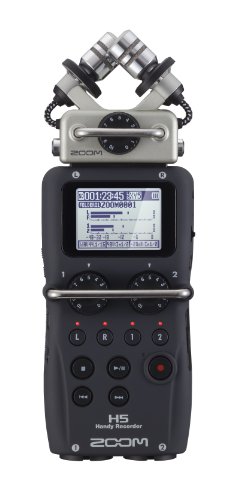
- Interchangeable capsules for flexible setups
- Two XLR/TRS inputs with phantom power
- Records up to 4 tracks and works as USB audio
Best For: Musicians needing a portable multitrack recorder with external input support
Budget Voice Memo Pick
EVISTR 64GB Voice Recorder with Playback

- Simple two-button operation
- Voice activation helps cut silent gaps
- 64GB storage with long battery life
Best For: Musicians who need a simple recorder for notes and long speech-focused sessions
Premium Clip-Free Capture

- 19.4mm X/Y mics for rich, detailed sound
- 32-bit float recording helps avoid clipping
- Dedicated gain knobs and up to 4-track recording
Best For: Musicians wanting premium portable capture with clip-free headroom
High-Capacity Pocket Recorder

- 136GB storage for long recording capacity
- Voice activation and noise reduction
- One-click record/save with 68-hour battery life
Best For: Musicians needing a lightweight, high-capacity recorder for long sessions
Field-Ready Studio Recorder
Zoom H6 Studio Handy Recorder for Filmmakers & Musicians

- Records up to 6 tracks plus stereo mix
- 32-bit float helps prevent distortion
- Mics handle up to 140 dB SPL
Best For: Musicians and filmmakers needing reliable multitrack capture
High-Capacity Note Taker
128GB Digital Voice Recorder for Lectures Meetings

- 128GB storage with very large capacity
- Voice-activated recording with 6 levels
- Up to 1536Kbps WAV recording
Best For: Long lectures, meetings, and organized voice notes
Portable Stereo Capture Pick
Zoom H1 Essential Recorder for Musicians, Podcasters & Content Creators

- X/Y stereo mics for clear capture
- 32-bit float helps avoid clipping
- USB-C mic mode for streaming and calls
Best For: Portable stereo recording for rehearsals and content
Music-Ready Multitrack Pick
Philips Voice Tracer DVT6510 Digital Voice Recorder

- 3Mic HighFidelity tuned for music
- Motion sensor auto-adjusts sensitivity
- Includes XLR adapter cable
Best For: Musicians wanting portable music-focused recording with external input support
Portable Float Recording Choice
Xvive XV1-R Portable Stereo Audio Recorder

- 32-bit float recording reduces clipping risk
- X/Y mics handle up to 130 dB SPL
- Works as a USB microphone too
Best For: Musicians and creators needing flexible high-dynamic-range stereo recording
Pro Input Recorder
PHILIPS DVT7500 VoiceTracer Audio Recorder

- 24-bit/96 kHz for high-quality capture
- XLR and line-in connectors included
- Multi-source recording for pro workflows
Best For: Musicians needing higher-resolution recording with external input options
Pro Field-Ready Multitrack – Zoom H5 4-Track Handheld Recorder
If you want voice recorders for musicians that can handle rehearsals, songwriting ideas, and mobile multitrack capture, the Zoom H5 is built for flexible use. Its interchangeable capsules, XLR/TRS inputs, and four-track recording make it a practical option when you need more than a basic voice memo device.
Best For: Musicians who want a compact handheld recorder with XLR inputs and interchangeable capsules for demo capture or live room recording.
Pros:
- Interchangeable input capsules let you adapt the recorder to different recording setups.
- Detachable X/Y capsule includes shock-mounted mics to help reduce handling noise.
- Two XLR/TRS combo inputs with selectable phantom power and -20dB pad support external mics and instruments.
- Records up to four tracks simultaneously and can also work as a USB audio interface.
Cons:
- Uses 2 AA batteries, so you may want spares for longer sessions.
- Records to SD/SDHC cards up to 32GB, which is less storage than some larger-capacity units.
This is a strong middle-ground recorder for musicians who need more control than a pocket voice recorder but still want portability. The H5 stands out most when you need versatile input options and straightforward multitrack recording in one handheld unit.
Budget Voice Memo Pick – EVISTR 64GB Voice Recorder with Playback
For musicians who need a simple backup among voice recorders for musicians, the EVISTR L357 focuses on long recording time, easy operation, and clear speech capture. It is more of a practical memo recorder than a studio tool, but its noise reduction and voice activation can be useful for grabbing song ideas, rehearsals, or meeting notes.
Best For: Musicians who want an easy-to-use voice recorder for spoken notes, lyrics, and long sessions without complicated controls.
Pros:
- Dynamic noise reduction microphone and PCM noise reduction are designed for clearer sound capture.
- Voice-activated recording can reduce silent sections and save playback time.
- 64GB storage and long battery life support extended recording sessions.
- Very simple two-button operation makes it quick to start and save recordings.
Cons:
- Built-in mic and voice-focused design make it less suited to more advanced music recording needs.
- Best results are centered on speech and simple capture rather than detailed multitrack work.
This is a straightforward option if you mainly need a dependable recorder for ideas, interviews, or practice notes. It’s strongest as an everyday carry device for musicians who value convenience over pro audio features.
Premium Clip-Free Capture – Zoom H5 Studio Handy Recorder
If you’re comparing voice recorders for musicians and want a more advanced handheld option, the Zoom H5 Studio is built for higher-end capture. Its large 19.4mm X/Y mics, 32-bit float recording, and dedicated gain knobs make it a strong fit for recording performances where you want quick control and less risk of clipping.
Best For: Musicians who want a premium portable recorder for detailed, high-dynamic-range recording on location or during rehearsal.
Pros:
- 19.4mm X/Y microphone capsule delivers rich audio with a wide dynamic range.
- 32-bit float recording helps create clip-free recordings in challenging environments.
- Dedicated gain knobs provide faster, more intuitive level control.
- Can record up to 4 tracks at up to 192kHz in WAV format.
Cons:
- Uses 4 AA batteries, so power management matters on long sessions.
- Heavier than smaller pocket recorders at 14.4 ounces.
The H5 Studio is the most performance-focused option in this group, especially if you want cleaner headroom and more hands-on control. It’s a smart pick when audio quality and reliability matter more than minimal size.
High-Capacity Pocket Recorder – Tonfarb 136GB Voice Recorder
The Tonfarb A20 is a practical choice if you want voice recorders for musicians that prioritize storage, battery life, and simple capture. With noise reduction, voice-activated recording, and one-touch operation, it works well for saving rehearsal notes, lyrics, and long spoken memos without much setup.
Best For: Musicians who need a lightweight recorder with lots of storage for long sessions and quick note-taking.
Pros:
- 136GB total memory supports very long recording capacity.
- Voice-activated recording and automatic noise reduction help reduce unwanted silence and background noise.
- One-click record and save makes it easy to capture ideas quickly.
- Built-in rechargeable battery offers up to 68 hours of continuous recording.
Cons:
- Built-in mic design is better suited to voice capture than more advanced music recording.
- Focuses on ease of use rather than pro-level input flexibility.
This model is best when you need a compact recorder that can stay on through long sessions and handle quick-start use. For musicians, it makes sense as a dependable capture tool for ideas, classes, and rehearsal notes rather than a full-featured studio recorder.
Field-Ready Studio Recorder – Zoom H6 Studio Handy Recorder for Filmmakers & Musicians
If you want voice recorders for musicians that can handle serious sessions, the Zoom H6 Studio is built for flexible multitrack capture with plenty of headroom. It records up to six individual tracks plus a stereo mix, and the 32-bit float workflow helps keep your takes safe from distortion when levels jump around.
Best For: Musicians, filmmakers, and anyone recording rehearsals, live takes, or demanding location audio.
Pros:
- Records up to 6 individual tracks plus a stereo mix
- 32-bit float recording for distortion-free audio and wide dynamic range
- 19.4mm microphones handle up to 140 dB SPL
- Look-ahead limiters help prevent overloads before clipping happens
Cons:
- Uses 4 AA batteries rather than a built-in rechargeable battery
- Bigger, more recorder-like design than a pocket voice recorder
- Likely more than casual users need for simple notes
This is a strong choice if your priority is clean, reliable audio with pro-level control rather than the smallest possible recorder. The longer battery life and selectable sample rates from 44.1 to 192 kHz make it easy to adapt to different recording jobs.
High-Capacity Note Taker – 128GB Digital Voice Recorder for Lectures Meetings
For buyers comparing voice recorders for musicians, this EVIDA model is better suited to long-form notes, interviews, and rehearsals where storage and voice activation matter most. It uses an upgraded noise-cancelling microphone and a professional recording chip to capture up to 1536Kbps sound, while the 128GB capacity gives you room for very large recording libraries.
Best For: Students, interviewers, and musicians who need a compact recorder for organized voice notes and long sessions.
Pros:
- 128GB storage for very large recording capacity
- Voice-activated recording with 6 sensitivity levels
- Captures up to 1536Kbps in WAV format
- Extra features like password protection, A-B repeat, and bookmarks
Cons:
- Mono microphone mode is less ideal for stereo music capture
- No headphone jack listed for quick monitoring
- Designed more for meetings and lectures than instrument recording
Its strengths are organization, portability, and long storage time rather than music-focused stereo capture. If you mainly need a simple recorder for voice, meetings, or practice ideas, it offers a lot of utility in a very small package.
Portable Stereo Capture Pick – Zoom H1 Essential Recorder for Musicians, Podcasters & Content Creators
If you need voice recorders for musicians that are quick to carry and easy to use, the Zoom H1 Essential is aimed at fast stereo capture for rehearsals, songwriting sessions, acoustic performances, and practice ideas. Its X/Y stereo mics and 32-bit float support are designed to make on-the-spot recording simpler, while USB-C mode also lets you use it as a microphone for streaming and calls.
Best For: Musicians, podcasters, and creators who want a compact stereo recorder for everyday sessions.
Pros:
- X/Y stereo microphones for clear stereo capture
- 32-bit float recording helps protect against clipping
- USB-C microphone mode for livestreams, calls, and voiceovers
- Lightweight 92 g design is easy to carry
Cons:
- 10-hour battery life is shorter than some larger recorders
- Uses AAA batteries instead of a built-in rechargeable pack
- Less track flexibility than multitrack recorders
This is the most grab-and-go option in the group for musicians who want better sound without a lot of setup. It balances portability with useful audio features, making it a practical pick for rehearsals, ideas, and simple content capture.
Music-Ready Multitrack Pick – Philips Voice Tracer DVT6510 Digital Voice Recorder
If you need voice recorders for musicians that can handle rehearsals, demos, and direct input capture, the Philips Voice Tracer DVT6510 is built with music in mind. Its 3-mic high-fidelity design, stereo recording, and included XLR adapter cable make it a practical choice when you want cleaner results from instruments or external sound sources.
Best For: Musicians who want a compact recorder for music-focused capture with XLR support.
Pros:
- Optimized for music with 3Mic HighFidelity recording
- Motion sensor automatically adjusts microphone sensitivity
- Includes an XLR adapter cable for external sound sources
- Compact 84 g design with 8 GB built-in storage
Cons:
- Uses built-in microphones rather than detachable mic inputs
- 8 GB storage may be limiting for longer sessions
- Recording time is listed at 120 hours, but storage is still finite
This is a solid option if your priority is straightforward, music-oriented recording in a portable form. The included accessories and stereo setup give it useful flexibility for instrumental capture without adding much bulk.
Portable Float Recording Choice – Xvive XV1-R Portable Stereo Audio Recorder
Among voice recorders for musicians, the Xvive XV1-R stands out for its 32-bit float recording and X/Y microphones, which are aimed at capturing loud, dynamic performances without gain guessing. It records WAV or AAC, supports up to 96 kHz sample rates, and can also work as a USB microphone for a wide range of devices.
Best For: Musicians and creators who want flexible stereo capture with 32-bit float recording.
Pros:
- 32-bit float recording helps prevent clipping from incorrect gain settings
- X/Y microphones are rated for clean capture up to 130 dB SPL
- Supports WAV and AAC recording formats
- Can function as a USB microphone with PC, Mac, iOS, and Android
Cons:
- No headphone jack is listed
- Battery life and recording time are listed at 12 hours
- Uses 2 AA batteries rather than a built-in rechargeable battery
If you want a versatile handheld recorder that can handle live music and other high-dynamic-range situations, this model offers a strong feature set. The float recording format and USB mic mode make it especially practical for users who switch between field recording and computer-based workflows.
Pro Input Recorder – PHILIPS DVT7500 VoiceTracer Audio Recorder
If your priority is clean capture from instruments and external sources, the PHILIPS DVT7500 VoiceTracer Audio Recorder is a strong fit for musicians who want more than basic memo recording. Its 24-bit/96 kHz sampling, high-quality microphones, and XLR plus line-in connectors give it the tools needed for more serious audio work.
Best For: Musicians who need higher-resolution recording and external input options.
Pros:
- 24-bit/96 kHz sampling supports high-quality audio capture
- XLR and line-in connectors work with external instruments and sources
- Multi-source recording adds flexibility for professional results
- Rechargeable Li-polymer battery supports extra-long recording
Cons:
- Heavier and less pocketable than some compact recorders
- 16 GB built-in storage may be limited for long high-resolution sessions
- Digital recording time is listed at 20.54 hours
This recorder makes the most sense if you value input flexibility and higher-resolution audio over ultra-simple portability. For musicians capturing instruments, rehearsals, or multiple sound sources, it offers a more connected and professional-feeling setup.
How We Picked the Best Voice Recorders for Musicians
We focused on Voice Recorders for Musicians that balance sound quality, simple operation, and practical portability. Priority went to models with clean stereo capture, usable onboard mics, dependable file formats, and recording controls that make sense in real-world music settings.
We also looked at storage options, battery life, transfer convenience, and whether a recorder is better suited to quick vocal memos, rehearsal documentation, or more serious multitrack capture.
Quick Comparison
Think of these options in three broad groups: compact pocket recorders for fast ideas, midrange handheld units for rehearsals and songwriting, and more advanced models for higher-quality reference recordings or flexible studio-style use.
If you want something small and simple, choose a lightweight recorder with one-touch operation. If you need better room sound or instrument demos, look for stereo mics, higher-resolution recording, and robust storage. For more demanding users, features like 32-bit float, low-noise preamps, and external mic inputs can make a meaningful difference.
Key Buying Factors for Voice Recorders for Musicians
Sound Quality and Mic Design
Built-in mics should capture clear speech and instruments without harshness or excessive noise. Stereo recording is especially useful for rehearsals, acoustic guitar, piano, and room ambience. If you record louder sources, look for strong input handling and lower distortion.
Portability and Usability
Musicians often need a recorder that is quick to start and easy to carry. Pocket-friendly size, straightforward menus, physical buttons, and one-touch record can matter more than advanced features if you mainly capture ideas on the go.
Format, Storage, and Power
WAV is best for higher-quality reference audio, while compressed formats can save space for voice memos and long sessions. Check microSD support, internal memory, battery type, and file transfer methods so your workflow stays simple.
Inputs and Recording Flexibility
External mic inputs, line-in capability, and multi-track options expand what a recorder can do. These features are helpful if you want to capture a practice amp, blend microphones, or use the recorder in semi-pro production work.
Who Should Buy Which Voice Recorders for Musicians?
Choose a compact, easy recorder if you mainly need quick lyric memos, melody snippets, or rehearsal reminders. Pick a sturdier handheld recorder if you want cleaner stereo captures of band practice or acoustic sessions. Go with a more advanced model if you need greater headroom, external inputs, or a stronger workflow for demo recording.
For most buyers, the best choice is the one that fits your recording environment: simple pocket units for speed, versatile handheld models for everyday musicianship, and premium recorders for more demanding audio capture.