If you need a simple way to connect a keyboard, synthesizer, or controller to a computer, USB MIDI interfaces can make the process fast and dependable.
This roundup focuses on practical options for home studios, live rigs, and mobile setups, with an eye on compatibility, port count, and ease of use.
Best 10 USB Midi Interfaces Picks for 2026
Simple USB-C Cable Interface

- 1 in / 1 out MIDI cable design
- USB-C plug-and-play for Windows and Mac
- LED indicators for power and signal
Best For: Simple recording and editing setups with a USB-C port
Pro Routing Interface

- 3-in/3-out interface with router and filter
- Supports major desktop and mobile OS platforms
- Low-latency MIDI with split, merge, and thru
Best For: Complex MIDI rigs that need routing and filtering
Budget MIDI Cable

- 1 in / 1 out interface with 16-channel support
- Plug-and-play with built-in driver and LEDs
- Works with Windows, Mac, iOS, and Android
Best For: Affordable standard MIDI connections with USB-A hosts
Trusted Compact Interface

- 1-in/1-out compact MIDI interface
- Low-latency FPT processing
- Compatible with Mac, Windows, and iPad
Best For: Simple, reliable MIDI connections from a compact brand-name interface
Dual-Port USB MIDI for Simple Studio Expansion
Midiplus 2x2 2-in/2-out USB MIDI interface

- 2 MIDI inputs and 2 MIDI outputs
- USB powered with no external supply
- No driver needed on Mac and Windows XP+
Best For: users who want a simple, bus-powered 2-in/2-out MIDI interface
Long-Run USB MIDI Cable for Portable Setups
ESI MIDIMATE eX 2m USB MIDI cable

- 2-meter cable for extended reach
- Plug-and-play with PC and Mac
- Supports up to 32 inputs or outputs
Best For: players who want a long USB-to-MIDI cable for direct connections
Hybrid USB Host MIDI for Modern and Legacy Gear
CME H2MIDI Pro USB host MIDI interface

- USB host mode for class-compliant MIDI devices
- USB-C client mode with 2-in/2-out virtual MIDI
- Routing, filtering, mapping, and presets via HxMIDI Tools
Best For: hybrid MIDI setups that mix USB controllers with DIN hardware
Budget Cable Pick

- 1-in/1-out MIDI interface with 16 channels
- Works with Windows and Mac systems
- Includes USB-C adapter for some mobile use
Best For: Simple computer-based MIDI recording on a budget
Premium Feature Pick

- Works plug-and-play on many operating systems
- Adds filtering, mapping, and routing tools
- Designed for low latency and accurate MIDI transfer
Best For: Advanced users who want flexible MIDI control and routing
Studio Starter Pick
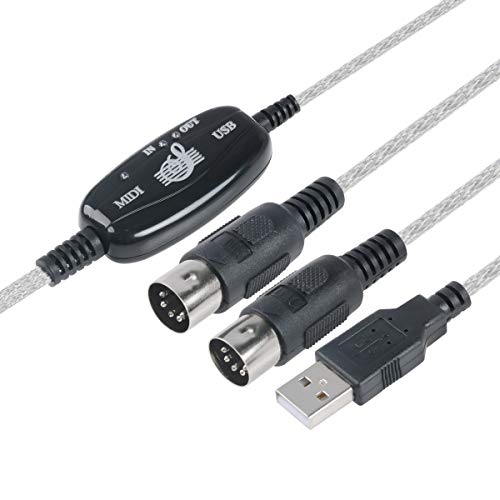
- Supports 16 MIDI channels in and out
- LED indicators help show power and signal status
- Compatible with Windows and Mac computers
Best For: Home recording setups that need a simple MIDI connection
Simple USB-C Cable Interface – LEKATO USB-C MIDI Interface
If you want usb midi interfaces that keep setup simple, this LEKATO cable is a straightforward choice for connecting a keyboard or synth to a USB-C computer. It offers 1-in/1-out MIDI with plug-and-play use on Windows and Mac, plus LED status lights to help you confirm power and data flow quickly.
Best For: Players who need a basic USB-C MIDI link for recording, editing, or everyday home studio use.
Pros:
- USB Type-C connection with built-in driver for plug-and-play use
- 1 in / 1 out design supports up to 16 MIDI channels
- LED indicators help show power and signal transfer
- Fast, stable transmission with interference resistance
Cons:
- Works best for standard MIDI setups
- Older or unusual synths may need extra compatibility checks
This is a practical pick if you mainly need a direct cable-style interface and do not want to manage extra routing features. It focuses on stable connectivity rather than advanced control.
Pro Routing Interface – CME U6MIDI Pro 3-in-3-out
Among usb midi interfaces, the CME U6MIDI Pro stands out if you need more than a basic cable. Its 3-in/3-out design, stand-alone routing, and built-in split, merge, thru, and filter tools make it well suited to more complex MIDI rigs and multi-device setups.
Best For: Musicians and producers who want a flexible, low-latency interface with routing and filtering control.
Pros:
- 3-in/3-out MIDI interface with stand-alone router and filter functions
- Supports macOS, iOS, Windows, Android, Linux, and Chrome OS
- Very low latency and no jitter, with support for notes, clock, sysex, and MPE
- Includes UxMIDI Tools for advanced setup and lifetime updates
Cons:
- More advanced than a simple plug-and-play cable for basic users
- Some routing features rely on the companion software for configuration
If you manage multiple MIDI devices or need tighter control over message flow, this model is the most feature-rich option in the group. It is especially appealing when accuracy and routing flexibility matter.
Budget MIDI Cable – FORE MIDI to USB Interface
If you are comparing usb midi interfaces for a straightforward keyboard or synth connection, this FORE cable covers the essentials well. It provides 1 MIDI in and 1 MIDI out, built-in driver support, and LED indicators, so it is easy to use for recording and editing on Windows, Mac, iOS, and Android setups.
Best For: Budget-minded users who want a simple 5-pin MIDI to USB-A cable for common music gear.
Pros:
- 1-in/1-out MIDI interface with support for up to 16 channels
- Plug-and-play operation with built-in driver and LED status lights
- Compatible with Windows, Mac OS, iOS, and Android
- Stable, low-delay transmission with interference resistance
Cons:
- USB-A connection may require an adapter for some newer computers
- Adapter is not included in the box
This is a practical cable-style interface if you need a simple, affordable way to connect standard MIDI gear. Just make sure your host device has the right USB port or adapter available.
Trusted Compact Interface – Roland UM-ONE-MK2
For shoppers looking at usb midi interfaces from a proven brand, the Roland UM-ONE-MK2 is a compact 1-in/1-out cable designed for reliable MIDI communication. It uses high-performance FPT processing for low latency and tighter clock timing, and the built-in data indicators make it easier to monitor connection status.
Best For: Users who want a small, reliable interface from Roland for Mac, Windows, or iPad-based MIDI use.
Pros:
- Low-latency MIDI with FPT processing for tighter timing
- Compatible with Mac, Windows, and iOS on iPad via Camera Connection Kit
- Input and output indicators help monitor signal flow
- USB bus-powered with an integrated cable design
Cons:
- Only one MIDI input and one MIDI output
- Less flexible than multi-port interfaces for larger setups
This is a solid pick when you want dependable MIDI performance in a very small package. It is best suited to simple setups where low latency and brand reliability matter more than expandability.
Dual-Port USB MIDI for Simple Studio Expansion – Midiplus 2×2 2-in/2-out USB MIDI interface
If you want a straightforward USB MIDI interface for a basic studio setup, the Midiplus 2×2 keeps things simple: it offers 2 MIDI inputs and 2 MIDI outputs over USB, with no driver required on Mac OSX and Windows XP and above. It’s a practical choice for connecting multiple MIDI devices without adding external power or extra setup steps.
Best For: Keyboard players and home-studio users who need an easy 2-in/2-out USB MIDI interface with plug-and-play setup.
Pros:
- 2 MIDI inputs and 2 MIDI outputs for flexible routing
- USB powered, so no external power supply is required
- Driver-free operation on Mac OSX and Windows XP and above
- Compact, lightweight design with USB cable included
Cons:
- Limited to a basic interface layout compared with more advanced routing options
- Windows support is listed from XP and above rather than newer OS-specific features
The Midiplus 2×2 is a practical pick if you mainly need reliable MIDI connectivity and want to avoid unnecessary complexity. It covers the essentials well for everyday recording and sequencing tasks.
Long-Run USB MIDI Cable for Portable Setups – ESI MIDIMATE eX 2m USB MIDI cable
The ESI MIDIMATE eX is a USB MIDI interface cable designed for users who want a long reach and a plug-and-play connection. With a 2-meter cable, dual MIDI connectors, and support for up to 32 inputs or outputs, it’s a practical fit for recording and editing with PC or Mac systems.
Best For: Musicians who need a longer USB-to-MIDI cable for portable setups, DAW work, and simple direct connections.
Pros:
- 2-meter cable gives you more placement flexibility
- Plug-and-play operation with no driver needed
- Compatible with PC and Mac, plus major DAWs
- Optional Windows MIDI Port driver for more advanced multi-device use
Cons:
- Uses a cable-style adapter rather than a full multi-port box
- Best suited to direct device connections rather than complex studio expansion
This is a good USB MIDI interface choice if space, reach, and quick setup matter more than having lots of physical ports. The included Cubasis LE and broad DAW compatibility add extra value for recording-focused workflows.
Hybrid USB Host MIDI for Modern and Legacy Gear – CME H2MIDI Pro USB host MIDI interface
The CME H2MIDI Pro is a more advanced USB MIDI interface for hybrid rigs, letting you connect class-compliant USB MIDI devices to 5-pin DIN hardware without a computer. It also works over USB-C with 2-in/2-out virtual MIDI ports, making it a strong option if you switch between standalone gear and computer-based workflows.
Best For: Producers and performers who need a compact interface that can route modern USB MIDI devices and traditional DIN hardware.
Pros:
- Standalone USB host mode connects USB MIDI gear to DIN hardware
- USB-C client mode supports 2-in/2-out virtual MIDI ports
- Works with macOS, Windows, iOS, Android, Linux, and Chrome OS
- HxMIDI Tools enables routing, filtering, mapping, splitting, and saved presets
Cons:
- Single 1-in/1-out DIN I/O may be limiting for larger DIN-only rigs
- Advanced feature set may be more than needed for basic MIDI tasks
If you need more than a basic USB MIDI interface, the H2MIDI Pro stands out for its host functionality, routing tools, and broad platform support. It’s especially useful when your setup mixes controllers, synths, and legacy MIDI hardware.
Budget Cable Pick – NUOSIYA USB to MIDI Adapter
If you need a straightforward usb midi interfaces option for connecting a keyboard or piano to a computer, this NUOSIYA cable keeps things simple. It supports MIDI signal transfer for recording and editing, works with many Windows and Mac systems, and includes a USB-C adapter for some phone or iPad setups.
Best For: Budget-minded players who want a basic USB-to-MIDI cable for home recording and editing.
Pros:
- 1-in/1-out MIDI interface design with 16 channels
- Compatible with Windows and Mac systems
- Includes a USB Type-C adapter for some mobile setups
- Flexible 6.5 ft cable for easier positioning
Cons:
- Mobile use requires an extra adapter for some devices
- Older audio gear may need additional adapters
- Basic design lacks advanced MIDI routing features
Overall, this is a practical plug-in solution for getting MIDI data into a computer without extra complexity. It suits simple recording workflows better than advanced studio routing needs.
Premium Feature Pick – CME U2MIDI Pro
The CME U2MIDI Pro is a more advanced choice among usb midi interfaces, especially if you want plug-and-play support across many devices and operating systems. It adds filter, mapping, and routing features through UxMIDI Tools, while keeping the cable setup compact and designed for low-latency MIDI transfer.
Best For: Musicians who want a feature-rich MIDI cable for flexible routing and cross-platform use.
Pros:
- Plug-and-play on macOS, iOS, Windows, Android, Linux, and ChromeOS
- Supports filter, mapping, routing, and merge/split via UxMIDI Tools
- Ultra-fast 32-bit processor with close to zero latency and jitter
- Works with many MIDI instruments, including keyboards, synths, drum machines, and controllers
Cons:
- More advanced than a basic MIDI cable if you only need simple connectivity
- Requires standard MIDI sockets on the instrument side
- Premium feature set may be more than casual users need
For players and producers who care about accuracy, flexibility, and cross-device compatibility, this is the most capable option in the group. Its software tools and low-latency performance make it a strong studio utility.
Studio Starter Pick – TENINYU 2-in-1 MIDI Cable
The TENINYU cable is a practical usb midi interfaces choice for turning a PC or Mac into a small music studio. It connects an electronic instrument to your computer for recording and editing, supports 16 channels in and out, and includes LED indicators to help confirm power and signal status.
Best For: Home musicians who want an affordable MIDI cable for recording and editing on a computer.
Pros:
- Supports 16 MIDI channels in and 16 channels out
- Includes LED power, in, and out indicator lights
- Compatible with Windows and Mac systems
- 2 meter / 6.5 ft cable gives decent reach
Cons:
- Does not support hot-swapping
- iOS use may require Apple’s original Camera Connection Kit
- Setup notes mention some systems need both MIDI plugs connected
If you want a simple cable for recording keyboard parts and basic studio work, this model covers the essentials well. It is best suited to straightforward computer setups rather than mobile-first workflows.
How We Picked the Best USB Midi Interfaces
We focused on models that solve real-world connection needs without adding setup headaches. Priority went to reliable MIDI timing, broad compatibility, plug-and-play operation, and the right balance of portability versus expansion. We also considered whether an interface supports one-way or two-way communication, since that matters for recording, syncing hardware, and sending data back to external gear.
Quick Comparison: What Matters Most
For a basic keyboard-to-computer setup, a simple USB MIDI cable may be enough. If you run multiple instruments, use hardware sequencing, or need to route MIDI between several devices, a multi-port unit is a better fit. Some USB Midi Interfaces are built for compact travel use, while others offer filters, mapping, or host functionality that can simplify more advanced rigs.
Key Buying Factors for USB Midi Interfaces
Port Count and Direction
Check whether you need 1-in/1-out, 2×2, or multi-port support. A single cable works well for one instrument, but dual or multi-output designs are more flexible for layered setups.
Compatibility and Power
Make sure the interface supports your computer or mobile device and your operating system. If you plan to connect directly to a keyboard or synth without a computer, look for host-compatible options. Bus-powered designs are convenient, but some studios benefit from devices with more robust power handling.
Timing, Latency, and Reliability
MIDI data is lightweight, but poor hardware can still cause missed notes or timing issues. Favor interfaces known for stable connections, especially if you record tight performances or control external modules.
Build Quality and Cable Length
Shorter cables are easier to manage in a desktop studio, while longer leads help when gear is rack-mounted or spread across a room. Solid connectors and durable cable jackets matter if you transport your setup often.
Who Should Buy Which USB Midi Interfaces?
Choose a simple MIDI cable if you only need one keyboard connected to one computer. Pick a 2×2 interface if you want a cleaner studio workflow and a little room to grow. Go with a multi-port model if you use several synths, controllers, or drum machines. If you need direct hardware-to-hardware connectivity, a USB host-capable option is the better choice. In short, the best USB Midi Interfaces are the ones that match your current workflow while leaving enough flexibility for future gear.