Choosing the right tube microphone preamp can shape how your vocals, instruments, and voiceovers sit in the mix. Some models are built for transparent gain, while others add obvious harmonic color and tube character.
Below, we’ve narrowed the field to 10 options that balance sound, features, and value so you can match the right preamp to your recording chain.
Best 10 Tube Microphone Preamp Picks for 2026
Clean Gain Booster
Ultra-Clean Gain for Quiet Sources

- Adds up to +25dB of clean gain
- Reduces noise while improving clarity
- Compatible with tube, battery, and power-supply mics
Best For: Home studios, podcasts, and quiet passive microphones
Variable Valve Preamp
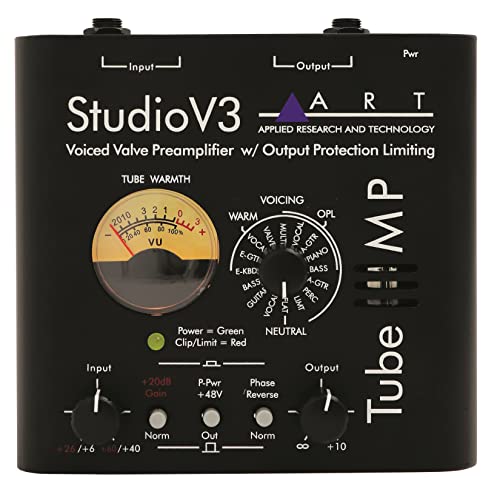
- Single-channel tube mic and instrument preamp
- Variable valve voicing for tone shaping
- Compatible with vocals and many instruments
Best For: Home recordists who want a compact tube preamp
Tone-Blending Preamp

- Blends tube and solid-state preamp sounds
- Dual gain stages expand tonal options
- Includes a high-impedance instrument DI
Best For: Engineers and players who want flexible tone shaping
Basic Tube Pick

- Single-channel tube mic and instrument preamp
- Simple design for basic setups
- Works with microphones and instruments
Best For: Budget-minded buyers who want a basic tube preamp
Studio Tube DI

- 12AX7 tube preamp with XMAX solid-state input stage
- Tube drive saturation plus phantom power and HP filter
- Separate mic and instrument inputs
Best For: Compact home studios needing flexible single-channel tube front-end control
Budget Rack Tube

- Professional-quality hybrid design
- Compact all-aluminum stackable chassis
- Cost-effective single-channel preamp
Best For: Affordable basic recording setups that value compact reliability
Limiter Tube Preamp

- Single-channel tube microphone/instrument preamp
- Built-in limiter helps prevent clipping
- Supports mic, instrument, and line-level sources
Best For: Simple studio or live setups needing limiter protection and tube input options
Studio Tube Control
UFO Tube Microphone Preamplifier with 4 Swappable Tubes

- Class A discrete tube preamp with classic analog warmth
- Includes four swappable tube options in the Tube Pack
- Mic/instrument modes, phantom power, pad, and polarity reverse
Best For: Home and project studios wanting flexible tube tone
USB Recording Utility
TUBE ULTRAGAIN MIC500USB Preamp

- Built-in USB/audio interface for direct computer recording
- 16 voicings for vocals, guitars, bass, drums, and more
- Handles mic, instrument, and line-level sources
Best For: Podcasters and home recordists who want USB convenience
EQ-Shaping Choice
ULTRAGAIN PRO MIC2200 Tube Preamplifier
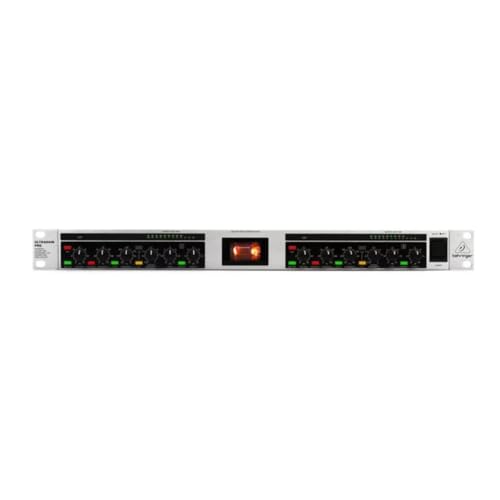
- Hand-selected 12AX7 tube for ultra-musical sound
- Integrated fully parametric EQs for tone shaping
- Independent line driver converts -10 dBV to +4 dBu
Best For: Studios needing tube tone with built-in EQ
Clean Gain Booster – Ultra-Clean Gain for Quiet Sources
If you need a tube microphone preamp-style boost without adding much extra noise, the Cloudlifter CL-1 is built for clean level increase ahead of your main preamp. It uses phantom power to add up to +25dB for passive microphones while keeping phantom power off the mic itself, which makes it a practical choice for low-output sources in studio or broadcast setups.
Best For: Home studios, podcasts, live streaming, radio broadcasts, and users with quiet passive microphones.
Pros:
- Adds up to +25dB of clean gain.
- Helps reduce noise while improving clarity and signal strength.
- Compatible with tube, battery, and power-supply driven microphones.
- Works well for studio recording, podcasting, and live sound.
Cons:
- Requires phantom power from the microphone input.
- Functions as a mic activator rather than a full standalone preamp.
- Designed for passive mics, so it is not a one-size-fits-all solution.
This is a straightforward option when the goal is more usable level and clearer capture from quiet microphones. It is less about color and more about clean gain staging, which makes it easy to place in a practical recording chain.
Variable Valve Preamp – Variable Valve Tube Preamp
The ART Tube MP Studio V3 is a single-channel tube microphone preamp and instrument preamp designed for users who want tube-based gain with adjustable voicing. Its variable valve voicing makes it a flexible front end for vocals and instruments, and the XLR connection keeps it simple to integrate into a basic recording chain.
Best For: Singers, musicians, and home recordists who want a compact tube preamp for mics or instruments.
Pros:
- Single-channel tube microphone and instrument preamplifier.
- Variable valve voicing adds flexibility in tone shaping.
- Works with vocals, guitars, keyboards, bass, and drums.
- Compact metal enclosure for straightforward desktop use.
Cons:
- Single-channel design limits it to one source at a time.
- Basic feature set compared with more advanced channel strips.
- Tube coloration may not suit users seeking a fully transparent sound.
This model fits buyers who want the character of a tube microphone preamp without a lot of complexity. It is a practical choice when you need one unit that can handle both mic and instrument duties.
Tone-Blending Preamp – Tube and Solid-State Blend
The Universal Audio 710 Twin-Finity is a microphone preamp built around a dual-path design that blends tube and solid-state character. With phase-aligned tone blending, dual gain stages, and a high-impedance DI, it is aimed at users who want more control over the feel and color of a tube microphone preamp than a fixed-sound unit can offer.
Best For: Engineers and players who want to shape tone between creamy tube warmth and more aggressive solid-state edge.
Pros:
- Twin-Finity design blends tube and solid-state sounds.
- Dual gain stages allow movement from wire-like clarity to crunchy color.
- Includes a discrete JFET DI with 2.2M ohm ultra Hi-Z impedance.
- Suitable for mic/line preamp and instrument DI use.
Cons:
- More complex than a simple single-purpose preamp.
- Larger and heavier than compact desktop units.
- Its tonal range may be more than some users need.
If you want a tube microphone preamp that can do more than add warmth, this unit offers a wide tone palette. The blend control concept makes it especially appealing for users who like to fine-tune character at the source.
Basic Tube Pick – Single-Channel Tube Preamp
The ART Tube MP is a simple single-channel tube microphone preamp and instrument preamplifier for users who want an affordable, focused tube front end. Based on the supplied details, it keeps the concept straightforward: one channel, tube-based gain, and support for both microphone and instrument sources.
Best For: Budget-minded buyers who want a basic tube preamp for one source at a time.
Pros:
- Single-channel tube microphone/instrument preamplifier.
- Simple design is easy to integrate into a small setup.
- Works with both microphones and instruments.
Cons:
- No advanced features are listed in the supplied details.
- Single-channel format limits it to one source.
- Not positioned as a high-feature studio processor.
This is the most straightforward pick in the group for users who mainly want tube preamp functionality without extras. It makes sense when simplicity and basic versatility matter more than added controls.
Studio Tube DI – Presonus TubePre v2
The Presonus TubePre v2 is a tube microphone preamp built for users who want simple front-end gain with extra control over tone. Its 12AX7 tube stage, XMAX solid-state input, and tube drive saturation make it a practical option for adding warmth while keeping the signal path flexible for both mic and instrument sources.
Best For: Home studio users who want a compact single-channel tube preamp with mic and instrument input options.
Pros:
- 12AX7 tube-based preamp with XMAX solid-state input stage
- Tube drive saturation control for adjusting character
- Separate instrument and mic inputs
- Useful extras: phantom power, HP filter, -20 dB pad, and polarity reverse
Cons:
- Single-channel design only
- May be more feature-rich than needed for very basic setups
Overall, this is a versatile tube microphone preamp for small studios that want more than a bare-bones gain box. The added controls make it easier to tailor the input for different mics and instruments without adding complexity elsewhere in the chain.
Budget Rack Tube – ART Tube MP Project Series
The ART Tube MP Project Series is a compact tube microphone preamp aimed at straightforward recording jobs. Its hybrid design and all-aluminum stackable chassis make it easy to fit into a working setup when you want an affordable single-channel preamp for microphone or PC-based use.
Best For: Budget-conscious buyers who need a compact, reliable tube preamp for basic recording.
Pros:
- Professional-quality hybrid design
- Compact and reliable form factor
- Cost-effective choice for a tube mic preamp
- All-aluminum stackable chassis
Cons:
- Single-channel only
- Limited feature set compared with more advanced preamps
For simple vocal or project-studio recording, this model focuses on practicality over extras. It is a good fit if you want an inexpensive tube microphone preamp with a durable chassis and a no-frills setup.
Limiter Tube Preamp – Behringer MIC300
Behringer Tube ULTRAGAIN MIC300 Audiophile Vacuum Tube Preamplifier with Limiter
Check Price On AmazonThe Behringer Tube ULTRAGAIN MIC300 is a tube microphone preamp with a built-in limiter for users who want extra protection against clipping. It is designed for microphone, instrument, and line-level sources, and its single-channel layout makes it a simple choice for studio or live recording setups.
Best For: Studio and live users who want a tube preamp with limiter protection for cleaner output control.
Pros:
- Single-channel tube microphone/instrument preamplifier
- Built-in limiter helps prevent output clipping
- Works with microphone, instrument, and line-level sources
- Designed for studio-grade condenser mics and general recording setups
Cons:
- Single-channel only
- No detailed controls beyond the core preamp and limiter features listed
This is a useful option if limiter protection matters as much as tube coloration. It fits well in simple rigs where you want a tube microphone preamp that can handle different sources without adding much setup complexity.
Studio Tube Control – UFO Tube Microphone Preamplifier with 4 Swappable Tubes
If you want a tube microphone preamp that aims for classic analog character, the Icon Pro Audio UFO is built around a Class A discrete tube design with a wide 10 Hz to 100 kHz frequency response. It also adds practical studio controls like mic/instrument switching, +48V phantom power, polarity reverse, and a -20 dB pad, so it can handle more than just one type of session.
Best For: Home and project studios that want tube warmth plus flexible input and output options.
Pros:
- Class A discrete tube preamp for rich harmonic character and analog warmth
- Includes a Tube Pack with Electro-Harmonix and Sovtek tubes for different tonal options
- Balanced XLR and unbalanced 1/4 inch I/O for flexible studio integration
- Vintage VU meter offers easy visual level monitoring
Cons:
- External power supply adds one more component to manage
- At 9.24 pounds, it is less portable than compact desktop units
- Best suited to users who want a more involved hardware preamp setup
Overall, this is the most feature-rich tube microphone preamp in the group for users who value tube swapping and hands-on studio controls. Its low-noise design and wide gain range make it a strong fit when you want warmth without giving up flexibility.
USB Recording Utility – TUBE ULTRAGAIN MIC500USB Preamp
The Behringer TUBE ULTRAGAIN MIC500USB is a practical tube microphone preamp for users who want preamplification and direct computer connectivity in one unit. It supports microphone, instrument, and line-level sources, adds 16 preamp voicings for different instruments and vocals, and includes a built-in USB/audio interface for recording, editing, and podcasting.
Best For: Recorders and podcasters who want a tube preamp with USB output and voicing options.
Pros:
- Built-in USB/audio interface for direct computer connection
- 16 preamp voicings for guitars, keyboards, bass, drums, vocals, and more
- Supports microphone, instrument, and line-level sources
- Includes free recording, editing, and podcasting software plus plug-ins
Cons:
- Voicing-based design may not suit users who want a simple, fixed preamp path
- Less specialized than a standalone studio preamp for strict analog workflows
- USB-focused setup may be unnecessary if you already have an interface
This model makes sense if you want one box that can preamp and connect to a computer without extra gear. Its versatility and included software make it especially useful for straightforward home recording and podcast setups.
EQ-Shaping Choice – ULTRAGAIN PRO MIC2200 Tube Preamplifier
Behringer ULTRAGAIN PRO MIC2200 Audiophile Vacuum Tube Microphone/Line Preamplifier
Check Price On AmazonThe Behringer ULTRAGAIN PRO MIC2200 is a tube microphone preamp aimed at users who want a low-noise mic or line-stage with extra shaping tools. It combines a hand-selected 12AX7 tube with integrated fully parametric EQs, an ultra-wide 10 Hz to 200 kHz bandwidth, and an independent line driver for moving -10 dBV signals up to pro level.
Best For: Studio setups that need tube color plus built-in EQ and line-level conversion.
Pros:
- Hand-selected 12AX7 tube for ultra-musical sound
- Integrated fully parametric EQs for detailed tone shaping
- Ultra-wide 10 Hz to 200 kHz bandwidth for an open sound
- Independent line driver converts -10 dBV into +4 dBu pro level
Cons:
- More complex than a basic preamp if you only need simple gain
- Less portable than compact desktop recording units
- Its added EQ features may be unnecessary for minimal signal chains
If you want a tube microphone preamp that also handles EQ and line-level duties, this unit is the most processing-oriented choice here. It is a good match for users who want shaping control at the preamp stage instead of relying only on downstream gear.
How We Picked the Best Tube Microphone Preamp
For this roundup, we focused on Tube Microphone Preamp models that offer a clear reason to exist: cleaner gain for low-output mics, audible tube warmth, useful onboard control, or strong value for home and project studios. We also weighed build quality, connectivity, and whether each unit is better suited to vocal recording, live work, or general studio use.
Quick Comparison
Some picks lean toward ultra-clean signal boosting, especially helpful with gain-hungry dynamics and ribbons. Others emphasize saturation, compression, and tonal shaping for users who want a more colored sound. A few include extras like DI inputs, limiter circuits, USB connectivity, or tube-mixing controls, which can make them more versatile if you need one box to cover multiple tasks.
Key Buying Factors for a Tube Microphone Preamp
Gain and Noise Performance
Check how much clean gain the unit provides and how well it stays quiet at higher settings. If you use a low-output mic, especially a dynamic or ribbon, prioritize headroom and low noise over dramatic coloration.
Sound Character
Not every tube design sounds equally “warm.” Some preamps add subtle thickness, while others produce more obvious saturation and harmonic richness. Decide whether you want transparency, gentle enhancement, or a clearly colored vocal tone.
Connections and Flexibility
Look for XLR and line routing that fits your interface, mixer, or live rig. Extra features such as instrument inputs, insert points, limiter circuits, or USB output can expand how and where you use the unit.
Tube Type and Control
Some models use a single tube stage for light enhancement, while others let you blend tube and solid-state paths or swap tubes for different voicings. If experimentation matters, those controls can be more valuable than a simple preset sound.
Who Should Buy Which Tube Microphone Preamp?
If you want the cleanest possible boost for a quiet mic, choose a model focused on transparent gain. If you want flattering vocal thickness or analog-style character, pick a more colored tube design. Budget shoppers should look for straightforward, dependable units with the core features they’ll actually use, while creators who record multiple sources may benefit most from a preamp with DI, limiter, or interface functions.
In short, the best Tube Microphone Preamp is the one that matches your source, your recording style, and how much tone shaping you want before the signal reaches your interface.