The best subwoofers for music add depth, impact, and realism without overwhelming vocals, instruments, or the rest of your system. The right choice depends on your room, speakers, listening habits, and desired bass response.
We compared 10 powered subwoofers across size, output, connectivity, placement flexibility, and value to help you find a model that delivers controlled low-end performance for music.
Best 10 Subwoofers for Music Picks for 2026
Studio Precision

- 8-inch bass-reflex powered subwoofer
- 22Hz–150Hz response with 150W amplifier
- Adjustable filters and phase switch
Best For: Home studios, recording, and live-music monitoring
Big-System Impact

- 12-inch front-firing copper-spun woofer
- 400W dynamic digital amplifier
- Low-pass, phase, line, and LFE controls
Best For: Music and home-theater systems needing powerful bass
Compact Value
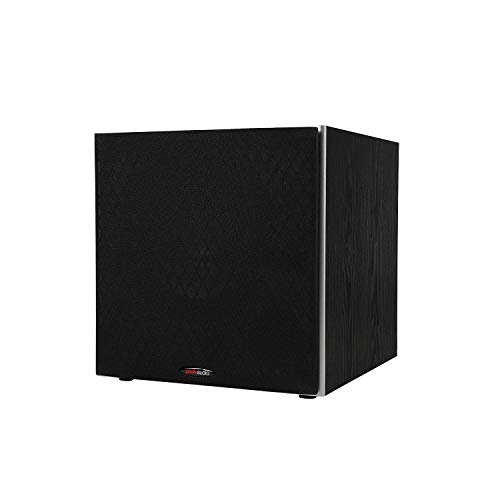
- 10-inch powered subwoofer
- 50W RMS amplifier, up to 100W power
- Flexible crossover and speaker-level inputs
Best For: Small-to-mid-size rooms and budget-conscious home audio
High-Output Upgrade

- 12-inch high-excursion spun-copper woofer
- 200W amplifier with 400W peak output
- 29Hz–120Hz response at ±3dB
Best For: Home entertainment systems and large-scale music playback
Best for Easy Setup

- 30 Hz low-end extension
- Bluetooth 5.0 and flexible inputs
- Adjustable crossover and room tuning
Best For: Music production and compact hi-fi setups
Big Bass Value

- 10-inch front-firing woofer
- 300-watt peak amplifier
- Phase and low-pass controls
Best For: Room-filling music and home theater bass
Simple Compact Upgrade

- 8-inch cone woofer
- 100 watts of dynamic power
- Twisted flare port for tight bass
Best For: Compact music systems needing a straightforward bass upgrade
Compact Music Upgrade
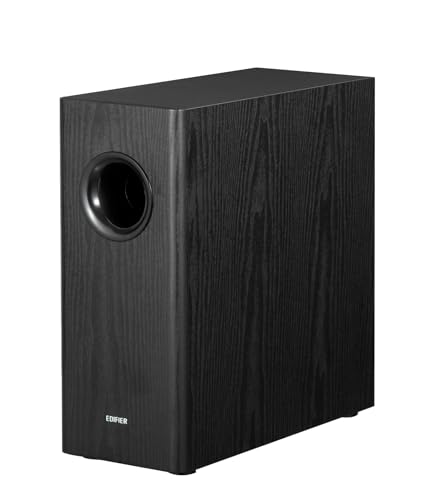
- 8-inch woofer with 35Hz bass response
- 70W RMS Class-D powered design
- Adjustable crossover and phase controls
Best For: Compact stereo, desktop, and bookshelf-speaker systems
Room-Filling Stereo Bass

- 10-inch powered cone woofer
- 100W output for fuller bass impact
- Twisted flare port for tight bass
Best For: Floor-standing home theater and stereo systems
High-Output System Builder

- 10-inch woofer with 300W RMS output
- RCA and high-level speaker connections
- Adjustable volume, crossover, and phase
Best For: High-output home theater, music, and gaming systems
Studio Precision – Yamaha HS8S
The Yamaha HS8S is a practical choice among subwoofers for music when you want studio-oriented low-end extension and flexible crossover control. Its 8-inch driver, 150-watt amplifier, and 22Hz–150Hz response suit recording and live-music setups.
Best For: Home studios, recording, and live-music monitoring.
Pros:
- 8-inch bass-reflex powered design
- 22Hz–150Hz frequency response
- Adjustable low-cut and high-cut controls from 80Hz to 120Hz
- Phase switch and wired XLR connectivity
Cons:
- Floor-standing cabinet weighs 33.6 pounds
- Not waterproof or water resistant
- Designed for corded-electric use
Choose the HS8S if integration and tuning flexibility matter more than a large driver. Its controls make it easier to match the subwoofer to a studio or music-monitoring system.
Big-System Impact – Klipsch R-12SW
The Klipsch R-12SW is a strong option among subwoofers for music when you want a larger 12-inch woofer and substantial amplifier output. Its front-firing copper-spun driver and line/LFE inputs make it easy to add to many wired audio systems.
Best For: Music listeners who also want powerful home-theater bass.
Pros:
- 12-inch front-firing copper-spun woofer
- 400 watts of dynamic amplifier power
- Low-pass crossover and phase control
- Line/LFE inputs support compatibility with many receivers
Cons:
- Large floor-standing cabinet
- Wired rather than wireless connectivity
- Not waterproof or water resistant
The R-12SW fits buyers who want pronounced bass impact from a full-size subwoofer. Its crossover and phase controls provide useful setup flexibility for music and movies.
Compact Value – Polk Audio PSW10
The Polk Audio PSW10 is a compact pick among subwoofers for music, adding extra bass without the footprint of a larger 12-inch model. Its 10-inch woofer, 50-watt RMS amplifier, and flexible connection options suit small-to-mid-size rooms.
Best For: Small-to-mid-size rooms and affordable home audio upgrades.
Pros:
- 10-inch Dynamic Balance woofer
- Compact design for smaller rooms
- Continuously variable 80Hz–160Hz crossover
- Speaker-level and line-level inputs plus phase switch
Cons:
- 100-watt maximum output is lower than larger alternatives
- Response is specified at 40Hz–160Hz at -3dB
- Not waterproof or water resistant
The PSW10 is a sensible starting point when you want deeper, fuller sound without moving to a bigger cabinet. Its connection and crossover choices make it straightforward to blend with an existing system.
High-Output Upgrade – Klipsch R-120SW
The Klipsch R-120SW is built for listeners seeking authoritative low end from a 12-inch subwoofer. Among subwoofers for music, it stands out with a high-excursion spun-copper woofer, rear-firing bass-reflex port, and up to 400 watts of acoustic output.
Best For: Home entertainment systems and larger-scale music playback.
Pros:
- 12-inch high-excursion spun-copper woofer
- 200-watt amplifier with 400-watt peak output
- 29Hz–120Hz frequency range at ±3dB
- Rear-firing bass-reflex port and RCA connectivity
Cons:
- 31-pound floor-standing cabinet needs dedicated space
- Wired, corded-electric design
- Not waterproof or water resistant
The R-120SW makes sense when output and low-frequency reach are priorities. Its larger driver and bass-reflex construction are suited to buyers who want a more commanding foundation for music and home entertainment.
Best for Easy Setup – PreSonus Eris Sub 8BT
The PreSonus Eris Sub 8BT is a flexible choice among subwoofers for music, especially for home studios and detailed listening. Its 8-inch driver reaches down to 30 Hz, while Bluetooth 5.0 and balanced, unbalanced, and auxiliary inputs make it easy to add to different setups.
Best For: Music production, hi-fi listening, gaming, and compact monitoring systems.
Pros:
- Low-frequency response reaches 30 Hz for full-spectrum monitoring.
- Adjustable highpass, lowpass, and room-tuning controls help integrate the sub with main speakers.
- Offers Bluetooth 5.0 plus TRS, RCA, and front-panel auxiliary connections.
- Front headphone output and automatic power-saving mode add convenience.
Cons:
- Its compact 8-inch design may provide less output than a larger home-theater subwoofer.
- Bluetooth range is listed at 10 meters, so placement may be limited in larger spaces.
The Eris Sub 8BT stands out when accurate, adjustable bass matters more than maximum room-shaking output. It is particularly practical for producers and listeners who want both studio connections and casual wireless playback.
Big Bass Value – Klipsch R-100SW 10-Inch
The Klipsch R-100SW is a strong option among subwoofers for music when you want a larger driver and substantial output from a straightforward wired design. Its 10-inch front-firing woofer, 150-watt continuous amplifier, and 300-watt peak rating suit music, movies, and gaming.
Best For: Living-room stereo or home-theater systems that need deep, energetic bass.
Pros:
- 10-inch spun-copper IMG woofer is larger than the drivers in many compact subs.
- 300 watts of peak power provides considerable output capability.
- Low-pass crossover, volume, and phase controls support system matching.
- Line-level LFE and RCA inputs offer broad receiver compatibility.
Cons:
- It uses wired RCA connectivity and has no wireless communication technology.
- The 26-pound cabinet requires more floor space than a compact 8-inch model.
- Its listed frequency response begins at 32 Hz, rather than extending as low as some studio-focused designs.
The R-100SW favors impact and easy integration over wireless convenience. Its controls and LFE/RCA inputs make it a practical upgrade for a conventional stereo or home-theater system.
Simple Compact Upgrade – Yamaha NS-SW050BL
The Yamaha NS-SW050BL is a simple, compact pick among subwoofers for music, offering an 8-inch cone woofer and 100 watts of dynamic power. Its twisted flare port is designed to contribute to clear, tight bass while keeping the design easy to add to a room.
Best For: Listeners seeking a straightforward powered subwoofer for a compact music system.
Pros:
- 8-inch woofer provides a practical balance of size and bass performance.
- Twisted flare port is designed to support clear, tight bass.
- 100 watts of dynamic power suits smaller or moderate listening setups.
- Black styling is designed to fit naturally into a room.
Cons:
- The supplied notes do not list Bluetooth or other wireless connectivity.
- The notes do not specify crossover, phase, or room-tuning controls.
- It may be less suited to listeners seeking the highest output from a large space.
The NS-SW050BL is best viewed as a no-frills way to add powered low end without moving to a larger cabinet. Choose it when compact size and a clear, tight-bass design are more important than extensive adjustment options.
Compact Music Upgrade – Edifier T5s
The Edifier T5s is a practical choice among subwoofers for music when you want deeper bass without a large floor-standing cabinet. Its 8-inch woofer, 70W RMS Class-D amplifier, and 35Hz frequency response are suited to home audio and bookshelf-speaker setups.
Best For: Compact stereo systems, desktop audio, and Edifier speakers with RCA or subwoofer connections.
Pros:
- 8-inch long-throw woofer reaches down to 35Hz.
- Adjustable 30Hz–160Hz low-pass filter and selectable phase control help with system matching.
- Compact MDF cabinet, front-firing driver, and acoustic port support clean, tight bass.
- Built-in amplification, auto-standby, and included RCA cables simplify setup.
Cons:
- Wired RCA connectivity only; it has no wireless communication technology.
- Series connection without a sub out requires main speakers with LINE IN.
- Its 70W RMS output is more suited to compact home audio than very large rooms.
The T5s stands out for flexible controls and a space-saving design. Choose it when integration with a stereo or active-speaker system matters as much as bass extension.
Room-Filling Stereo Bass – Yamaha NS-SW100BL
The Yamaha NS-SW100BL is a straightforward pick among subwoofers for music if you prefer a larger 10-inch driver and 100W of powered output. Its twisted flare port and Advanced YST II technology are designed to produce clear, tight bass for home theater and stereo listening.
Best For: Floor-standing home theater and stereo systems that need a larger powered subwoofer.
Pros:
- 10-inch cone woofer provides a larger bass driver than compact models.
- 100W powered output supports fuller low-end impact.
- Twisted flare port is designed to contribute to clear, tight bass.
- Stylish black cabinet can fit naturally into a room-based audio setup.
Cons:
- The floor-standing cabinet is relatively large and heavy at 26.5 pounds.
- Its listed 180Hz frequency-response detail is less informative about deep-bass extension than the other options.
- It is wired and intended primarily for home theater or room-based systems.
The NS-SW100BL favors a familiar home-audio format: a 10-inch driver, powered operation, and Yamaha’s port and servo technology. It makes sense for listeners with the floor space for a conventional subwoofer.
High-Output System Builder – Rockville Rock Shaker
The Rockville Rock Shaker is aimed at listeners seeking high-output subwoofers for music, movies, and gaming. Its 10-inch woofer, 300W RMS Class-D amplifier, and adjustable controls provide a flexible wired solution for home theater, TV, projector, or studio setups.
Best For: Home theater and music systems that need strong output and multiple connection options.
Pros:
- 10-inch woofer with 300W RMS and 600W peak output offers substantial bass power.
- Volume, crossover, and phase controls allow system-specific tuning.
- RCA and high-level speaker inputs and outputs support varied installations.
- MDF enclosure with a vinyl finish and detachable foam grille provides a durable presentation.
Cons:
- The cabinet is large at 18.9 inches deep by 18.3 inches wide.
- It uses wired connectivity rather than wireless communication.
- The listed 200Hz frequency-response detail does not specify a deep-bass lower limit.
The Rock Shaker is the most output-focused option here, with a higher RMS rating and broader input/output selection than the compact Edifier. It is best suited to systems where power and installation flexibility take priority.
How We Picked the Best Subwoofers for Music
We focused on powered subwoofers that are practical for home audio, desktop listening, stereo systems, and home theaters. Our comparison considered woofer size, amplifier power, frequency range, connection options, cabinet size, placement flexibility, and overall value.
Because music benefits from accurate, well-integrated bass rather than sheer volume alone, we included compact 8-inch models alongside larger 10- and 12-inch designs. We also considered models with features such as adjustable crossover controls, phase adjustment, wireless connectivity, and compact enclosures.
Quick Comparison
| Best For | Recommended Size | What to Prioritize |
|---|---|---|
| Desktop or small room | 8 inches | Compact cabinet, adjustable crossover, low-volume control |
| Typical living room | 10 inches | Balanced output, placement flexibility, clean integration |
| Large room or high-volume listening | 12 inches | Higher output, deeper extension, sturdy enclosure |
Key Buying Factors for Subwoofers for Music
Room Size and Output
A larger woofer can move more air and produce deeper, stronger bass, but bigger is not automatically better. An 8-inch subwoofer can be easier to integrate in a bedroom, office, or apartment, while a 10-inch model is a versatile choice for many living rooms. Choose a 12-inch design when you have more space and regularly listen at higher volume.
Frequency Response and Control
Look for a subwoofer that reaches low enough to complement kick drums, bass guitars, electronic music, and orchestral recordings. Adjustable crossover and volume controls are especially important because they let you blend the subwoofer with your main speakers instead of making bass sound disconnected or boomy.
Connections and Placement
Check whether your amplifier or receiver uses RCA, line-level, speaker-level, or dedicated subwoofer outputs. Wireless or Bluetooth features can simplify placement, but wired connections are often preferable for the most predictable setup. Position the subwoofer near a wall for more output, then experiment with placement to reduce peaks and muddy spots.
Power and Enclosure Design
Amplifier wattage gives a general indication of output, but it does not guarantee sound quality. A well-designed cabinet, capable driver, and useful controls matter just as much. Ported enclosures can deliver more output, while sealed designs may offer a tighter, more controlled presentation.
Who Should Buy Which Subwoofers for Music?
For Small Rooms and Desktop Systems
Choose an 8-inch model if you want fuller bass without taking up much floor space. These are well suited to nearfield listening, compact bookshelf speakers, and moderate listening levels.
For Most Living Rooms
A 10-inch powered subwoofer offers the best balance of depth, output, and size for many stereo and home-theater systems. It is the safest all-around category for listeners who want noticeable bass enhancement without an oversized cabinet.
For Large Rooms and Powerful Systems
Choose a 12-inch model if you have room to position it properly, use larger main speakers, or want high-impact bass for both music and movies. Start with conservative volume and crossover settings, then increase them gradually until the subwoofer sounds integrated rather than dominant.