Great monitors do more than play loud—they reveal problems before they reach the mix. If your room colors the sound, room correction can make a bigger difference than another hardware upgrade.
This roundup of studio monitors with room correction focuses on accurate, practical options for home studios, project rooms, and small commercial setups in 2026.
Best 10 Studio Monitors with Room Correction Picks for 2026
Compact Room-Corrected Monitoring

- Built-in ARC room correction for setup optimization
- 36 Hz to 32 kHz response for detailed monitoring
- ARC X monitor emulation for mix translation checks
Best For: Compact studios and critical mixing in challenging rooms
Reference-Grade Nearfield
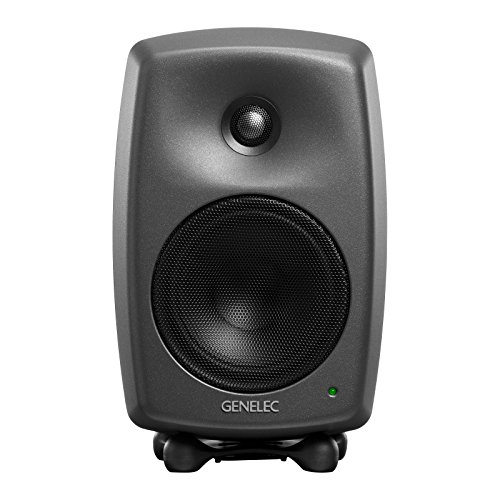
- 5-inch active reference monitor for studio use
- 50W HF and 50W LF amplification
- Pairs well with a calibrated monitoring setup
Best For: Engineers who want a compact reference monitor in a calibrated studio
Standalone Calibration System

- Dedicated room correction processor for existing monitors
- Includes measurement mic and calibration software
- Adds monitor emulation for translation checks
Best For: Studios that want to correct an existing monitoring setup
Wide Sweet Spot Monitor

- Acoustic tuning controls help adapt sound to the room
- EBM waveguide supports wide imaging and sweet spot
- 6.55-inch woofer delivers deeper low-end
Best For: Home and project studios needing room-friendly monitor tuning
Reference-Grade Compact

- DSP engine with app control
- Compact 4-inch nearfield monitor
- MMD waveguide for controlled dispersion
Best For: Nearfield reference monitoring in small studios
Feature-Packed 3-Way Pair

- Rear knobs plus app-based room compensation
- 3-way active crossover with detailed drivers
- XLR, TRS, RCA, AUX, and Bluetooth 6.0
Best For: Flexible nearfield listening with room tuning
High-End Studio Pair

- 6.5-inch flax cone woofer
- 40Hz-35kHz frequency response
- 400W max output power
Best For: Professional recording and detailed nearfield monitoring
Coaxial room-tuning pick
PreSonus Eris Pro 6 coaxial studio monitor

- Coaxial single-point-source design for better imaging
- Manual acoustic tuning for wall, corner, and tonal adjustments
- 140W biamplified output with XLR, TRS, and RCA inputs
Best For: mixing in stereo or Dolby Atmos rooms
Compact app-controlled monitor
Edifier MR5 3-way studio monitor with room tuning

- Rear knobs and app controls for room compensation
- 3-way crossover with woofer, mid, and silk dome tweeter
- XLR, TRS, RCA, AUX, Bluetooth 6.0, and headphone output
Best For: desktop studios and small rooms
Large-room reference monitor
Mackie HR824mk2 8-inch monitor with acoustic control
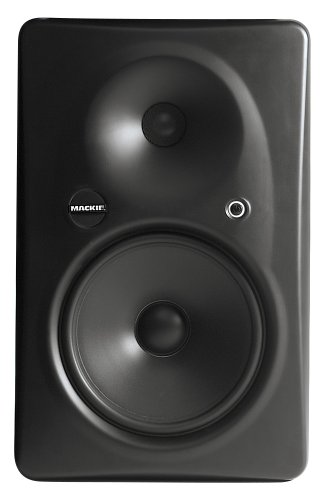
- Acoustic Space Control helps adapt sound to the room
- 8-inch low-frequency driver for bigger low-end monitoring
- Built for accurate stereo and surround applications
Best For: larger studios and surround monitoring
Compact Room-Corrected Monitoring – IK Multimedia iLoud MTM MKII
For studio monitors with room correction in a compact format, the IK Multimedia iLoud MTM MKII is built for detail-first mixing. Its built-in ARC room correction, linear phase design, and wide frequency range make it easier to hear balance, imaging, and translation clearly, even in less-than-ideal rooms.
Best For: Producers, mixers, and editors who want compact monitors with built-in room correction and monitor emulation.
Pros:
- Built-in ARC room correction helps compensate for acoustic issues and speaker placement.
- Ultra-flat response from 36 Hz to 32 kHz supports accurate low-end and clear highs.
- Time alignment and linear phase design help reduce phase distortion and ear fatigue.
- ARC X software can emulate different reference monitors for mix checks.
Cons:
- Mic for ARC calibration is sold separately.
- 3.5-inch speaker size may be too small if you want bigger-room output.
- Best suited to nearfield use rather than larger monitoring spaces.
This is a strong pick if you want room-aware monitoring without stepping up to a full-sized system. The built-in correction and emulation tools make it especially practical for small studios where accuracy matters more than sheer volume.
Reference-Grade Nearfield – Genelec 8030C 5-inch Monitor
The Genelec 8030C is a reference monitor for users who want a straightforward, accurate nearfield speaker in a studio setup. While it is not a room-correction system by itself, it pairs well with a corrected monitoring chain and offers the kind of controlled response and imaging that makes studio monitors with room correction setups easier to trust.
Best For: Mix engineers and producers who want a compact reference monitor to use in a calibrated studio workflow.
Pros:
- 5-inch woofer and 50W HF/50W LF amplification support clear, focused monitoring.
- Rear-facing reflex port helps extend bass response for a compact cabinet.
- ISS technology reduces energy use by entering standby when no signal is present.
- Well suited to professional audio production, recording, and mixing.
Cons:
- Does not include built-in room correction.
- Sold as a single monitor, so a stereo pair requires two units.
- Bass extension will still depend on room and system integration, especially without a sub.
If you already rely on room calibration elsewhere in your setup, this monitor gives you a reliable nearfield reference to work from. It is a practical choice when the goal is accuracy, not extra features.
Standalone Calibration System – IK Multimedia ARC Studio
If you are building studio monitors with room correction into an existing setup, the IK Multimedia ARC Studio is the dedicated calibration piece. It combines measurement mic, correction software, and a stand-alone processor to help balance frequency response, improve imaging, and make your monitors translate more reliably.
Best For: Studio owners who already have monitors and want a dedicated room correction system without replacing their speakers.
Pros:
- Includes a high-precision measurement microphone and correction processor.
- Corrects frequency imbalances and improves stereo imaging.
- Works with a wide range of studio and home studio setups.
- Includes monitor emulation for checking tonal translation.
Cons:
- It is a correction system, not a pair of monitors.
- Requires setup and calibration to get the benefit.
- Best value only if you already have monitors worth optimizing.
This is the most direct option here if your main priority is room correction rather than new speakers. It is a workflow tool built to make an existing monitoring chain more dependable and easier to trust.
Wide Sweet Spot Monitor – PreSonus Eris E7 XT
PreSonus Eris E7 XT 2-Way Active Studio Monitor with EBM Waveguide (Pack of 1)
Check Price On AmazonThe PreSonus Eris E7 XT is a practical monitor for buyers comparing studio monitors with room correction features, because it includes acoustic tuning controls to adapt the sound to your space. Its EBM waveguide, 6.55-inch woofer, and flexible connectivity make it a solid fit for mixing in home or project studios.
Best For: Mixers who want a larger nearfield monitor with onboard tuning controls for room adaptation.
Pros:
- Acoustic tuning controls help tailor the monitor to your room.
- EBM waveguide creates a wide sweet spot and solid imaging.
- 6.55-inch woven composite woofer provides deep lows.
- Includes Studio One Prime and Studio Magic software bundle.
Cons:
- Does not offer true built-in room correction like dedicated calibration systems.
- Single-monitor listing means you need two for stereo monitoring.
- Larger footprint may be less convenient on very small desks.
This monitor is a good middle ground if you want practical room-adapting controls without adding a separate calibration box. It should appeal to users who want a bigger sound and a wider sweet spot for everyday mixing.
Reference-Grade Compact – Neumann KH 80 DSP
If you want studio monitors with room correction in a compact nearfield format, the Neumann KH 80 DSP is built for precise monitoring. Its DSP engine and app control make it well suited for dialing in response in project studios, home studios, and other close-listening setups where accuracy matters more than size.
Best For: Nearfield mixing and reference monitoring in small to medium rooms where DSP-based adjustment is useful.
Pros:
- DSP engine with app control for flexible tuning.
- Mathematically Modeled Dispersion Waveguide helps with controlled directivity.
- Compact 4-inch design fits desktop and tabletop monitoring spaces.
- Useful for project studios, broadcast, post production, and home studio environments.
Cons:
- 4-inch woofer may not deliver deep low-end on its own.
- Sold as a single monitor, so stereo use requires a second unit.
- Best suited to nearfield listening rather than larger rooms.
Overall, the KH 80 DSP is a strong choice if you want a compact monitor with DSP-based control and a professional reference focus. It is most compelling when accuracy, placement flexibility, and room-aware tweaking matter more than sheer output.
Feature-Packed 3-Way Pair – Edifier MR5 3-Way Monitors
For buyers comparing studio monitors with room correction, the Edifier MR5 stands out because it includes both physical acoustic controls and app-based room compensation. Its 3-way active crossover, multiple inputs, and compact bookshelf format make it a practical option for near-field work or multi-use listening spaces.
Best For: Users who want an affordable, flexible monitor pair with room-tuning options and broad connectivity.
Pros:
- Room acoustic tuning via rear knobs and the EDIFIER ConneX app.
- 3-way design with woofer, mid driver, and silk dome tweeter for detailed playback.
- Multiple connections include XLR, TRS, RCA, AUX, and Bluetooth 6.0.
- 110W RMS output is suitable for near-field use and mid-sized rooms.
Cons:
- Room compensation features are app- and control-dependent.
- Bookshelf-style design may not appeal to users seeking traditional pro monitor aesthetics.
- Best results depend on careful setup and tuning to your space.
The MR5 is a versatile all-rounder if you need studio monitors with room correction and plenty of connectivity. It balances tuning flexibility with a feature set that works well for both desk setups and broader listening environments.
High-End Studio Pair – Focal Shape 65 Monitor
If you are shopping for studio monitors with room correction, the Focal Shape 65 is a premium nearfield option with a focus on accuracy and studio recording use. Its 6.5-inch flax cone woofer, inverted-dome tweeter, and broad frequency range make it a serious pick for detailed critical listening in production spaces.
Best For: Professional studio recording and music production where a large nearfield monitor is preferred.
Pros:
- 6.5-inch flax cone woofer supports fuller low-end performance.
- M-profile inverted-dome tweeter is designed for detailed high frequencies.
- Wide 40Hz-35kHz frequency response suits critical monitoring.
- High 400W maximum output power gives it substantial headroom.
Cons:
- No explicit room correction feature is listed in the supplied details.
- Larger, heavier cabinet may be less convenient for small desks.
- Sold as a single monitor, so a stereo pair requires two units.
The Shape 65 is best viewed as a high-end reference monitor for serious studio work. While it does not list built-in room correction, its precision-focused design and robust output make it a compelling option for buyers prioritizing monitoring quality.
Coaxial room-tuning pick – PreSonus Eris Pro 6 coaxial studio monitor
If you want studio monitors with room correction support that can adapt to placement challenges, the PreSonus Eris Pro 6 is built for that kind of job. Its coaxial single-point-source design helps improve phase alignment and imaging, while the acoustic tuning controls let you compensate for wall or corner placement and dial in the midrange, HF, and low-cut response for your room.
Best For: Stereo or surround mixing in rooms where placement and acoustic balance matter.
Pros:
- Coaxial design supports symmetrical dispersion and a wide sweet spot.
- Acoustic tuning controls include HF, midrange, low cutoff, and acoustic space settings.
- 140W Class AB biamplification delivers up to 106 dB SPL for clear, loud monitoring.
- Multiple inputs: XLR, 1/4-inch TRS, and RCA.
Cons:
- Room tuning is manual rather than app-based or automated.
- Single monitor listing means you need to verify pair quantity before ordering.
Overall, the Eris Pro 6 is a strong fit if you want accurate nearfield monitoring with practical room-adjustment tools and a design that favors precise imaging. It is especially appealing for stereo setups and immersive rooms where consistent off-axis response matters.
Compact app-controlled monitor – Edifier MR5 3-way studio monitor with room tuning
The Edifier MR5 is a practical choice if you’re shopping for studio monitors with room correction features in a compact bookshelf format. It uses a 3-way active crossover and gives you both physical rear controls and app-based room compensation options, so you can fine-tune the sound for desktop placement or a small studio space.
Best For: Home studios, desktop setups, and listeners who want flexible room tuning with app control.
Pros:
- Room Acoustic Tuning via rear knobs and the EDIFIER ConneX app.
- 3-way active design with woofer, mid driver, and silk dome tweeter.
- 110W RMS output and 101 dB peak SPL for near-field use.
- Wide connectivity including XLR, TRS, RCA, AUX, Bluetooth 6.0, and headphone out.
Cons:
- Bookshelf form factor may not suit users who want a larger studio monitor cabinet.
- Wireless convenience is included, but wired setup is still the best fit for critical monitoring.
For buyers who want room adjustment without giving up compact size, the MR5 offers a very balanced feature set. Its tuning tools, versatile inputs, and 3-way layout make it especially useful for everyday studio work and mixed-use listening.
Large-room reference monitor – Mackie HR824mk2 8-inch monitor with acoustic control
The Mackie HR824mk2 is aimed at buyers who want studio monitors with room correction-style adjustment in a bigger, more powerful monitor. Its Acoustic Space Control is designed to adapt the speaker to different rooms, while the optimized waveguide and Zero Edge baffle are intended to support accurate, natural reproduction for demanding monitoring work.
Best For: Larger studios and surround setups that need room-adaptive monitoring.
Pros:
- Acoustic Space Control helps adapt the monitor to the room.
- 8-inch class low-frequency driver supports substantial low-end monitoring.
- Optimized waveguide and Zero Edge baffle are built for accurate sound reproduction.
- Suitable for 5.1 and 7.1 surround applications.
Cons:
- Larger cabinet may be more than you need for a desktop setup.
- Connectivity is limited to RCA.
- Heavier build makes placement less flexible than smaller monitors.
In practice, the HR824mk2 makes the most sense when you need a robust monitoring solution and room adaptation is part of the setup. It is a strong match for production spaces where accuracy, output, and surround support matter more than compact size.
How We Picked the Best Studio Monitors with Room Correction
We prioritized monitors and correction systems that help reduce room-induced errors, with attention to integration, measurement workflow, DSP quality, output headroom, and value. We also favored models that make it easier to get reliable results without requiring a full acoustic-treatment overhaul.
Quick Comparison
When comparing Studio Monitors with Room Correction, think in terms of the whole monitoring chain: the speaker, the correction method, and the room itself. Some options include built-in DSP and measurement support, while others pair best with an external correction platform or software-based workflow.
Key Buying Factors for Studio Monitors with Room Correction
Correction Method
Look for built-in room EQ, standalone correction software, or a hardware/software ecosystem you can actually maintain. Built-in systems can be convenient, but external solutions may offer more flexibility across multiple monitors or setups.
Room Size and Monitor Size
Match cabinet size and low-frequency extension to your room. Smaller rooms often benefit from compact nearfields, while larger spaces can justify bigger woofers if placement and treatment are under control.
Measurement and Setup Workflow
Easy calibration matters. A good system should guide you through mic placement, measurement points, and target curves without turning setup into a technical project.
Accuracy Beyond the Correction Curve
Room correction is only part of the picture. Imaging, transient response, directivity, and off-axis behavior still matter because they shape what you hear before DSP is applied.
Connectivity and Practical Use
Check analog and digital inputs, monitoring volume control, and whether you need a dedicated interface or controller. In a hybrid studio, integration can be as important as raw performance.
Who Should Buy Which Studio Monitors with Room Correction?
If you want the simplest path to a more trustworthy mix position, choose a monitor or system with built-in correction and an included measurement mic. If you already like your current speakers, a dedicated correction system may deliver the biggest improvement for the least disruption. Producers working in small untreated rooms should lean toward compact models with strong DSP support, while larger rooms and engineers who need higher SPL may prefer fuller-size monitors paired with calibrated correction.
For most buyers, the best choice is the one that fits your room, your workflow, and your willingness to measure and fine-tune. In other words, the right Studio Monitors with Room Correction should make monitoring easier—not more complicated.