Desktop speakers can sound noticeably cleaner when they are decoupled from a hard surface. The right isolation stand can reduce desk-borne vibration, improve tweeter positioning, and help aim sound toward your ears.
We compared 10 speaker isolation stands for desktop use, including adjustable IsoAcoustics platforms, angled foam pads, and compact stands for small monitors and bookshelf speakers. Use the guide below to match capacity, fit, angle, and budget to your setup.
Best 10 Speaker Isolation Stands for Desktop Picks for 2026
Best Angle for Desktops
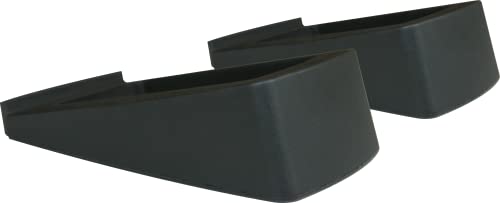
- 15-degree tilt aims sound toward the listener
- Silicone construction helps reduce vibration
- Supports speakers up to 8 pounds
Best For: Small computer, gaming, and bookshelf speakers
Best Foam Isolation Pads

- High-density acoustic foam dampens vibration
- Multiple configurations provide angle options
- Supports up to 16 pounds
Best For: Small studio monitors and bookshelf speakers
Best Heavy-Duty Compact Stand

- Elevates speakers 3.8 inches
- Metal construction with matte finish
- Listed 66-pound load capacity
Best For: Small speakers needing sturdy desktop elevation
Best Adjustable Isolation Stands
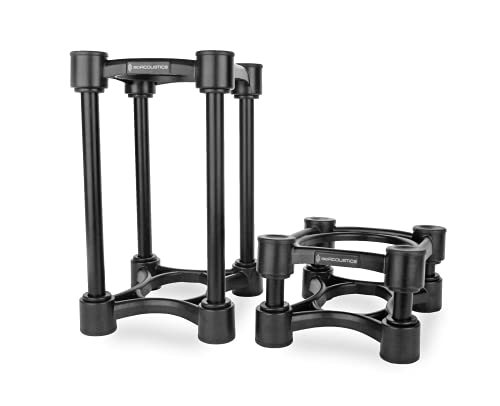
- Offers 14 height and tilt variations
- Adjusts from 2.8 to 8.25 inches
- Supports speakers up to 20 pounds
Best For: Desktop monitors requiring precise placement
Compact Angle Pads

- Five adjustable angle settings
- Compact 9 x 6-inch footprint
- Fits 3- to 4.5-inch monitors
Best For: Small desktop monitor setups needing compact angled risers
Adjustable Premium Stands

- 14 height and tilt variations
- 3- to 8.25-inch height range
- 40-pound capacity per supplied details
Best For: Precise desktop monitor positioning and isolation
Simple Foam Pair
Saiqiang Monitor Isolation Pads

- Two-pad set for stereo monitors
- Adjustable angles for placement
- Fits 3- to 5-inch speakers
Best For: Low-profile desktop isolation on a practical budget
Compact Anti-Vibration Pick
Monoprice Tilted Wedge Desktop Speaker Stands

- 15-degree tilt for directional placement
- Rubber construction for anti-vibration support
- Compact pair for small desktop speakers
Best For: Small speakers in space-limited desktop setups
Foam Isolation Pick
Sound Addicted SMPad 5 Monitor Pads

- High-density acoustic foam construction
- Multiple angle configurations
- Sized for popular 5-inch monitors
Best For: 5-inch studio monitors needing configurable foam isolation
Heavy-Duty Tilted Pick
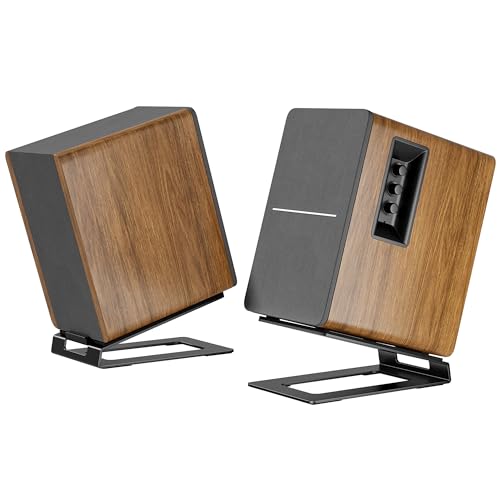
- 22-pound capacity for bookshelf speakers
- 16-degree upward tilt
- Freestanding or screw-mounted installation
Best For: Larger desktop speakers needing sturdy, stable support
Best Angle for Desktops – Audioengine DS1
If you want speaker isolation stands for desktop setups that also angle compact speakers toward your listening position, the Audioengine DS1 offers a straightforward solution. Its 15-degree tilt can help optimize sound direction while silicone construction helps reduce vibration.
Best For: Small bookshelf, computer, and gaming speakers on Mac or PC desks.
Pros:
- 15-degree angled design helps aim sound toward the listener.
- Silicone stands help minimize vibration-related sound effects.
- Universal fit supports speakers weighing up to 8 pounds.
- Includes a pair and a 3-year warranty.
Cons:
- Limited to speakers within the 8-pound load capacity.
- The fixed 15-degree angle offers less positioning flexibility than adjustable stands.
The DS1 is a compact, low-profile choice for desktop listeners who want a defined tilt and basic vibration control without adding tall supports.
Best Foam Isolation Pads – Sound Addicted SMPad 4
For speaker isolation stands for desktop setups using compact monitors, the Sound Addicted SMPad 4 uses high-density acoustic foam to separate speakers from the desk. Its reversible configurations let you adjust the angle for different listening positions.
Best For: Small 3- to 4.5-inch studio monitors and bookshelf speakers.
Pros:
- High-density 50 kg/m³ acoustic foam provides cushioning and dampening.
- Multiple configurations allow angled or flat placement.
- Designed to support up to 16 pounds without changing shape.
- Includes two pads for a left-and-right speaker setup.
Cons:
- Its 1.4-inch height provides less elevation than raised metal stands.
- The 6.3-by-8-inch footprint may take more desk space than compact angled risers.
The SMPad 4 is a practical pick when vibration dampening and flexible angle options matter more than lifting speakers high off the desktop.
Best Heavy-Duty Compact Stand – Kanto SE2
The Kanto SE2 is a useful option for shoppers comparing speaker isolation stands for desktop systems that need compact elevation. Its metal construction raises small speakers 3.8 inches and provides a listed 66-pound load capacity.
Best For: Small speakers that benefit from elevated desktop placement and a sturdy metal platform.
Pros:
- Raises speakers 3.8 inches above the desktop.
- Metal construction with a matte black finish.
- Listed 66-pound load capacity offers substantial support.
- Includes two stands and a 2-year manufacturer warranty.
Cons:
- The supplied notes do not specify a dedicated isolation material or angle adjustment.
- The 3.8-by-3.15-inch dimensions may limit compatibility with larger speakers.
Choose the SE2 when straightforward elevation and a high stated load capacity are priorities, while keeping in mind that its notes provide fewer isolation-specific details than the other options here.
Best Adjustable Isolation Stands – IsoAcoustics ISO-130
For desktop listeners who need precise positioning, the IsoAcoustics ISO-130 combines speaker isolation with height and tilt adjustment. Fourteen setup variations let you target ear level, while the isolators help manage vibrations transferred to the supporting surface.
Best For: Small monitors and desktop systems where adjustable height, tilt, and isolation are important.
Pros:
- Provides 14 height and tilt variations.
- Adjusts from a 2.8-inch low setting to an 8.25-inch tall setting.
- Supports speakers weighing up to 20 pounds.
- Designed to reduce surface resonance and internal reflections.
Cons:
- Its adjustable design is likely more involved than fixed desktop risers.
- The 5.1-by-6-inch platform may not suit larger speakers.
- It is heavier than simple foam pads, at 1.6 kg according to the supplied details.
The ISO-130 is the most versatile choice in this group for dialing in speaker height and tilt, particularly when accurate monitor placement matters as much as vibration control.
Compact Angle Pads – Liquid Stands Isolation Pads
For desktop setups that need speaker isolation stands for desktop use without taking up much room, these Liquid Stands foam pads provide a compact way to elevate and angle compatible studio monitors. Their high-density construction and adjustable positioning are designed to help reduce unwanted vibration while improving listening height.
Best For: Desktop users with 3- to 4.5-inch studio monitors who want a space-saving angled riser.
Pros:
- Supports five angle settings, including flat and tilted positions.
- 50 kg/m³ foam construction with a non-slip surface.
- Compact 9 x 6 x 2-inch footprint helps preserve desk space.
- Fits 3-, 3.5-, 4-, and 4.5-inch studio monitors.
Cons:
- Designed for smaller monitors up to 4.5 inches.
- Sold as one item rather than a pair.
This is a practical choice when desktop space is limited and you want basic elevation, angle control, and vibration management in a compact foam design.
Adjustable Premium Stands – IsoAcoustics ISO-155 Pair
Among speaker isolation stands for desktop setups, the IsoAcoustics ISO-155 stands stand out for their broad height and tilt adjustability. The pair is designed to position monitors with tweeters closer to ear level while managing energy transferred into the supporting surface.
Best For: Desktop studio users who want extensive positioning control and a purpose-built isolation system.
Pros:
- Offers 14 height and tilt adjustment variations.
- Adjusts from a 3-inch low setting to an 8.25-inch tall setting.
- Supports up to 40 pounds.
- Includes two stands and uses the IsoAcoustics isolation design.
Cons:
- Heavier and larger than simple foam pads.
- May be more adjustment than needed for a basic desktop setup.
Choose this pair if precise monitor placement is a priority and your speakers need more height flexibility than a fixed foam wedge can provide.
Simple Foam Pair – Saiqiang Monitor Isolation Pads
These Saiqiang pads offer a straightforward option for speaker isolation stands for desktop use. The two-piece high-density foam design sits directly beneath compatible monitors, helping limit vibration and allowing angle adjustment for a more practical listening position.
Best For: Home and project studio users seeking an easy-to-install pair for 3- to 5-inch monitors.
Pros:
- Includes two pads for a stereo monitor setup.
- Adjustable angles support more precise monitor placement.
- 8 x 6.3-inch pads fit speakers in the 3- to 5-inch range.
- Can be placed directly on a desktop for quick installation.
Cons:
- Each pad is only 1.4 inches thick, so elevation is limited.
- The supplied details list plastic as the material type despite describing high-density isolation foam.
This pair makes sense when you want a low-profile, ready-to-use isolation solution with angle adjustment rather than a taller monitor stand.
Compact Anti-Vibration Pick – Monoprice Tilted Wedge Desktop Speaker Stands
These Monoprice stands are a compact option for anyone looking for speaker isolation stands for desktop use with small bookshelf speakers or studio monitors. The 15-degree wedge design helps with positioning, while the thermoplastic rubber construction provides a simple way to separate speakers from the desktop.
Best For: Small speakers and space-constrained desktop setups that need quick, tidy positioning.
Pros:
- 15-degree tilt helps aim speakers toward the listening position.
- Thermoplastic rubber construction is intended to provide anti-vibration support.
- Pair format and quick installation suit limited desktop space.
- Lightweight, clean-looking design is easy to reposition.
Cons:
- Designed for small-sized speakers, so it may not suit larger monitors.
- Offers a fixed wedge angle rather than adjustable positioning.
The Monoprice pair is a straightforward choice when compact dimensions, simple setup, and a modest tilt are more important than heavy-duty support or extensive adjustment.
Foam Isolation Pick – Sound Addicted SMPad 5 Monitor Pads
The Sound Addicted SMPad 5 uses high-density acoustic foam to isolate 5-inch studio monitors from the supporting surface. For shoppers comparing speaker isolation stands for desktop setups, its multiple angle configurations provide more placement flexibility than a fixed wedge.
Best For: Owners of popular 5-inch studio monitors who want foam-based isolation and configurable angles.
Pros:
- High-density 50 kg/m³ acoustic foam is designed for sound insulation.
- Multiple configurations allow speakers to be positioned at different angles.
- Each pack includes two pads for left and right monitors.
- Rated to hold up to 24 pounds without changing shape.
Cons:
- Designed around 5-inch monitors rather than a broad range of speaker sizes.
- Foam pads do not provide the rigid metal support of traditional stands.
With its monitor-specific sizing and reconfigurable angle options, the SMPad 5 is a practical isolation solution for compact studio setups where foam support is preferred.
Heavy-Duty Tilted Pick – PEGZONE Desk Speaker Stands
PEGZONE desk speaker stands combine a metal base, 16-degree upward tilt, and anti-vibration pads for desktop audio setups. They are a strong candidate for speaker isolation stands for desktop use when you want more support capacity and the option to mount speakers securely.
Best For: Bookshelf speakers and desktop users who want a sturdy, tilted stand with optional screw mounting.
Pros:
- Supports up to 22 pounds and fits most bookshelf speakers.
- 16-degree tilt directs sound toward the listener.
- Can be used freestanding or secured with screws.
- Protective and anti-vibration pads help stabilize the setup and reduce unwanted resonance.
Cons:
- The 7.8-inch-long metal base may occupy more desk space than compact wedge stands.
- The fixed 16-degree angle offers less adjustment than configurable isolation pads.
The PEGZONE pair is the most support-oriented option here, balancing a space-saving riser design with a 22-pound capacity and two installation methods for added stability.
How We Picked the Best Speaker Isolation Stands for Desktop
We evaluated these Speaker Isolation Stands for Desktop setups by focusing on the factors that affect everyday performance: speaker compatibility, platform dimensions, vibration control, construction, viewing angle, stability, and value. We also considered whether each design suits compact computer speakers, small studio monitors, or heavier bookshelf speakers.
Foam isolation pads are often the simplest and least expensive choice, while rigid platforms and adjustable stands offer more precise positioning. No stand eliminates every vibration, but a properly sized product can limit energy transfer between the speaker and desk while improving listening geometry.
Quick Comparison
| Stand Type | Best For | Main Advantage | Potential Limitation |
|---|---|---|---|
| Angled foam pads | Small monitors and desktop speakers | Affordable decoupling and built-in tilt | Less rigid and usually less adjustable |
| Rigid desktop stands | Bookshelf speakers and heavier cabinets | More support and predictable placement | May transmit some desk vibration without isolation material |
| Adjustable isolation platforms | Studio monitors and precise listening setups | Height and tilt control with strong isolation | Higher cost and larger footprint |
Key Buying Factors for Speaker Isolation Stands for Desktop
Speaker Size and Weight
Measure the speaker base rather than relying only on the advertised woofer size. The platform should support the cabinet fully, with no unstable overhang. Check the stand’s weight rating, especially for bookshelf speakers or monitors with large rear ports and heavy magnets.
Platform Dimensions and Fit
Compare the stand’s usable surface with your speaker dimensions. A close fit is generally more stable than a platform that is much larger. Also check the available desk depth and leave room for cables, controls, and ventilation.
Isolation Material
High-density acoustic foam is compact and inexpensive, but its performance depends on the speaker’s weight and the foam’s firmness. Rigid isolation platforms may offer more consistent support and can be preferable for heavier monitors.
Angle, Height, and Stability
A slight upward tilt can aim tweeters at ear level and reduce reflections from the desktop. Adjustable models provide more control, while fixed wedges are quicker to install. Look for broad bases, non-slip surfaces, and a design that does not wobble when you adjust the speaker.
Who Should Buy Which Speaker Isolation Stands for Desktop?
Choose Foam Pads for a Simple, Low-Cost Upgrade
Angled foam pads are a practical choice for small desktop speakers and compact monitors. They take up little space, are easy to position, and add basic decoupling without significantly raising the speakers.
Choose Rigid Stands for Bookshelf Speakers
If your speakers are larger or heavier, prioritize a sturdy pair with a suitable weight capacity and platform size. These stands can improve stability and raise the tweeters while keeping the cabinet securely supported.
Choose Adjustable IsoAcoustics Platforms for Precision
For nearfield mixing, critical listening, or a desk where speaker alignment matters, adjustable isolation stands are the most flexible option. They cost more, but height and tilt adjustment can make it easier to create a symmetrical listening triangle.
Measure Before Ordering
Before buying, record each speaker’s width, depth, and weight, then compare those measurements with the product specifications. Confirm that the pair fits your desk, leaves clearance for cables, and places the tweeters close to ear level from your normal seated position.