The best samplers for live performances let you trigger clips, reshape loops, layer one-shots, and build arrangements without relying entirely on a computer. The right choice depends on how much portability, sequencing control, connectivity, and hands-on effects you need.
We’ve selected 10 standout samplers and grooveboxes for different performance styles, from compact sketching tools to full-featured sampling workstations. Use the guide below to narrow the field by workflow, stage setup, and budget.
Best 10 Samplers for Live Performances Picks for 2026
All-in-One Performer

- Standalone sampler, beat maker, and MIDI controller
- Rechargeable battery and built-in stereo speakers
- 16 RGB pads, touchscreen, and broad connectivity
Best For: Portable live performers needing a complete MPC workstation
Modular Performance Hub

- Eight stereo audio tracks and eight MIDI tracks
- Real-time pitch shifting and time stretching
- Crossfader, sequencer, and rugged performance controls
Best For: Electronic performers manipulating samples and MIDI hardware live
Next-Generation Workstation
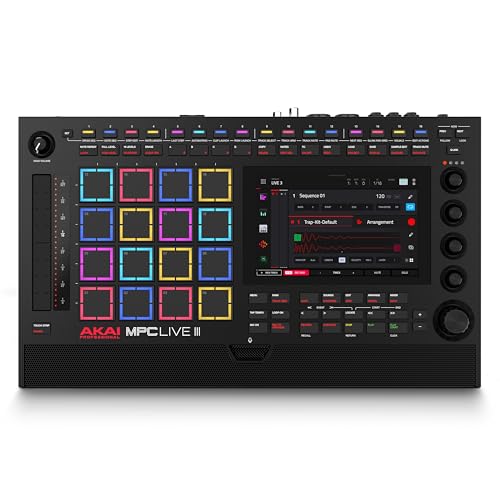
- Standalone system with 8-core processing and 8GB RAM
- Expressive 3D-sensing MPCe pads and clip launching
- Rechargeable battery, microphone, speakers, and 128GB storage
Best For: Advanced live production and expressive standalone performance
Compact Effects Specialist

- 17 velocity-sensitive RGB pads and low-latency workflow
- 16GB storage with 32-voice polyphony
- Portable power options and extensive onboard effects
Best For: Portable beatmaking, resampling, and effects-driven live sets
Best Portable All-in-One

- Battery-powered standalone groovebox with speaker and microphone
- 32 expressive pads plus on-device sampling and slicing
- Includes Ableton Live 12 Intro and wireless Ableton integration
Best For: Portable live performers building beats, samples and tracks without a computer
Best Dedicated Groovebox

- Eight sample tracks with slicing, reversing, looping and resampling
- Up to 256 chained steps per track for extended patterns
- Performance FX include lo-fi tape, beat repeat, reverb and delay
Best For: Sample-based performers who want tactile sequencing and live beat manipulation
Best Multipad for Drummers

- 1,000 sounds, 30 kits and 32GB internal storage
- Five timbre layers, onboard effects and sensitive trigger pads
- Bluetooth sampling plus MIDI, USB, audio and expansion connections
Best For: Drummers and bands needing a stage-ready sample pad with expandable triggering
Portable Powerhouse

- Built-in mic for quick sampling
- Chop, step sampling, and resampling
- Granular controls with chromatic playback
Best For: Portable performers and hands-on sound design
Deep Performance Sculptor

- Four parallel stereo sampling tracks
- Granular, filter, color, and space processing
- Scenes, macros, and assignable modulation
Best For: Advanced live texture creation and sound shaping
Battery-Powered Beat Maker
teenage engineering EP-133 K.O. II
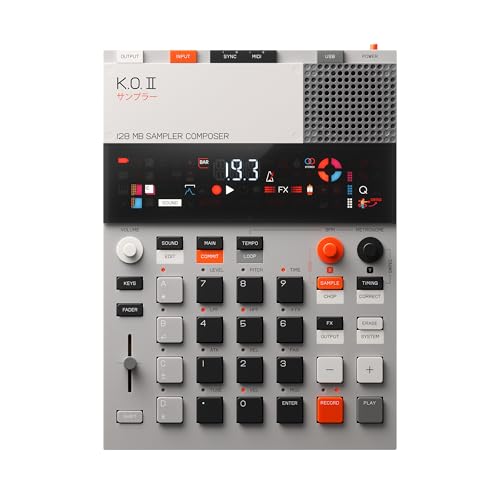
- Built-in mic and line-in sampling
- Pattern sequencer with 999 sample slots
- Punch-in effects and battery operation
Best For: Portable beat making and pattern-based live sets
All-in-One Performer – Akai MPC Live II
The Akai MPC Live II is a strong choice among samplers for live performances when you want standalone beat-making, sampling, sequencing, and monitoring in one portable unit. Its rechargeable battery, built-in speakers, touchscreen, and broad connectivity make it practical for mobile setups and computer-free sessions.
Best For: Performers and producers who want an all-in-one standalone sampler with battery power, pads, speakers, and extensive studio connectivity.
Pros:
- Standalone MPC, sampler, drum machine, and MIDI controller functionality.
- Rechargeable battery and built-in stereo monitoring system support portable use.
- Offers 16 velocity-sensitive RGB pads, a 7-inch multi-touch display, Wi-Fi, Bluetooth, MIDI, USB, and CV/Gate connectivity.
- Supports MPC Stems for separating drums, bass, music, and vocals from samples or recordings.
Cons:
- At 4 kg, it is less lightweight than some compact performance samplers.
- Its extensive feature set may require more setup time than a simpler sampler.
The MPC Live II is especially appealing if your live rig needs both hands-on performance controls and production depth. Built-in speakers and battery operation add flexibility, while the multiple outputs and CV/Gate connections make it suitable for larger hybrid setups.
Modular Performance Hub – Elektron Octatrack MKII
Elektron Octatrack MKII 8-track Performance Sampling Workstation/Sequencer - Black
Check Price On AmazonThe Elektron Octatrack MKII is built for performers who want deep real-time control over samples, sequencing, and MIDI hardware. With eight stereo audio tracks, pitch shifting, time stretching, and a precision crossfader, it is one of the more performance-focused samplers for live performances.
Best For: Electronic musicians who need hands-on sample manipulation, multitrack sequencing, and control of external MIDI equipment.
Pros:
- Provides eight stereo audio tracks plus eight dedicated MIDI tracks.
- Real-time pitch shifting and time stretching support dynamic sample manipulation.
- Includes an onboard 16-track sequencer for internal and external gear.
- Rugged backlit buttons, precision encoders, and a smooth contactless crossfader suit live operation.
Cons:
- The supplied notes do not mention built-in speakers or battery power.
- Its specialized workflow may be less immediate for users seeking a simple sample launcher.
The Octatrack MKII stands out when live performance depends on transforming samples rather than merely triggering them. Its balanced inputs, durable controls, and extensive sequencing architecture make it a capable centerpiece for electronic and hybrid rigs.
Next-Generation Workstation – Akai MPC Live III
The Akai MPC Live III combines standalone production power with performance-oriented controls, making it a compelling option among samplers for live performances. Its 3D-sensing MPCe pads, clip-launching features, built-in microphone and speakers, rechargeable battery, and expanded storage support flexible live workflows without a computer.
Best For: Performers and producers who want advanced standalone sequencing, expressive pads, clip launching, and substantial sample storage.
Pros:
- Standalone operation uses an 8-core processor, 8GB RAM, and MPC3 OS.
- MPCe pads offer velocity, pressure, and X/Y control for expressive performance.
- Includes rechargeable battery, integrated microphone, stereo monitors, and 128GB internal storage expandable through SD or SSD.
- Provides clip launching, a performance touch-strip, MIDI, CV/Gate, XLR/TRS inputs, and six TRS outputs.
Cons:
- Its broad production feature set may be more than needed for basic sample triggering.
- The supplied notes do not specify the unit’s weight or battery runtime.
The MPC Live III is suited to ambitious live rigs that blend beat-making, sampling, clip launching, and full-track sequencing. Its expressive controls and expandable storage make it particularly adaptable for performers carrying large libraries and building arrangements onstage.
Compact Effects Specialist – Roland SP-404MKII
The Roland SP-404MKII is a compact, performance-centered sampler for performers who want fast triggering, resampling, and effects. Its low-latency pads, OLED waveform editing, portable power options, and distinctive effects make it a practical pick among samplers for live performances.
Best For: Beatmakers, DJs, and live electronic performers who prioritize rapid sample triggering, resampling, and onboard effects.
Pros:
- Offers 17 velocity-sensitive RGB pads, 32-voice polyphony, and quick sample editing.
- Includes 16GB internal storage, 160 samples per project, and 16 internal projects.
- Supports USB-C, six AA batteries, mobile battery power, or an AC adaptor.
- Provides extensive effects including Vinyl Simulator, DJFX Looper, Lo-fi, Cassette Simulator, and Resonator.
Cons:
- Its compact performance focus may not replace a full multitrack workstation for complex arrangements.
- The supplied notes do not identify a built-in speaker or standalone sequencer with broader workstation features.
The SP-404MKII is a strong fit for hands-on sets where immediacy, texture, and effects matter more than a large studio-style interface. Its multiple power options and 2.6-pound design make it especially convenient for portable performance setups.
Best Portable All-in-One – Ableton Move
A strong choice among samplers for live performances, Ableton Move combines a rechargeable battery, built-in speaker and microphone with four flexible tracks that can function as drum kits, samplers or synthesizers. Its compact design supports untethered beat-making, sampling and performance.
Best For: Performers who want a portable sampler and groovebox that can capture sounds, slice samples and build sets without a computer.
Pros:
- Standalone operation with rechargeable battery, speaker and microphone.
- 32 velocity-sensitive pads with polyphonic aftertouch provide expressive control.
- On-device sampling, slicing, resampling and time-stretching support live workflows.
- Includes Ableton Live 12 Intro, built-in effects and wireless Ableton integration.
Cons:
- Four flexible tracks may be limiting for larger, more complex arrangements.
- Ableton Live 12 Intro includes limited tracks, instruments and effects.
Move is especially appealing when portability and direct hands-on control matter more than a large track count. It also offers a convenient path from standalone sketches to Ableton-based production.
Best Dedicated Groovebox – Novation Circuit Rhythm
Novation Circuit Rhythm is a focused option for samplers for live performances, with direct recording from phones, turntables or synths, eight sample tracks and hands-on sequencing. Its performance effects are designed for shaping beats and adding movement during a set.
Best For: Beatmakers and performers who need multiple sample tracks, resampling tools and tactile pattern control in a standalone unit.
Pros:
- Records directly from external sources and supports slicing, reversing, looping and resampling.
- Eight sample tracks provide room for layered beats and musical parts.
- Each track offers 32-step patterns that can chain to up to 256 steps.
- Includes performance effects such as lo-fi tape, beat repeat, reverb, delay and sidechain.
Cons:
- Its workflow centers on samples and sequencing rather than broad synthesizer features.
- At 1.9 pounds, it is portable but lacks the built-in speaker listed for Ableton Move.
Circuit Rhythm makes a practical live tool for performers who prioritize sample manipulation and pattern-based arrangements. The four-hour battery and standalone operation further support mobile sessions and performances.
Best Multipad for Drummers – HXW PD708 Sampling Drum Pad
The HXW PD708 takes a drummer-focused approach to samplers for live performances, pairing sensitive trigger pads with 1,000 built-in sounds, onboard effects and customizable LEDs. Its large internal storage and expandable trigger inputs make it suitable for rehearsals, recording and club stages.
Best For: Drummers and live acts that need a playable multipad with built-in sounds, user-sample storage and expansion connections.
Pros:
- Includes 30 kits, 1,000 built-in sounds and 32GB of internal storage.
- Five timbre layers and trigger technology support expressive pad performances.
- Four effect processors provide access to 24 effects.
- Offers wireless sampling over Bluetooth 5.0 plus MIDI, USB, audio and trigger connections.
Cons:
- At 7.19 pounds, it is less lightweight than the listed grooveboxes.
- Firmware should be downloaded from the HXW-Music website for updating.
- Its extensive trigger and pedal connectivity may be more than solo sample performers need.
PD708 is a better fit for players who want to strike pads and expand a percussion setup rather than sequence entirely from a grid. The LED customization, wireless sampling and extra trigger inputs are useful stage-oriented touches.
Portable Powerhouse – Roland AIRA Compact P-6
The Roland AIRA Compact P-6 is a strong choice for performers who need compact samplers for live performances. Its built-in microphone, onboard keyboard, chromatic playback, resampling, and dedicated sound controls make it practical for capturing and shaping sounds away from a computer.
Best For: Portable performers, quick sample capture, and hands-on sound design.
Pros:
- Pocket-size design with a built-in microphone for fast sample capture.
- Chop, step sampling, resampling, and chromatic polyphonic playback support flexible performance workflows.
- Granular controls, filters, and envelopes provide detailed sound shaping.
- Sample Tool software supports editing and importing or exporting sounds.
Cons:
- Its compact plastic body may not suit performers seeking a larger, more spacious interface.
- Advanced granular features may require time to learn.
The P-6 is especially appealing when portability and immediate sample manipulation matter more than extensive physical controls. It offers a broad creative toolkit in a small format.
Deep Performance Sculptor – S4 Sculpting Sampler
The S4 Sculpting Sampler is designed for performers who want extensive sound transformation from a single instrument. With four parallel stereo tracks, granular processing, modulation, scenes, macros, and a master mixer section, it is one of the more comprehensive samplers for live performances in this lineup.
Best For: Sound sculptors, evolving textures, and advanced live arrangement control.
Pros:
- Four parallel stereo tracks, each with five audio-processing devices.
- Granular engine offers up to 128 grains and detailed control over pitch, movement, and distribution.
- Four assignable modulators per track support dynamic performance changes.
- Scenes and global macros make it easier to recall and reshape performance states.
Cons:
- Its larger 850 g form factor is less travel-friendly than pocket-size samplers.
- The extensive processing and modulation options may be demanding for beginners.
- The supplied details identify an auxiliary connector but do not specify broader connection options.
The S4 stands out for performers who want a self-contained environment for building evolving textures and transitions. Its scenes, macros, and multichannel processing are particularly useful for expressive live control.
Battery-Powered Beat Maker – teenage engineering EP-133 K.O. II
The teenage engineering EP-133 K.O. II combines sampling, beat making, sequencing, and effects in a portable unit. For samplers for live performances, its built-in microphone, punch-in effects, multifunctional fader, pattern-based workflow, and battery operation make it well suited to spontaneous performance and travel.
Best For: Mobile beat makers, pattern-based sets, and quick live effect control.
Pros:
- Built-in microphone and line input support flexible sampling from voices, instruments, records, or phones.
- Four groups with 99 patterns each enable fast beat and arrangement experimentation.
- Multifunctional fader controls stereo and punch-in effects for live manipulation.
- 128 MB memory, 999 sample slots, built-in speaker, and battery power support portability.
Cons:
- The plastic body may be less reassuring for heavy touring use.
- Its workflow emphasizes beats and patterns rather than extensive granular sound design.
- AAA batteries or USB-C power are required for operation.
The K.O. II is a practical pick for performers who want to build and alter beats quickly. Its pattern system, effects, sampling inputs, and portable power options favor energetic, hands-on sets.
How We Picked the Best Samplers for Live Performances
We focused on instruments designed for active, real-time use rather than sample playback alone. Our criteria included pad and control layout, responsiveness, sequencing, looping and resampling features, effects, audio connectivity, storage, portability, and the ability to perform without a computer.
We also considered workflow differences. Some performers need reliable clip triggering and quick pattern changes, while others prioritize deep sound design, granular processing, drum-pad technique, or integration with a larger MIDI and audio rig. Because no single sampler suits every stage setup, this list includes both accessible grooveboxes and more advanced performance workstations.
Quick Comparison
| Best For | Look For | Ideal Type |
|---|---|---|
| All-in-one mobile production | Battery power, speakers, sequencing, multiple engines | Standalone workstation |
| Deep live manipulation | Scenes, crossfader control, resampling, flexible routing | Performance sampler |
| Fast beat and loop triggering | Responsive pads, pattern chaining, immediate controls | Groovebox |
| Compact setups | Small footprint, battery operation, efficient sampling | Portable sampler |
| Drummer-led performance | Large pads, sound capacity, dependable triggering | Sample pad |
Key Buying Factors for Samplers for Live Performances
Workflow and Control
Choose a layout that matches how you perform. Large pads work well for finger drumming and one-shot accents, while knobs, faders, touch controls, and crossfaders are valuable for transitions, filters, effects, and live resampling. A fast, intuitive interface can matter more onstage than a long feature list.
Sequencing and Arrangement
Check how easily you can launch patterns, change scenes, mute parts, and extend an idea during a performance. Pattern chaining, clip-style triggering, song modes, and reliable tempo synchronization are especially useful when your set includes structured arrangements.
Inputs, Outputs, and Synchronization
Review the audio I/O before buying. Microphone or line inputs support live sampling, while multiple outputs can simplify routing drums, effects, or a click track. MIDI, USB, and clock options determine how well the sampler will work with keyboards, drum machines, mixers, and pedals.
Portability and Reliability
For mobile performances, battery operation, built-in speakers, durable controls, and quick startup can make a significant difference. For fixed rigs, prioritize connectivity, storage, power stability, and a workflow you can operate confidently in low-light conditions.
Effects, Storage, and Sample Management
Look for effects that support your style, such as delay, reverb, filtering, compression, stutter, or granular processing. Also confirm internal storage, expansion options, sample-transfer software, supported file formats, and how quickly you can find sounds during a set.
Who Should Buy Which Samplers for Live Performances?
Choose an all-in-one workstation if you want sequencing, synthesis, sampling, and performance controls in one self-contained instrument. Choose a dedicated performance sampler if manipulating loops, scenes, effects, and transitions is central to your show.
Choose a compact groovebox for portable beatmaking, quick pattern construction, and minimal setups. Choose a sample pad if you perform primarily with drumsticks or need dependable, large-pad triggering. Choose a small creative sampler if you value improvisation, unusual sound design, and a lightweight rig over extensive arrangement features.
Before ordering, map your typical set: list the sounds you trigger, the instruments you connect, whether you need a microphone input, and how much preparation you are willing to do. The best Samplers for Live Performances are the ones that make those actions quick, repeatable, and easy to recover from onstage.