Video editing demands storage that can handle large media files, sustained transfers, and dependable access to project footage. The right RAID enclosure can add capacity, improve workflow speed, and provide useful redundancy without requiring a complete NAS setup.
We compared 10 RAID enclosures across bay count, drive compatibility, connection speed, RAID flexibility, cooling, and practical editing needs to help you choose a better fit for your workstation.
Best 10 Raid Enclosure for Video Editing Picks for 2026
Best High-Speed Capacity
ORICO 4-Bay 20Gbps RAID Enclosure

- Up to 104TB across four drives
- Six RAID and storage modes
- USB 3.2 Gen 2x2 with hot-swapping
Best For: Large video libraries and USB4-equipped editing systems
Best RAID Flexibility
MAIWO 4-Bay SATA RAID Enclosure

- Eight RAID and storage configurations
- Up to 96TB with four drives
- USB-A/C connectivity and dual fans
Best For: Flexible desktop media storage and backup setups
Best Compact Two-Drive Option
TerraMaster D2-320 RAID Enclosure

- 10Gbps USB 3.2 Gen 2 interface
- RAID 0, 1, JBOD, and Single modes
- Supports up to 44TB total
Best For: Solo editors needing compact direct-attached storage
Best Maximum Capacity
Yottamaster 5-Bay RAID Enclosure
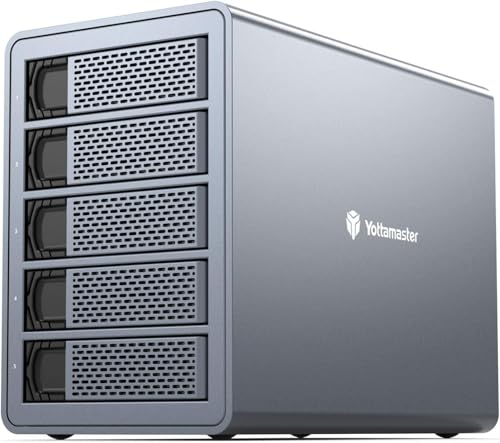
- Up to 120TB across five drives
- Supports seven RAID and storage modes
- Aluminum body with 80mm cooling fan
Best For: Studios and teams managing extensive media archives
High-Capacity Pick
ORICO 5-Bay 20Gbps RAID Enclosure
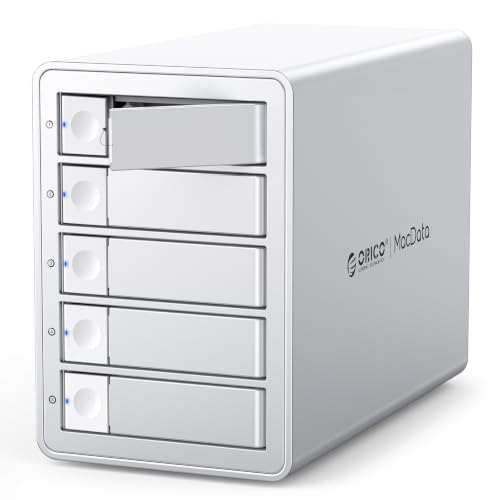
- Five bays with up to 130TB capacity
- Six RAID and independent-drive modes
- USB 3.2 Gen 2x2 with hot-swapping
Best For: High-volume video production and desktop storage
Hardware RAID Value
ORICO 5-Bay USB 3.0 RAID Enclosure

- Hardware RAID with eight configuration modes
- Supports 2.5- and 3.5-inch SATA drives
- 150W power supply and 80mm cooling fan
Best For: Desktop media libraries and backup stations
Flexible 4-Bay Value Pick

- Four bays support 2.5- and 3.5-inch SATA drives
- Eight RAID modes and up to 80TB capacity
- USB 3.0, eSATA, aluminum body, and active cooling
Best For: Editors needing flexible, high-capacity SATA storage
High-Capacity Project Storage

- Four 3.5-inch bays support up to 88TB total
- Eight modes include RAID 0, 1, 5, 10, JBOD, and CLONE
- 150W power supply and 80mm cooling fan
Best For: Editors handling large 3.5-inch footage archives
Fast Portable SSD Pick
NEWQ Dual-Bay NVMe RAID Enclosure

- Dual M.2 2280 NVMe bays with four operating modes
- USB 3.2 supports up to 20Gbps transfers
- Tool-free aluminum design with auxiliary USB-C input
Best For: Mobile editors needing fast, compact SSD storage
Best High-Speed Capacity – ORICO 4-Bay 20Gbps RAID Enclosure
If you need a high-capacity raid enclosure for video editing, the ORICO 4-bay model combines a USB 3.2 Gen 2×2 interface with support for up to 104TB. It offers six modes, including RAID 0, 1, 5, and 10, plus hot-swappable drive support for flexible storage management.
Best For: Video editors and production teams moving large media libraries who have a USB4 port or compatible 20Gbps connection.
Pros:
- Supports up to four 26TB drives, for 104TB total capacity.
- Offers RAID 0, 1, 5, 10, JBOD, and Normal modes.
- Provides USB 3.2 Gen 2×2 connectivity, aluminum cooling, and a 45dB fan.
- Works with Windows, macOS, and Linux and supports hot-swapping.
Cons:
- Thunderbolt connections are limited to about 10Gbps rather than the full 20Gbps.
- Changing RAID modes erases drive contents, so backups are required.
- Drives are not included.
The ORICO is the strongest capacity-and-speed option here, particularly for editors with USB4 connectivity. Its multiple RAID modes and cooling features also make it suitable for long-running media storage workloads.
Best RAID Flexibility – MAIWO 4-Bay SATA RAID Enclosure
The MAIWO 4-bay enclosure is a practical raid enclosure for video editing when you want several hardware RAID choices without moving to a larger five-bay system. Its USB A/C 3.1 connection reaches up to 5Gbps and supports up to 96TB using four 3.5-inch SATA drives.
Best For: Editors, businesses, and power users who value numerous RAID configurations and straightforward 3.5-inch drive expansion.
Pros:
- Supports eight configurations, including RAID 0, 1/10, 3, 5, Clone, Large/JBOD, and Normal.
- Accommodates up to four 24TB drives for 96TB of capacity.
- Includes USB-A to USB-C and USB-C to USB-C cables.
- Dual switch-controlled fans help cool drives during intensive use.
Cons:
- Its 5Gbps interface is slower than the ORICO and TerraMaster options.
- It is designed for 3.5-inch SATA drives rather than a broader mix of drive types.
- Drives are not included.
The MAIWO stands out for configuration flexibility. It is a sensible choice for a workstation or backup setup where 5Gbps transfers are adequate and the extra RAID modes are more valuable than maximum interface speed.
Best Compact Two-Drive Option – TerraMaster D2-320 RAID Enclosure
The TerraMaster D2-320 is a compact raid enclosure for video editing with two drive bays and 10Gbps USB 3.2 Gen 2 connectivity. It supports RAID 0, RAID 1, JBOD, and Single modes, making it suitable for editors who need either higher throughput or mirrored protection without a four- or five-bay enclosure.
Best For: Solo editors and smaller workstations needing a compact two-drive DAS for active projects or mirrored backups.
Pros:
- Offers USB 3.2 Gen 2 speeds up to 10Gbps.
- Supports RAID 0, RAID 1, JBOD, and Single modes.
- Accepts 2.5-inch and 3.5-inch SATA HDDs and SSDs, up to 44TB total.
- Includes tool-free trays and temperature-controlled fan operation.
Cons:
- Two bays provide less capacity and expansion than the four- and five-bay alternatives.
- It is a DAS, not a NAS, so it is intended for direct USB connection.
- Drives are not included.
The D2-320 is an efficient fit when a two-drive workflow is enough. RAID 0 can prioritize performance, while RAID 1 provides a mirrored copy for more cautious project storage.
Best Maximum Capacity – Yottamaster 5-Bay RAID Enclosure
For large media collections, the Yottamaster FS5RU3 is a high-capacity raid enclosure for video editing with five bays and room for up to 120TB. It uses hardware RAID and a 5Gbps USB 3.0 Type-B connection, while its aluminum body and 80mm fan support extended operation.
Best For: Video production teams, studios, and users archiving large camera libraries, project files, and other media.
Pros:
- Supports up to five 24TB drives for 120TB of total storage.
- Offers RAID 0, 1, 5, 10, JBOD, Clone, and Normal modes.
- Accepts both 2.5-inch and 3.5-inch SATA HDDs and SSDs.
- Uses removable aluminum trays, an 80mm fan, and multiple ventilation openings.
Cons:
- The 5Gbps USB 3.0 interface is slower than newer 10Gbps and 20Gbps options.
- Its five-bay design may be more enclosure than a small editing setup requires.
- Drives are not included.
The Yottamaster prioritizes capacity and expansion over peak connection speed. It is a strong choice for studios that need five drives in one enclosure for active media, backups, or long-term archives.
High-Capacity Pick – ORICO 5-Bay 20Gbps RAID Enclosure
For editors moving large video files, this raid enclosure for video editing combines a USB 3.2 Gen 2×2 interface with five drive bays and multiple RAID options. It supports up to 130TB using 3.5-inch SATA drives, while USB4 can access the enclosure’s full 20Gbps interface capability; Thunderbolt connections are limited to about 10Gbps by bandwidth constraints.
Best For: Video producers and professional users who need high-capacity desktop storage, flexible RAID configurations, and hot-swappable drives.
Pros:
- Supports RAID 0, 1, 5, 10, JBOD, and Normal modes.
- Holds up to five 3.5-inch SATA drives and 130TB total.
- Includes a 150W built-in power supply for multi-drive operation.
- Aluminum construction, cooling grille, and a 45dB fan support sustained use.
Cons:
- Thunderbolt connections cannot use the full 20Gbps storage bandwidth.
- Changing RAID modes erases drive contents, so backups are required.
- Its five-bay desktop design is less portable than a smaller enclosure.
This is the strongest capacity-focused option in the group. Choose it when your editing workflow benefits from several large hard drives, broad RAID flexibility, and USB4 or USB 3.2 Gen 2×2 connectivity.
Portable Flash Pick – ORICO 4-Bay 2.5-Inch RAID Enclosure
This compact raid enclosure for video editing is designed around 2.5-inch SSDs and HDDs, making it easier to carry than a traditional 3.5-inch multi-drive enclosure. It offers up to 10Gbps through USB 3.2 Gen 2 with a PSSD connection, seven RAID modes, and built-in USB and SD/TF card expansion for mobile editing and backup workflows.
Best For: Video editors and photographers who need portable storage, memory-card access, and flexible SSD-based RAID configurations.
Pros:
- Supports RAID 0, 1, 3, 5, 10, JBOD, and Clear modes.
- Accepts four 2.5-inch drives with up to 40TB total capacity.
- Provides two USB 3.2 ports plus SD and TF 3.0 card slots.
- Compact all-flash design offers improved shock resistance for travel.
Cons:
- It does not accept 3.5-inch drives.
- SATA connections are limited to 5Gbps, while up to 10Gbps is available with a PSSD connection.
- The listed drive capacity is lower than the five-bay desktop models.
Its smaller footprint and card-reader connectivity make it particularly practical for on-location work. It is the better match for editors prioritizing portability and SSD workflows over maximum desktop capacity.
Hardware RAID Value – ORICO 5-Bay USB 3.0 RAID Enclosure
For a straightforward raid enclosure for video editing, this five-bay ORICO DAS provides a hardware RAID controller and switch-based configuration. It supports both 2.5- and 3.5-inch SATA drives, offers up to 110TB of stated capacity, and uses a built-in 150W power supply for stable operation with multiple disks.
Best For: Editors and backup users who want hardware-controlled RAID, broad drive compatibility, and a reliable desktop media library.
Pros:
- Supports RAID 0, 1, 3, 5, 10, JBOD, Clone, and Clear modes.
- Accepts both 2.5- and 3.5-inch SATA HDDs and SSDs.
- Built-in 150W power supply supports five high-consumption mechanical drives.
- Aluminum housing and an 80mm cooling fan support extended operation.
Cons:
- USB 3.0 is slower than the 20Gbps interface on the newer ORICO five-bay model.
- The supplied capacity specification is up to 110TB, below the 130TB claim of the other five-bay enclosure.
- Its USB Type-A connection may be less convenient for newer USB-C-only laptops without an adapter.
This model favors practical hardware RAID control and drive flexibility over the fastest interface. It is a sensible choice for a studio backup station or media library where USB 3.0 performance and broad OS compatibility are sufficient.
Flexible 4-Bay Value Pick – CENMATE 4-Bay RAID Enclosure
If you need a raid enclosure for video editing with flexible drive support, the CENMATE combines four 2.5- or 3.5-inch SATA bays with USB 3.0 and eSATA connectivity. Its multiple RAID modes and up to 80TB capacity make it suitable for expanding project storage, though the configuration process requires care.
Best For: Editors and content creators who need a versatile four-drive enclosure for large media libraries and backup workflows.
Pros:
- Supports four 2.5- or 3.5-inch SATA HDDs or SSDs, with up to 80TB total capacity.
- Offers RAID 0, 1, 3, 5, 10, CLONE, LARGE, and NORMAL modes.
- Includes USB-A/C 3.0 and eSATA connectivity, plus a cooling fan and aluminum construction.
Cons:
- Fan noise is rated around 40–50 decibels.
- Hot-swapping is not supported.
- Changing RAID modes requires a power-off reset procedure and may cause data loss.
The CENMATE is a practical, capacity-focused option when four mixed-size SATA bays and broad RAID flexibility matter more than silent operation or tool-free RAID changes. Verify your computer’s eSATA RAID support if you plan to use that connection.
High-Capacity Project Storage – ORICO 4-Bay RAID Enclosure
For a raid enclosure for video editing built around four large 3.5-inch drives, the ORICO offers up to 88TB of direct-attached storage and eight configuration modes. Its USB 3.0 connection is rated for up to 235MB/s, making it useful for consolidating footage and backups without adding a network storage setup.
Best For: Video editors managing high-capacity footage collections, engineering projects, or multi-drive backup tasks.
Pros:
- Supports four 3.5-inch SATA drives, including up to 22TB per disk and 88TB total.
- Provides RAID 0, 1, 3, 5, 10, JBOD, CLONE, and CLEAR modes.
- Uses a 150W internal power supply and an 80mm cooling fan with front and rear ventilation.
Cons:
- Supports 3.5-inch drives only, limiting compatibility with 2.5-inch SSDs.
- Connectivity is through USB 3.0 rather than a faster USB-C or Thunderbolt interface.
- Its cooling fan may not suit users seeking a completely silent editing environment.
The ORICO is a strong choice when capacity, cooling, and straightforward USB direct attachment are priorities. It is especially appealing for editors who already rely on 3.5-inch hard drives and want several RAID or independent-drive configurations.
Fast Portable SSD Pick – NEWQ Dual-Bay NVMe RAID Enclosure
If portability and fast SSD-based workflows matter, this dual-bay NVMe model is a compact raid enclosure for video editing that supports two M.2 2280 PCIe NVMe SSDs. Its USB 3.2 connection is rated at 20Gbps, while RAID 0, RAID 1, JBOD, and clone modes cover performance, redundancy, and duplication needs.
Best For: Mobile editors who want a compact NVMe enclosure for fast project transfers, backups, and disk cloning.
Pros:
- Supports two M.2 2280 NVMe SSDs with RAID 0, RAID 1, JBOD, and clone modes.
- Offers up to 20Gbps USB 3.2 transfer speeds for large files and media projects.
- Tool-free installation, aluminum construction, and an auxiliary USB-C input support portable use.
Cons:
- Works with M.2 2280 NVMe SSDs rather than 2.5- or 3.5-inch SATA drives.
- Its listed memory storage capacity is 16TB, so it is less suited to very large multi-drive archives.
- Actual performance depends on the installed SSDs and connected computer.
The NEWQ is the most compact and speed-oriented option in this group. Choose it for a portable NVMe editing or backup setup; choose a four-bay enclosure instead if your priority is maximum storage capacity or broader drive compatibility.
How We Picked the Best Raid Enclosure for Video Editing
We focused on enclosures that suit real editing workflows, from two-drive portable setups to five-bay desktop units. Our comparison considered supported drive types, maximum capacity, connection standards, available RAID modes, cooling, construction, and ease of use.
USB 3.2 Gen 2×2 and USB-C models can offer higher peak bandwidth than older USB 3.0 designs, but the computer, cable, and drives must support the same standard. We also considered whether each enclosure is diskless, supports both 2.5-inch and 3.5-inch SATA drives, or is designed specifically for NVMe SSDs.
RAID is not a substitute for backup. Even RAID 1 or other redundant configurations can be affected by accidental deletion, corruption, theft, or enclosure failure, so important projects should also be copied to a separate storage location.
Quick Comparison
| Enclosure type | Best suited to | Main advantage |
|---|---|---|
| Two-bay SATA | Editors needing a compact array | Simple RAID 1 or increased capacity |
| Four-bay SATA | Growing media libraries | More capacity and RAID flexibility |
| Five-bay SATA | Large desktop video projects | High capacity and expansion room |
| Multi-bay all-flash | Fast, quiet editing systems | Lower drive noise and quick access |
| Dual-bay NVMe | Portable high-speed workflows | Compact SSD performance and cloning |
Key Buying Factors for a Raid Enclosure for Video Editing
Drive Type and Bay Count
Choose SATA bays if you need affordable bulk storage using hard drives or 2.5-inch SATA SSDs. Four- and five-bay models offer more room for large footage libraries and provide additional RAID layouts. Two-bay designs are easier to place on a desk and can be sufficient for active projects or smaller archives.
Connection Speed
Check the enclosure’s rated interface and your computer’s ports. A 20Gbps USB connection can reduce transfer bottlenecks, while USB 3.0 remains adequate for many hard-drive arrays. NVMe enclosures may be faster, but real-world performance depends on thermal management, SSD speed, RAID mode, and the host system.
RAID Mode and Protection
RAID 0 prioritizes speed and capacity but has no drive redundancy. RAID 1 mirrors data for better fault tolerance, while larger arrays may support additional capacity or parity-oriented modes. Confirm the exact modes supported and whether changing modes can erase existing data.
Cooling, Noise, and Capacity
Fans help manage heat during long transfers, especially with several hard drives installed, but they may add audible noise. Look for adequate ventilation and verify the stated maximum capacity against the drive sizes you plan to use.
Who Should Buy Which Raid Enclosure for Video Editing?
Choose a two-bay SATA enclosure if you want a straightforward project drive, mirrored protection, or a compact desktop setup. Choose a four-bay model for a balanced combination of capacity, RAID flexibility, and future expansion.
Choose a five-bay enclosure if you regularly handle high-resolution footage, multicamera projects, or large archives. Choose an all-flash or NVMe enclosure when low latency, quiet operation, and fast scratch storage matter more than the lowest cost per terabyte.
Before buying, confirm operating-system compatibility, included cables, drive installation requirements, and whether the enclosure manages RAID internally or relies on software. For critical editing work, pair the enclosure with a separate backup and test your recovery process before storing irreplaceable footage.