Choosing among power amplifiers with XLR inputs is easier when you compare real-world power, speaker compatibility, connectivity, and installation requirements—not just headline wattage.
This roundup covers 10 two-channel models for DJ rigs, live sound, rack systems, and home theaters, including compact Class D designs and higher-powered professional amplifiers.
Best 10 Power Amplifiers with Xlr Inputs Picks for 2026
Best Overall

- 350W per channel at 4 ohms
- Balanced XLR, TRS, and RCA inputs
- Lightweight Class D design with DSP
Best For: Professional audio systems needing flexible connectivity and efficient power
Best High-Power Value
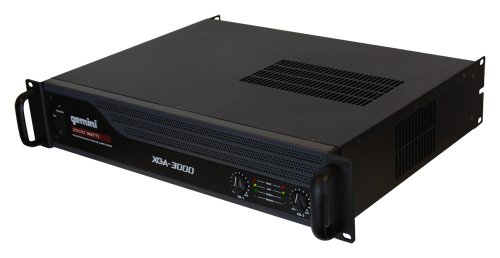
- Listed 3000W two-channel output
- Balanced XLR, 1/4-inch, and RCA inputs
- Bridge mode with Speakon and binding-post outputs
Best For: DJs and live sound rigs needing high output and flexible connections
Best Feature-Packed Budget Pick

- Up to 2000W in bridged mode
- XLR and TRS inputs with Bluetooth and USB-A
- Speakon and binding-post speaker outputs
Best For: Budget PA and event systems needing built-in playback options
Best Home Theater Option

- 90W per channel across two channels
- RCA and XLR inputs
- Designed for home theater use
Best For: Home theater systems needing balanced and unbalanced source connections
Best Lightweight Rackmount Pick
Rockville D12 Class D Amplifier

- 1400W RMS at 4 ohms
- Stereo, parallel, and bridged modes
- Lightweight 1.5U chassis with LCD monitoring
Best For: Mobile DJs and flexible passive-speaker systems
Best Traditional Pro-Audio Option

- 1400W RMS output
- Bridgeable two-channel design
- 2U steel chassis with crossover and limiter
Best For: Clubs, concerts, and larger PA installations
Best High-Output Class D Pick
Rockville D14 Class D Amplifier

- 2000W RMS output
- Compact 1.5U chassis weighing 10.14 pounds
- LCD, crossover, limiter, and protection circuits
Best For: High-output DJ and live-sound systems
High-Output Rack Power
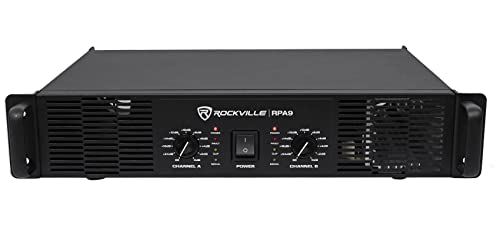
- 800W RMS and 3000W peak output
- XLR, 1/4-inch, and RCA inputs
- Stereo/bridged modes with built-in crossover
Best For: DJs, live venues, and high-output rack systems
Compact Pro Flexibility
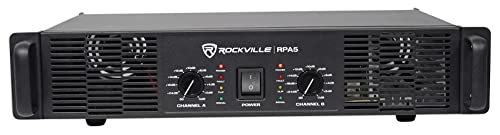
- 200W RMS per channel at 4 ohms
- Combo XLR/1/4-inch and RCA inputs
- Stereo/bridged operation with crossover
Best For: Moderate-power DJ rigs and rack installations
Touring-Level Power

- Up to 3000W RMS bridged at 8 ohms
- Combo XLR/1/4-inch inputs and XLR outputs
- LCD monitoring, crossover, and limiter protection
Best For: Large venues, touring systems, and subwoofer applications
Best Overall – Crown XLS1002
For buyers seeking power amplifiers with xlr inputs, the Crown XLS1002 combines balanced XLR connectivity with efficient Class D operation, useful DSP features, and flexible two-channel output. It delivers 350 watts per channel at 4 ohms while weighing under 11 pounds.
Best For: Professional audio setups, live events, and studio systems that need a lightweight, feature-rich amplifier.
Pros:
- Balanced XLR inputs, plus TRS and RCA connectivity.
- Class D DriveCore design weighs less than 11 pounds.
- Peakx Limiters, PureBand crossover, and selectable input sensitivity support system protection and setup flexibility.
- Supports stereo and bridged output configurations.
Cons:
- Its official warranty applies only to purchases from authorized Crown North American dealers in the United States.
- Maximum listed output varies by impedance and bridged configuration, so system matching is important.
The XLS1002 is a strong all-around choice when low weight, balanced inputs, and built-in signal-management tools matter as much as raw output. Its sleep mode and forced-air cooling add practical convenience for regular use.
Best High-Power Value – Gemini XGA-3000
The Gemini XGA-3000 is a practical pick among power amplifiers with xlr inputs for DJs, PA systems, and live sound rigs that need substantial headroom. It offers two channels, bridge operation, and balanced XLR connectivity in a 2U all-metal chassis.
Best For: Working DJs, mobile sound systems, venues, and live events requiring high listed output and flexible speaker connections.
Pros:
- Listed 3000-watt output with stereo and mono bridge modes.
- Balanced XLR, 1/4-inch, and RCA inputs accommodate varied sources.
- Speakon outputs and five-way binding posts support different speaker setups.
- Protection circuits, variable-speed cooling, and status LEDs aid extended operation.
Cons:
- At 17.6 pounds in the product description, it is heavier than compact Class D alternatives.
- The 2U rack chassis may be more equipment than smaller systems need.
With broad input and output options plus protection features, the XGA-3000 is designed for demanding mobile or installed systems. Check your speakers’ impedance and the amplifier’s stereo or bridged requirements before connecting it.
Best Feature-Packed Budget Pick – Pyle PTA1000BT
For straightforward power amplifiers with xlr inputs, the Pyle PTA1000BT adds Bluetooth and USB-A playback to a rack-mountable two-channel design. It is rated for up to 1000 watts per channel in stereo or 2000 watts in bridged mode with 4- to 8-ohm speakers.
Best For: Budget-conscious PA, karaoke, event, and installation systems that benefit from wireless and direct media playback.
Pros:
- Includes two XLR and two 1/4-inch TRS input connectors.
- Bluetooth and USB-A MP3 playback add source flexibility.
- Speakon and binding-post outputs support stereo or bridged speaker configurations.
- Front-panel LCD and signal, clip, protect, and level indicators simplify monitoring.
Cons:
- The listed 2000-watt figure is maximum bridged output, not stereo output per channel.
- Its 6.94 kg weight is relatively substantial for a compact amplifier.
The PTA1000BT suits systems where convenience features are a priority alongside XLR connectivity. Its built-in fan and front-panel controls make it practical for rack-based setups, provided the claimed output matches your speaker and venue requirements.
Best Home Theater Option – Monolith M2100X
The Monolith M2100X offers a home-theater-focused alternative for shoppers comparing power amplifiers with xlr inputs. Its two-channel design provides 90 watts per channel and accepts both RCA and XLR sources.
Best For: Home theater and stereo installations that need balanced XLR and unbalanced RCA connectivity.
Pros:
- Provides two channels at 90 watts per channel.
- Supports both RCA and XLR inputs.
- Designed for multi-channel home theater applications.
Cons:
- Its listed power is substantially lower than the pro-audio amplifiers in this roundup.
- The supplied notes do not specify speaker outputs, protection features, or cooling details.
The M2100X is best considered when balanced connectivity and home-theater integration are more important than very high output. Verify the complete installation dimensions and connection details before purchase, since the supplied specifications are limited.
Best Lightweight Rackmount Pick – Rockville D12 Class D Amplifier
If you need power amplifiers with XLR inputs for a DJ rig, live setup, or home audio system, the Rockville D12 combines high output with a lightweight 1.5U rack-mount design. Its two-channel layout, selectable crossover, LCD monitoring, and multiple operating modes make it practical for flexible speaker configurations.
Best For: Mobile DJs, live-event setups, and users who want a lightweight amplifier for passive speakers or subwoofers.
Pros:
- Provides up to 1400W RMS at 4 ohms and 700W RMS at 8 ohms.
- Supports stereo, parallel, and bridged operation.
- Includes XLR/1/4-inch inputs, crossover settings, limiter, and LCD monitoring.
- Lightweight 9.7-pound chassis with rack-mount hardware and quiet cooling fans.
Cons:
- Its 1.5U chassis may not match standard 2U rack layouts without planning.
- The supplied notes do not specify separate output power figures for every operating mode.
The D12 is a strong choice when portability and flexible system integration matter. Its monitoring features and crossover options add useful control, while the dual-channel Class D design keeps the rack load manageable.
Best Traditional Pro-Audio Option – Rockville RPA12 Amplifier
The Rockville RPA12 is one of the power amplifiers with XLR inputs suited to larger PA systems, clubs, concerts, and event production. It offers 1400W RMS output, bridgeable operation, a built-in crossover, and a limiter for a practical professional-audio feature set.
Best For: Concerts, clubs, and fixed or portable PA systems that need a sturdy 2U rack-mount amplifier.
Pros:
- Delivers up to 5000W peak and 1400W RMS output.
- Offers stereo, parallel, and bridged operating modes.
- Includes a built-in limiter and selectable bypass, 80Hz, and 160Hz crossover.
- Steel 2U chassis with cooling fans and XLR/1/4-inch inputs.
Cons:
- At 26 pounds, it is substantially heavier than the D-series models listed here.
- Its 2U rack size requires more rack space than a compact 1.5U amplifier.
The RPA12 favors a conventional, robust rack-mount approach. Choose it when chassis size and weight are less important than a steel enclosure, bridge capability, speaker-protection features, and straightforward PA connectivity.
Best High-Output Class D Pick – Rockville D14 Class D Amplifier
For shoppers comparing power amplifiers with XLR inputs, the Rockville D14 stands out with 2000W RMS and a compact 1.5U Class D chassis. Its stereo, parallel, and bridged modes, crossover controls, LCD display, and system-protection circuits support demanding DJ and live-sound applications.
Best For: DJs and live-sound users who need high output in a relatively lightweight rack-mount format.
Pros:
- Delivers 7000W peak and 2000W RMS, including 1000W per channel at 4 ohms.
- Provides stereo, parallel, and bridged mono operation.
- Offers XLR/1/4-inch combo inputs, crossover selection, limiter, and LCD monitoring.
- Includes short-circuit, thermal, and DC overload protection.
Cons:
- Its higher output may be more than needed for smaller home or low-power systems.
- The supplied notes do not provide detailed power ratings for every impedance and operating mode.
The D14 is the most powerful option in this group while retaining a portable 10.14-pound form factor. It makes the most sense for users who need substantial headroom, flexible routing, and protection features in a compact rack setup.
High-Output Rack Power – Rockville RPA9
For shoppers comparing power amplifiers with XLR inputs, the Rockville RPA9 combines substantial output with flexible connections for DJ rigs, live events, and installed audio systems. Its 2U rack-mount design supports stereo or bridged operation, while built-in cooling helps it handle extended sessions.
Best For: DJs, live venues, and users needing high output with XLR, 1/4-inch, and RCA connectivity.
Pros:
- Rated at 800W RMS with 3000W peak output.
- Includes XLR, 1/4-inch, and RCA inputs.
- Offers stereo and bridged modes plus a built-in crossover.
- Dual fans and a heat-sink design support extended operation.
Cons:
- Its high-power design may be more amplifier than smaller setups require.
- The unit occupies 2U of rack space.
The RPA9 is a practical choice when output headroom and connection flexibility matter most. Front-panel controls and LED indicators also make basic monitoring straightforward during performances.
Compact Pro Flexibility – Rockville RPA5
The Rockville RPA5 is a versatile option for buyers seeking power amplifiers with XLR inputs in a more moderate power range. It provides 200W RMS per channel at 4 ohms or 400W bridged at 8 ohms, with stereo/mono switching and a built-in crossover for adaptable speaker configurations.
Best For: Small-to-medium DJ systems, rack installations, and users who need flexible input and output options.
Pros:
- Delivers up to 1000W peak output.
- Combo XLR/1/4-inch and RCA inputs support varied source equipment.
- Includes stereo/bridged modes and a built-in crossover.
- Dual cooling fans and protection circuitry support reliable operation.
Cons:
- Lower output than the RPA9 and RPA16 models in this group.
- The 2U chassis may be larger than needed for compact systems.
Choose the RPA5 when you want professional connectivity and configuration options without stepping up to the highest power levels. Its rack-ready construction and clipping indicators suit mobile and installed audio setups.
Touring-Level Power – Rockville RPA16
For demanding sound reinforcement, the Rockville RPA16 stands out among power amplifiers with XLR inputs by offering up to 3000W RMS in bridged mode. It combines combo XLR/1/4-inch inputs, crossover controls, limiter protection, and an LCD display in a rugged 2U chassis.
Best For: Large venues, concerts, touring systems, rental applications, and subwoofer-driven setups.
Pros:
- Provides 2 x 1000W RMS at 8 ohms, 2 x 1500W at 4 ohms, or 3000W bridged at 8 ohms.
- Combo XLR/1/4-inch inputs and XLR line outputs support system expansion.
- Includes stereo, parallel, and bridged modes with an 80Hz/160Hz crossover.
- LCD monitoring, limiter protection, and cooling fans aid system management.
Cons:
- At 40.8 pounds, it is substantially heavier than a smaller power amplifier.
- Its high output and 2U rack format may be excessive for modest systems.
The RPA16 is aimed at users who need serious headroom and flexible routing for demanding speaker or subwoofer applications. Its display and protection features add useful control for touring, installation, and rental work.
How We Picked the Best Power Amplifiers with Xlr Inputs
We selected these amplifiers by comparing their input and output connections, channel configuration, stated power ratings, impedance support, form factor, and intended use. XLR compatibility was essential, while additional connections such as RCA, TRS, Speakon, USB, or Bluetooth helped distinguish models for different systems.
We also considered practical features that affect setup and reliability, including bridge mode, cooling, DSP or limiters, rack-mount compatibility, protection circuitry, and whether the amplifier is better suited to home listening, mobile DJ work, or professional installation. Because manufacturers may publish power figures under different testing conditions, treat wattage as a starting point and verify the rating at your speaker’s impedance.
Quick Comparison
| Best For | What to Prioritize | Models to Consider |
|---|---|---|
| Home theater or distributed audio | Low noise, moderate output, RCA and XLR connectivity | Monolith M2100X |
| Mobile DJ and event systems | Rack mounting, flexible inputs, cooling, protection | Crown XLS1002, Rockville D12, D14 |
| Budget installations | Basic two-channel power and broad connectivity | Gemini XGA-3000, Pyle 2000W |
| High-output professional setups | Impedance flexibility, bridge operation, durable construction | Rockville RPA5, RPA9, RPA12, RPA16 |
Key Buying Factors for Power Amplifiers with Xlr Inputs
Power and Impedance
Match continuous amplifier output to the speaker’s recommended range and confirm whether the rating is specified at 8, 4, or 2 ohms. More wattage is not automatically better; excessive output can damage speakers, while an undersized amplifier driven into clipping can also create problems.
Input and Output Connections
Balanced XLR inputs are useful for longer cable runs and systems with mixers, audio interfaces, or professional signal processors. Check whether the amplifier also accepts RCA or TRS sources. For speaker connections, Speakon terminals are convenient for pro audio, while binding posts or banana-compatible terminals may better suit fixed home installations.
Features and Installation
DSP, crossover controls, band-pass filters, limiters, bridge mode, and protection circuits can simplify system tuning and help prevent overload. Confirm rack depth, ventilation clearance, fan noise, voltage requirements, and front-panel controls before buying.
Who Should Buy Which Power Amplifiers with Xlr Inputs?
Choose the Crown XLS1002 if you want a reputable, efficient amplifier with useful signal-management features for mobile or installed audio. The Monolith M2100X is the more natural fit for a home theater or audiophile-oriented system where moderate power and RCA/XLR flexibility matter.
Gemini and Pyle models suit buyers prioritizing broad features and budget-friendly output. Rockville’s D-series Class D models are worth considering when lower weight and rack-friendly operation are important, while the RPA models target buyers who want straightforward professional-style amplification at different power levels. Before ordering, confirm the exact output rating, speaker impedance, connector layout, and return or warranty terms for your system.