A great portable hardware sampler can turn a quick idea into a finished beat without tying you to a computer. From pocket-sized groove tools to more complete standalone workstations, the right pick depends on how you create.
Below, we focus on portability, workflow, sound-shaping, and real-world usability so you can find a sampler that fits your style, your setup, and your budget.
Best 10 Portable Hardware Sampler Picks for 2026
Flagship performance sampler

- 17 RGB velocity-sensitive pads
- 16 GB storage and 32-voice polyphony
- Fast editing with extensive effects
Best For: Producers and performers who want deep control and a fast workflow
Compact pattern sampler
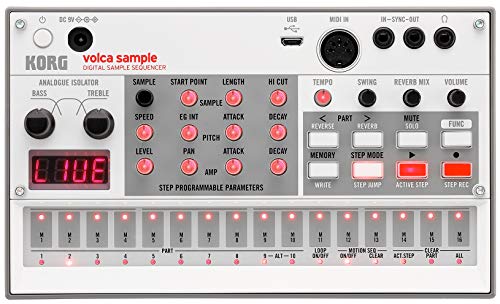
- 8-voice sample-based drum machine
- 16-step sequencer with pattern chain
- Built-in speaker and battery power
Best For: Beatmakers who want a tiny sampler for quick sequencing and travel
Ultra-portable MPC controller

- Slim USB-powered MPC controller
- 16 backlit pads with classic workflow
- Includes MPC software with 128-track sequencing
Best For: Laptop producers who want MPC pads and software control on the move
Pocket micro sampler
teenage engineering PO-33 K.O.!

- Built-in mic and line input
- 40 seconds of sample memory
- 16 built-in effects and battery power
Best For: Musicians who want a tiny sampler for fast sketches and sound capture
Compact Touchscreen Sampling Studio

- Touchscreen workflow for recording, editing, and sequencing
- Compact tabletop sampler that works without a computer
- USB support for connecting external hardware and control
Best For: Producers who want a compact, touchscreen-based sampler for computer-free sessions
Reggae Rhythm System Sampler
teenage engineering EP-40 RIDDIM

- Synced loops, bass and lead synths, and sequencer in one system
- Reggae sound library plus dub siren and remixable tracks
- Portable plastic design with a 1-year manufacturer warranty
Best For: Musicians who want a reggae-focused sampler and sequencer with built-in sounds
Portable Standalone Audio Workstation
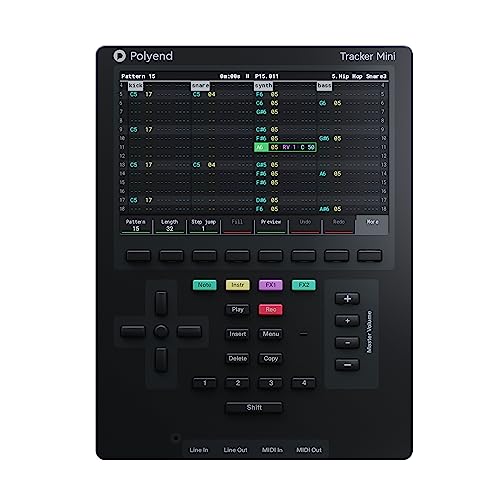
- Standalone sampler with 4,000 preloaded samples
- Adds wavetable and granular synthesis for sound design
- Portable unit with USB-A adapter and power adapter included
Best For: Mobile producers who want a standalone sampler with a large sample library
Hybrid MPC Controller

- 16 backlit MPC pads
- 16 Q-Link controls
- Vintage Mode for classic MPC character
Best For: Studio producers who want MPC-style control with computer-based production
Battery-Powered Groovebox

- Runs on 4 AA batteries or USB
- 4 tracks with 64 clips
- Includes SD card for project storage
Best For: Mobile beatmakers who need a compact, self-contained production box
Pocket Pad Controller
Wireless 16-Pad MIDI Controller

- 16 trigger pads for MIDI input
- Wireless and USB-C connectivity
- Pocket-size design for mobile use
Best For: Beat makers who want a compact trigger pad for travel and small setups
Flagship performance sampler – Roland SP-404MKII
If you want a portable hardware sampler built for fast, hands-on beatmaking, the Roland SP-404MKII stands out for its refined workflow and performance-focused design. It combines quick sample editing, strong onboard effects, and a compact body that is easy to carry for studio or live use.
Best For: Producers and performers who want a premium portable sampler with deep effects and quick workflow.
Pros:
- 17 velocity-sensitive RGB pads with a no-click design for smooth playability
- 16 GB internal storage, 32-voice polyphony, and 160 samples per project
- Fast startup, quick load times, and rapid sample editing tools
- Wide effect set including Vinyl Simulator, DJFX Looper, Lo-fi, and Cassette Simulator
Cons:
- More expensive and complex than simpler portable samplers
- Best suited to performance workflows rather than minimal sketching
The SP-404MKII is a strong choice if you want a portable hardware sampler with serious creative depth. Its combination of pads, effects, and streamlined editing makes it especially appealing for beatmakers who work quickly and perform often.
Compact pattern sampler – Korg Volca Sample 2
Korg Volca Sample 2 Digital Sample Sequencer Drum Machine w/Pattern Chain Mode and 16-step Sequencer
Check Price On AmazonThe Korg Volca Sample 2 is a practical portable hardware sampler for users who want a small footprint without giving up sequencing tools. Its built-in speaker, battery power, and pattern chain mode make it easy to sketch beats anywhere.
Best For: Beatmakers who want an ultra-light sample sequencer for travel or quick ideas.
Pros:
- 16-step sequencer with pattern chain and start delay
- 8-voice polyphony plus digital reverb and double filter
- Integrated speaker and headphone output for standalone use
- Runs on 6 AA batteries or an AC adapter
Cons:
- Smaller workflow and voice count than larger groove samplers
- Micro USB connectivity is less modern than newer USB-C designs
For a portable hardware sampler that prioritizes convenience and sequencing over deep editing, the Volca Sample 2 is easy to recommend. It is lightweight, flexible on power, and well suited to fast idea capture in compact setups.
Ultra-portable MPC controller – Akai MPC Studio Black
The Akai Professional MPC Studio Black is a portable hardware sampler controller designed to pair with the power of your computer and MPC software. If you want classic MPC-style pads and workflow in a slim unit that slips into a laptop bag, this is a strong fit.
Best For: Laptop-based producers who want an ultra-portable MPC workflow with software depth.
Pros:
- Less than 1.5 inches thick and easy to carry
- 16 backlit genuine MPC pads with note repeat and full level controls
- Includes MPC software with 128-track sequencing and audio editing tools
- USB powered, with a rugged brushed aluminum body
Cons:
- Relies on a connected Mac or PC for production
- Not a standalone sampler with internal storage or onboard sound engine
This is a good portable hardware sampler option if your workflow already centers on a computer. It gives you the tactile MPC feel in a highly mobile package, but it is best viewed as a controller rather than an all-in-one standalone machine.
Pocket micro sampler – teenage engineering PO-33 K.O.!
The teenage engineering PO-33 K.O.! is an ultra-portable hardware sampler for capturing sounds anywhere, thanks to its built-in microphone and 3.5 mm line input. Its tiny size, simple sequencing, and built-in effects make it a useful grab-and-go tool for sketches and beats.
Best For: Musicians who want a pocket-sized sampler for quick sampling and playful beat creation.
Pros:
- Built-in microphone plus line in for sampling from multiple sources
- 40 seconds of sample memory with 8 melodic and 8 drum slots
- 16 built-in effects for shaping sounds and ideas
- Battery powered with very long standby time and built-in speaker
Cons:
- 40-second memory is limited for larger sample libraries
- Tiny layout may feel restrictive for more detailed programming
If portability is the priority, the PO-33 K.O.! is one of the easiest portable hardware sampler options to carry everywhere. It is best for quick inspiration, simple sequences, and creative sound capture rather than more elaborate production.
Compact Touchscreen Sampling Studio – 1010music Blackbox
The 1010music Blackbox is a portable hardware sampler built around a familiar touchscreen workflow, making it a strong choice if you want to record, edit, sequence, and build songs without reaching for a computer. Its compact footprint and USB connectivity make it easy to fold into a tabletop setup alongside synths, drum machines, and other external gear.
Best For: Producers who want a compact, touchscreen-based sampler for computer-free tabletop sessions.
Pros:
- Touchscreen interface supports recording, editing, and sequencing in one unit
- Can integrate synths, drum machines, and other devices into a tabletop studio
- Creates samples, sequences, and songs without using a computer
- USB connectivity expands performance and control options
Cons:
- Focused on hands-on hardware use, so it may not suit users who prefer a computer-based workflow
- Compact design may feel limiting if you want a larger control surface
The Blackbox stands out for its fast, fluid workflow and all-in-one sampling approach. If portability and direct touchscreen control matter more than deep desktop integration, it offers a practical way to sketch and finish ideas on the hardware itself.
Reggae Rhythm System Sampler – teenage engineering EP-40 RIDDIM
The teenage engineering EP-40 RIDDIM is a portable hardware sampler and sequencer aimed at building complete rhythm-and-bass tracks in one box. With synced loops, bass and lead synths, a reggae sound library, a dub siren, and eight remixable tracks from top producers, it is designed for users who want a focused style-driven workflow rather than a general-purpose studio machine.
Best For: Musicians who want a reggae-focused sampler and sequencer with built-in sounds and remixable tracks.
Pros:
- Combines synced loops, bass synths, lead synths, and sequencer functions
- Includes a reggae sound library and dub siren for genre-specific production
- Eight remixable tracks support layered track building
- Compact plastic design keeps it portable
Cons:
- Its reggae-focused feature set may be too specialized for broad sampling needs
- Plastic construction may not appeal to users seeking a heavier build
As a portable hardware sampler, the EP-40 RIDDIM is best viewed as a complete rhythm system with a strong stylistic identity. If you want a self-contained platform for reggae and dub-inspired ideas, it offers a tightly integrated set of tools.
Portable Standalone Audio Workstation – Polyend Tracker Mini
The Polyend Tracker Mini is a portable hardware sampler and standalone audio workstation built for sample-based creation on the move. It comes with 4,000 preloaded samples and adds wavetable and granular synthesis, giving it a broader sound palette than a basic sampler while still keeping everything self-contained.
Best For: Mobile producers who want a standalone sampler with a large sample library and extra synthesis tools.
Pros:
- Standalone audio workstation sampler with 4,000 preloaded samples
- Includes wavetable synthesis and granular synthesis for expanded sound design
- Portable design suits mobile production workflows
- USB-A adapter and power adapter are included
Cons:
- Buttons, dial, and keyboard input may feel less immediate than a touchscreen workflow
- Its workstation-style approach may be more than some users need for simple sampling
For users who want a portable hardware sampler with more built-in sound-shaping options, the Tracker Mini is well equipped. The included samples and synthesis engines make it a flexible choice for creating and shaping ideas without a computer.
Hybrid MPC Controller – Akai MPC Renaissance
If you want a portable hardware sampler feel with deeper computer-based production control, the Akai Professional MPC Renaissance is built around that hybrid workflow. It pairs 16 backlit MPC pads and 16 Q-Link controls with MPC Software support, while Vintage Mode lets you shift the output character toward classic MPC voices like the MPC3000 and MPC60.
Best For: Producers who want hands-on MPC-style sampling and sequencing with a computer-connected setup.
Pros:
- 16 genuine backlit MPC pads for performance and sample triggering
- 16 Q-Link controls for hands-on mixing and production control
- Vintage Mode can change the sound character toward classic MPC models
- USB connectivity and MPC Software support for Mac and Windows workflows
Cons:
- At 13.1 pounds, it is not the lightest option for frequent travel
- Designed around computer integration rather than fully standalone use
This is a strong choice if your priority is tactile MPC control in a studio-oriented setup. It is less about pocket portability and more about delivering a familiar sampler workflow with computer power behind it.
Battery-Powered Groovebox – Roland MC-101
The Roland MC-101 is a compact portable hardware sampler-style groovebox built for making tracks away from a full studio rig. It offers Tone, Drum Kit, and Looper track types, 4 tracks with 64 clips, and a 128-step sequencer, so you can sketch ideas, build beats, and save projects to the included SD card.
Best For: Mobile producers who want a battery-powered groovebox for beatmaking and sketching ideas.
Pros:
- Runs on 4 AA batteries or USB for flexible portable use
- Compact size makes it easy to carry and set up anywhere
- 4 tracks and 64 clips support focused beat and loop building
- Includes SD card support for saving project data and audio data
Cons:
- Only 4 tracks, so it is better for compact projects than large arrangements
- Built for portability, but not a full-size workstation
If you want a portable hardware sampler workflow that can travel easily, the MC-101 is the most self-contained option here. Its battery power and compact footprint make it practical for quick production sessions, rehearsals, and mobile sketching.
Pocket Pad Controller – Wireless 16-Pad MIDI Controller
This MIDI pad controller is the simplest portable hardware sampler-style option in the group, built around 16 trigger pads for MIDI input control. Its pocket-size structure, wireless support, and USB-C interface make it easy to use for triggering percussion samples, drum sounds, and other mapped functions in a DAW.
Best For: Players who want a lightweight pad controller for beat triggering and MIDI programming on the go.
Pros:
- 16 trigger pads for sample triggering and MIDI control
- Wireless connection plus USB-C for flexible device setups
- Pocket-size design supports mobile use and small workspaces
- Can be mapped to drum modules, virtual instruments, and sequencing tasks
Cons:
- Focuses on MIDI triggering rather than full standalone sampling
- Product details are sparse compared with more established production gear
- Listed warranty is only 1 month
If your main need is a compact trigger surface rather than a full groovebox, this controller keeps things simple and portable. It is best viewed as a flexible input tool for beat making, recording, and live performance workflows.
How We Picked the Best Portable Hardware Sampler
We prioritized portability, speed, sampling flexibility, sequencing depth, and how well each unit supports hands-on music making. We also considered power options, storage, connectivity, and whether the device works well as a true Portable Hardware Sampler or needs a more fixed studio setup.
Quick Comparison
Some models are best for sketching beats fast, while others are better for full track construction. Compact units like pocket samplers and smaller grooveboxes excel at travel and idea capture. Larger controllers and workstation-style options offer deeper editing, but may be less convenient away from the desk.
Key Buying Factors for a Portable Hardware Sampler
Workflow and Speed
If you want to capture ideas quickly, look for intuitive pad layouts, fast sample loading, and simple sequencing. A strong workflow matters more than raw specs when you are creating on the move.
Sampling and Sound Editing
Check whether the unit can record from line input, microphone, or USB, and whether it offers trimming, slicing, time-stretching, filtering, and effects. These features determine how much you can do without external gear.
Portability and Power
True portability means more than a small footprint. Battery power, USB power, durable construction, and easy cable management all make a difference if you plan to travel or perform with it.
Sequencing and Song Building
Some users only need short loops, while others want pattern chaining, longer arrangements, and multitrack sequencing. Match the sequencer to your goals so you do not outgrow the device too quickly.
Storage and Connectivity
Look for enough internal memory, expandable storage, sample import/export options, and MIDI or audio connectivity. These features help a Portable Hardware Sampler fit into a larger studio setup later.
Who Should Buy Which Portable Hardware Sampler?
Choose a pocket sampler if you want ultra-portable beat making and instant ideas. Pick a compact groovebox if you want a balance of sampling, sequencing, and performance tools. Go with a workstation-style unit if you need deeper production features and are willing to trade some portability for flexibility. If you mainly want pads for finger drumming and triggering, a compact MIDI pad controller may be the better fit than a full sampler.
For most buyers, the best option is the one that feels fast enough to use every day. The right Portable Hardware Sampler should encourage you to make music more often, not slow you down with menus or unnecessary complexity.