The best podcast recorders for musicians need to do more than capture spoken vocals. They should preserve instruments clearly, handle changing volume levels, and make recording practical in studios, rehearsal spaces, and on location.
We selected 10 portable recorders spanning simple stereo capture, flexible XLR connectivity, multitrack production, and modern 32-bit float workflows. Use the guide below to narrow the choices by inputs, portability, editing needs, and recording experience.
Best 10 Podcast Recorders for Musicians Picks for 2026
Versatile Multitrack Pick

- Four-track recording for bigger projects
- Two XLR/TRS inputs and built-in stereo mics
- USB-C recording with SD-card backup
Best For: Musicians recording podcasts, performances, and varied sources
Adjustable Mic Value

- Adjustable AB/XY stereo microphones
- 32-bit float recording and up to 96kHz modes
- USB-C 2-in/2-out audio interface
Best For: Portable stereo music and podcast recording
Compact XLR Starter

- Two locking XLR/TRS combo inputs
- 32-bit recording up to 96kHz
- Waveform display and SDXC support to 1TB
Best For: Simple two-source musician and podcast setups
Portable Music Production Hub

- Eight tracks with touchscreen editing
- Drum loops, FM synths, effects, and MIDI
- Hi-Z, phantom power, and USB-C DAW control
Best For: Musicians creating and arranging songs without a computer
Best Layering Recorder

- Four-track recording with bounce and undo
- 32-bit float capture reduces clipping concerns
- Built-in rhythms, effects, and stereo microphones
Best For: Portable songwriting, demos, and layered musical sessions
Best All-Around Recorder
Zoom H6 Essential Handheld Recorder

- Six-track 32-bit float recording
- Four XLR inputs plus built-in X/Y microphones
- USB interface with simultaneous SD backup
Best For: Multi-source podcasts, rehearsals, and live recordings
Best Professional Two-Input Recorder
Zoom F3 Professional Field Recorder

- Dual locking XLR/TRS inputs
- 32-bit float recording for unpredictable peaks
- Low-noise preamps and flexible power options
Best For: Professional microphone rigs and demanding field recording
Best Portable 32-Bit Float Pick

- 32-bit float recording reduces gain-setting concerns
- X/Y microphones handle sources up to 130 dB SPL
- USB microphone mode works with computers and mobile devices
Best For: Portable stereo recording, rehearsals, concerts, and podcasting
Best Expandable Multitrack Pick
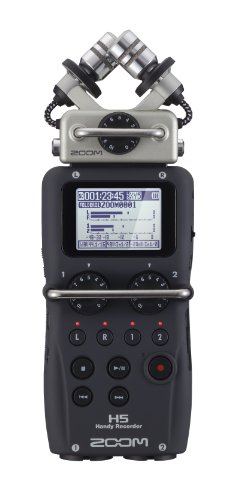
- Records four tracks simultaneously
- Two XLR/TRS inputs offer phantom power and pads
- Interchangeable capsules support different recording setups
Best For: Multitrack music sessions, external microphones, and film audio
Best Flexible Pattern Pick

- Three microphones provide nine selectable recording patterns
- 32-bit float recording supports clip-free capture
- USB microphone mode can record a simultaneous SD backup
Best For: Flexible mono, stereo, surround, and field recording
Versatile Multitrack Pick – Zoom H4 Essential
The Zoom H4 Essential is a flexible choice among podcast recorders for musicians who also need to capture rehearsals, interviews, live performances, and video audio. Its built-in stereo microphones, four-track recording, dual XLR/TRS inputs, and 32-bit float recording make it suitable for varied sources and changing volume levels.
Best For: Musicians and creators who want one recorder for podcasts, instruments, live sound, and field recording.
Pros:
- Four-track recording supports larger projects.
- Built-in stereo microphones plus two XLR/TRS inputs offer flexible setup options.
- USB-C recording or streaming can run alongside SD-card backup recording.
- Spoken menu guidance may make operation easier for visually impaired users.
Cons:
- Requires two AA batteries.
- The 3.5mm headphone jack may be limiting for some monitoring setups.
The H4 Essential stands out when you need more than a basic stereo recorder. It is a practical all-around option for musicians who want multitrack capability and clip-resistant recording in a portable format.
Adjustable Mic Value – TASCAM DR-07XP
The TASCAM DR-07XP is a straightforward option among podcast recorders for musicians who prefer built-in adjustable stereo microphones. It supports 32-bit float recording, handles sources up to 125dB SPL, and can also work as a 2-in/2-out USB-C audio interface for computer recording.
Best For: Musicians who want portable stereo recording for music, voice, video audio, and podcasting.
Pros:
- Adjustable AB/XY condenser microphones suit different stereo recording approaches.
- 32-bit float, 24-bit, 16-bit, and MP3 recording modes provide format flexibility.
- Up to 17.5 hours of operation with two AA alkaline batteries.
- USB-C interface mode supports direct computer recording.
Cons:
- MicroSD card is not included.
- External microphones connect through a 3.5mm MIC/EXT IN jack rather than XLR inputs.
The DR-07XP makes sense for solo musicians and mobile creators who mainly record stereo audio. Its adjustable microphones and long stated battery life are useful for sessions away from a desk, while USB-C adds computer-based flexibility.
Compact XLR Starter – Zoom H1 XLR
The Zoom H1 XLR is a compact choice among podcast recorders for musicians who need two XLR/TRS inputs without moving to a larger multitrack unit. It records in 32-bit and up to 96kHz, includes an OLED waveform display, and adds 3.5mm input and headphone connections.
Best For: Musicians, podcasters, and filmmakers building simple two-source recording setups.
Pros:
- Two locking XLR/TRS combo inputs connect microphones and instruments.
- 32-bit float recording helps support clean capture across changing levels.
- OLED waveform display provides a quick view of recording levels.
- Supports SDXC cards up to 1TB for extended sessions.
Cons:
- It is limited to two-channel recording.
- Requires two AA batteries.
- The supplied notes identify the microphone form factor as shotgun, so it may be less suited to broad stereo ambience than dedicated stereo-mic recorders.
The H1 XLR is a sensible fit when portability and external connections matter more than track count. Its two combo inputs cover common musician and podcast setups, while the waveform display keeps basic level monitoring visible.
Portable Music Production Hub – Zoom R12
The Zoom R12 is a different kind of option among podcast recorders for musicians: a portable recording studio focused on hands-on music production. It offers eight tracks, touchscreen editing, effects, drum loops, FM synths, MIDI support, and two XLR/TRS inputs for developing songs without a computer.
Best For: Musicians who want to record, arrange, and build song ideas on a portable multitrack workstation.
Pros:
- Eight-track recording and onboard editing support computer-free workflows.
- Two inputs include 48V phantom power, while input 1 adds Hi-Z for guitar and bass.
- Includes 150 drum loops, 18 FM synth instruments, effects, and MIDI functionality.
- Works as a stereo USB-C audio interface and DAW control surface.
Cons:
- Battery operation is rated for up to five hours with four AA batteries.
- Its larger music-production layout may be more than needed for basic spoken podcasts.
- The supplied notes list two XLR/TRS inputs, so recording several live sources at once may require additional equipment.
The R12 is best viewed as a musician-first production tool rather than a simple handheld podcast recorder. Its touchscreen workflow, built-in accompaniment, and direct instrument support make it especially useful for composing and arranging on the go.
Best Layering Recorder – Zoom R4 Multi-Track Recorder
The Zoom R4 is one of the most focused podcast recorders for musicians who want to capture ideas, build layered arrangements, and work without a computer. Its four-track workflow, 32-bit float recording, combo inputs, built-in microphones, effects, and rhythms make it practical for demos, songwriting, and portable sessions.
Best For: Musicians who want a compact, battery-powered recorder for layering vocals, instruments, and musical ideas.
Pros:
- Records, mixes, and bounces up to four tracks while freeing channels for additional layers.
- 32-bit float recording helps prevent clipping without constant gain adjustments.
- Two XLR/TRS combo inputs accommodate microphones, instruments, keyboards, and other sources.
- Includes more than 80 rhythm patterns plus built-in microphones and effects.
Cons:
- Its two-input design is less suited to larger multi-microphone sessions.
- The four-track workflow may be limiting for complex ensemble recordings.
The R4 stands out when creative layering matters more than maximum input count. It also works as a 32-bit float 2-in/2-out USB audio interface and can run from four AA batteries or USB-C.
Best All-Around Recorder – Zoom H6 Essential Handheld Recorder
The Zoom H6 Essential is a versatile choice among podcast recorders for musicians, combining built-in X/Y microphones with four XLR/TRS inputs. Six-track 32-bit float recording, interchangeable capsules, and USB interface operation make it suitable for podcasts, rehearsals, interviews, and live events.
Best For: Musicians and podcasters who need multiple inputs and a flexible handheld recorder for varied recording situations.
Pros:
- Six-track 32-bit float recording captures multiple sources while helping avoid distortion.
- Four XLR/TRS combo inputs work alongside built-in X/Y microphones.
- Interchangeable 3.0 capsules support different stereo and mid-side recording setups.
- Can function as a USB audio interface while recording to an SD card for backup.
Cons:
- Its broader feature set may be more than needed for simple two-source recordings.
- It uses four AAA batteries, so extended sessions require attention to battery supplies.
Choose the H6 Essential when you want one recorder to cover music, spoken-word production, and location work. Its four inputs and six-track capacity give it more room for ensemble or multi-source sessions than smaller recorders.
Best Professional Two-Input Recorder – Zoom F3 Professional Field Recorder
The Zoom F3 is a compact, focused option among podcast recorders for musicians who prioritize clean capture and dependable field operation. Its dual locking XLR inputs, 32-bit float recording, low-noise preamps, and flexible power options suit demanding location work and setups where there is little room for retakes.
Best For: Musicians and recordists using professional microphones in portable, unpredictable, or run-and-gun environments.
Pros:
- 32-bit float recording handles quiet passages and sudden peaks without repeated level adjustments.
- Dual locking XLR/TRS inputs help secure microphone connections in mobile or mounted rigs.
- Ultra-low-noise preamps support clean recordings in less-controlled environments.
- Supports standalone battery operation, USB workflows, and wireless control.
Cons:
- With two inputs and no listed built-in stereo microphone system, it is less flexible for casual multi-source recording.
- Its professional field-recorder design may require more setup than an all-in-one handheld recorder.
The F3 is the specialized pick for users who already have microphones and need reliable, clip-resistant recording in the field. Its small body and locking connectors make it particularly practical for compact rigs and remote sessions.
Best Portable 32-Bit Float Pick – Xvive XV1-R Stereo Recorder
For musicians comparing podcast recorders for musicians, the Xvive XV1-R is a compact option built around forgiving 32-bit float recording. Its X/Y microphones, auto-record features, and USB microphone mode make it suitable for capturing rehearsals, interviews, live sound, and online audio without constantly adjusting gain.
Best For: Musicians and podcasters who want a lightweight stereo recorder with flexible WAV/AAC storage and USB connectivity.
Pros:
- 32-bit float recording helps prevent distortion from incorrect gain settings.
- X/Y microphones capture up to 130 dB SPL for concerts and other loud sources.
- Works as a USB microphone with PC, Mac, iOS, and Android devices.
- Supports WAV recording up to 96 kHz plus space-saving AAC formats.
Cons:
- There is no headphone jack for direct monitoring.
- USB microphone operation is fixed at a 48 kHz sample rate.
- Extended recordings use a maximum 4GB file size before automatic splitting.
The XV1-R stands out when portability and simple level management matter most. It is a practical choice for creators who need both standalone SD recording and a straightforward USB microphone mode.
Best Expandable Multitrack Pick – Zoom H5 4-Track Recorder
The Zoom H5 is a strong choice among podcast recorders for musicians who need more input flexibility than a basic stereo recorder provides. It records four tracks simultaneously, includes two XLR/TRS combo inputs, and supports interchangeable input capsules for adapting to different recording setups.
Best For: Musicians, filmmakers, and podcasters who need external microphones, phantom power, and multitrack recording in a battery-powered unit.
Pros:
- Four-track simultaneous recording supports more involved sessions.
- Two XLR/TRS combo inputs include selectable phantom power and -20 dB pads.
- Interchangeable input capsules expand microphone and recording options.
- Functions as a multichannel or stereo USB audio interface for PC, Mac, and iPad.
Cons:
- Recording to SD/SDHC cards is limited to capacities up to 32GB.
- It uses a conventional gain-based workflow rather than the supplied 32-bit float features of the other listed models.
- The included X/Y capsule may require careful handling despite its shock-mounted design.
The H5 is the most adaptable option here for users connecting external microphones or building a multitrack setup. Choose it when inputs and capsule compatibility are more important than the simplest clip-free recording workflow.
Best Flexible Pattern Pick – Zoom H2 Essential Recorder
The Zoom H2 Essential brings unusually broad microphone coverage to the podcast recorders for musicians category. Its three built-in microphones and nine selectable patterns can handle intimate speech, stereo performances, and wider soundscapes, while 32-bit float recording removes the need to set gain for every take.
Best For: Musicians, podcasters, and field recordists who want multiple built-in recording patterns, long battery life, and clip-free capture.
Pros:
- Three microphones and nine patterns support mono, stereo, and surround recording.
- 32-bit float recording captures varying volume levels without manual gain adjustments.
- Can operate as a USB microphone while recording a backup to an SD card.
- Offers up to 20 hours of battery life and Bluetooth timecode synchronization for multiple units.
Cons:
- The 1.3-inch screen is smaller than the display specified for the Xvive XV1-R and Zoom H5.
- Bluetooth timecode synchronization requires compatible additional H2 Essential units.
- Its extensive pattern selection may be more than needed for simple voice recordings.
The H2 Essential is especially appealing when one recorder needs to cover several spatial recording scenarios. Simultaneous USB and SD recording also gives podcasters and musicians a useful backup-oriented workflow.
How We Picked the Best Podcast Recorders for Musicians
We compared these recorders by the features that matter most when recording both speech and music: microphone and input flexibility, preamp and gain-handling options, track count, portability, battery or USB operation, file formats, monitoring, and workflow. We also considered whether each model is better suited to quick stereo captures, connected microphones, multitrack songwriting, or more controlled field production.
Because “best” depends on the project, this list includes straightforward handheld units alongside multitrack recorders and professional field recorders. Features such as 32-bit float recording can be especially useful for unpredictable performances, but they do not replace good microphone placement or a quiet recording environment.
Quick Comparison
| Best For | What to Look For |
|---|---|
| Fast rehearsal or idea capture | Built-in stereo microphones, simple controls, and compact size |
| Podcast interviews with external microphones | XLR inputs, headphone monitoring, and reliable gain control |
| Music production on the go | Multiple inputs, overdubbing, effects, and track management |
| Variable-volume performances | 32-bit float recording and strong limiter-free workflow |
| More advanced field recording | Low-noise preamps, robust connectors, and flexible routing |
Key Buying Factors for Podcast Recorders for Musicians
Inputs and Microphone Compatibility
Built-in X/Y microphones are convenient for stereo performances, room sound, and quick interviews. Choose XLR or combo inputs if you plan to use dynamic vocal microphones, condenser microphones, instrument outputs, or external preamps. Check phantom-power support before buying condenser microphones.
Track Count and Recording Style
A two-channel recorder is often enough for a solo musician, stereo instrument, or simple interview. Multitrack models are better for layering vocals, guitars, keyboards, percussion, and remote collaborators. More tracks add flexibility but usually require more setup and file management.
32-Bit Float and Gain Handling
32-bit float can reduce the risk of unusable recordings caused by unexpected peaks, making it valuable for live music, rehearsals, and changing speaking levels. You still need to monitor placement, handling noise, and distortion from the source itself.
Portability, Power, and Monitoring
For mobile work, consider size, battery life, wind protection, tripod mounting, and whether the recorder can operate as a USB audio interface. A clear headphone output and easy level controls are important when recording in noisy or unfamiliar spaces.
Who Should Buy Which Podcast Recorders for Musicians?
Choose a compact handheld recorder if you want quick rehearsal captures, songwriting ideas, acoustic sessions, or portable interviews with minimal setup. Pick a model with XLR inputs when your podcast or music sessions depend on external microphones and direct connections.
Musicians who want to build complete arrangements away from a computer should prioritize a multitrack recorder with overdubbing, effects, and track bouncing. For live performances, documentary-style sessions, or unpredictable volume changes, a 32-bit float field recorder is often the safer choice.
Before buying, confirm the included accessories, microphone configuration, storage requirements, and connectivity you need. The right recorder is the one that matches your normal recording method—not simply the model with the longest feature list.