Recording a lecture clearly depends on more than storage capacity. The right device should capture intelligible speech, operate discreetly, and make it easy to move files to a computer or phone.
This roundup compares 10 options, including dedicated voice recorders and flexible multitrack units suited to classrooms, interviews, presentations, and more demanding audio setups.
Best 10 Multitrack Recorders for Lectures Picks for 2026
Best Multitrack Choice

- Four XLR/TRS inputs with per-input controls
- Up to 24-bit/96kHz WAV recording
- USB interface plus SD-card recording
Best For: Multi-microphone lectures and panels
Best Feature-Rich Recorder

- Eight simultaneous playback tracks
- 64 V-Tracks for project organization
- Built-in stereo mic and effects
Best For: Complex sessions and music-oriented recording
Best Pocket Voice Recorder

- 136GB built-in storage
- Voice activation and AI noise reduction
- Up to 48 hours of battery life
Best For: Portable single-speaker lecture recording
Best Simple Track Recorder

- Eight-track digital recording
- Built-in stereo microphones
- Battery operated with included 2GB SD card
Best For: Standalone planned recording sessions
Best High-Capacity Pick
EVISTR L357 64GB Voice Recorder

- 64GB storage for lengthy recording archives
- Voice activation with adjustable sensitivity
- Up to 32 hours of continuous recording
Best For: Students and teachers recording frequent lectures
Best True Multitrack Option
Tascam DP-006 6-Track Pocketstudio

- Records up to six separate tracks
- Two-track simultaneous recording
- Built-in omnidirectional condenser microphones
Best For: Layered audio projects and multitrack production
Best Simple Budget Recorder
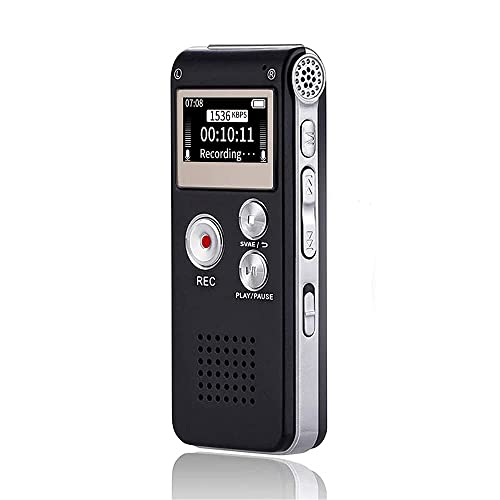
- One-button recording and straightforward playback
- Voice activation with noise reduction
- Up to 30 hours of continuous recording
Best For: Students wanting simple lecture and meeting capture
Best Heavy-Duty Pick
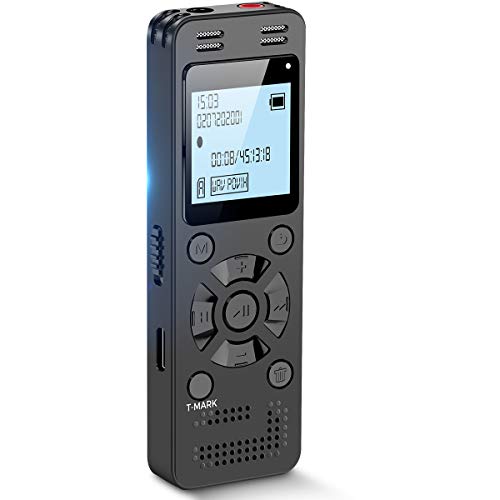
- Stores up to 9,296 hours
- Records MP3 or 1536 kbps WAV
- Voice activation with four folders
Best For: Heavy users managing many lectures and recordings
Simple Storage Pick

- Up to 750 hours of storage
- Voice activation and noise reduction
- Low-battery auto-save protection
Best For: Everyday lecture and interview recording with ample storage
Best Multitrack Choice – Zoom H6
The Zoom H6 is a flexible pick among multitrack recorders for lectures when you need separate inputs, portable operation, and higher-quality WAV recording. It records directly to SD cards, includes stereo microphone capsules, and can also work as a multichannel USB audio interface.
Best For: Lectures, panel discussions, and field setups requiring multiple microphones or separate input control.
Pros:
- Four XLR/TRS inputs with individual gain controls, pads, and phantom power.
- Supports up to 24-bit/96kHz WAV recording and SD cards up to 128GB.
- Includes X/Y and mid-side microphone capsules, batteries, case, and windscreen.
- Can connect to a PC, Mac, or iPad as a multichannel or stereo USB interface.
Cons:
- Its broader multitrack feature set may be more than needed for simple one-microphone lectures.
- Requires four AA batteries for portable use.
The H6 is the strongest all-around option here for users who want room to expand beyond basic lecture recording. Its interchangeable microphones and multiple inputs make it especially useful for recording speakers, questions, or several sources at once.
Best Feature-Rich Recorder – Boss BR-600
The Boss BR-600 suits buyers seeking multitrack recorders for lectures with substantial track capacity and built-in recording tools. It offers eight simultaneous playback tracks, 64 V-Tracks, a built-in stereo microphone, and battery-powered operation.
Best For: Users who want extensive track organization and a self-contained recorder that can also handle music-oriented projects.
Pros:
- Provides eight simultaneous playback tracks and 64 V-Tracks.
- Includes a built-in stereo microphone for recording without an external mic.
- Battery powered and equipped with a CompactFlash recording-media slot.
- Includes vocal effects, pitch correction, guitar effects, and a built-in drum machine.
Cons:
- The included 128MB card is listed with only 2 hours and 16 minutes of digital recording time.
- Uses four 9V batteries, which may be less convenient than rechargeable power.
- Its music-focused effects may be unnecessary for straightforward lecture capture.
The BR-600 is a specialized choice rather than a simple voice recorder. Its track and V-Track capacity can help organize complex sessions, but the older CompactFlash workflow and music tools may not be ideal if your priority is uncomplicated lecture recording.
Best Pocket Voice Recorder – Pexqil AI Voice Recorder
The Pexqil is a compact option among multitrack recorders for lectures when portability and long unattended recording matter more than separate microphone inputs. Its one-button design, voice activation, AI noise reduction, and 136GB of built-in storage are geared toward spoken-word capture.
Best For: Students and professionals recording individual lectures, interviews, and classes on the move.
Pros:
- 136GB of built-in storage is specified for up to 18,800 hours of audio capacity.
- Voice activation pauses during silence to reduce empty recordings.
- DSP 5.0 AI noise reduction is rated by the supplied notes to filter up to 97% of ambient noise.
- Weighs 1 ounce, supports OTG transfer, and offers up to 48 hours of continuous recording.
Cons:
- It has a built-in microphone rather than the multiple XLR/TRS inputs found on dedicated multitrack models.
- The supplied digital recording-time specification is 48 hours despite the larger stated storage capacity.
This recorder is best understood as a lightweight voice recorder, not a conventional multitrack production unit. For a single lecture source, its storage, battery life, and simple controls make it highly convenient; users needing separately recorded microphones should choose a recorder with dedicated inputs.
Best Simple Track Recorder – TASCAM DP-008EX
The TASCAM DP-008EX is a practical choice among multitrack recorders for lectures when you want a dedicated, battery-operated device with built-in microphones. Its eight-track design and WAV recording support provide more structure than a basic dictation recorder.
Best For: Users who prefer a standalone eight-track recorder for planned sessions, presentations, or spoken-word projects.
Pros:
- Offers eight-track digital recording in a compact pocketstudio format.
- Built-in stereo microphones allow recording without an added microphone.
- Records WAV files and includes a 2GB SD card, USB cable, and four AA batteries.
- Includes a 3.5mm headphone jack for monitoring.
Cons:
- The listed digital recording time is 6.5 hours.
- Its 610-gram weight is considerably higher than a small voice recorder.
- The supplied notes do not list XLR inputs or advanced noise-reduction features.
The DP-008EX offers a straightforward multitrack workflow with built-in stereo microphones, making it more suitable for deliberate recording projects than quick pocket capture. Its limited listed storage and heavier body are worth considering for long lecture days.
Best High-Capacity Pick – EVISTR L357 64GB Voice Recorder
For shoppers comparing multitrack recorders for lectures, the EVISTR L357 is a compact voice recorder focused on long recording sessions, voice activation, and easy file transfer. Its built-in microphone supports adjustable gain, PCM noise reduction, and WAV or MP3 recording.
Best For: Students, teachers, and anyone needing extensive storage for lectures, meetings, or interviews.
Pros:
- 64GB storage can hold up to 4,660 hours at 32Kbps.
- Voice activation and seven sensitivity levels can reduce silent sections.
- Up to 32 hours of continuous recording and USB-C file transfer.
- Supports playback controls, including A-B repeat and variable speed.
Cons:
- This is primarily a single-device voice recorder, not a conventional multitrack studio recorder.
- The many settings may be more than needed for basic recording.
The EVISTR is a practical choice when storage, battery endurance, and lecture-focused voice capture matter more than true multitrack mixing. Its time-stamped files and straightforward controls also make recordings easier to organize.
Best True Multitrack Option – Tascam DP-006 6-Track Pocketstudio
Among multitrack recorders for lectures, the Tascam DP-006 stands apart as the only dedicated multitrack pocketstudio in this lineup. It records up to six tracks, offers built-in omnidirectional condenser microphones, and supports CD-quality 16-bit/44.1kHz recording.
Best For: Users who need genuine multitrack recording for layered audio projects, field ideas, or more advanced lecture-related production.
Pros:
- Supports up to six tracks with two simultaneous recording tracks.
- Provides six-track simultaneous playback and a dedicated stereo master track.
- Includes two built-in omnidirectional condenser microphones.
- Battery-operated design uses four included AA batteries.
Cons:
- Its 4GB storage is considerably smaller than the 64GB voice recorder in this roundup.
- At 1.8 pounds, it is less lightweight than a mini dictaphone.
- Six-track features may be unnecessary for simple one-speaker lectures.
The DP-006 is the strongest fit when “multitrack” means recording and playing back separate audio tracks. For straightforward lecture capture, however, its larger, more production-oriented design may be more capability than you need.
Best Simple Budget Recorder – Sunlan 16GB Voice Recorder
For buyers seeking multitrack recorders for lectures but mainly needing simple voice capture, this Sunlan recorder offers one-button operation, noise reduction, and voice activation in a small rechargeable design. It records WAV audio and transfers files through USB.
Best For: Students and casual users who want an uncomplicated recorder for lectures, meetings, and interviews.
Pros:
- Simple REC, STOP, and PLAY controls are easy to learn.
- Voice activation can conserve recording time and power.
- 16GB storage and up to 30 hours of continuous recording.
- Includes playback, A-B repeat, music-player, and removable-storage functions.
Cons:
- It is a mono voice recorder rather than a true multitrack recorder.
- Playback battery life is listed at about seven hours.
- Its 16GB capacity is lower than the EVISTR model’s 64GB.
The Sunlan is a sensible low-complexity option when reliable lecture recording is the priority. Choose it for basic spoken-word capture, but look to the Tascam if you specifically need separate tracks.
Compact Classroom Pick – 8GB Stereo Lecture Recorder
For shoppers comparing multitrack recorders for lectures, this compact HoTiyan unit offers stereo recording, voice activation, and straightforward three-button operation. Its 8GB storage, rechargeable battery, and playback tools make it practical for classes, meetings, and interviews.
Best For: Students who want an easy-to-use recorder with A-B repeat and variable playback speed.
Pros:
- Built-in stereo microphone with noise reduction and a professional recording chip.
- Voice activation can reduce blank sections and quiet snippets.
- Supports up to 128 hours at 192 kbps, plus MP3/WAV recording and playback.
- Offers A-B repeat, variable playback speed, timestamps, and password protection.
Cons:
- 8GB capacity is substantially smaller than the other listed options.
- The supplied details list a 20-hour continuous recording runtime, which may require recharging for extended use.
This is a sensible choice when simple controls, stereo capture, and study-friendly playback features matter more than maximum storage.
Best Heavy-Duty Pick – EVIDA 128GB Lecture Recorder
Among multitrack recorders for lectures, the EVIDA 128GB recorder stands out for its very large storage capacity and selectable recording quality. It supports PCM, MP3, and WAV settings, while voice activation and folder organization help manage long-term lecture and meeting recordings.
Best For: Frequent users who need extensive onboard storage and multiple recording-quality options.
Pros:
- 128GB capacity is rated for up to 9,296 hours of recording storage.
- Supports 1536 kbps WAV, 128 kbps MP3, and 192 kbps MP3 recording.
- Six voice-activation levels can help reduce silence and whispering.
- Includes four folders, bookmarks, A-B repeat, password protection, and USB file transfer.
Cons:
- The built-in microphone is listed as mono rather than stereo.
- The details list a 54-hour battery life and no headphone jack.
Choose this model if storage and file organization are priorities, especially when recording regularly and transferring files to a computer.
Simple Storage Pick – EVIDA 64GB Voice Recorder
For buyers seeking multitrack recorders for lectures without a complicated feature list, this EVIDA model provides 64GB of built-in storage in a lightweight portable design. Its voice-activated recording, noise reduction, and low-battery auto-save features focus on convenient everyday use.
Best For: Lecture and interview users who want generous storage and protection against losing a recording when the battery runs low.
Pros:
- 64GB memory provides up to 750 hours of stated recording storage.
- Voice activation is designed to capture spoken audio while reducing quiet sections.
- Low-battery smart auto-save helps protect files before shutdown.
- Compact 14.7-gram design with rechargeable operation.
Cons:
- The supplied details do not specify recording formats, microphone mode, or playback features.
- The listed digital recording time is 15 hours, so battery endurance may be more limited than storage capacity.
This model is most appealing for users who value a small recorder, ample file space, and low-battery file protection over detailed recording specifications.
How We Picked the Best Multitrack Recorders for Lectures
We evaluated these recorders for the practical demands of lecture capture: speech clarity, microphone performance, battery life, storage, recording controls, portability, and file-transfer convenience. We also considered whether each model is best suited to a single speaker, a classroom, or a more advanced setup using external microphones.
Some products are conventional multitrack recorders with multiple inputs and overdubbing features. Others are compact digital voice recorders designed primarily for straightforward lecture, meeting, or interview recording. That distinction matters: a feature-rich multitrack unit can offer greater control, while a voice recorder is often faster and simpler to use.
Quick Comparison
| Best For | Look For | Typical Advantage |
|---|---|---|
| Single-speaker lectures | Voice activation, simple controls | Quick setup and easy playback |
| Large classrooms | Strong microphones and adjustable gain | Better coverage from a distance |
| Multiple speakers | External inputs or multiple tracks | More flexible microphone placement |
| Frequent transfers | USB or OTG compatibility | Faster file management |
| Advanced audio work | Multitrack recording and SD storage | Greater editing and production control |
Key Buying Factors for Multitrack Recorders for Lectures
Microphones and Recording Quality
Built-in stereo microphones are convenient for general classroom use, but microphone placement and room acoustics still affect results. Choose adjustable input levels when the speaker’s volume or distance may vary. For large rooms or panel discussions, external microphone inputs can be more valuable than a very high storage rating.
Tracks, Inputs, and Ease of Use
Do not assume that a recorder with more tracks is automatically better for lectures. Multiple tracks help when using separate microphones or recording different sources, but they may add setup time. A simple voice-activated model may be the better choice for students who only need reliable speech capture.
Storage, Battery, and File Transfer
High-capacity storage is useful for long lectures, but battery endurance and file organization are equally important. Check whether the device uses removable storage, rechargeable power, or replaceable batteries. USB connectivity, OTG support, and straightforward playback can save time after every session.
Privacy and Recording Settings
Look for password protection or lock features if recordings contain private discussions. Voice activation can reduce silent sections and conserve storage, but test its sensitivity before relying on it in a quiet or distant classroom. Always follow applicable school, workplace, and local recording-consent rules.
Who Should Buy Which Multitrack Recorders for Lectures?
Students and casual note-takers: Choose a compact voice recorder with simple controls, voice activation, playback, and enough storage for several classes.
Researchers and interviewers: Prioritize clear microphones, adjustable recording levels, dependable battery life, and easy file transfer. Password protection may also be worthwhile.
Lecturers and presenters: A model with strong built-in microphones and reliable long-session operation can simplify recording without requiring additional equipment.
Musicians or advanced users recording lectures and other sources: Choose a true multitrack recorder with multiple inputs, SD storage, and USB audio functionality. These models require more learning but provide substantially greater flexibility.