Adding microphone inputs does not always require replacing your entire audio interface. The best microphone preamp with ADAT output can expand an existing setup while preserving your preferred converters, monitoring workflow, and computer connection.
This roundup compares 10 options across dedicated preamps, channel strips, compact gain boosters, and full-featured interfaces. Pay close attention to ADAT compatibility, channel count, phantom power, gain requirements, and whether each product actually provides digital optical output.
Best 10 Microphone Preamp with Adat Output Picks for 2026
Best 8-Channel ADAT Expander

- Eight Midas microphone preamps
- 24-bit conversion at 44.1/48 kHz
- ADAT optical output for digital expansion
Best For: Adding eight microphone inputs to an ADAT-compatible setup
Best Tube Channel Strip With ADAT
ART VoiceChannel Tube Channel Strip

- Tube preamp for warmth and definition
- Compressor, expander, de-esser, and gate
- ADAT Lite-pipe plus AES/EBU and S/PDIF
Best For: Single-channel vocal and voiceover recording with dynamics control
Best USB Interface With ADAT I/O

- Eight MIDAS microphone preamps
- 18x20 USB audio/MIDI interface
- ADAT I/O with up to 96 kHz support
Best For: Computer studios needing USB recording and expandable inputs
Best Portable Low-Noise Mic Preamp

- 19–66 dB variable gain
- Stated -120 dBV EIN noise performance
- XLR/TRS/TS outputs with Type-C power
Best For: Portable single-channel gain before an external audio interface
Best Overall
Focusrite Scarlett 18i20 4th Gen

- Eight mic preamps with up to 69dB gain
- Dual ADAT plus S/PDIF, MIDI, and Word Clock
- 24-bit/192kHz conversion and useful gain-management tools
Best For: Expandable home and project studios
Best Portable Booster

- Up to +75dB of clean gain
- Works with dynamic and condenser microphones
- XLR and 3.5mm outputs in a compact metal housing
Best For: Podcasting and portable streaming setups
Best Dynamic-Mic Booster
StudioMan CL-200 Two-Channel XLR Preamp

- Two channels with +25dB clean gain
- Designed for dynamic and passive ribbon microphones
- Low-noise balanced XLR input and output
Best For: Boosting passive microphones in analog recording chains
Flexible 3-Input Gain Booster
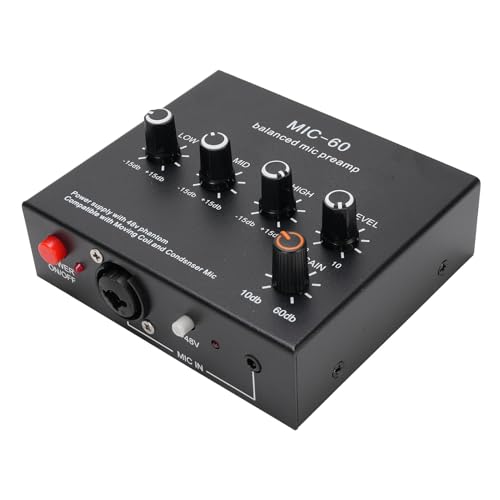
- Up to 60dB gain
- 48V support for dynamic and condenser mics
- XLR, 3.5mm, and 6.35mm outputs
Best For: Analog multi-channel recording and streaming
Compact Balanced Mic Amp

- 20dB clean balanced gain
- 48V support for condenser microphones
- Includes sound and USB power cables
Best For: Portable analog recording and streaming
Low-Noise Vocal Booster

- Clean 20dB balanced gain
- 48V support for dynamic and condenser mics
- Compact metal case for portable use
Best For: Compact vocal recording and podcast setups
Best 8-Channel ADAT Expander – Behringer ADA8200
Behringer ADA8200 Audiophile 8 In/8 Out ADAT Audio Interface with Midas Mic Preamplifiers
Check Price On AmazonThe Behringer ADA8200 is a practical microphone preamp with ADAT output for expanding a compatible digital recording setup. It provides eight Midas microphone preamps, 24-bit conversion, and ADAT optical connectivity at 44.1 or 48 kHz.
Best For: Home studios and project studios that need eight additional microphone inputs through ADAT.
Pros:
- Eight microphone preamp channels in one rack-style unit
- Midas-designed preamps for multi-microphone recording
- Includes 24-bit AD/DA conversion and ADAT optical output
- Supports 44.1 and 48 kHz sample rates
Cons:
- Maximum sample rate is limited to 48 kHz
- Requires a compatible ADAT-equipped interface or recorder
Choose the ADA8200 when channel count and straightforward ADAT expansion matter more than high-resolution recording rates. Its eight inputs make it especially useful for drums, ensembles, and larger tracking sessions.
Best Tube Channel Strip With ADAT – ART VoiceChannel Tube Channel Strip
The ART VoiceChannel combines a tube microphone preamp with dynamics processing and digital outputs, making it a flexible microphone preamp with ADAT output for single-channel recording. It also supports AES/EBU, S/PDIF, TOSLink, and USB connectivity.
Best For: Vocalists, voiceover users, and producers who want tube preamp character plus built-in dynamics control.
Pros:
- Tube preamp design aimed at warmth and definition
- Includes compressor, expander, de-esser, and gate functions
- Offers ADAT Lite-pipe and other digital output options
- Supports sample rates up to 192 kHz
Cons:
- Only one microphone channel
- More specialized than a simple multi-channel ADAT preamp
The VoiceChannel is a strong fit when the recording chain benefits from processing before conversion. Its single-channel format suits lead sources, while the range of digital outputs gives it flexibility in different studio systems.
Best USB Interface With ADAT I/O – Behringer UMC1820
The Behringer UMC1820 is more than a microphone preamp with ADAT output: it is an 18×20 USB audio/MIDI interface with ADAT I/O. Its eight MIDAS-designed preamps, 24-bit/96 kHz support, and computer connectivity make it a versatile central interface for recording microphones and instruments.
Best For: Computer-based studios that need multiple preamps, USB recording, MIDI, and ADAT expansion in one unit.
Pros:
- Eight MIDAS-designed microphone preamps
- Provides 18 inputs and 20 outputs over USB
- Includes ADAT I/O for system expansion
- Supports 24-bit recording at up to 96 kHz
Cons:
- May be more equipment than needed for a basic ADAT-only expansion task
- Computer recording depends on USB connectivity and compatible software
Consider the UMC1820 if you want an all-in-one recording interface rather than a standalone ADAT converter. Its high channel count and MIDI support make it suitable for a growing studio with microphones and instruments.
Best Portable Low-Noise Mic Preamp – Rodyweil RO03 Mic Preamp
The Rodyweil RO03 is a compact single-channel preamp designed for microphones and instruments, with up to 66 dB of gain and a stated -120 dBV EIN. It is not an ADAT unit, so it does not provide a microphone preamp with ADAT output; instead, it feeds an external interface or mixer through XLR, TRS, or TS outputs.
Best For: Portable vocal or instrument setups that need extra gain and Type-C-powered operation before an audio interface.
Pros:
- Variable gain range of 19 to 66 dB
- Designed for dynamic, condenser, ribbon microphones, and instruments
- 1 MΩ instrument input impedance helps support DI use
- Type-C power input improves portability
Cons:
- Does not include ADAT output
- Two input ports cannot operate simultaneously
- Notes recommend connecting to an interface’s TRS line input for lowest noise
The RO03 can be useful as a budget-friendly front end when your existing interface lacks enough gain, but it is not a direct match for an ADAT expansion requirement. Choose it only if analog output and portability are more important than digital multi-channel connectivity.
Best Overall – Focusrite Scarlett 18i20 4th Gen
If you need a microphone preamp with ADAT output that can also serve as the hub of a growing studio, the Focusrite Scarlett 18i20 4th Gen is the most versatile option here. It combines eight microphone preamps with dual ADAT, extensive analog I/O, and high-resolution conversion.
Best For: Home and project studios needing multiple mic inputs, ADAT expansion, and flexible routing.
Pros:
- Eight mic preamps with up to 69dB of gain
- Dual ADAT, S/PDIF, MIDI, and Word Clock connectivity
- 24-bit/192kHz converters with a 122dB dynamic range
- Auto Gain, Clip Safe, Air modes, and included recording software
Cons:
- Its larger feature set may be more than a simple recording setup requires
- Rack-style design is less portable than a compact preamp
The 18i20 is the clear choice when expansion and channel count matter. Its eight preamps and dual ADAT connections make it better suited to multi-microphone recording than the standalone boosters in this roundup.
Best Portable Booster – XTUGA XIC1 Microphone Preamp
The XTUGA XIC1 is a compact microphone preamp with ADAT output? No—the supplied specifications list XLR, 3.5mm line, and 3.5mm microphone outputs, but do not mention ADAT. It is instead designed as a portable gain booster for dynamic and condenser microphones.
Best For: Podcasting, live streaming, and small recording setups needing substantial gain and flexible outputs.
Pros:
- Provides up to +75dB of clean gain
- Supports both dynamic and condenser microphones
- Includes 48V phantom power and dual-channel inputs
- Offers balanced XLR plus 3.5mm outputs in a compact metal enclosure
Cons:
- ADAT output is not listed in the supplied specifications
- It is a preamp and booster rather than a multichannel ADAT expansion interface
Choose the XIC1 when portability, high gain, and connection flexibility are more important than digital expansion. For an actual microphone preamp with ADAT output, the Focusrite is the better match.
Best Dynamic-Mic Booster – StudioMan CL-200 Two-Channel XLR Preamp
The StudioMan CL-200 is not a microphone preamp with ADAT output; its supplied specifications describe a two-channel analog XLR mic activator with no ADAT connection. It focuses on adding clean gain to dynamic and passive ribbon microphones before they reach an interface or mixer.
Best For: Dynamic and passive ribbon microphones that need a low-noise analog gain boost.
Pros:
- Two channels provide a +25dB gain boost
- Designed for dynamic and passive ribbon microphones
- Uses 48V phantom power from a connected interface or mixer
- Balanced XLR connections support professional audio equipment
Cons:
- ADAT output is not listed
- Not compatible with condenser microphones
- Requires 48V phantom power from another device
The CL-200 is a focused solution for weak passive-mic signals, especially in podcasting, voice-over, and live applications. It should be considered an analog booster, not an ADAT-equipped expansion preamp.
Flexible 3-Input Gain Booster – 3-Channel Microphone Preamp
If you need a microphone preamp with ADAT output, verify your interface requirements carefully: this model provides analog XLR-balanced, 3.5mm, and 6.35mm outputs rather than a listed ADAT connection. It offers up to 60dB of gain, 48V power, and three inputs for flexible recording and streaming setups.
Best For: Home studios, vocal recording, podcasting, and live streaming setups needing multiple analog outputs.
Pros:
- Up to 60dB of gain with a fully balanced circuit design.
- Supports dynamic and condenser microphones with 48V power.
- Offers XLR-balanced, 3.5mm, and 6.35mm microphone or line outputs.
- Compact 315g metal housing is easy to carry and designed to reduce interference.
Cons:
- ADAT output is not listed, so it may not suit an optical-expansion setup.
- Only a 90-day manufacturer warranty is specified.
This is the most versatile analog-output option of the three, particularly if you need higher gain and three input channels. However, buyers specifically seeking a microphone preamp with ADAT output should confirm compatibility before purchase.
Compact Balanced Mic Amp – 20dB Microphone Preamp
For shoppers comparing a microphone preamp with ADAT output, note that this compact unit lists XLR, 3.5mm, and 6.35mm interfaces but does not specify ADAT connectivity. Its 20dB balanced gain, 48V support, and included power and sound cables make it a straightforward analog mic-boosting option.
Best For: Portable home-studio, podcasting, recording, and live-streaming applications.
Pros:
- Compact and lightweight design is convenient for storage and transport.
- Fully balanced 20dB gain aims to provide clean, low-noise amplification.
- Supports dynamic and condenser microphones with 48V power.
- Includes sound and USB power cables.
Cons:
- ADAT output is not listed.
- Its 20dB gain is lower than the 60dB rating of the three-input model.
- The notes indicate that condenser microphones operate for 3–5 hours with 48V active.
This model emphasizes portability and simple connectivity rather than digital expansion. It can be a practical choice for basic analog microphone boosting, but it is not a confirmed match for an ADAT-based recording system.
Low-Noise Vocal Booster – 20dB Mic Preamplifier
This microphone preamp with ADAT output alternative is a compact analog booster: the supplied specifications list XLR output and do not mention ADAT. It focuses on transparent 20dB gain, 48V microphone power, and a rugged metal case for vocal recording, podcasting, and streaming.
Best For: Users wanting a compact, low-noise preamp for dynamic or condenser microphones.
Pros:
- Balanced circuitry provides 20dB of clean, transparent gain.
- 48V power supports both dynamic and condenser microphone use.
- Fully balanced design is intended to reduce noise and coloration.
- Lightweight black metal casing helps with portability and interference reduction.
Cons:
- ADAT output is not specified.
- The supplied details identify XLR output but do not list multiple output formats.
- Its 20dB gain rating is intended for moderate boosting rather than maximum gain.
Choose this unit for a simple, portable vocal preamp with a low-noise design. If your setup requires optical ADAT expansion, look for a model that explicitly lists ADAT input or output and confirm the required channel count.
How We Picked the Best Microphone Preamp with Adat Output
We focused on products that can add useful microphone gain to a recording system, while separating true ADAT-capable expanders from analog-only preamps and general-purpose interfaces. The selection covers eight-channel units for studio expansion, channel strips with digital connectivity, USB interfaces with ADAT I/O, and compact options for simpler microphone setups.
We also considered published input and output formats, phantom-power support, gain range, connection flexibility, likely use cases, and practical value. Product listings can vary by revision, so confirm the current specifications and included cables before ordering.
Quick Comparison
| Best For | What to Prioritize | Typical Format |
|---|---|---|
| Expanding a studio interface | Eight preamps, ADAT optical output, dependable clocking | Rack or desktop expander |
| Recording vocals or instruments | Clean gain, phantom power, useful metering | Channel strip or single/dual preamp |
| Replacing an entry-level interface | USB connectivity, ADAT I/O, monitor outputs | Multichannel USB interface |
| Podcasting or basic live use | Simple controls, low noise, compatible outputs | Compact analog preamp |
Key Buying Factors for a Microphone Preamp with Adat Output
Confirm the Digital Connection
ADAT normally uses an optical TOSLINK connection and commonly carries up to eight channels at 44.1 or 48 kHz. Higher sample rates may reduce the available channel count through SMUX, and some products marketed as “digital” use USB, coaxial, or analog outputs instead of ADAT. Check both the optical input and output requirements of your interface.
Match Gain, Noise, and Microphone Type
Dynamic and ribbon microphones may need substantially more gain than condensers. Look for a generous gain range and low equivalent input noise, especially for quiet sources. Phantom power is essential for most condenser microphones, but switch it off when using passive ribbon microphones unless the manufacturer confirms protection.
Consider Clocking and Workflow
When connecting an expander to an interface, set one device as clock master and verify the sample rate. Word-clock options, front-panel metering, direct monitoring, and stable drivers can matter as much as headline channel count. For computer recording, decide whether you need a dedicated ADAT expander or a USB interface that can also operate independently.
Check the Physical Setup
Rack units suit permanent studio installations, while compact preamps are easier to place beside a microphone or portable rig. Verify the number and type of outputs, balanced connections, power requirements, and whether optical cables are included.
Who Should Buy Which Microphone Preamp with Adat Output?
Choose an eight-channel ADAT unit if you already own an interface with optical input and need several additional microphone channels for drums, ensembles, or hardware routing. A USB interface with ADAT I/O is more suitable if you need a central recording interface with its own computer connection and future expansion.
Choose a channel strip when one vocal or instrument channel needs extra shaping, compression, or a distinctive preamp character. Compact analog boosters are best for straightforward gain assistance, streaming, speech, or portable setups—but they are not substitutes for an ADAT expander unless their specifications explicitly include optical ADAT output.