Consistent timing is central to playing bass well, whether you are practicing scales, locking in with a drummer, or preparing for a recording session. The right metronome makes tempo work easier by providing a clear pulse, flexible subdivisions, and controls you can use without interrupting your practice.
These 10 picks include compact digital metronomes, tuner-and-metronome combinations, rechargeable models, and feature-rich BOSS and Korg options. Use the guide below to narrow the list by accuracy, visibility, portability, and the kind of bass practice you do most often.
Best 10 Metronomes for Bass Guitars Picks for 2026
Versatile Practice Pick
Donner DMT-01 3-in-1 Metronome Tuner

- Combines metronome, tuner, and tone generator
- 30–260 BPM with eight rhythm options
- Accurate clip-on tuning with a large display
Best For: Bassists wanting timing, tuning, and ear-training tools together
Portable Timing Specialist

- Supports odd time signatures
- Includes visual guidance and play-along patterns
- Headphone jack and auto power-off
Best For: Bassists seeking a dedicated metronome for varied rhythm practice
Compact All-in-One Choice

- Metronome, tuner, and tone generator in one unit
- 30–260 BPM with 10 beat patterns
- Backlit display and headphone jack support quiet practice
Best For: Bassists wanting portable, multifunctional practice support
Professional Rhythm Control

- Note Mixing and dozens of drum patterns
- Direct bass connection with headphone monitoring
- Footswitch control and MIDI synchronization
Best For: Advanced bass practice, rehearsals, and synchronized setups
Best All-in-One Pick

- Combines bass tuning, metronome, and tone generation
- 30–260 BPM with tap tempo and vocal counting
- Color display, headphone output, and USB-C charging
Best For: Bassists wanting one compact device for tuning and rhythm practice
Best Precision Tuner

- Tuning precision specified at ±0.1 cents
- 30–252 BPM with improved metronome audio
- Sound Out, transpose modes, and adjustable calibration
Best For: Bassists prioritizing precise tuning and reference tones
Best for Vocal Counting
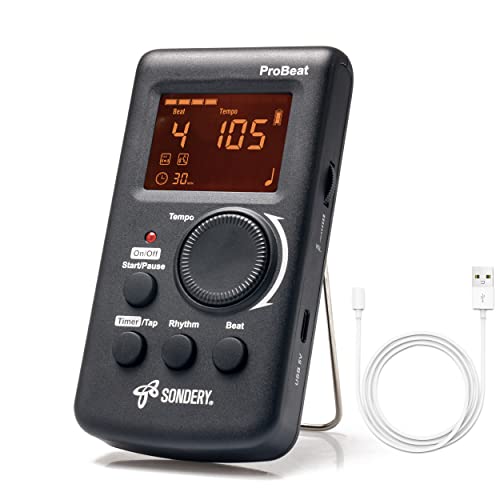
- Vocal counting plus three digital sound options
- 40–208 BPM with tap tempo and ten beat patterns
- LED tempo display, earphone output, timer, and rechargeable power
Best For: Bassists building timing through guided and structured practice
Rechargeable Practice Companion
3-in-1 Digital Metronome Tuner

- Rechargeable metronome, tuner, and tone generator
- 30–250 BPM with eight rhythm options
- Bass support, pickup clip, color LCD, and headphone jack
Best For: Portable all-in-one practice for bass and other instruments
Clear-Screen Timing Specialist
Cecilio Digital Metronome Tuner

- Dedicated bass tuning mode
- Pendulum-style metronome from 30–230 BPM
- Large LCD plus instrument and headphone inputs
Best For: Focused bass timing and tuning practice
Compact Color-Display Choice
MT-41 Rechargeable Metronome Tuner

- Metronome, tuner, and tone generator in one
- Rechargeable battery with USB connection
- Color LCD and dual-color visual beat indicator
Best For: Portable visual-feedback practice for bassists
Versatile Practice Pick – Donner DMT-01 3-in-1 Metronome Tuner
The Donner DMT-01 is a practical choice among metronomes for bass guitars when you also want tuning and reference-pitch tools in the same compact device. It combines a metronome, tuner, and tone generator, with tempo and rhythm controls suited to practice or performance.
Best For: Bassists who want one affordable practice unit for timing, tuning, and ear training.
Pros:
- Combines metronome, chromatic tuner, and tone generator functions.
- Offers 30–260 BPM, 0–9 beats per measure, and eight rhythm options.
- Provides ±0.5-cent tuning accuracy and a sensitive vibration clip.
- Large LCD and 45-degree viewing angle improve readability.
Cons:
- Requires one AAA battery.
- Its broad instrument support may be more than needed if you only want a metronome.
With flexible rhythm settings, a built-in clip tuner, and an easy jog-dial interface, the DMT-01 is a well-rounded option for bass practice sessions that cover more than timing alone.
Portable Timing Specialist – BOSS DB-30 Dr. Beat
The BOSS DB-30 Dr. Beat is a focused option among metronomes for bass guitars, built for portable rhythm practice. Its visual practice assistance, odd-time support, play-along patterns, headphone jack, and auto power-off make it suited to structured sessions at home or on the go.
Best For: Bassists who prioritize a dedicated, rugged-feeling metronome with visual guidance and varied practice patterns.
Pros:
- Supports odd time signatures for more advanced rhythm work.
- Includes visual practice assistance and play-along patterns.
- Offers a headphone jack for more private practice.
- Auto power-off helps conserve battery life.
Cons:
- Does not list an integrated tuner or tone generator.
- Runs on a supplied lithium-metal battery rather than a rechargeable system.
The DB-30 keeps its emphasis on rhythm development, making it a sensible pick when your bass practice needs flexible timing exercises rather than an all-in-one tuning device.
Compact All-in-One Choice – Aroma AMT-560 Metronome Tuner
The Aroma AMT-560 brings metronome, chromatic tuner, and tone-generator functions into a pocket-sized unit, making it a convenient contender among metronomes for bass guitars. Its adjustable tempo, multiple beat patterns, backlit display, and headphone jack support both audible and quiet practice.
Best For: Bassists who want a compact, battery-powered practice tool with timing, tuning, and reference-tone functions.
Pros:
- Combines three useful practice functions in one small device.
- Provides 30–260 BPM, 10 beat patterns, and eight rhythm styles.
- Offers ±0.5-cent tuning accuracy with A4 calibration from 430–450 Hz.
- Backlit LCD, LED cues, adjustable volume, and headphone output aid practice.
Cons:
- Requires two AAA batteries.
- The supplied notes specify that it is not suitable for piano tuning.
The AMT-560 is especially appealing for bassists who want a readable, versatile practice companion that can move easily between a case, lesson, and rehearsal.
Professional Rhythm Control – BOSS DB-90 Dr. Beat
BOSS DB-90 Dr. Beat Portable Metronome (DB-90), BLACK | The Versatile and Professional Dr. Beat
Check Price On AmazonThe BOSS DB-90 Dr. Beat is designed for bassists who need more advanced rhythm control than a basic click. Among metronomes for bass guitars, it stands out with note mixing, drum patterns, multiple metronome sounds, direct guitar and bass connection, headphone monitoring, footswitch control, and MIDI synchronization.
Best For: Advanced bassists, rehearsals, and performance setups that benefit from hands-free control and external synchronization.
Pros:
- Note Mixing allows quick rhythm customization.
- Includes dozens of play-along drum patterns and four metronome sounds.
- Supports direct guitar and bass connection with headphone monitoring.
- Offers footswitch control and MIDI input for external sequencer sync.
Cons:
- At 16 ounces, it is less lightweight than simpler portable metronomes.
- The supplied notes do not list a built-in tuner.
- Requires a 9-volt battery.
For players who want a more interactive and expandable timing system, the DB-90 provides the strongest feature set here, particularly when bass connection, MIDI, and hands-free operation matter.
Best All-in-One Pick – Rechargeable Vocal MetroTune
For players comparing metronomes for bass guitars, the Sondery MetroTune stands out as a compact practice hub that combines timing, tuning, and pitch reference in one rechargeable device. Its bass tuning mode, tap tempo, vocal counting, and headphone output make it especially practical for focused practice.
Best For: Bassists who want a tuner, metronome, and tone generator in one portable unit.
Pros:
- Combines a metronome, bass-capable tuner, and tone generator.
- Supports 30–260 BPM, tap tempo, beats from 0 to 9, and eight rhythms.
- Offers English vocal counting, a color screen, speaker, earphone output, and rechargeable USB-C power.
- Includes a folding kickstand and internal microphone or pickup-cable tuning.
Cons:
- Its plastic construction may not feel as rugged as a dedicated stage unit.
- The many functions may be more than players who only need a basic click.
The MetroTune is a strong choice when convenience matters more than minimalist operation. Bassists can tune and practice timing without carrying separate devices, while the broad tempo range leaves room for both slow drills and faster exercises.
Best Precision Tuner – Korg TM-70T Tuner-Metronome
The Korg TM-70T is a compact option for bassists who prioritize accurate tuning alongside metronome practice. Its claimed ±0.1-cent tuning precision, improved display, sound-out reference, and 30–252 BPM range provide useful tools for both everyday practice and ensemble preparation.
Best For: Bassists who want a pocket-sized tuner-metronome with highly precise tuning and reference tones.
Pros:
- Provides tuning accuracy specified at ±0.1 cents.
- Offers a 30–252 BPM tempo range with improved metronome sound quality.
- Includes chromatic tuning, F/B♭/E♭ transpose options, adjustable calibration, and Sound Out mode.
- Compact design fits easily in a pocket and includes a five-year manufacturer warranty.
Cons:
- Its feature set is focused on tuning and metronome functions rather than vocal counting.
- The supplied notes do not mention rechargeable power or a built-in speaker size.
For bassists seeking dependable pitch accuracy in a small package, the TM-70T is a focused and versatile pick. The Sound Out feature can also support ear training, while adjustable calibration helps accommodate different reference pitches.
Best for Vocal Counting – Rechargeable Vocal ProBeat
Among metronomes for bass guitars, the Sondery ProBeat is geared toward hands-on rhythm training. Its rotary tempo control, vocal counting, multiple beat patterns, visual LED pulse, and timer function make it useful for building consistent timing during structured bass practice.
Best For: Bassists who prefer vocal guidance, clear visual cues, and timed practice sessions.
Pros:
- Provides vocal counting and three digital sound options.
- Supports 40–208 BPM, tap tempo, and beat patterns from 0 through 9.
- Uses a color screen, top LED indicator, large speaker, and earphone output for flexible practice.
- Rechargeable battery and 15-, 30-, 45-, or 60-minute timer support routine building.
Cons:
- It is a metronome rather than an integrated bass tuner.
- Its tempo range is narrower than the MetroTune’s listed 30–260 BPM range.
- The pocket-sized plastic body may be less suited to heavy-duty handling.
The ProBeat is a practical choice when the main goal is improving internal timing. Vocal counting can reinforce subdivision, while the LED and headphone output let you practice with either visual or private audio feedback.
Rechargeable Practice Companion – 3-in-1 Digital Metronome Tuner
For musicians comparing metronomes for bass guitars, this compact rechargeable unit combines timing practice with tuning and tone generation. Its bass compatibility, pickup clip, broad tempo range, and headphone output make it a flexible option for home practice, lessons, or rehearsals.
Best For: Bassists who want one portable device for metronome practice, tuning, and tone generation.
Pros:
- Supports bass and multiple other instruments, with microphone, clip, and direct cable pickup options.
- Offers tempos from 30–250 BPM, 0–9 beats, and eight rhythms.
- Rechargeable design includes USB charging, a color LCD, LED beat indicator, adjustable volume, and a headphone jack.
Cons:
- Its plastic-and-metal construction may not suit shoppers seeking a more specialized or rugged unit.
- The feature-rich 3-in-1 design may be more than needed for users who only want a basic metronome.
With its pocket-sized build and included pickup clip, this is a practical all-purpose choice for bass players who value portability and rechargeable convenience.
Clear-Screen Timing Specialist – Cecilio Digital Metronome Tuner
This Cecilio model is a straightforward option among metronomes for bass guitars, pairing a bass tuning mode with a pendulum-style metronome. The large LCD, instrument input, and headphone jack support focused practice at home, in lessons, or in a studio setting.
Best For: Bassists who prefer a simple 2-in-1 tuner and metronome with a large, easy-to-read display.
Pros:
- Includes a dedicated bass tuning mode alongside guitar, violin, and cello/viola modes.
- Provides a traditional pendulum-simulating metronome with a 30–230 BPM range.
- Features a 1/4-inch input, 3.5mm headphone jack, and 2 1/4-inch LCD screen.
Cons:
- Uses two AAA batteries rather than a rechargeable battery.
- Does not include the tone-generator and broader rhythm features described for the other 3-in-1 models.
Its emphasis on a familiar pendulum-style beat and clear controls makes it a sensible pick for bassists who want essential timing and tuning functions without extra complexity.
Compact Color-Display Choice – MT-41 Rechargeable Metronome Tuner
The MT-41 is a compact option for shoppers seeking metronomes for bass guitars that also handle tuning and tone generation. Its rechargeable battery, bass compatibility, visual beat indicator, and pocket-sized profile suit regular practice at home, in the studio, or on the go.
Best For: Bassists who want a lightweight rechargeable 3-in-1 unit with clear visual timing feedback.
Pros:
- Combines a metronome, tuner, and tone generator in one device.
- Supports bass and other listed instruments, with A4 calibration from 430–450 Hz.
- Offers a high-contrast color LCD, dual-color LED beat indicator, rechargeable battery, and USB connection.
Cons:
- The supplied notes do not specify the metronome’s tempo range or selectable rhythm count.
- Its compact controls may provide fewer clearly listed features than a dedicated standalone metronome.
For players who prioritize portability and visual feedback, the MT-41 provides the core timing and tuning tools in a small rechargeable package.
How We Picked the Best Metronomes for Bass Guitars
We focused on practical features that matter during bass practice: dependable tempo control, audible click clarity, useful rhythm options, readable displays, portability, and tuner functionality. The selection includes simple metronomes for daily drills as well as more capable units for players who need subdivisions, accents, tap tempo, sound-out functions, or rechargeable power.
Because bassists often practice with amplification or other instruments nearby, we also considered whether each design is likely to remain easy to hear and operate. Combination tuner models were included for players who want to reduce the amount of gear in their practice setup.
Quick Comparison
| Best For | Look For |
|---|---|
| Simple daily practice | Clear click, easy tempo adjustment, compact body |
| Bassists who want fewer devices | Built-in chromatic tuner and metronome modes |
| Advanced rhythm work | Subdivision, accent, tap-tempo, and beat-pattern controls |
| Travel and rehearsals | Portable design, durable controls, and dependable battery life |
| Dim or busy practice spaces | High-visibility LCD and strong audible output |
Key Buying Factors for Metronomes for Bass Guitars
Tempo and Rhythm Flexibility
A wide tempo range is useful, but practical control matters more than an impressive specification. Look for tap tempo, adjustable subdivisions, accents, and multiple beat patterns if you are working on syncopation, odd groupings, or gradually increasing speed.
Click Volume and Sound
The click should be distinct enough to hear alongside an unplugged or amplified bass without becoming harsh. A headphone output or sound-out function can help when practicing privately or connecting to a larger setup.
Tuner and Tone-Generator Features
A chromatic tuner is convenient for checking bass tuning before each session. Some combination units also provide reference tones, transpose settings, or tone generation, which can support ear training and ensemble preparation.
Display, Controls, and Power
Choose a display you can read quickly and controls that are easy to adjust while holding your bass. Rechargeable models reduce disposable battery use, while replaceable batteries may be preferable for travel or emergency changes.
Who Should Buy Which Metronomes for Bass Guitars?
Choose a basic compact metronome if you mainly need a reliable pulse for scales, finger exercises, and timing drills. A tuner-metronome combination is the better fit if you want one small device for tuning and practice. Players working on detailed rhythm patterns should prioritize advanced BOSS-style controls, clear subdivisions, and flexible accent settings. If you practice away from outlets or frequently carry your gear between lessons, rehearsals, and gigs, a rechargeable portable model can be especially convenient.
Before buying, decide whether you need headphones, a tuner, rechargeable power, or advanced rhythm programming. Those priorities will help you choose among these Metronomes for Bass Guitars without paying for features you will not use.