Clear dialogue can make or break a film, and the right lavalier microphone helps capture natural speech without forcing performers to project toward a camera. The best choice depends on your camera or phone, shooting style, range requirements, and tolerance for setup.
We compare 10 lavalier options ranging from professional wearable microphones to compact wireless kits and affordable wired pairs, so you can match your production needs with the right balance of sound quality, convenience, and value.
Best 10 Lavalier Microphones for Film Picks for 2026
Best Wired Professional Pick

- Discreet 4 mm omnidirectional capsule
- 3.5 mm TRS connector works with many cameras and transmitters
- Kevlar-reinforced 1.2 m cable and included pop shield
Best For: Wired filmmaking and broadcast setups
Best Two-Mic Smartphone Kit

- Two microphones for interviews and two-person recordings
- Lightning, USB-C, and USB-A receiver connectivity
- Up to 24 hours with the charging case and noise reduction
Best For: Mobile filmmakers and smartphone interviews
Best DJI Mic Accessory

- Designed for DJI Mic and DJI Mic 2
- Rotating design supports flexible cable positioning
- Compact body and cable routing aid concealed, secure use
Best For: DJI wireless-system owners
Best AI Noise Control
NEEWER CM26 MAX Wireless Lavalier

- Two-level AI noise cancellation
- Up to 394-foot line-of-sight range
- 50-hour runtime with charging case
Best For: Film crews recording dialogue in varied indoor and outdoor locations
Best Plug-and-Play Kit
Mini Mic Pro Wireless Lavalier

- Includes USB-C and Lightning adapters
- Foam and deadcat wind protection included
- Up to six hours per charge
Best For: Mobile filmmakers and interview creators using phones
Best Wired Two-Pack

- Two battery-free wired microphones
- 3.5mm TRS plug-and-play connection
- Includes clips and foam windscreens
Best For: Two-person shoots using compatible 3.5mm equipment or transmitters
Best Two-Person Wireless Pick
KUKIHO 2-Pack Wireless Lavalier Mic

- Two microphones for dual-person recording
- Plug-and-play phone compatibility
- Noise reduction with up to 66-foot range
Best For: Smartphone interviews and two-person videos
Best Wired Camera Pair
NEEWER LM5 Mini Lavalier Microphones
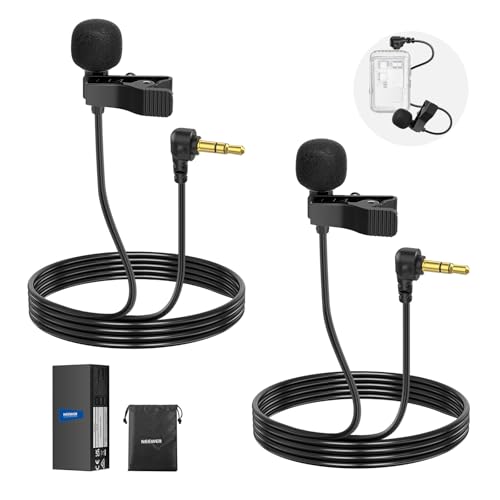
- Two compact wired lavaliers
- Works with cameras and select wireless transmitters
- Omnidirectional condenser pickup
Best For: DSLR, mirrorless, and camcorder production
Best Feature-Rich Phone System
NEEWER KM19 Wireless Lavalier Mic
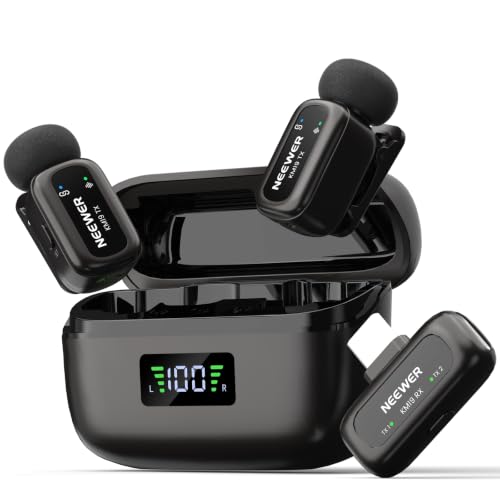
- 48kHz/24-bit capture with noise control
- Two transmitters and 30-hour case runtime
- 100-meter range with stereo or mono output
Best For: Feature-focused smartphone filmmaking
Best Portable Wireless System – Movo WMX-2
The Movo WMX-2 is a compact wireless option for filmmakers who need flexible camera audio without managing a long cable. Its 2.4GHz connection, built-in omnidirectional transmitter microphone, and included accessories make it a practical choice among lavalier microphones for film.
Best For: DSLR filmmakers, vloggers, and mobile content creators who want a portable wireless setup with a charging case.
Pros:
- Wireless range reaches up to 328 feet under the stated conditions.
- Up to 7 hours of battery life, plus an additional charge from the case.
- Includes a receiver, lavalier microphone, windmuffs, counterweight, pouch, and USB-C cable.
- Compatible with Canon, Sony, Nikon, and other DSLR cameras.
Cons:
- Uses a single channel.
- The system relies on a 3.5 mm connection for camera use.
- The transmitter has a plastic enclosure.
Choose the WMX-2 when portability and wireless freedom matter more than a larger multi-channel kit. The charging case and long stated transmission range are especially useful for location shoots.
Best Wired Professional Pick – RØDE Lavalier GO
The RØDE Lavalier GO is a straightforward wired microphone for filmmakers who prefer a discreet capsule and broad 3.5 mm TRS compatibility. Its omnidirectional pattern and reinforced cable make it a dependable candidate among lavalier microphones for film.
Best For: Filmmakers, broadcasters, and creators using compatible cameras, audio interfaces, or wireless transmitters.
Pros:
- Discreet 4 mm capsule provides broadcast-grade audio capture according to the supplied specifications.
- Omnidirectional pickup is forgiving of placement on talent.
- Kevlar-reinforced 1.2 m cable is designed for the demands of regular shoots.
- Includes a foam pop shield, mounting clip, cable management, and pouch.
Cons:
- It is a wired microphone rather than a complete wireless system.
- The 3.5 mm TRS connector may require an adapter for devices with different inputs.
- Only one microphone is included.
The Lavalier GO is a strong fit when you already have a camera, interface, or compatible transmitter and want a compact replacement or dedicated wearable mic. Its included pop shield and durable cable add practical value for production work.
Best Two-Mic Smartphone Kit – APOMOV Wireless Lavalier Set
This APOMOV kit is designed for phone- and laptop-based production, pairing two wireless microphones with interchangeable Lightning, USB-C, and USB-A connectivity. For creators seeking lavalier microphones for film on a modest mobile setup, its charging case and noise-reduction features are useful additions.
Best For: Smartphone filmmakers, interviewers, vloggers, and creators recording with iOS, Android, tablets, or laptops.
Pros:
- Includes two microphones for interviews or two-person recordings.
- Supports Lightning, USB-C, and USB-A connections through the included receiver options.
- Transmitter battery life is stated at up to 5 hours, with up to 24 hours using the charging case.
- Offers low-cut and ENC noise reduction, plus a charging-case battery display.
Cons:
- Its stated wireless range is up to 65 feet, shorter than some camera-oriented systems.
- The microphones are primarily designed around smartphones, tablets, and laptops rather than DSLR cameras.
- Performance depends on using the appropriate Lightning or USB-C connection for the device.
This is a convenient all-in-one choice for small crews and mobile interviews. The two-transmitter design and broad device connectivity make it more flexible for phone-based filming than a single wired lavalier.
Best DJI Mic Accessory – DJI Lavalier Microphone
The DJI Lavalier Microphone is a compact wired accessory made specifically for DJI Mic and DJI Mic 2 systems. Its rotating design and cable-routing feature address common on-set handling issues, making it a focused option among lavalier microphones for film.
Best For: DJI Mic and DJI Mic 2 users who want a concealable lavalier with flexible cable positioning.
Pros:
- Compatible with DJI Mic 2 and DJI Mic.
- Rotating design allows flexible recording angles.
- Cable routing helps prevent accidental unplugging.
- Compact form is suited to concealed placement for interviews, vlogs, and streams.
Cons:
- Compatibility is limited to the stated DJI receiver systems.
- Only one microphone is included.
- The 3.5 mm TRS connector is not a direct USB or Lightning connection.
If you already own a DJI wireless kit, this microphone is a sensible way to add a discreet wearable option without replacing the receiver. It is less suitable as a standalone microphone for general-purpose camera setups.
Best AI Noise Control – NEEWER CM26 MAX Wireless Lavalier
For filmmakers who need flexible lavalier microphones for film, the NEEWER CM26 MAX combines wireless range, app-based controls, and adjustable AI noise cancellation. It records at 48kHz/24-bit, supports real-time monitoring, and includes a furry windshield for outdoor shoots.
Best For: Film crews recording interviews, dialogue, and run-and-gun video across indoor and outdoor locations.
Pros:
- Two AI noise-cancellation modes, with up to -40dB outdoor reduction.
- Up to 394 feet of wireless transmission in line-of-sight conditions.
- Offers Mono, Stereo, and Safety Track recording plus real-time monitoring.
- Charging case provides up to 50 hours of total runtime.
Cons:
- iPhone 14 and earlier models require a separately purchased MFi-certified USB-C-to-Lightning OTG adapter.
- Some Android phones require OTG activation.
- Its broad feature set may be more than needed for simple wired recording.
The CM26 MAX is a strong choice when a film setup needs long battery life, extensive device compatibility, and more control over challenging background noise. Its safety-track and monitoring features are particularly useful for production work.
Best Plug-and-Play Kit – Mini Mic Pro Wireless Lavalier
The Mini Mic Pro is a compact option for creators seeking lavalier microphones for film that connect quickly without apps or Bluetooth. Its included USB-C and Lightning adapters, wind protection, and charging case make it practical for mobile interviews and lightweight production kits.
Best For: Smartphone filmmakers, interviewers, and creators who prioritize simple setup and portability.
Pros:
- Works with iPhone, Android, tablets, and laptops using included adapters.
- Plug-and-play operation requires no app or Bluetooth connection.
- Includes foam and deadcat wind protection for outdoor recording.
- Lightweight design and charging case support portable use.
Cons:
- Battery life is up to six hours per charge.
- The receiver is stored in the charging box.
- The supplied details identify it as a single-channel system.
Mini Mic Pro suits fast-moving productions where convenience matters more than advanced audio routing. It is especially useful for phone-based filming, though longer shoots may require attention to charging.
Best Wired Two-Pack – NEEWER CM5 Clip Lavalier Mics
For dependable, battery-free lavalier microphones for film, the NEEWER CM5 provides two wired omnidirectional mics with 3.5mm TRS connectors. The 3.9-foot cables, metal clips, and included windscreens make this set useful for straightforward dialogue and presentation recording.
Best For: Filmmakers using compatible transmitters, cameras, recorders, or 3.5mm-equipped devices who need two simple lavs.
Pros:
- Two microphones allow simultaneous use with multiple speakers.
- No batteries or wireless pairing are required.
- Omnidirectional condenser capsules capture voices from around the mic.
- Compatible with Rode Wireless GO II, DJI Wireless Mic transmitters, and NEEWER CM28/CM31 systems.
Cons:
- Requires a 3.5mm TRS input or a separately purchased adapter.
- Not compatible with Sony microphone systems.
- Wired operation limits movement compared with wireless lavaliers.
The CM5 is a practical supporting option for productions that already use compatible wireless transmitters or wired inputs. Its two-mic format and battery-free design are convenient for controlled shoots, though it is less suitable when subjects need unrestricted movement.
Best Two-Person Wireless Pick – KUKIHO 2-Pack Wireless Lavalier Mic
For creators comparing lavalier microphones for film, this KUKIHO 2-pack is a practical smartphone-focused option for interviews, vlogs, and two-person shoots. Its plug-and-play 2.4GHz system requires no Bluetooth or app, while the included receiver can charge a phone during use.
Best For: Smartphone interviews, dual-person videos, podcasts, and mobile content creation.
Pros:
- Includes two transmitters for recording two people at once.
- Automatic pairing without Bluetooth or an application.
- Noise reduction, windproof foam, and omnidirectional pickup support clearer speech.
- Offers up to 66 feet of unobstructed transmission and approximately four hours of use.
Cons:
- Its listed four-hour working time is shorter than some larger wireless systems.
- Compatibility depends on using the appropriate iOS or USB-C adapter.
- Designed primarily around phones and computers rather than dedicated camera inputs.
This is a convenient starter kit when portability and two-person recording matter more than extensive camera-system features. Verify the connector and adapter requirements before filming.
Best Wired Camera Pair – NEEWER LM5 Mini Lavalier Microphones
For film setups that already use wireless transmitters or a camera’s 3.5mm input, the NEEWER LM5 provides two compact wired lavaliers. The mini design is easy to conceal, and the omnidirectional condenser capsules are intended for interviews, broadcasts, podcasts, and vlogs.
Best For: DSLR and mirrorless camera shoots, camcorders, and wireless systems with 3.5mm TRS microphone inputs.
Pros:
- Two microphones support recording two speakers.
- Compatible with specified DJI Mic, RØDE Wireless GO II, and NEEWER transmitters.
- Small clip-on design helps keep the microphone unobtrusive.
- Omnidirectional pickup captures sound from all directions.
Cons:
- Not compatible with computers, smartphones, or tablets.
- Requires a compatible 3.5mm TRS input or wireless transmitter.
- As wired microphones, they do not provide an independent wireless connection.
The LM5 is a straightforward add-on for camera crews that already have compatible audio hardware. Its main limitation is connector compatibility, so check your camera or transmitter’s input before buying.
Best Feature-Rich Phone System – NEEWER KM19 Wireless Lavalier Mic
For mobile filmmakers who want more recording control, the NEEWER KM19 combines two wireless transmitters with a USB-C receiver, charging case, adjustable noise cancellation, and mute control. It records at 48kHz/24-bit and supports stereo or mono output for flexible phone-based production.
Best For: Phone interviews, lessons, live recording, short videos, and creators needing long battery life.
Pros:
- Two transmitters support two-person recording.
- Offers three noise-cancellation levels and a quick mute function.
- Provides up to 30 hours of total runtime with the charging case.
- Supports up to 100 meters of wireless range in suitable conditions.
Cons:
- Not compatible with GoPro cameras.
- Some Android phones require OTG activation.
- The receiver uses USB-C, so connector requirements should be checked before purchase.
With its extended runtime, high-resolution capture, and selectable stereo/mono output, the KM19 is the most control-oriented option here for mobile production. Confirm phone compatibility and OTG settings before a shoot.
How We Picked the Best Lavalier Microphones for Film
We focused on the factors that matter most during real filming: voice clarity, connection type, compatibility, portability, operating convenience, and value. The selection includes wired lavalier microphones, wireless systems for cameras and phones, single-mic and two-mic kits, and models designed for different recording devices.
Because “film” can mean anything from a short movie to a solo creator production, we considered both professional workflows and budget-conscious setups. Compatibility is especially important: a microphone that works with a smartphone may require a different connector, receiver, or adapter for a DSLR, mirrorless camera, computer, or audio recorder.
Quick Comparison
- Best for camera-based filmmaking: Choose a wireless system with a dedicated receiver, stable range, and camera-compatible output.
- Best for phones and mobile production: Look for a plug-and-play USB-C or Lightning receiver, depending on your device.
- Best for two speakers: A two-transmitter kit can simplify interviews, dialogue scenes, and paired presentations.
- Best for low-cost setups: Wired lavalier microphones avoid battery charging and usually offer simple, dependable operation.
- Best for discreet placement: Compact clip-on microphones are easier to hide under clothing, but placement and fabric noise still require care.
Key Buying Factors for Lavalier Microphones for Film
Compatibility and Connection
Check whether the microphone connects directly to your recording device or uses a separate transmitter and receiver. Confirm the connector type, including USB-C, Lightning, 3.5mm TRS, or TRRS. Camera systems may also need the correct cable and input level.
Wired Versus Wireless Operation
Wired lavs are affordable, lightweight, and free from wireless interference, but cables can restrict movement and create handling noise. Wireless systems provide greater freedom for actors and interview subjects, although they require charging, pairing, and attention to signal range.
Sound Quality and Noise Control
Prioritize natural vocal tone, intelligibility, and consistent output over aggressive noise cancellation. Noise reduction can help with background sound, but it may also make voices sound processed. Use wind protection outdoors and position the capsule carefully to reduce clothing rustle.
Battery Life and Workflow
For wireless recording, compare transmitter and receiver battery life, charging-case capacity, recharge time, and whether the system supports recording while charging. A quick setup and clear status indicators are valuable on busy sets.
Number of Microphones
A single transmitter is suitable for one speaker, while a two-transmitter kit is more practical for interviews or scenes with two people. Make sure your camera or recording app can accept the system’s output as intended.
Who Should Buy Which Lavalier Microphones for Film?
Choose a dedicated wireless camera system if you shoot narrative scenes, interviews, or events with subjects moving away from the camera. Choose a phone-focused wireless kit for mobile filmmaking, social video, and fast run-and-gun production. Choose a two-microphone package when recording conversations or two-person content. Choose a wired lavalier when affordability, simplicity, and dependable operation matter most.
Before buying, verify device compatibility and test the microphone with your complete recording setup. Even excellent Lavalier Microphones for Film need careful placement, gain adjustment, and a short sound check to deliver clean dialogue.