If you need to feed multiple headphones from one source without losing clarity or volume, the right distribution amp makes a big difference.
This 2026 roundup highlights practical, buyer-friendly options for home studios, podcast setups, rehearsal rooms, and shared listening stations.
Best 10 Headphone Distribution Amplifiers Picks for 2026
Compact 4-Channel Splitter
Mackie HM-4 Headphone Amplifier

- Four independent headphone outputs
- Works with 1/4-inch or 1/8-inch sources
- Compact metal build, plug-and-play
Best For: Small sessions and simple four-person monitoring
Ultra-Compact Metal 4-Channel
FIFINE N6 4 Channels Metal Stereo Headphone Amplifier
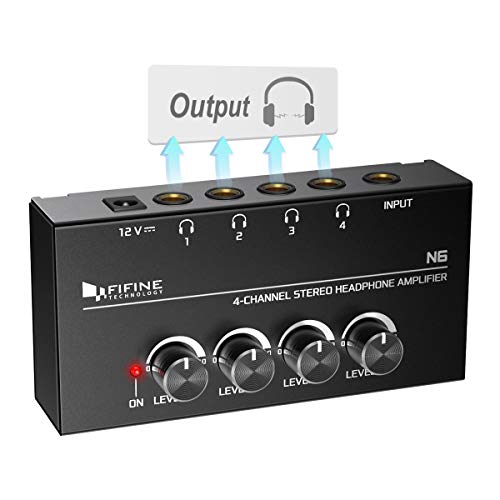
- Four stereo outputs with individual knobs
- Low noise and minimal distortion
- Compact metal design with power adapter included
Best For: Up to four listeners in studio, stage, or home use
Balanced 4-Channel Monitor Hub
Samson QH4 4-Channel Headphone Amplifier

- Four stereo headphone channels
- Two balanced inputs plus 1/8-inch aux
- Individual volume control on each output
Best For: Music production and podcast monitoring with flexible inputs
Eight-Output Studio Splitter
ART HeadAMP4 Eight Output Stereo Headphone Amplifier

- Eight headphone outputs in a compact unit
- Works with 1/8-inch and 1/4-inch connections
- Lower noise and lower distortion
Best For: Project studios that need more headphone outputs
Compact Studio Monitor Hub
LZSIG 6-Channel Headphone Amp with Bass Boost

- 6 headphone outputs with individual volume control
- Works with 3.5mm and 6.35mm headphones
- Bass Boost and metal build for studio use
Best For: Home studios and shared monitoring setups
Rackmount Multi-Mix Station
8-Channel Headphone Mixing Distribution Amp

- 8 channels and 16 headphone outputs
- Mono/stereo routing with rear-panel inputs
- 1U rack design with LED metering
Best For: Studio and live setups needing multiple discrete mixes
High-Power Multi-Out Monitor
Bolanle PH800 8-Channel Headphone Amp

- 16 outputs across 3.5mm and 6.35mm jacks
- Drives headphones up to 250Ω
- Mono/stereo switching for flexible monitoring
Best For: Bands and studios using higher-impedance headphones
Rackmount Studio Hub
Art HeadAmp6 Rackmount 6-Channel Stereo Headphone Amplifier
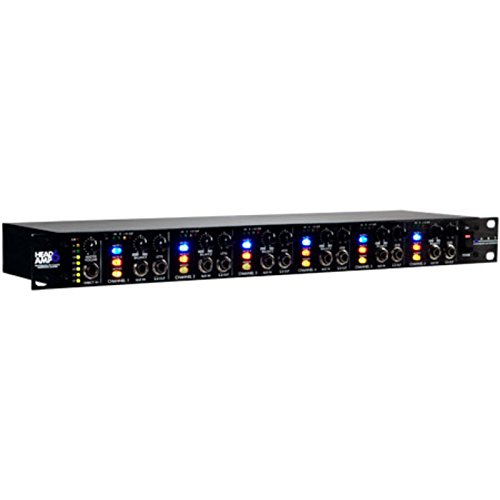
- Six independent channels with per-channel level control
- Drives up to 18 headphones with front/rear jacks
- XLR and 1/4" main I/O plus LED metering
Best For: Rackmount studios and rooms needing flexible multi-headphone monitoring
Portable Four-Listener Amp
4-Channel Portable Stereo Headphone Amplifier - Pyle PHA40

- Four independent headphone outputs with individual volume knobs
- Compact size makes it easy to carry for sessions or gigs
- Uses a 1/4" TRS input and standard TRS headphone outputs
Best For: Small studios and portable setups needing simple four-headphone monitoring
Eight-Output Portable Monitor
Headphone Amplifier 8 Channel, Stereo Headphone Amp

- Eight stereo outputs with individual volume controls
- Mono/stereo switch and one-input-to-eight-output distribution
- Metal construction with included 12V AC adapter
Best For: Studios and stage setups needing eight-channel monitoring in a portable format
Compact 4-Channel Splitter – Mackie HM-4 Headphone Amplifier
If you need simple headphone distribution amplifiers for rehearsals or tracking, the Mackie HM-4 keeps setup easy and practical. It takes a 1/4-inch or 1/8-inch source and gives four listeners their own level control in a very small metal box.
Best For: Small sessions, rehearsals, and anyone who wants a no-fuss 4-headphone monitor split.
Pros:
- Drives four headphones from either 1/4-inch or 1/8-inch sources
- Independent volume control for each listener
- Compact metal build that can mount or sit neatly on a desk
- Plug-and-play use with no power-supply hassle
Cons:
- Only provides four outputs
- Designed as a straightforward splitter, not a feature-heavy controller
For a compact monitoring solution, the HM-4 focuses on the essentials: multiple outputs, individual volume knobs, and easy integration into a small workspace.
Ultra-Compact Metal 4-Channel – FIFINE N6 4 Channels Metal Stereo Headphone Amplifier
The FIFINE N6 is a practical pick among headphone distribution amplifiers when you want four outputs from a single stereo source. It uses metal construction, individual volume knobs, and low-noise operation to keep shared listening or tracking sessions straightforward.
Best For: Studio, stage, or home setups that need a compact 4-way splitter with separate volume control.
Pros:
- Four 1/4-inch stereo headphone outputs with separate volume knobs
- Low noise and minimal distortion at high volume levels
- Compact metal build with tight connections and smooth knobs
- 12V DC power adapter included
Cons:
- TRS/TS cables are not included
- It is a 1-input/4-output unit, not a mixer
The N6 keeps the feature set focused on shared monitoring and stable signal distribution. If you need a rugged, small-format amplifier for up to four listeners, it covers the basics well.
Balanced 4-Channel Monitor Hub – Samson QH4 4-Channel Headphone Amplifier
The Samson QH4 fits the headphone distribution amplifiers category when you need a compact, wired monitoring hub with flexible input options. It provides four stereo headphone channels, individual volume control, and both balanced and aux connectivity for studio or shared listening setups.
Best For: Music production, podcasting, and shared monitoring where multiple stereo inputs and separate headphone levels matter.
Pros:
- Four independent 1/4-inch stereo headphone channels
- Individual volume control on each output
- Two balanced 1/4-inch inputs plus stereo 1/8-inch aux input/output
- Lightweight wired design with a 2-year limited warranty
Cons:
- Wired-only setup
- No noise control or advanced processing features
With its mix of input options and per-channel control, the QH4 is a strong fit for users who want more routing flexibility than a basic splitter without adding complexity.
Eight-Output Studio Splitter – ART HeadAMP4 Eight Output Stereo Headphone Amplifier
Among headphone distribution amplifiers, the ART HeadAMP4 stands out for feeding up to eight headphones from a compact stereo unit. It accepts both 1/8-inch and 1/4-inch inputs and outputs, and its metal case is built for home or project studio use.
Best For: Small studios that need more headphone outputs from a simple, low-noise stereo amplifier.
Pros:
- Eight headphone outputs in a compact 4-channel design
- 1/8-inch and 1/4-inch input/output compatibility
- Lower noise and lower distortion
- Stackable metal case for studio-friendly placement
Cons:
- Still limited to four channel groups despite eight outputs
- Designed for line-level or headphone-output sources, not broader routing
The HeadAMP4 is a practical choice when your priority is giving more listeners a clean headphone feed without taking up much space. Its combination of multiple outputs and simple connectivity makes it easy to fit into a project studio.
Compact Studio Monitor Hub – LZSIG 6-Channel Headphone Amp with Bass Boost
If you need headphone distribution amplifiers for a small studio, desk, or shared listening setup, this LZSIG unit is built around simple multi-out monitoring. It supports up to 6 pairs of 32–100Ω headphones, works with both 3.5mm and 6.35mm plugs, and adds independent level control for each channel so everyone can set their own listening level.
Best For: Home studios, shared monitoring, and compact setups that need multi-headphone output with bass boost.
Pros:
- 6-channel stereo design with independent volume control per output
- Supports both 3.5mm and 6.35mm headphones without adapters
- Bass Boost mode adds extra presence in vocals and bass frequencies
- Metal chassis and durable knobs for desk or portable use
Cons:
- Best matched to 32–100Ω headphones, not higher-impedance models
- Fewer outputs than larger rackmount distribution amps
- Bass Boost changes the sound rather than keeping it strictly flat
For a compact monitoring rig, this model covers the basics well: multiple listeners, easy plug compatibility, and per-channel control. Its sound-shaping switch and low-noise design make it a practical pick when you want headphone distribution without a large rack unit.
Rackmount Multi-Mix Station – 8-Channel Headphone Mixing Distribution Amp
For larger headphone distribution amplifiers, this 1U rackmount unit stands out with 8 channels, 16 headphone outputs, and flexible routing for studio or live monitoring. Each channel has independent volume control, dual mono/stereo input options, and rear-panel jacks that make it easier to build clean multi-listener monitoring chains.
Best For: Studios, live sound setups, and rack systems that need eight separate monitoring channels.
Pros:
- 8-channel design with up to 16 headphone outputs
- Independent channel control plus separate master input volume
- Front and rear 1/4" outputs with dedicated rear inputs
- 6-segment LED meters for real-time level monitoring
Cons:
- Uses 1/4" headphone connections rather than 3.5mm outputs
- Rackmount format is less convenient for ultra-portable setups
- Built for professional monitoring, so it may be more than a casual listener needs
This is a strong choice when you need a more structured distribution solution with real routing flexibility. The rack format, metering, and per-channel controls make it especially practical for users managing multiple mixes at once.
High-Power Multi-Out Monitor – Bolanle PH800 8-Channel Headphone Amp
If you want headphone distribution amplifiers that can handle tougher headphones, the Bolanle PH800 is built for high output and broad compatibility. It offers 16 total outputs across 3.5mm and 6.35mm jacks, supports mono or stereo monitoring, and is rated to drive headphones up to 250Ω for more demanding studio use.
Best For: Band rehearsals, studio monitoring, and professional headphones that need more driving power.
Pros:
- 8-channel amplifier with 16 total outputs
- Supports both 3.5mm and 6.35mm headphone plugs
- Rated for high-impedance headphones up to 250Ω
- Mono/stereo switching adds flexibility for different monitoring needs
Cons:
- Only one power level, so there’s less fine-grained output tailoring
- No LED metering or routing features like some rack units
- Water resistance is not listed, so it’s mainly for indoor use
The PH800 focuses on output power and connector flexibility rather than extra studio features. That makes it a straightforward option for groups that need loud, clean monitoring across many headphones, especially when higher-impedance models are part of the setup.
Rackmount Studio Hub – Art HeadAmp6 Rackmount 6-Channel Stereo Headphone Amplifier
If you need headphone distribution amplifiers for a studio or rehearsal setup, the ART HeadAmp6 is built for feeding multiple listeners from one source. It offers six independent high-power channels, per-channel mix/balance control, and enough output routing to connect and drive up to 18 headphones simultaneously.
Best For: Studios, bands, and production rooms that need a rackmount distribution amp with flexible per-channel monitoring.
Pros:
- Six independent headphone amp channels with individual output level control
- Per-channel balance/mix control and multiple monitoring settings
- Front-panel direct input plus front and rear headphone jacks
- XLR and 1/4" main inputs and output with LED metering
Cons:
- Rackmount design is less portable than compact desktop units
- More feature-rich than needed if you only need a simple splitter
This is the most flexible option in the group if you want a serious monitoring hub rather than a basic headphone splitter. The mix controls, metering, and multiple jack positions make it a practical choice for shared listening in professional spaces.
Portable Four-Listener Amp – 4-Channel Portable Stereo Headphone Amplifier – Pyle PHA40
For smaller headphone distribution amplifiers needs, the Pyle PHA40 keeps things simple with four independent channels in a compact body. It is designed to power up to four headphones at once, with separate volume controls for each listener and a straightforward 1/4" TRS audio input.
Best For: Home studios, portable recording setups, and small group listening sessions.
Pros:
- Powers up to four headphones simultaneously
- Independent volume control for each output
- Compact, road-friendly size for easy transport
- Low-noise design aimed at maintaining audio quality
Cons:
- Only supports four headphone outputs
- Fewer routing and monitoring features than rackmount models
This is a practical pick if you want an inexpensive, small-format distribution amp that gets the job done without taking up much space. It suits straightforward monitoring tasks where individual volume control matters more than advanced routing.
Eight-Output Portable Monitor – Headphone Amplifier 8 Channel, Stereo Headphone Amp
This STABCL unit is a strong fit if you want headphone distribution amplifiers that can handle larger listening groups without moving to a full rack system. It provides eight independent stereo channels, each with its own volume control, and can also function as an audio distributor with one input feeding eight outputs.
Best For: Recording studios, stage monitoring, and anyone who needs eight individually controlled headphone outputs.
Pros:
- Eight high-power stereo channels with independent volume control
- Mono/stereo switch for flexible source handling
- Can work as both a headphone amp and an audio distributor
- Metal aluminum-alloy build with included 12V AC adapter
Cons:
- 1/8" devices require a conversion plug
- Fewer physical routing details than some rackmount alternatives
Compared with smaller amps, this model gives you more output capacity while staying relatively portable. It is a sensible middle ground for users who need eight-channel monitoring, simple controls, and a rugged metal enclosure.
How We Picked the Best Headphone Distribution Amplifiers
We focused on Headphone Distribution Amplifiers that offer useful output counts, stable stereo performance, and enough power to support real-world monitoring needs. We also looked at build quality, connector flexibility, rack or desktop convenience, and whether the unit is better suited to casual shared listening or more demanding studio work.
Because different buyers need different setups, we prioritized a mix of compact 4-channel models and higher-capacity 6- to 8-channel units. That makes it easier to match the amplifier to the number of listeners, available space, and the type of source gear you already own.
Quick Comparison
Smaller 4-channel units are usually the best fit for portable rigs, solo creators, and small recording spaces. Mid-size models tend to work well in project studios that need several independent headphone feeds. Larger 8-channel designs are better when you need more listeners, more output flexibility, or a single hub for a group environment.
In this category, the most important difference is not just how many outputs a unit has, but how well it maintains usable volume and clean sound across every connected pair of headphones.
Key Buying Factors for Headphone Distribution Amplifiers
Channel Count and Output Style
Choose a unit based on how many listeners you need to support now and in the near future. Some Headphone Distribution Amplifiers offer multiple jacks per channel, while others focus on straightforward multi-out monitoring. If your setup changes often, extra outputs can be worth the added footprint.
Power and Headroom
More outputs do not automatically mean more usable volume. Check whether the amplifier can comfortably drive higher-impedance headphones, especially if your studio uses a mix of models. Good headroom helps prevent distortion when several listeners are monitoring at once.
Connectivity and Flexibility
Look for input options that match your mixer, interface, or playback device. Stereo compatibility, mono/stereo switching, and included adapters can make setup easier. For many buyers, the best Headphone Distribution Amplifiers are the ones that integrate cleanly without extra accessories.
Form Factor and Build
Desktop units are ideal for portability and simple setups, while rackmount models suit permanent studios and multi-user workspaces. Metal housings and secure knobs or switches are useful if the amplifier will be moved regularly or used heavily.
Who Should Buy Which Headphone Distribution Amplifiers?
If you are a solo creator, podcaster, or mobile recorder, a compact 4-channel model is usually the most practical choice. Small studios and rehearsal spaces often benefit from a mid-size unit with a better balance of output count and simplicity. If you run a shared control room, teaching space, or larger production setup, an 8-channel model is typically the smarter investment.
In short, the best choice depends on scale, not just specs. The right Headphone Distribution Amplifiers should fit your monitoring workflow, your headphone mix, and the amount of control each listener needs.