For church guitarists, the right processor should make it easy to move from subtle ambient textures to clear lead tones without fighting the gear.
This roundup of the best guitar effects processors for church musicians focuses on practical features like dependable presets, quiet operation, simple control, and sounds that sit well in a mix.
Best 10 Guitar Effects Processors for Church Musicians Picks for 2026
Portable HX Modeling
Line 6 POD Go Multi-Effects Pedal

- Large color display with simple controls
- 270+ HX and legacy amp/effect models
- Compact design with stereo effects loop
Best For: Church guitarists who need portable, flexible modeling
Feature-Packed Routing
VALETON GP-200 Multi-Effects Pedal

- 240+ effects with 140 amp/cab sims
- Stereo USB interface plus XLR and FX loop
- 256 presets, looper, and drum rhythms
Best For: Worship players needing flexible routing and recording support
Hands-On BOSS Control
BOSS ME-90 Guitar Multi-Effects Processor
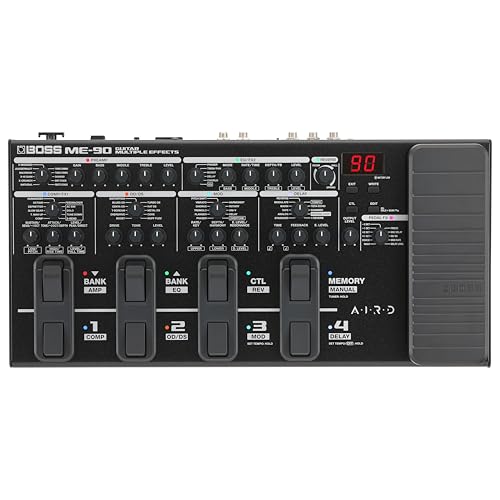
- Knob-based interface for quick setup
- 11 AIRD amp models with IR loading
- Eight footswitches and expression pedal
Best For: Stage players who want fast, intuitive worship-tone control
Compact Helix Power for Church Sets

- Same HX Modeling as Helix
- 300+ effects and models
- Up to 6 simultaneous blocks
Best For: Church players who want Helix-style tones in a small, easy-to-fit processor with deep editing.
Big-Touchscreen Worship Workstation

- 7-inch touchscreen interface
- Song/set list mode for services
- Amp and effect modeling with IR manager
Best For: Worship guitarists who want a large touchscreen workflow and organized setlist management.
Feature-Packed Stage Rig

- Over 240 effects and 140+ amp models
- Up to 11 simultaneous modules
- USB-C interface with looper and drum machine
Best For: Church guitarists who want lots of effects, routing flexibility, and built-in practice tools.
Budget Practice Pick
MOOER GE100 Multi-Effects Guitar Pedal

- 80 preset and 80 user patches
- 66 effect types across 8 modules
- 180-second looper and drum machine
Best For: Players who need a low-cost multi-effects unit with presets and basic live/practice tools
Portable Expression Pick
Zoom G1X Four Multi-Effects Processor

- 71 built-in effects and 13 amp models
- Integrated expression pedal
- 30-second looper with 68 rhythm patterns
Best For: Guitarists who want a portable multi-effects pedal with expression control and practice tools
Advanced Live Control Pick
MOOER GE150 Pro Multi Effects Processor

- 200 factory presets and 170 effects
- 55 amp models, 26 cab sims, 20 IR slots
- Four footswitches plus USB OTG recording
Best For: Players who want a feature-rich processor with expanded footswitch control and recording support
Portable HX Modeling – Line 6 POD Go Multi-Effects Pedal
If you want guitar effects processors for church musicians that stay simple on stage but still cover a wide range of tones, the Line 6 POD Go is built for that balance. Its large color display, compact footprint, and 270+ HX and legacy amp/effect models make it a practical pick for players who need dependable sounds without a steep setup process.
Best For: Church guitarists who want a portable, easy-to-read processor with plenty of amp and effect options.
Pros:
- Large color display and straightforward controls make it easy to use during services.
- Compact, lightweight design is convenient for travel and smaller pedalboard setups.
- 270+ HX and legacy amp/effect models provide broad tonal flexibility.
- Includes stereo effects loop, expression pedal, and third-party IR loading support.
Cons:
- Listed as a corded electric unit, so it is not a battery-powered option.
- Shoulder bag is sold separately.
Overall, the POD Go is a strong fit for church musicians who want a streamlined processor with pro-level modeling and practical stage-friendly control.
Pocket-Friendly BOSS Tone – BOSS GX-1 Guitar Effects Processor
The BOSS GX-1 is aimed at players who want guitar effects processors for church musicians in a very compact format without giving up core features. It combines 23 amplifier types, more than 140 BOSS effects, Bluetooth connectivity, and a color display, so it can handle quick tone changes and straightforward preset management in a worship setting.
Best For: Beginners or church players who want an ultra-portable processor with easy operation and classic BOSS tones.
Pros:
- Ultra-portable design fits easily in a guitar case or bag.
- 23 amplifier types and over 140 BOSS effects offer a wide sound palette.
- Color display, effect category buttons, and Gear Suite simplify setup.
- Includes 99 preset memories and 99 user memories for storing sounds.
Cons:
- Fewer amp types than some larger multi-effects processors.
- Not as deep as more advanced floor units for complex routing needs.
For church musicians who value portability and a simple workflow, the GX-1 offers a very practical entry into modern multi-effects processing.
Feature-Packed Routing – VALETON GP-200 Multi-Effects Pedal
Valeton GP-200 Multi-Effects Processor for Guitar & Bass, Expression Pedal, MIDI, USB Interface
Check Price On AmazonFor church musicians who need guitar effects processors with lots of routing options, the VALETON GP-200 stands out for its wide feature set. It offers 240+ built-in effects, 140 amplifier and cabinet simulations, IR support, a stereo USB audio interface, and flexible I/O, making it a strong choice for players who want one unit to cover direct-to-PA and practice needs.
Best For: Worship players who want extensive effects, flexible connectivity, and built-in recording/interface features.
Pros:
- 240+ effects and 140 amp/cab simulations create a very broad sound library.
- FX loop, MIDI input, line/XLR/headphone outputs, and USB-C interface add flexibility.
- 4.3-inch color LCD and 8 customizable LED footswitches support hands-on control.
- Includes 256 presets, a looper, and 100 built-in drum rhythms.
Cons:
- Feature-rich layout may be more than some players need for basic worship rigs.
- It is a corded electric unit rather than a battery-powered processor.
The GP-200 is a strong all-rounder for church setups that need deep editing, flexible outputs, and interface-style functionality in one pedal.
Hands-On BOSS Control – BOSS ME-90 Guitar Multi-Effects Processor
BOSS ME-90 Guitar Multi-Effects Guitar Processor | All-In-One Guitar Processor
Check Price On AmazonThe BOSS ME-90 is a practical option for church musicians who want guitar effects processors that feel fast and familiar on stage. Its knob-based interface, 11 AIRD amp models, 60 effects, IR loading, and eight multi-function footswitches make it easy to build and adjust tones without diving into complicated menus.
Best For: Guitarists who want an intuitive, stage-friendly BOSS processor with solid amp modeling and broad effects coverage.
Pros:
- Stompbox-style knob layout makes sound creation quick and intuitive.
- 11 AIRD amp models, IR loading, and an effects loop add useful tone-shaping tools.
- Eight multi-function footswitches and a redesigned expression pedal improve live control.
- 36 preset patches and 36 user patches provide room for worship-ready setups.
Cons:
- Patch memory is smaller than some larger multi-effects units.
- Optional Bluetooth adapter is sold separately for mobile editing/streaming.
Overall, the ME-90 is a strong fit for players who prioritize fast hands-on control and dependable BOSS processing over deep menu editing.
Compact Helix Power for Church Sets – Line 6 HX Stomp
If you need guitar effects processors for church musicians that can cover a wide range of worship sounds without taking over your pedalboard, the Line 6 HX Stomp is a smart compact option. It uses the same HX Modeling found in Helix and gives you access to more than 300 effects and models, plus up to 6 simultaneous amp, cab, and effect blocks with IR loading and a looper.
Best For: Church players who want Helix-style tones in a small, easy-to-fit processor with deep editing.
Pros:
- Same HX Modeling platform as Helix for a broad range of tones
- More than 300 effects and models from Line 6’s HX, M-Series, and legacy lines
- Up to 6 simultaneous blocks, including amp, cab, effects, looper, and IR support
- 3 capacitive-sensing footswitches with color-coded LED rings for quick control
Cons:
- Only 3 footswitches, so hands-on live control is more limited than larger units
- Requires external power supply
- Compact layout may feel less immediate if you prefer a workstation-style interface
Overall, the HX Stomp is a practical pick if your church rig needs strong modeling in a small footprint. It balances flexibility and size well, especially for players who build preset-based worship tones.
Big-Touchscreen Worship Workstation – Fender Tone Master Pro
For guitar effects processors for church musicians that prioritize setlist workflow and fast navigation, the Fender Tone Master Pro is built like a full workstation. Its 7-inch touchscreen, amp modeling, effect modeling, song/set list mode, and IR manager make it well suited to players who move between multiple songs and tones in service.
Best For: Worship guitarists who want a large touchscreen workflow and organized setlist management.
Pros:
- 7-inch touchscreen for direct, visual control
- Song/set list mode helps organize tones for church services
- Amp modeling and effect modeling cover core worship sounds
- IR manager adds practical cab management
Cons:
- Larger and heavier than compact processors
- More of a floor workstation than a grab-and-go pedal
- USB-focused hardware interface may not suit every simple pedalboard setup
This is a strong choice if your church rig benefits from a big, touch-driven interface and easy preset organization. It fits players who want a more production-style command center on the floor.
Feature-Packed Stage Rig – Valeton GP-200
If you want guitar effects processors for church musicians that pack in performance tools without a huge price or footprint, the Valeton GP-200 is worth a close look. It offers over 240 effects, 140+ amp and cabinet models, up to 11 simultaneous modules, plus an IR loader, looper, drum machine, and USB audio interface for flexible worship use.
Best For: Church guitarists who want lots of effects, routing flexibility, and built-in practice tools.
Pros:
- Over 240 effects and 140+ guitar, bass, and acoustic amp/cab models
- Up to 11 simultaneous modules for more complex signal chains
- Built-in looper, drum patterns, and chromatic tuner for practice and live use
- USB-C audio interface with loopback and re-amping support
Cons:
- More complex than a simple compact pedal
- 9V/500mA power requirement may limit casual power options
- Built-in expression pedal adds size compared with smaller units
The GP-200 stands out when you want maximum features for rehearsals and services in one unit. It is especially appealing for church players who also want recording or interface functionality from the same processor.
Budget Practice Pick – MOOER GE100 Multi-Effects Guitar Pedal
If you want one of the more affordable guitar effects processors for church musicians, the MOOER GE100 gives you a lot of practical tone tools in a small footprint. It offers 80 preset patches, 80 user patches, 66 effect types across 8 modules, plus an expression pedal, tuner, looper, and drum machine for rehearsal and simple worship-set ideas.
Best For: Players who need a low-cost multi-effects unit with presets, expression control, and basic loop/rhythm features for practice or straightforward live use.
Pros:
- 80 preset patches and 80 user patches for building a personal sound library
- 8 effect modules with 66 effect types for broad tone shaping
- Assignable expression pedal and adjustable output mode for added flexibility
- 180-second looper and built-in drum machine for practice and songwriting
Cons:
- Uses a simpler control layout with knob-based operation rather than deeper footswitch control
- Best suited to basic tone building rather than advanced routing or modeling features
- Designed around a compact feature set, so it may not suit players needing extensive live-performance control
For church musicians who mainly need dependable presets, easy saving, and a few built-in practice tools, the GE100 is a practical entry-level choice. Its line-out mode and included expression pedal make it more flexible than many budget units, especially when playing without an amp.
Portable Expression Pick – Zoom G1X Four Multi-Effects Processor
The Zoom G1X Four is a compact option in the guitar effects processors for church musicians category when you want a simple all-in-one pedal for practice, songwriting, and live use. It includes 71 built-in effects, 13 amp models, an expression pedal, a 30-second looper, and 68 rhythm patterns, giving you a lot of variety without taking up much space.
Best For: Guitarists who want a portable multi-effects pedal with expression control, amp models, and built-in rhythm tools for practice or smaller church setups.
Pros:
- 71 effects and 13 amp models for a wide range of sounds
- Integrated expression pedal for real-time control
- 30-second looper and 68 rhythm patterns for practice and arranging
- Supports USB editing with Zoom Guitar Lab for patch creation and tone management
Cons:
- Looper is limited to 30 seconds, which may be restrictive for longer worship ideas
- Feature set is strong for its size, but it is still aimed at compact, entry-to-mid use
- Best experience depends on using the companion software for deeper editing
For church musicians who need an easy-to-carry processor with useful editing and performance tools, the G1X Four is a strong practical fit. Its mix of effects, amp models, and rhythms makes it useful for rehearsal, silent practice, and basic live pedalboard setups.
Advanced Live Control Pick – MOOER GE150 Pro Multi Effects Processor
For church musicians looking at more advanced guitar effects processors for church musicians, the MOOER GE150 Pro stands out with deeper control and a larger tone library. It includes 200 factory presets, 170 effects, 55 amp models, 26 cab simulations, 20 IR slots, four multi-purpose footswitches, an expression pedal, and built-in looper and drum machine features for live and rehearsal use.
Best For: Players who want a feature-rich processor with expanded footswitch control, amp/cab modeling, and recording support for more involved church and stage setups.
Pros:
- 200 factory preset tones and 170 effects for broad sound coverage
- 55 amp models, 26 cab sims, and 20 IR slots for detailed tone shaping
- Four multi-purpose footswitches for flexible live control
- USB OTG recording plus built-in looper and drum machine for practice and capture
Cons:
- More complex than simpler multi-effects units, so it may take more time to learn
- Designed as a higher-feature processor, which may be more than some basic players need
- Cabled power on the standard model means it is less portable than battery-based options
If your priority is live flexibility and a larger effects engine, the GE150 Pro is the most capable of the three options here. Its footswitch layout, modeling support, and recording features make it especially appealing for church players who want one processor to cover rehearsal, stage use, and quick audio capture.
How We Picked the Best Guitar Effects Processors for Church Musicians
We focused on Guitar Effects Processors for Church Musicians that are easy to program, versatile enough for modern worship styles, and dependable in live service use. Priority went to units with strong amp modeling, usable delays and reverbs, expression control, USB connectivity, and interface layouts that do not slow down patch changes on stage.
Quick Comparison
For simple plug-and-play use, compact all-in-one units are often the fastest path. If you want deeper tone shaping, amp and cab simulation, IR support, or more flexible routing, step up to higher-end models. Budget options can cover basic worship needs, while premium workstations are better for players who build multiple scenes, setlists, and direct-to-PA rigs.
Key Buying Factors for Guitar Effects Processors for Church Musicians
Tone Quality and Ambient Effects
Church guitar parts often rely on clean headroom, delay, modulation, and reverb rather than heavy gain. Look for processors that keep repeats clear, ambience natural, and picking dynamics intact so your parts do not clutter vocals or keys.
Preset Switching and Workflow
Fast, reliable switching matters on worship stages. Favor processors with easy preset organization, scene or stomp modes, and clear footswitch labeling. If you rotate between rhythm, swells, and lead parts within one song, workflow can matter as much as raw sound quality.
Direct Recording and FOH Options
Many churches run direct to front of house, so amp modeling, cab simulation, and IR loading can be essential. These features help you send a consistent signal to the mixer without depending on a loud amp on stage.
Connectivity and Expansion
USB audio, MIDI, expression pedal support, and effect loops can make a processor much more useful over time. These features are especially helpful if you use external drive pedals, need computer editing, or want tighter control in a larger church rig.
Who Should Buy Which Guitar Effects Processors for Church Musicians?
Choose a compact processor if you want a simple, portable setup for weekend services and rehearsals. Pick a midrange model if you need better editing, more effects blocks, or direct-to-PA flexibility. Go with a premium workstation if you play multiple parts, need advanced routing, or want one device to cover church, studio, and touring use. For most players, the best Guitar Effects Processors for Church Musicians are the ones that balance great clean tones, quick operation, and dependable stage consistency.