Choosing the right graphic studio equalizer can make a system easier to tune, smoother to listen to, and more precise for music, DJ, or home audio setups.
Below, you’ll find a focused roundup of 10 options with different band counts, formats, and feature sets so you can match the equalizer to your system and workflow.
Best 10 Graphic Studio Equalizer Picks for 2026
Rack-Ready Precision
dbx 231s Dual Channel 31-Band Equalizer

- Dual 31-band, 1/3-octave EQ
- Switchable 6 dB or 12 dB ranges
- Front bypass and LED output metering
Best For: Dual-channel rack EQ in studio or live setups
Digital EQ With Visualization
Stereo Graphic Equalizer, 31-Band Digital Audio Processor

- 31-band EQ with ±12 dB control
- Bluetooth 5.4 and wired digital inputs
- LED spectrum display with preset memory
Best For: Home theater and studio users wanting digital EQ plus visuals
Ultra-Compact Feedback-Finder
Behringer MiniFBQ FBQ800 9-Band Graphic Equalizer
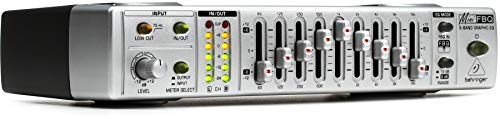
- Ultra-compact 9.5-inch chassis
- FBQ Feedback Detection System
- Low-cut filter and LED meters
Best For: Small studio or stage setups needing compact EQ and feedback detection
Multi-Input Visual Equalizer
Decibelvibe TNZ SGE6 Audio Graphic Equalizer

- 31-band spectrum display with 15-band EQ
- RCA, 3.5 mm, USB, and Bluetooth inputs
- Built-in mic for cable-free visualization
Best For: Home audio, DJ, and HiFi setups wanting visual EQ with flexible connections
Studio-Ready 15-Band Control
15-Band Stereo EQ for Home Audio
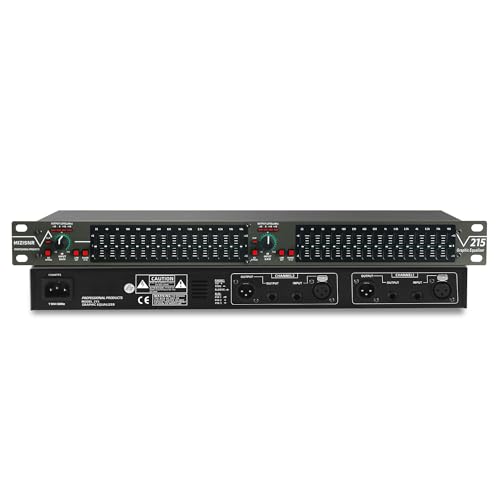
- Dual-channel 15-band EQ with ±12dB per band
- LOW-CUT and BYPASS switches for cleaner tuning
- XLR and 1/4" TRS I/O for flexible rack setups
Best For: Home audio, studios, and live rigs needing simple dual-channel EQ control
Fine-Tune Precision
31-Band Stereo EQ for Home Audio

- 31-band dual-channel EQ for finer frequency control
- 4-segment LED ladders show output and gain reduction
- LOW-CUT, BYPASS, XLR, and TRS support included
Best For: DJs and studio setups that need detailed EQ shaping and visual monitoring
Digital Control Hub
31-Band Graphic EQ with Spectrum Display

- 31-band DSP EQ with real-time spectrum monitoring
- Bluetooth 5.2, USB playback, and 10 presets
- Dedicated subwoofer output with adjustable bass range
Best For: Home theater and studio setups that want digital EQ features with extra connectivity
Pro Rack EQ
Stereo Graphic Equalizer 15-Band EQ

- Dual-channel 15-band control with ±12dB per band
- Low-cut switch and dedicated bass output
- 1U rack-mount with XLR and 1/4" TRS connectivity
Best For: Rack-mounted home audio and DJ systems
Digital Precision EQ

- 31-band dual-channel design with PC software tuning
- 10 presets, bypass mode, and large LED display
- Balanced XLR, TRS, and L/R connectivity
Best For: Detailed studio or live sound equalization
Clean Rack EQ
Graphic Equalizer 15-Band Stereo EQ

- 15-band dual-channel EQ with ±12dB control
- LOW-CUT and BYPASS switches for cleaner setup
- XLR balanced and 1/4" TRS I/O in a 1U rack design
Best For: Simple pro-style rack equalization
Rack-Ready Precision – dbx 231s Dual Channel 31-Band Equalizer
If you need a graphic studio equalizer for serious routing and room control, the dbx 231s keeps things straightforward with dual 31-band, 1/3-octave constant-Q adjustment and switchable 6 dB or 12 dB boost/cut ranges. It is built in a standard rack format and gives you front-panel bypass plus level metering, so it fits well in live or studio signal chains where quick, reliable control matters.
Best For: Engineers, studios, and live setups that want dual-channel 31-band EQ with simple rack-based operation.
Pros:
- Dual 31-band, 1/3-octave constant-Q frequency bands
- Switchable boost/cut ranges of 6 dB or 12 dB
- Front panel bypass switch for fast A/B checking
- 4-segment LED ladders for output monitoring
Cons:
- No digital display or modern visual spectrum features
- Designed for rack use, so it is not the most compact option
The dbx 231s is a practical choice when you want familiar, dependable EQ control without extra frills. Its balanced I/O and direct layout make it a solid fit for users who value signal shaping and level awareness over advanced processing extras.
Digital EQ With Visualization – Stereo Graphic Equalizer, 31-Band Digital Audio Processor
This graphic studio equalizer is aimed at users who want detailed tone shaping plus a visual readout of the mix. It offers 31-band adjustment from 32 Hz to 16 kHz with ±12 dB control per band, Bluetooth 5.4, and multiple wired inputs, making it a flexible fit for home theater, recording, and general audio setups.
Best For: Home theaters, recording spaces, and users who want a modern digital equalizer with broad connectivity.
Pros:
- 31-band precision tuning from 32 Hz to 16 kHz
- Bluetooth 5.4 plus optical, coaxial, USB, and RCA inputs
- 31-segment LED spectrum display with 12 rhythm modes
- 1U metal chassis for rack-style installation
Cons:
- More feature-heavy than a basic analog EQ
- Best suited to users comfortable with digital controls and presets
For buyers who want a studio-style equalizer with visual feedback and modern input options, this model offers a lot in a compact rack footprint. Its mix of tuning flexibility, auto-save presets, and display features makes it especially appealing for multi-use audio systems.
Ultra-Compact Feedback-Finder – Behringer MiniFBQ FBQ800 9-Band Graphic Equalizer
If you want a compact graphic studio equalizer for quick correction and feedback spotting, the Behringer MiniFBQ FBQ800 keeps the setup small while still covering core EQ duties. Its 9-band layout, FBQ Feedback Detection System, and low-cut filter make it useful for studio and stage applications where space is limited but troubleshooting still matters.
Best For: Small studio rigs and stage setups that need compact EQ control with feedback detection.
Pros:
- Ultra-compact 9.5-inch design for tight spaces
- FBQ Feedback Detection System helps reveal problem frequencies
- Additional low-cut filter removes unwanted rumble
- 6-digit LED input/output meters for level checking
Cons:
- Only 9 bands, so it offers less control than 31-band units
- Best for targeted correction rather than detailed tonal shaping
The FBQ800 is a practical pick when footprint and feedback detection matter more than deep EQ complexity. It is a simple, focused tool for users who need compact equalization and clear level monitoring in a small system.
Multi-Input Visual Equalizer – Decibelvibe TNZ SGE6 Audio Graphic Equalizer
The Decibelvibe TNZ SGE6 is a graphic studio equalizer built for users who want both sound control and a visual spectrum display. It combines rear RCA and 3.5 mm inputs/outputs with USB and Bluetooth 5.0 connectivity, plus a built-in microphone for spectrum display without connecting source cables, which makes it a flexible option for home audio, DJ, and HiFi setups.
Best For: Home audio, DJ, and HiFi users who want a visualizer-style equalizer with flexible input options.
Pros:
- 31-band music spectrum display with 15-band EQ for two channels
- Rear RCA and 3.5 mm auxiliary inputs/outputs
- USB and Bluetooth 5.0 inputs for wireless use
- Built-in microphone can display the spectrum without audio cables
Cons:
- Uses a 15-band EQ layout for two channels rather than full 31-band EQ control
- Requires a CR2 battery for the included functionality noted in the listing
For buyers who want a mix of equalization, visualization, and modern connectivity, the SGE6 covers a lot of ground. Its adjustable output amplitude and color options add flexibility, though it is more of a versatile audio processor than a strict pro-grade rack EQ.
Studio-Ready 15-Band Control – 15-Band Stereo EQ for Home Audio
If you want a graphic studio equalizer that gives you precise, hands-on control without overcomplicating the setup, this 15-band stereo EQ is a practical option. It offers dual-channel adjustment with a ±12dB range per band, plus low-cut filtering to help tame rumble, hum, and other unwanted low-end noise.
Best For: Home audio users, studio setups, and live applications that need straightforward dual-channel EQ control.
Pros:
- 15-band dual-channel design with adjustable ±12dB per band
- LOW-CUT switch helps reduce wind noise, floor rumble, and electrical hum
- BYPASS switch makes A/B checking and machine debugging easier
- XLR balanced and 1/4" TRS input/output support adds setup flexibility
Cons:
- Does not include the broader band count of a 31-band model
- No built-in display or analyzer feedback mentioned
- More basic feature set than digital EQ units with presets or playback
Overall, this EQ suits buyers who value simple, rack-mountable control and solid noise reduction over advanced visual tools. It is a sensible pick if you need dependable analog-style tuning for a studio or PA chain.
Fine-Tune Precision – 31-Band Stereo EQ for Home Audio
This graphic studio equalizer is built for users who want more detailed control than a 15-band unit can provide. Each channel has 31 bands with a ±12dB range, and the 4-segment LED ladders give clear visual feedback for gain reduction and output levels.
Best For: DJs, studio users, and installers who want detailed EQ shaping with strong visual monitoring.
Pros:
- 31-band dual-channel layout offers finer frequency control
- 4-segment LED ladders provide useful level and gain-reduction monitoring
- LOW-CUT and BYPASS switches support cleaner signal management
- XLR balanced and 1/4" TRS connections suit many audio setups
Cons:
- Heavier and larger than the 15-band version
- More controls may be unnecessary for simple home listening setups
- No digital presets or playback features are listed
If you want more precise tuning and visible signal monitoring, this 31-band EQ is the more capable option. It fits well in live, studio, or installed systems where detailed adjustment matters.
Digital Control Hub – 31-Band Graphic EQ with Spectrum Display
For buyers seeking a more feature-rich graphic studio equalizer, this digital 31-band EQ adds real-time spectrum monitoring, Bluetooth 5.2, USB playback, and an independent subwoofer output. It is aimed at users who want tuning flexibility alongside convenient playback and noise reduction.
Best For: Home theater, DJ, KTV, and studio users who want digital EQ tools plus extra playback connectivity.
Pros:
- 31-band DSP EQ with real-time frequency monitoring
- 10 custom presets for quick recall of sound settings
- Bluetooth 5.2 and USB playback expand source options
- Independent subwoofer output with adjustable 50Hz to 250Hz range
Cons:
- More complex than a basic analog EQ
- At 1U rack size, it is still designed for fixed installations rather than portable use
- Users who only need simple tone shaping may not use all the extra features
This model stands out if you want an EQ that does more than tone shaping alone. The display, presets, and connectivity options make it a strong fit for systems that need both control and convenience.
Pro Rack EQ – Stereo Graphic Equalizer 15-Band EQ
If you want a graphic studio equalizer for precise system tuning, this dual-channel 15-band model gives you a straightforward way to shape sound in a home audio rack or pro DJ setup. Each channel offers ±12dB control, plus a low-cut feature and dedicated bass output for tightening up the bottom end.
Best For: Home audio owners, DJs, and installers who want a rack-mount stereo EQ with flexible input/output options and simple bypass operation.
Pros:
- Dual-channel 15-band design with ±12dB adjustment per band
- Low-cut control and dedicated bass output for low-end tuning
- XLR balanced and 1/4" TRS connections for flexible integration
- 1U rack-mount format with bypass mode for easy setup and debugging
Cons:
- Wired rack unit, so it is not a portable tabletop EQ
- More control than casual listeners may need
- Best suited to systems with compatible XLR or TRS gear
This EQ is a practical pick if you want manual control over stereo sound and need hardware that fits cleanly into a rack. Its emphasis on precise band adjustment, low-frequency cleanup, and flexible wiring makes it a solid fit for tuned audio systems.
Digital Precision EQ – 31-Band Digital Equalizer
For buyers comparing a graphic studio equalizer with deeper control, this 31-band digital model stands out for fine-grained tuning and PC software support. It works across home stereo, studio, and live audio setups, with dual-channel control, preset recall, a large LED display, and built-in noise reduction.
Best For: Users who want detailed frequency shaping, software-assisted tuning, and digital features for studio or live sound.
Pros:
- 31-band dual-channel EQ for detailed frequency adjustment
- PC software support for fine-tuning and setup control
- 10 presets plus bypass mode for quick comparisons
- Large LED display and multiple I/O options including XLR and TRS
Cons:
- Digital feature set may be more than basic home users need
- Requires corded power and PC software for full tuning workflow
- Noise reduction is adjustable, not a full replacement for good source audio
This is the most feature-rich option in the group if you want more than simple tone shaping. The combination of 31 bands, preset memory, and software tuning makes it especially useful when you need repeatable, detailed control over the sound.
Clean Rack EQ – Graphic Equalizer 15-Band Stereo EQ
If you need a graphic studio equalizer for straightforward rack-based sound shaping, this 15-band stereo unit focuses on the essentials. It offers dual-channel control, ±12dB adjustment per band, a LOW-CUT switch for reducing rumble and hum, and a BYPASS switch for quick setup checks.
Best For: Buyers who want a simple, professional 1U stereo EQ for home audio, studio, or live applications.
Pros:
- Dual-channel 15-band design with ±12dB per band
- LOW-CUT switch helps reduce wind noise, floor rumble, and hum
- BYPASS switch makes machine debugging easier
- XLR balanced and 1/4" TRS inputs and outputs for broad compatibility
Cons:
- Fewer bands than a 31-band digital EQ
- No PC software or display-based tuning tools
- Racks and compatible audio connections are required for best use
This model keeps the workflow simple while still offering the control most rack users want. If you prefer a manual stereo equalizer with low-cut filtering and easy bypass operation, it is a clean, practical choice.
How We Picked the Best Graphic Studio Equalizer
For this Graphic Studio Equalizer roundup, we focused on practical buyer needs: channel count, band count, rack-mount compatibility, noise control, and the inputs and outputs most shoppers actually use. We also looked for models that make setup straightforward, whether you want a simple stereo correction tool or a more detailed tuning solution.
Quick Comparison
The main tradeoff is simplicity versus precision. 9-band units are easier to use and suit smaller systems, while 15-band models offer a more balanced middle ground. 31-band equalizers give the finest control and are often the better choice when you need detailed room correction, system tuning, or DJ-style adjustments. Digital models may add display, PC control, or extra connectivity, while analog rack units tend to be more direct and reliable for traditional setups.
Key Buying Factors for Graphic Studio Equalizer
Band Count
Choose the number of bands based on how much control you want. More bands mean more precise adjustments, but also more complexity. If you just want broad tone shaping, fewer bands may be enough. If you are correcting room issues or dialing in a system for performance, 31-band options are often the strongest fit.
Connectivity and Input Options
Check whether the unit supports RCA, 3.5 mm, XLR, or other inputs and outputs that match your gear. Some Graphic Studio Equalizer models also include Bluetooth, USB, PC control, or subwoofer output, which can be useful if you want more flexibility.
Noise and Signal Quality
Look for low-noise design, independent channel tuning, and clean bypass behavior. These features matter when you want to improve sound without adding hiss or distortion.
Form Factor
Most buyers will want a 1U rack-mount design for easy integration with home audio, studio, or DJ equipment. Compact tabletop models can work better for smaller spaces or portable setups.
Who Should Buy Which Graphic Studio Equalizer?
If you want the simplest upgrade, choose a compact model with fewer bands and basic controls. If you are building or refining a home theater, stereo system, or DJ rack, a 15-band Graphic Studio Equalizer is often the best middle-ground option. If you need maximum tuning precision or plan to shape a challenging room or speaker setup, go with a 31-band unit. Buyers who value modern convenience should consider digital models with display features or PC connectivity, while those who want a straightforward analog workflow may prefer a classic rack-mount equalizer.