Choosing the right floor guitar effects processor can simplify your rig, expand your tones, and cut down on pedalboard clutter. Whether you want studio-ready amp modeling or a straightforward all-in-one practice tool, the best options today cover a wide range of players and budgets.
This roundup focuses on practical features that matter most: sound quality, ease of use, preset flexibility, expression control, connectivity, and overall value. The goal is to help you find a processor that fits how you actually play.
Best 10 Floor Guitar Effects Processors Picks for 2026
Editor’s Pick
VALETON GP-200 Multi-Effects Processor

- 240+ effects with 140 amp/cab simulations
- USB-C interface, FX loop, MIDI, and XLR/headphone I/O
- 4.3-inch color LCD with 8 customizable footswitches
Best For: Players who want a feature-rich all-in-one processor with deep modeling
Best Hands-On Control
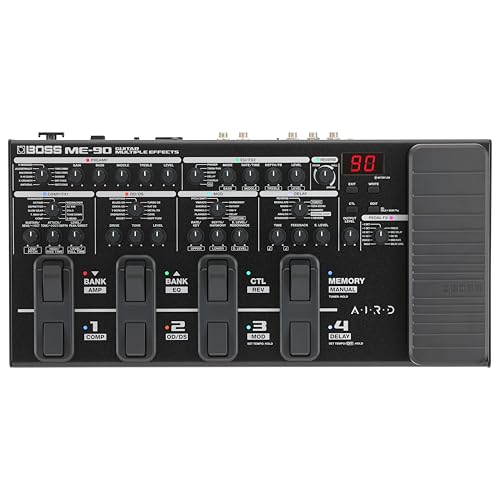
- Knob-based layout for fast tone building
- 11 AIRD amp models and 60 effects from GT-1000
- Eight footswitches plus redesigned expression pedal
Best For: Guitarists who want a compact, hands-on processor with fast editing
Best Portable Choice
Line 6 POD Go Multi-Effects Pedal

- Large color display with a simple interface
- 270+ HX and legacy amp/effects models
- Compact design with third-party IR loading
Best For: Guitarists who want a lightweight processor with modern modeling
Best Budget Pick
Zoom G1 Four Multi-Effects Processor
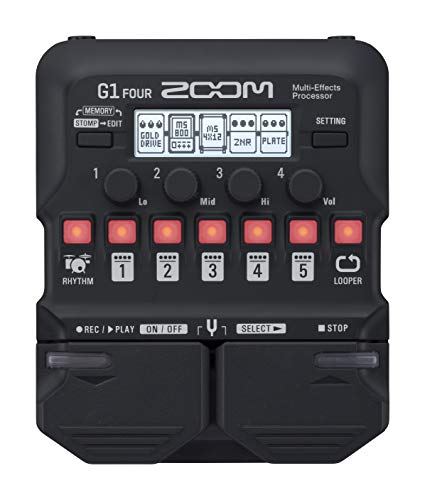
- 65 effects and 13 amp models
- 30-second looper and 68 rhythm patterns
- Battery powered with aux input and headphone output
Best For: Beginners and budget-minded players who want essential features
Smart Modeling Multi-Effects

- 130+ effects with 100 preset slots
- Supports NAM and third-party IR files
- USB audio interface with loopback and re-amp
Best For: Players who want a portable floor processor with amp/cab modeling and deep editing
Performance-Focused Preset Engine

- 200 presets with 170 effects and amp/cab modeling
- Four footswitches plus expression pedal control
- USB OTG recording and phone connectivity
Best For: Live players and practicing guitarists who want flexible preset switching and hands-on control
Budget Practice Multi-Effects

- 71 effects and 13 amp models
- 30-second looper with 68 rhythm patterns
- Zoom Guitar Lab editing support
Best For: Beginners and budget-minded players who want a compact practice-friendly multi-effects pedal
Entry-Level Patch Library
MOOER GE100 Multi-Effects Guitar Pedal

- 80 preset and 80 user patches
- 66 effects across 8 modules
- 180-second looper and drum machine
Best For: Players who want an affordable all-in-one floor processor for practice and preset building.
Stage-Ready Modeling Rig
Valeton GP-200 Multi-Effects Processor

- 240+ effects with 140+ amp/cab models
- USB-C audio interface with re-amping
- 256 patches plus IR loading support
Best For: Gigging players who want deep modeling, USB audio, and flexible live control.
Compact Modern Modeling
MOOER GE150 Plus Multi Effects Processor

- 198 preset patches and 55 preamp models
- Third-party IR, NAM, and MNRS support
- Delay/reverb spill-over with looper and drums
Best For: Players who want a compact modern processor with flexible model loading and smooth transitions.
Editor’s Pick – VALETON GP-200 Multi-Effects Processor
Valeton GP-200 Multi-Effects Processor for Guitar & Bass, Expression Pedal, MIDI, USB Interface
Check Price On AmazonIf you want a floor guitar effects processor that covers a lot of ground without feeling limited, the VALETON GP-200 is built for exactly that kind of job. It packs a large effects library, amp and cab modeling, IR support, and flexible routing into a floorboard format that can handle practice, recording, and live use.
Best For: Players who want a feature-rich all-in-one processor with extensive modeling and routing options.
Pros:
- 240+ built-in guitar, bass, and acoustic effects plus 140 amp/cab simulations
- Supports 20 third-party IRs and up to 11 simultaneous effect blocks
- 4.3-inch color LCD, 8 customizable LED footswitches, and user-friendly controls
- USB-C audio interface, stereo streaming, FX loop, MIDI, and XLR/headphone I/O
Cons:
- Large feature set may be more than a simple plug-and-play player needs
- Requires learning the signal chain and preset management to get the most from it
The GP-200 stands out for players who want deep tone-shaping and connectivity in one floor unit. If you need broad effects coverage and modern routing, it is a strong candidate in this category.
Best Hands-On Control – BOSS ME-90 Guitar Processor
BOSS ME-90 Guitar Multi-Effects Guitar Processor | All-In-One Guitar Processor
Check Price On AmazonThe BOSS ME-90 is a floor guitar effects processor for players who prefer quick, tactile control over menu diving. Its knob-based layout, AIRD amp models, and broad effect selection make it easy to build tones fast, whether you are rehearsing, gigging, or dialling in patches at home.
Best For: Guitarists who want a compact, hands-on processor with strong BOSS tones and fast editing.
Pros:
- Intuitive stompbox-style interface with dedicated knobs
- 11 AIRD amp models and 60 effects derived from the GT-1000
- Eight multi-function footswitches and redesigned expression pedal with toe switch
- 36 preset patches, 36 user patches, and BOSS Tone Studio support
Cons:
- Not as deep in routing and extras as some larger floor processors
- Optional Bluetooth adaptor is needed for wireless audio/MIDI features
This is a practical choice if you value speed and simplicity without giving up strong processing quality. For players who want a familiar pedalboard feel, the ME-90 is an easy unit to live with.
Best Portable Choice – Line 6 POD Go Multi-Effects Pedal
The Line 6 POD Go is a strong pick if you want a floor guitar effects processor that stays simple and portable. It combines a large color display, a compact footprint, and a deep model library, so it works well for players who want a streamlined board with plenty of tone options.
Best For: Guitarists who want a lightweight, easy-to-use processor with modern modeling and a compact footprint.
Pros:
- Large color display with a simple interface
- 270+ HX and legacy amp/effects models
- Third-party IR loading and stereo effects loop
- Compact, ultra-portable design with expression pedal and footswitch input
Cons:
- Less physically large and expansive than some fuller-featured floorboards
- Non-wireless design may matter to users wanting built-in wireless connectivity
The POD Go is best when you want a balanced blend of portability and modeling depth. It is a sensible floor unit for players who value a clean layout and a straightforward workflow.
Best Budget Pick – Zoom G1 Four Multi-Effects Processor
The Zoom G1 Four is a compact floor guitar effects processor aimed at players who want an affordable way to access a wide range of effects. With built-in amp models, a looper, rhythm patterns, and software support, it covers the basics well for practice and home use.
Best For: Beginners and budget-minded players who want a small processor with essential features.
Pros:
- 65 built-in guitar effects and 13 amp models
- 30-second looper for practice and song ideas
- 68 built-in rhythm patterns for backing play
- Battery powered, with aux input and amp/headphone output
Cons:
- Smaller feature set than more advanced floor processors
- Basic hardware layout compared with larger multi-effects units
If you want a simple entry point into multi-effects, the G1 Four makes the category approachable. It is especially appealing when portability and price matter more than deep editing or premium hardware.
Smart Modeling Multi-Effects – SONICAKE QME-20 Smart Box
If you’re comparing floor guitar effects processors for deep tone shaping and flexible live use, the SONICAKE QME-20 stands out as a compact smart multi-effects box. It combines amp and cabinet IR modeling with EQ, delay, reverb, and more, while also supporting NAM and third-party IR files for broader sound design.
Best For: Players who want a portable floor processor with amp/cab modeling, modern file support, and strong practice-to-stage features.
Pros:
- 9 simultaneous effect modules with 130+ effects and 100 preset slots
- Supports third-party NAM and cabinet IR files for expanded tone options
- Includes USB audio interface functions with loopback and re-amp support
- Built-in looper, tuner, metronome, and 100 drum rhythms for practice and performance
Cons:
- Firmware update caution on Windows 11 limits some setup workflows
- Package does not include a 9V DC or USB cable
- Battery life is limited to up to 3.5 hours for wireless operation
The QME-20 is a strong pick if you want a feature-packed floor unit that balances modern modeling tools with practical performance extras. It makes the most sense for players who value editing depth, stereo I/O, and flexible connectivity.
Performance-Focused Preset Engine – MOOER GE150 Pro
The MOOER GE150 Pro is built for guitarists who want a practical floor guitar effects processor with plenty of onboard sounds and performance control. It offers 200 presets, 170 effects, amp and cab modeling, plus NAM and MNRS support for players who like to expand beyond stock tones.
Best For: Live players and practicing guitarists who want four footswitches, an expression pedal, and lots of preset flexibility.
Pros:
- 200 factory presets with 55 amp models, 26 cab sims, and 20 IR slots
- Four multi-purpose footswitches for broader live control
- Expression pedal supports parameter control and volume control
- Built-in looper, drum rhythms, metronome modes, and tuner for practice and jamming
Cons:
- Standard GE150 Pro is mains-powered rather than battery-based
- UI and control logic may feel more complex than simpler multi-effects units
- OTG recording is useful, but the included notes emphasize phone/computer connectivity rather than standalone recording
For players who need a floor unit that can handle patch switching, expression-based control, and a wide tone library, the GE150 Pro is a capable option. It is especially appealing if you want modern file support and a performance-oriented footswitch layout.
Budget Practice Multi-Effects – Zoom G1X Four
The Zoom G1X Four is a straightforward choice among floor guitar effects processors if you want a compact unit for practice, basic recording, and experimenting with tones. It includes 71 effects, 13 amp models, a 30-second looper, and built-in rhythm patterns, giving you a lot to work with in a simple pedalboard-friendly format.
Best For: Beginners and budget-minded players who want an easy-to-use multi-effects pedal with looper and rhythm support.
Pros:
- 71 built-in effects and 13 amp models for tone experimentation
- 30-second looper for songwriting and layered practice
- 68 rhythm patterns help with timing and solo practice
- Works with Zoom Guitar Lab for patch editing and tone building
Cons:
- Uses knob-based control rather than a larger footswitch-driven layout
- Fewer advanced modeling and connectivity features than higher-end processors
- Best suited to practice and home use rather than complex live rigs
If you want a simple entry point into floor-based multi-effects, the G1X Four covers the essentials without adding much complexity. It is a practical option for players who need amp models, a looper, and rhythm support in one compact pedal.
Entry-Level Patch Library – MOOER GE100 Multi-Effects Guitar Pedal
If you want floor guitar effects processors that make it easy to build tones fast, the MOOER GE100 is geared toward players who want a lot of sounds in one compact unit. It offers 80 preset patches, 80 user patches, 8 effect modules, and 66 effect types, plus a 180-second looper and drum machine for practice or songwriting. The adjustable output mode is especially useful if you need a solid line-out tone when playing without an amp.
Best For: Players who want an affordable, feature-packed multi-effects floor unit for practice, presets, and basic live flexibility.
Pros:
- 80 preset patches plus 80 user patches for building a personal sound library
- 8 effect modules with 66 effect types for broad tone shaping
- 180-second looper and built-in drum machine support practice and creativity
- Assignable expression pedal and adjustable output mode add control and versatility
Cons:
- Analog signal format may not suit players specifically looking for digital modeling workflows
- Feature set is broad, but the notes do not mention amp modeling or IR loading
- Best suited to straightforward use rather than advanced routing or USB recording
Overall, the GE100 stands out as a simple way to get a wide range of effects, storage, and practice tools in one floor unit. If you mainly need a practical all-in-one processor rather than deep studio features, it is a solid value-oriented choice.
Stage-Ready Modeling Rig – Valeton GP-200 Multi-Effects Processor
Among floor guitar effects processors, the Valeton GP-200 is built for players who need fast operation, flexible routing, and a serious effects library on stage. It combines over 240 effects with 140+ amp and cabinet models, up to 11 simultaneous modules, 20 user cabinet IRs, and 256 patch slots. The built-in expression pedal, looper, drum machine, and USB-C audio interface make it equally useful for rehearsal, recording, and live performance.
Best For: Gigging guitarists and bassists who want a versatile digital processor with amp modeling, IR loading, and USB audio.
Pros:
- Over 240 effects and 140+ amp/cab models for wide tonal coverage
- 20 user IRs plus 256 patch slots support deep customization
- USB-C interface with 6-in/4-out operation adds recording and re-amping flexibility
- Built-in expression pedal, looper, and drum patterns support live and practice use
Cons:
- Larger cast-metal unit may be less travel-friendly than ultra-compact processors
- More advanced feature set can take longer to learn than simpler pedals
- Requires corded power, so it is less flexible than battery-powered options
The GP-200 is the most feature-rich option here for players who want a stage-focused processor with modern connectivity. If you need one pedalboard hub for tones, practice, and audio interface duties, it delivers a lot in a single enclosure.
Compact Modern Modeling – MOOER GE150 Plus Multi Effects Processor
If you are shopping floor guitar effects processors and want a compact unit with current modeling features, the MOOER GE150 Plus packs a lot into a small footprint. It offers up to 198 preset patches, 55 preamp models, third-party IR loading, and support for NAM and MOOER MNRS files. Reverb and delay spill-over, an 80-second stereo looper, and 40 drum patterns make it a strong fit for players who move between practice and performance.
Best For: Guitarists who want a compact floor processor with modern IR/model support and smooth preset changes.
Pros:
- 198 preset patches and 55 preamp models provide plenty of tonal range
- Supports third-party IRs plus NAM and MNRS file loading for expanded sound options
- Delay and reverb spill-over help transitions sound natural between presets
- Built-in 80-second stereo looper, drum patterns, and expression pedal add practical utility
Cons:
- Three-footswitch layout may feel limited to players who want more immediate hands-on control
- Compact design prioritizes portability over a larger control surface
- Best features depend on using the editor, cloud platform, or USB-C workflow
The GE150 Plus is a strong middle-ground option if you want modern sound-loading flexibility without moving up to a larger board. It is especially appealing for players who value compact size, seamless effects spill-over, and easy preset management.
How We Picked These Floor Guitar Effects Processors
We looked for models that balance core tone quality with real-world usability. Priority went to units with strong preset libraries, reliable amp and cabinet simulation, useful onboard effects, and connectivity that supports home practice, recording, and live use. We also considered whether each processor is approachable for beginners while still offering enough depth for experienced players.
Because Floor Guitar Effects Processors can serve very different needs, we included compact budget units, midrange all-rounders, and more advanced models with USB audio, expression control, MIDI, IR loading, and amp modeling.
Quick Comparison
If you want the simplest setup, compact processors are ideal for practicing and learning without much menu diving. If you need stage flexibility, look for features like expression pedals, scene or preset switching, stereo output, and an effects loop. For recording and direct-to-PA use, USB interface support and cabinet simulation matter more than raw effect count.
Key Buying Factors for Floor Guitar Effects Processors
Sound Engine and Amp Modeling
The biggest difference between processors is how convincing the core amp and effect tones feel. Some units are best for straightforward effects, while others are designed to replace a full amp-and-pedal setup. If you play direct, prioritize accurate amp models and cab IR support.
Preset Workflow and Ease of Use
A processor with lots of features is not always better if it is slow to edit. Clear screens, logical knob layouts, and quick preset access make a big difference in daily use. Beginners often benefit from simpler interfaces, while advanced players may prefer deeper editing options.
Connectivity and Expansion
Check for USB audio, MIDI, stereo outs, headphone support, and effects loops if you plan to record, integrate external pedals, or play live. These details help Floor Guitar Effects Processors adapt to different setups instead of locking you into one workflow.
Expression and Foot Control
An onboard expression pedal can be essential for wah, volume, pitch, and dynamic effect changes. Even if you do not need one now, it is worth considering if you expect to grow into more expressive playing later.
Who Should Buy Which Floor Guitar Effects Processors?
Beginners should lean toward simple, compact processors that offer easy navigation and enough sounds to cover practice, jam sessions, and basic recording. Intermediate players usually get the most value from all-in-one units with stronger editing, presets, and USB support. Gigging musicians and home recordists should focus on Floor Guitar Effects Processors with amp modeling, IR loading, MIDI, and flexible outputs so the same unit can handle rehearsal, stage, and direct recording duties.
If you want the broadest balance of features, look for a processor that gives you strong core tones first, then adds the extras you will actually use. That approach is usually the best way to get long-term value from a multi-effects purchase.