The right XLR cable should deliver clean signal, survive repeated handling, and remain easy to route around stands, mixers, and stage equipment. Flexibility matters just as much as shielding when a cable must be coiled, repositioned, or packed away frequently.
We selected 10 flexible XLR cables in a range of lengths, pack sizes, connector designs, and price points to suit home studios, live sound, podcasting, and professional audio setups.
Best 10 Flexible Xlr Cables Picks for 2026
Classic Long-Run Pick

- 25-foot cable for extended reach
- Chrome male-to-female XLR connectors
- Designed for low-impedance microphones
Best For: Long microphone runs and stage setups
Stage-Ready Value
Foboiu 6-Foot XLR Cable 2-Pack

- Two shielded 6-foot XLR cables
- Metal-spring strain relief for repeated handling
- Flexible PVC with multi-layer shielding
Best For: Compact audio rigs and live-use spares
Long Cable on a Budget
Amazon Basics 50-Foot XLR Cable

- 50-foot male-to-female XLR cable
- All-copper conductors with spiral shielding
- Flexible 6.0mm PVC jacket
Best For: Long PA, speaker, and studio connections
Studio Two-Pack
Cable Matters Premium XLR Cables

- Two 6-foot male-to-female XLR cables
- 21 AWG OFC conductors for clear audio
- Braided shielding and metal connectors
Best For: Studio and live-recording setups needing two cables
Reliable Everyday Pick
Amazon Basics 6-Foot XLR Cable
- All-copper conductors and spiral shielding
- Flexible 6mm PVC jacket
- Durable 3-pin male-to-female connectors
Best For: Short connections in home studios and PA systems
Best for Tight Setups
Cable Matters Right-Angle XLR 2-Pack

- 90-degree connector for crowded spaces
- OFC conductors with braided shielding
- Two 6-foot cables included
Best For: Complex studio, stage, and equipment connections
Best Long-Reach Value
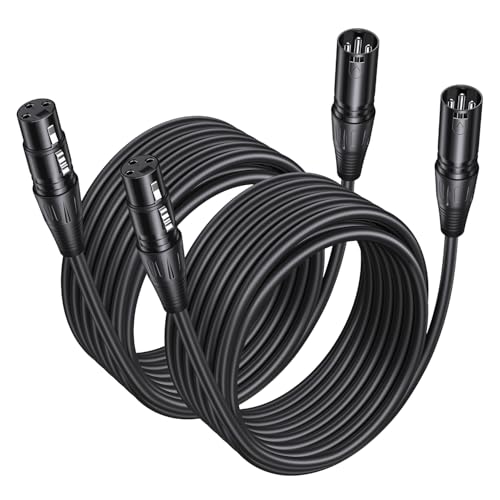
- Two 25-foot male-to-female cables
- OFC conductors and balanced design
- Self-locking connectors and durability testing
Best For: Extended stage, live-sound, and room-spanning connections
Best Flexible Pick

- Nylon-braided jacket for flexibility
- Shielding helps reduce electromagnetic noise
- 10-foot male-to-female XLR cable
Best For: Podcasting, streaming, gaming, and indoor microphone setups
Best Long-Run Value
Bietrun 100-Foot XLR Cable 2-Pack

- Two 100-foot balanced XLR cables
- Multi-layer shielding for noise reduction
- Locking connectors and metal spring strain relief
Best For: Stage sound, venues, studios, and long cable runs
Best Short Cable Set

- Compact 3-foot length for tidy setups
- Nylon braid supports flexibility and durability
- Double shielding and OFC conductors
Best For: Desktop recording, compact studios, and nearby audio connections
Classic Long-Run Pick – Shure C25J Hi-Flex Cable
The Shure C25J is a straightforward choice when you need flexible XLR cables for connecting a low-impedance microphone to audio equipment. Its 25-foot length provides useful reach for indoor setups, stage use, and other installations where a short lead may not be enough.
Best For: Long microphone-to-audio-equipment connections using low-impedance gear.
Pros:
- 25-foot length offers generous setup flexibility.
- Hi-Flex construction is suited to practical microphone use.
- Chrome XLR connectors provide a conventional male-to-female connection.
- Includes a two-year limited warranty.
Cons:
- Only one cable is included.
- The long length may be more than needed for compact setups.
The C25J is a sensible option when reach and a familiar Shure build matter more than buying a multipack. Choose it for a dependable single-cable solution with extra length.
Stage-Ready Value – Foboiu 6-Foot XLR Cable 2-Pack
This two-pack is a versatile choice if you want flexible XLR cables for microphones, mixers, interfaces, speakers, or other three-pin XLR equipment. The cables combine high-elastic PVC, multi-layer shielding, metal-spring strain relief, and locking metal connectors for frequent setup and coiling.
Best For: Home studios, live performances, PA systems, and buyers who need two short replacement or working cables.
Pros:
- Two 6-foot male-to-female cables provide useful value and a spare.
- High-elastic PVC is designed for easy wrapping and resistance to cracking.
- Metal-spring strain relief helps manage bending near the connectors.
- Oxygen-free copper, braided copper, and foil shielding are intended to reduce interference.
Cons:
- Six feet may be limiting for larger stages or distant equipment.
- Designed for three-pin XLR connections, so it is not a universal cable for other connector types.
With two cables, reinforced strain relief, and extensive compatibility claims, this set is a practical fit for users building or refreshing a compact audio rig. It is especially useful when repeated coiling and setup are part of the routine.
Long Cable on a Budget – Amazon Basics 50-Foot XLR Cable
The Amazon Basics 50-foot cable suits buyers who need flexible XLR cables for long connections to a speaker, PA system, or recording setup. All-copper conductors, copper spiral shielding, zinc alloy three-pin connectors, and a 6.0mm PVC jacket provide a practical feature set for studio recording and live sound.
Best For: Long-distance connections in PA, speaker, studio, and live-sound systems.
Pros:
- 50-foot length handles substantial distances between equipment.
- All-copper conductors and spiral copper shielding help reduce noise interference.
- Flexible 6.0mm PVC jacket supports easier routing.
- Protective metal connector housing adds practical durability.
Cons:
- Only one cable is included.
- The 50-foot length can be excessive for small indoor setups.
- Its listed indoor usage may not suit buyers specifically seeking outdoor-rated cabling.
This is a good reach-focused option for users who would rather have extra cable than rely on extensions. It offers the basic balanced XLR format and shielding features needed for common PA and recording applications.
Studio Two-Pack – Cable Matters Premium XLR Cables
The Cable Matters two-pack is a convenient option for flexible XLR cables in studio and live-recording setups. Each 6-foot cable uses 21 AWG oxygen-free copper conductors, copper braided shielding, a soft PVC jacket, and heavy-duty metal connectors with molded strain relief.
Best For: Buyers who need two short cables for microphones, mixers, preamps, speakers, or stage lighting.
Pros:
- Two 6-foot cables support multiple connections or provide a spare.
- 21 AWG OFC conductors are designed for clear audio transmission.
- Copper braided shielding helps with noise cancellation.
- Heavy-duty metal connectors and molded strain relief support durability.
Cons:
- Six-foot cables may not reach across larger performance spaces.
- The set is listed for indoor usage.
This set balances useful everyday length with a two-cable bundle, making it a strong fit for microphone and recording systems that need more than one XLR lead. Its soft jacket and reinforced connectors also suit regular handling.
Reliable Everyday Pick – Amazon Basics 6-Foot XLR Cable
For shoppers comparing flexible XLR cables for basic recording or live-sound setups, this 6-foot Amazon Basics model offers a straightforward male-to-female connection. Its all-copper conductors, spiral copper shielding, and flexible PVC jacket are suited to connecting compatible microphones, speakers, and PA equipment.
Best For: Home studios, PA systems, and short microphone connections.
Pros:
- All-copper conductors with copper spiral shielding help reduce noise interference.
- Flexible 6.0mm PVC jacket supports easier cable handling.
- Zinc alloy, nickel-plated 3-pin connectors with protective metal housing.
Cons:
- At 6 feet, it may be too short for larger stages or distant equipment.
- Only one cable is included.
This is a practical choice when you need a basic, flexible XLR cable without extra length or specialized connectors. Its compact size works best when your equipment is positioned nearby.
Best for Tight Setups – Cable Matters Right-Angle XLR 2-Pack
These flexible XLR cables are designed for crowded or difficult-to-reach connections, with a 90-degree right-angle connector that can reduce cable strain. The 6-foot cables use OFC conductors, copper braided shielding, and soft PVC jackets for balanced audio connections in recording and stage setups.
Best For: Mixing boards, microphones, lighting equipment, and other setups with limited space.
Pros:
- Right-angle XLR connector helps with tight spaces and complex cable routing.
- Two-pack provides a convenient option for multi-cable setups.
- OFC conductors and copper braided shielding support clear, low-noise transmission.
- Molded strain relief and grip treads improve handling and durability.
Cons:
- The 6-foot length may not reach across larger performance areas.
- Right-angle connectors may be less suitable where a straight connector is preferred.
The main advantage here is the connector design. If standard straight XLR cables create awkward bends behind equipment, this two-pack offers a more manageable routing solution while retaining professional-oriented construction.
Best Long-Reach Value – Aqdocvf 25-Foot XLR 2-Pack
For longer runs, this two-pack of 25-foot flexible XLR cables provides substantially more reach than standard short cords. The male-to-female cables feature OFC conductors, balanced construction, soft PVC jackets, and self-locking 3-pin connectors for microphones, mixers, preamps, speakers, and stage equipment.
Best For: Stages, larger rooms, live sound, and setups that need extended cable length.
Pros:
- Two 25-foot cables offer useful reach and multi-device flexibility.
- OFC conductors and balanced design are intended to support clear, low-interference audio.
- Self-locking connectors help secure the connection during use.
- Advertised testing includes more than 20,000 bends and 10,000 plug cycles.
Cons:
- Long 25-foot cables can be excessive for compact desktop or home-studio setups.
- A two-pack may provide more cable than needed for a single connection.
This is the strongest fit when flexibility and reach matter more than compact storage. The generous length and two-cable package make it useful for distributed stage or professional sound-reinforcement equipment.
Best Flexible Pick – Elgato Shielded XLR Cable
The Elgato XLR Cable is a practical choice for buyers seeking flexible xlr cables for a microphone, podcasting setup, gaming station, or streaming rig. Its nylon-braided exterior is designed for durability, while shielding helps reduce electromagnetic interference.
Best For: Home podcasting, streaming, gaming, and general indoor microphone connections.
Pros:
- Flexible nylon-braided jacket with metal plugs.
- Shielding is designed to reduce electromagnetic noise.
- Plug-and-play compatibility with XLR equipment.
- Gold-plated pins and a 10-foot length support reliable setup flexibility.
Cons:
- Only one 10-foot cable is included.
- Designed for indoor use according to the supplied specifications.
This is a straightforward, well-equipped option when you want one durable flexible XLR cable for a compact audio setup. The braided jacket and interference-reduction features make it especially suitable for regular podcasting or streaming use.
Best Long-Run Value – Bietrun 100-Foot XLR Cable 2-Pack
For stage layouts, larger rooms, or multi-microphone setups, the Bietrun 100-foot two-pack offers flexible xlr cables with substantial reach. Its multi-layer shielding, TPE jacket, metal spring strain relief, and locking connectors are aimed at demanding installations and frequent movement.
Best For: Stage sound, small venues, home studios, and users who need two extra-long microphone cables.
Pros:
- Two 100-foot cables provide extensive routing distance.
- Multiple shielding layers are designed to reduce interference and hum.
- Metal spring strain relief supports flexibility and durability.
- Self-locking connectors help prevent accidental disconnections.
Cons:
- The 100-foot length may be excessive for compact desktop setups.
- Long cables can require more careful organization despite the included Velcro ties.
- Connector colors may not suit every equipment-matching preference.
This pack makes the most sense when cable reach and quantity matter more than a compact footprint. The combination of long lengths, locking connectors, shielding, and included Velcro ties suits mobile or multi-device audio systems.
Best Short Cable Set – 3-Foot OFC XLR Cable 2-Pack
This two-pack is a space-saving choice for buyers who need flexible xlr cables between nearby microphones and audio equipment. The 3-foot nylon-braided cables use oxygen-free copper conductors, double shielding, and sturdy metal connectors for short, tidy connections.
Best For: Desktop recording, compact microphone setups, patching nearby studio equipment, and keeping a spare cable available.
Pros:
- Short 3-foot length helps reduce excess cable on compact setups.
- Nylon braiding is designed to resist tangling and repeated bending.
- OFC conductors and double shielding support clear, low-noise signal transmission.
- Two-pack provides a replacement or second cable.
Cons:
- Three feet may be too short for stage or widely spaced equipment.
- Longer lengths require selecting a different available size.
Choose this set when neat cable management and close equipment placement are priorities. It combines a compact length with durable braiding, reinforced connectors, and shielding suited to everyday microphone and studio connections.
How We Picked the Best Flexible Xlr Cables
We focused on the features that most affect everyday performance: cable flexibility, balanced male-to-female XLR connectivity, shielding, conductor quality, jacket durability, connector construction, and available lengths. We also considered whether each option is practical for its intended use, from short microphone connections to long runs across a stage or venue.
Because cable needs vary widely, this list includes single cables and multipacks, compact 3-foot and 6-foot options, standard 10-foot and 25-foot lengths, and extended 50-foot and 100-foot choices. Right-angle connectors are included for setups where straight plugs could place strain on equipment or take up too much space.
Quick Comparison
- Short patching: Choose 3-foot or 6-foot cables for nearby microphones, mixers, interfaces, and rack equipment.
- General-purpose use: A 10-foot cable offers useful reach without creating excessive slack.
- Stage and room coverage: Consider 25-foot or 50-foot cables when microphones must move away from the mixer or PA system.
- Large venues: A 100-foot multipack is suited to long runs, provided the route is secured and signal requirements are appropriate.
- Space-constrained setups: Right-angle XLR connectors can improve routing behind desks, interfaces, and other equipment.
Key Buying Factors for Flexible Xlr Cables
Flexibility and Jacket Design
A supple jacket is easier to coil and less likely to fight against microphone stands or cable channels. Look for a construction that balances flexibility with enough thickness to resist everyday abrasion. Extremely soft cables may be convenient, but heavy-duty environments also require strain relief and a jacket that can tolerate repeated handling.
Shielding and Conductors
Balanced XLR connections help reject interference, while effective shielding reduces unwanted hum and noise in electrically busy environments. Oxygen-free copper or all-copper conductors are common choices for reliable signal transmission. For long runs, quality shielding and secure connections become especially important.
Length and Connector Style
Measure the route rather than choosing solely by microphone distance. Leave enough slack for movement, but avoid unnecessary excess that can create trip hazards and tangled coils. Standard straight connectors suit most applications; right-angle connectors are helpful where equipment sits close to a wall, desk, or rack.
Durability and Pack Value
Check connector housings, cable strain relief, and jacket thickness if the cable will be transported often. Multipacks are useful for multi-microphone setups and backups, while a single premium cable may be preferable for critical connections.
Who Should Buy Which Flexible Xlr Cables?
Home recordists and podcasters will generally benefit from 6-foot or 10-foot cables that keep desk setups tidy. Live performers and small venues should consider flexible 10-foot to 25-foot cables, with longer options for distant stage positions. Installers and event crews may prefer 50-foot or 100-foot multipacks for broader coverage. Rack and desktop users should look at short or right-angle cables to reduce clutter and connector strain.
Before buying, confirm that your equipment uses standard three-pin XLR connections and select a length that supports movement without leaving excessive cable on the floor. For demanding use, prioritize robust strain relief, reliable shielding, and a jacket that remains flexible during repeated coiling.