The best drum machines for producers make it easier to build grooves, audition sounds, and turn rhythmic ideas into finished tracks. The right model depends on whether you prioritize authentic analog tone, deep sampling, fast pattern creation, or live control.
We selected 10 standout options across compact performance machines, hybrid instruments, beat-production workstations, and sample-based grooveboxes. Use the guide below to narrow the field by workflow, connectivity, sound design, and budget.
Best 10 Drum Machines for Producers Picks for 2026
Best Hybrid Classic

- Modeled TR-808, 909, 707, 727, 606, and CR-78 sounds
- Imports mono or stereo samples via SD card
- Per-instrument effects and performance-ready kit storage
Best For: Hybrid drum production with classic Roland sounds
Best Portable Sampler

- Battery-powered standalone operation with speaker and microphone
- 16 MPC pads and fast sample-chopping workflow
- Four FX processors with 60 effect types
Best For: Portable sampling and DAWless beatmaking
Best Analog Punch

- Separate accent control for each drum
- Song mode chains patterns into arrangements
- Color sound-shaping on most instruments
Best For: Hands-on analog pattern programming
Best DAW Production Hub

- Integrated sampler, arranger, mixer, effects, and controller
- Includes a 25 GB KOMPLETE 11 SELECT library
- Built-in 96 kHz/24-bit audio interface and DAW support
Best For: Computer-based beatmaking and integrated studio production
Portable Classic Beat Power
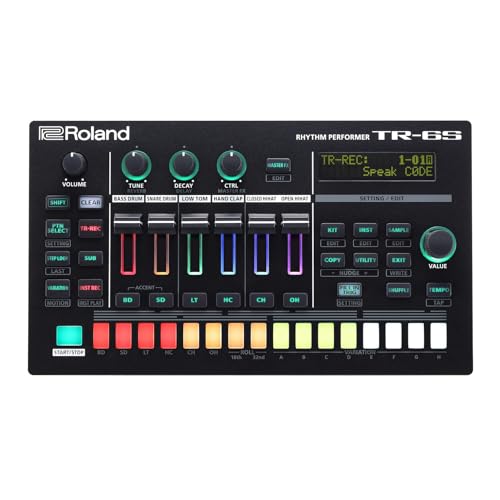
- Six tracks with detailed classic TR sounds
- Supports samples and FM synthesis
- Battery-powered with advanced sequencing
Best For: Portable production and authentic Roland rhythm sounds
Analog 909-Style Punch
Behringer RD-9 Analog Drum Machine

- Analog drum machine with 11 sounds
- Includes filter and Wave Designer effects
- Provides individual outputs and MIDI I/O
Best For: Hardware studios focused on analog 909-style drums
Portable Sampling Beatbox
teenage engineering EP-133 K.O. II
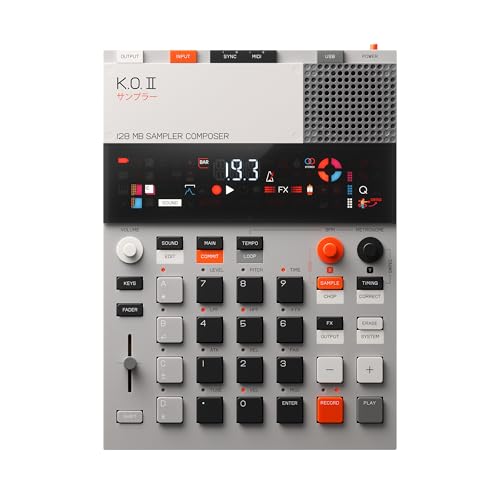
- Built-in microphone and line-in sampling
- 128MB memory with 999 sample slots
- Pattern sequencing with punch-in effects
Best For: Portable sampling, beat sketching, and live performance
Pad-Driven Beat Station
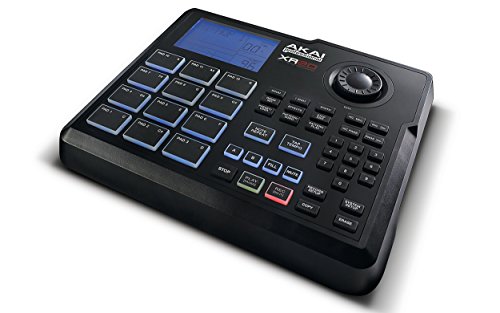
- 700+ onboard sounds
- 99 preset and 99 user patterns
- Backlit trigger pads with note repeat
Best For: Hands-on beat programming and pad performance
Hybrid Sequencing Powerhouse

- Analog, digital, and multi-engine architecture
- 11-part, 64-step sequencer
- Assignable outputs, MIDI, USB-C, and audio input
Best For: Hybrid sound design and hardware-focused production
Classic Analog Rhythm Box

- 15 classic analog drum sounds
- 34 rhythm presets
- Simple 16-step sequencer
Best For: Accessible analog rhythms for studio and live use
Best Hybrid Classic – TR-8S Rhythm Performer
For producers who want classic Roland drum-machine character with modern sample-based flexibility, the TR-8S is a capable choice among drum machines for producers. Its modeled TR sounds, sample import, per-instrument effects, and performance-focused kit storage make it suitable for both studio programming and live use.
Best For: Producers who want authentic TR-808, TR-909, TR-707, TR-727, TR-606, and CR-78 sounds alongside custom samples and hands-on effects.
Pros:
- Includes detailed circuit-modeled sounds from several iconic Roland TR machines.
- Supports mono or stereo sample import through the SD card slot.
- Offers per-instrument effects, customizable kits, and 128 kit locations.
- TR-EDITOR adds graphical controls and organizational tools.
Cons:
- Sample management requires working with an SD card.
- Its broad feature set may take time to learn.
The TR-8S stands out when you need one instrument to cover recognizable Roland rhythms, imported samples, sound shaping, and performance-ready recall. It is especially appealing for producers who want a hybrid workflow rather than a sample-only device.
Best Portable Sampler – MPC Sample
The Akai MPC Sample is a compact option for producers who want drum machines for producers with a strong sampling focus. Battery power, a built-in speaker and microphone, 16 pads, onboard effects, and standalone operation make it practical for sketching beats away from a computer.
Best For: Beatmakers, finger drummers, DAWless creators, and beginners who want portable sampling, chopping, sequencing, and effects.
Pros:
- Runs standalone from a rechargeable battery with a built-in speaker and microphone.
- Includes 16 MPC pads, over 100 factory kits, and Instant Sample Chop Mode.
- Provides four internal effects processors with 60 effect types.
- Offers USB-C audio/MIDI, MIDI connectivity, line I/O, and microSD storage.
Cons:
- The MIDI DIN adapter is not included.
- Its compact workflow is centered on sampling and MPC-style production.
This is a flexible choice when portability and immediate sampling matter more than a traditional dedicated drum-synthesis layout. Its built-in recording tools, effects, and battery-powered design support quick ideas, live setups, and computer-free production.
Best Analog Punch – DrumBrute Impact
The Arturia DrumBrute Impact is a focused analog option for producers comparing drum machines for producers. Separate accents, Song mode, and the Color sound-shaping control give its pattern workflow useful performance and sequencing flexibility without relying on a computer.
Best For: Producers who want hands-on analog drum programming, pattern chaining, and additional sound shaping for most instruments.
Pros:
- Provides a separate accent control for each drum.
- Song mode supports chaining patterns into longer arrangements.
- Color sound-shaping is available on all instruments except the cowbell.
- Metal construction provides a substantial hardware format.
Cons:
- The Color control does not apply to the cowbell.
- Its feature set is more focused than an integrated sampler or software production system.
The DrumBrute Impact makes sense for producers who value immediate controls and pattern-based performance. Its separate accents and Color controls add expressive options, while Song mode helps turn individual patterns into a more complete sequence.
Best DAW Production Hub – Maschine Mk3 Drum Controller
The Native Instruments Maschine Mk3 is a computer-centered production system rather than a standalone drum machine. For producers choosing drum machines for producers, it combines a sampler, arranger, mixer, effects, responsive controls, and a 96 kHz/24-bit audio interface with broad DAW compatibility.
Best For: Studio producers who want pad-based beatmaking integrated with sampling, arranging, mixing, effects, and a computer DAW.
Pros:
- Combines sampler, arranger, mixer, effects, and controller functions.
- Includes a 25 GB KOMPLETE 11 SELECT library with studio and creative effects.
- Provides two line inputs, two line outputs, a dynamic mic input, MIDI I/O, and a headphone output.
- Works with major DAWs including Ableton Live, Logic Pro, Cubase, FL Studio, and Pro Tools.
Cons:
- It requires a compatible Mac or Windows computer and software setup.
- It is a controller-based system rather than a standalone drum machine.
Maschine Mk3 is strongest for producers who want a unified hardware-and-software workflow. Its pads, Smart Strip, audio interface, included library, and DAW integration make it a practical centerpiece for computer-based beat production.
Portable Classic Beat Power – Roland TR-6S
The Roland TR-6S is a strong choice for producers who want classic drum-machine sounds in a compact, battery-powered format. It combines detailed TR-808, TR-909, TR-606, and TR-707 circuit models with sample support, FM synthesis, and hands-on sequencing, making it versatile for studio sessions and beat-making on the go.
Best For: Producers seeking authentic Roland rhythm sounds, portable sequencing, and flexible hybrid drum kits.
Pros:
- Includes detailed models of several iconic TR drum machines.
- Supports custom samples, FM synthesis, and mixed hybrid kits.
- Offers advanced sequencing features such as sub-steps, flam, step-loop, and motion recording.
- Can function as a USB audio/MIDI interface and includes a dedicated editor.
Cons:
- Its six-track design may be limiting for arrangements requiring more independent tracks.
- The plastic body may feel less substantial than larger metal drum machines.
- Expanded editing relies in part on the separate TR-EDITOR software.
For producers comparing drum machines for producers, the TR-6S stands out when portability and a broad range of classic-to-modern sounds matter more than a larger track count.
Analog 909-Style Punch – Behringer RD-9 Analog Drum Machine
The Behringer RD-9 is built for producers who want an analog drum machine centered on 909-style sounds. Its 11 sounds, analog filter, Wave Designer effects, individual outputs, MIDI connectivity, and trigger outs give it a focused setup for beat production and hardware integration.
Best For: Producers who want analog drum tones, separate outputs, and flexible connections for a hardware setup.
Pros:
- Uses an analog drum-machine design with 11 sounds.
- Includes an analog filter and Wave Designer effects.
- Provides 10 individual outputs for separate sound processing.
- Offers MIDI In/Out/Thru and three trigger outputs for external gear.
Cons:
- Its 11-sound focus is less sample-oriented than more hybrid drum machines.
- The larger, heavier format is less convenient for mobile beat-making.
- Supplied notes do not specify battery operation, so it is better suited to a stationary setup.
Among drum machines for producers, the RD-9 makes the most sense for a dedicated hardware rig where analog character, routing flexibility, and external synchronization are priorities.
Portable Sampling Beatbox – teenage engineering EP-133 K.O. II
The teenage engineering EP-133 K.O. II combines sampling, drum sequencing, effects, and performance controls in a lightweight portable unit. With a built-in microphone, 128MB of memory, 999 sample slots, pattern-based sequencing, and battery or USB-C power, it is designed to turn recorded sounds and ideas into beats quickly.
Best For: Producers who want portable sampling, fast pattern building, built-in effects, and live performance control.
Pros:
- Samples through its built-in microphone or line input and supports resampling.
- Offers 128MB of memory, 999 sample slots, and a selection of built-in sounds.
- Includes six master effects and 12 punch-in effects controlled by a multifunctional fader.
- Provides pattern groups, song mode, MIDI, sync, speaker, and line-out connections.
Cons:
- Its four-track sequencer may feel limited for more complex arrangements.
- The compact plastic design may not provide the physical heft of larger drum machines.
- Its workflow emphasizes sampling and pattern performance rather than a traditional multi-track studio layout.
For drum machines for producers who value immediacy and portability, the K.O. II is a creative sampler-sequencer suited to capturing sounds, building variations, and performing beats away from the computer.
Pad-Driven Beat Station – Akai XR20
The Akai XR20 is a practical option for producers who want a compact, pad-based workflow. With more than 700 sounds, preset and user patterns, note repeat, and bright backlit pads, it gives drum machines for producers a straightforward beat-making setup.
Best For: Producers who prioritize hands-on pad triggering, pattern creation, and a broad onboard sound library.
Pros:
- Includes over 700 sounds produced by Chronic Music.
- Offers 99 preset patterns and 99 user patterns.
- Backlit pads follow the beat for visible performance feedback.
- Provides microphone input, headphone output, and USB connectivity.
Cons:
- The listed mixer channel quantity is four, which may limit more complex mixing workflows.
- Noise control is listed as none.
The XR20 stands out for immediate, tactile control and a generous built-in sound selection. It is especially suitable when quick pattern programming and pad performance matter more than extensive effects or routing.
Hybrid Sequencing Powerhouse – KORG drumlogue
The KORG drumlogue is built for producers who want analog drums alongside digital and multi-engine sound generation. Its dedicated controls, 11-part 64-step sequencer, per-part effects, and extensive connectivity make it a flexible choice among drum machines for producers.
Best For: Producers who need hybrid sound design, live mixing controls, flexible sequencing, and integration with other hardware.
Pros:
- Combines analog, digital, and multi-engine synthesis, including user oscillators and effects.
- Provides 11 parts and a 64-step sequencer with Loop and Chain functions.
- Includes per-part reverb and delay plus master effects.
- Offers stereo and assignable outputs, USB-C, audio input, DIN MIDI, and audio sync.
Cons:
- Its broader synthesis, effects, and routing options may be more involved than a basic drum machine workflow.
- The supplied specifications list a relatively substantial 1.4 kg weight for a compact unit.
The drumlogue is the most versatile option here for producers who want sound-design depth and hardware connectivity. Dedicated knobs also make it practical for shaping sounds and mixing parts during performance.
Classic Analog Rhythm Box – Behringer RD-78
The Behringer RD-78 focuses on an uncomplicated classic analog drum-machine experience. With 15 drum sounds, 34 rhythm presets, and a 16-step sequencer, it is a sensible pick for producers seeking a direct workflow for studio production or live performance.
Best For: Beginners and experienced performers who want accessible analog-style rhythms, preset inspiration, and compact operation.
Pros:
- Provides 15 classic analog drum sounds.
- Includes 34 rhythm presets for quickly starting patterns.
- Uses an intuitive 16-step sequencer for beat programming.
- Compact alloy-steel construction is designed for studio and live use.
Cons:
- The sound set is limited to 15 drum sounds compared with larger sample-based libraries.
- The listed sequencer length is 16 steps, offering less pattern space than the drumlogue.
The RD-78 is a focused choice when simplicity and classic analog drum sounds are the priority. Its preset rhythms and straightforward sequencer can help users get started quickly without a more complex synthesis environment.
How We Picked the Best Drum Machines for Producers
We evaluated these drum machines by focusing on the factors that most affect real-world production: sound quality, sequencing workflow, hands-on control, pattern memory, sampling or synthesis capabilities, connectivity, portability, and live performance features. The lineup includes analog, digital, hybrid, and sample-based instruments so producers can compare different approaches rather than choosing between near-identical products.
We also considered how quickly each machine supports idea generation. A drum machine can have extensive features yet feel slow to use, while a simpler unit may be more inspiring because its controls and sequencing workflow are immediate.
Quick Comparison
| Best For | Recommended Type | What to Prioritize |
|---|---|---|
| Live performance | Hands-on performance drum machine | Pattern control, mutes, effects, and reliable sequencing |
| Sample-based production | Sampler or groovebox | Sample memory, pads, chopping, and export options |
| Analog sound design | Analog drum machine | Individual outputs, parameter controls, and sequencing depth |
| Computer-based workflows | Drum controller | DAW integration, pad response, software instruments, and USB connectivity |
| Portable beatmaking | Compact sampler or drum machine | Battery operation, built-in microphone, size, and fast pattern creation |
Key Buying Factors for Drum Machines for Producers
Sound Engine
Analog machines typically deliver a focused, immediate character, while digital and sample-based instruments offer broader sound libraries and more flexible editing. Hybrid models can combine synthesized drum voices with samples for a wider palette.
Sequencer and Workflow
Look for the features that match your process: step sequencing, real-time recording, probability, swing, parameter locks, pattern chaining, or song mode. Clear controls and responsive pads often matter more than a long specification list.
Connectivity
Check for MIDI, USB, audio inputs, individual outputs, headphone monitoring, and synchronization options. These determine how easily the machine fits into a DAW, hardware setup, or live rig.
Sampling and Expansion
If you want to use vocals, field recordings, or your own drum hits, confirm the available memory, sample transfer method, microphone input, and editing tools. Producers who mainly want classic synthesized sounds may not need these extras.
Who Should Buy Which Drum Machines for Producers?
Choose the Roland TR-8S or TR-6S if classic Roland-style rhythms, performance controls, and dependable sequencing are central to your music. The TR-8S is the more expansive option, while the TR-6S suits producers who need a smaller footprint.
Choose the Akai MPC Sample, Maschine Mk3, or EP–133 K.O. II for sample-driven production. MPC and Maschine are better suited to comprehensive studio workflows, while the EP–133 emphasizes portability and spontaneous beatmaking.
Choose the DrumBrute Impact, Behringer RD-9, or Behringer RD-78 if dedicated hardware controls and analog-style drum sounds are your priorities. The KORG drumlogue is a strong fit for producers who want a hybrid sound engine and more experimental sound-design potential. The Akai XR20 is worth considering for straightforward pad-based beat production with a large built-in sound set.